Quick answer
The issue in brief
The Asian songbird crisis is the decline of wild songbirds driven by trapping for the cage-bird trade, and Indonesia is its centre. A songbird is legally protected when its species is listed in the annex to Regulation P.106/2018, such as the black-winged myna, Bali myna and greater green leafbird; the white-rumped shama, straw-headed bulbul and Javan pied starling were dropped from the list in 2018, although the bulbul is Critically Endangered and the starling may be extinct in the wild. Taking wild birds for sale still needs a permit and a quota, so buy only marked, certified captive-bred birds and report illegal trade.
- Cage birds kept on Java
- 66–84 million, kept by a third of households (estimate published 2020) source ↗
- Birds seized in media-reported cases
- 132,945 birds of 157 species, across all 34 provinces source ↗
- Straw-headed bulbuls left in the wild
- 600–1,700 mature individuals; Critically Endangered (IUCN, assessed 2020) source ↗
- Javan pied starling
- Critically Endangered, possibly extinct in the wild; 0–49 mature individuals (IUCN, assessed December 2024) source ↗
- Black-winged mynas in the wild
- 150–190 mature individuals; Endangered (IUCN, assessed 2021) source ↗
- Bird capture quotas (2016)
- Only about 80 species nationwide, a median of 140 birds per species per year source ↗
- Penalty for protected-wildlife offences
- Up to 15 years in prison and/or a fine of up to category VII (Rp5 billion) source ↗
What is the Asian songbird crisis?
The Asian Songbird Crisis is the label IUCN gave in 2017 to the high level of bird trade, legal and illegal, across South-east Asia. IUCN's Species Survival Commission set up the Asian Songbird Trade Specialist Group, an expert network whose purpose is to prevent songbirds being driven to extinction by unsustainable trapping and the trade in wild-caught birds.
Indonesia is the trade's global hotspot. Birds are kept as pets, eaten, released in prayer rituals and read as omens. A survey of more than 3,000 households in six provinces of Java estimated that a third of the island's 36 million households keep 66–84 million cage birds, and that 76% of bird keepers own native Indonesian species.
The problem is not confined to one species. As one bird becomes hard to find, trapping pressure shifts to similar species. That is why the specialist group keeps a priority list: a taxon goes into Tier 1 when its survival is significantly affected by trade and extinction may be imminent without action.
Evidence: Rethinking extinction 'crises': the case of Asian songbird trade (Cambridge Prisms: Extinction, 2024) ↗ · IUCN SSC Asian Songbird Trade Specialist Group: home page ↗ · Marshall et al. (2020) Spatio-temporal dynamics of consumer demand driving the Asian Songbird Crisis, Biological Conservation 241 ↗ · IUCN SSC Asian Songbird Trade Specialist Group: Priority Taxon List 2026 ↗
Where do the birds in Indonesia's bird markets come from?
Most birds traded in Indonesian markets come from the wild. An analysis of media-reported seizures counted 132,945 confiscated birds of 157 species in a network spanning 18 countries and all 34 provinces. Lampung was the most important source, West Java the most important destination and Jakarta the main transit point.
Data from December 1986 suggested that about 1.8 million wild-caught birds a year were sold at Jakarta's Pramuka market alone. Two days of surveys in three Jakarta markets recorded 206 wild bird species, 184 of them native, and surveys of 20 markets on Java found 35,715 bulbuls of 20 species, mostly sooty-headed and yellow-vented bulbuls.
Market surveys in Kalimantan in 2015–2017 found 201 shops selling 25,298 birds of 153 species. Sales have also moved online: six months of monitoring social-media trading groups in 2022 recorded nearly 2,000 birds of 190 Indonesian species; 9.5% of the species were threatened on the IUCN Red List and 15.8% protected under Indonesian law.
Evidence: The final straw? An overview of Straw-headed Bulbul Pycnonotus zeylanicus trade in Indonesia (Bird Conservation International, 2018) ↗ · It's in the news: characterising Indonesia's wild bird trade network from media-reported seizure incidents (Biological Conservation, 2020) ↗ · Disentangling the legal and illegal wildlife trade: insights from Indonesian wildlife market surveys (Animals, 2022) ↗ · Quantifying market prevalence, abundance, and suitable habitats of bulbuls in Java, Indonesia (Biological Conservation, 2025) ↗ · A silent morning: the songbird trade in Kalimantan, Indonesia (Tropical Conservation Science, 2018) ↗ · Comparisons of songbirds on sale across online and physical markets in Indonesia (Biodiversity and Conservation, 2024) ↗
Do songbird singing contests drive wild trapping?
Most buyers keep their birds at home; only a small but important minority enter them in contests. Interviews with nearly a thousand bird keepers on Java divided them into three groups: hobbyists who keep birds as pets, contestants, and breeders who breed and train birds for resale.
Contestants may be few, but contest demand shows up clearly in seizure data: songbirds made up 83.8% of all confiscated birds, and the largest numbers were species sought for singing competitions.
Contests also create indirect demand. To enrich a bird's song, competitors use "master birds", caged near contest birds so that the contest birds copy their calls. One of them, the crested jayshrike (Platylophus galericulatus), is listed in the P.106/2018 annex, yet surveys of 21 bird markets in 2011–2025 found that this protection had little effect, with thousands caught illegally every year.
The government itself acknowledges the role of contests. P.106/2018 states that, for birds specifically, decisions on protected status take into account the amount of captive breeding, the amount of hobby keeping, and contests.
Evidence: Disentangling the legal and illegal wildlife trade: insights from Indonesian wildlife market surveys (Animals, 2022) ↗ · Characterizing bird-keeping user-groups on Java reveals distinct behaviours, profiles and potential for change (People and Nature, 2020) ↗ · It's in the news: characterising Indonesia's wild bird trade network from media-reported seizure incidents (Biological Conservation, 2020) ↗ · Risk of secondary extinction in the Asian songbird trade, as exemplified by the selling of crested jayshrikes as master birds (Integrative Conservation, 2026) ↗ · Permen LHK P.106/MENLHK/SETJEN/KUM.1/12/2018 (JDIH Kementerian Kehutanan) ↗
Which Indonesian songbirds is the trade pushing towards extinction?
The straw-headed bulbul (Pycnonotus zeylanicus) is Critically Endangered, with an estimated 600–1,700 mature individuals left. Researchers name unregulated illegal trade as the driver, and a market survey published in 2025 still found it on sale on Java, where it has vanished from the wild.
The Javan pied starling (Gracupica jalla) is Critically Endangered (Possibly Extinct in the Wild), with an estimated 0–49 mature individuals (assessed December 2024). Genetic research links its loss in the wild to unsustainable and illegal trade, and finds illegally held captive birds often cross-bred with a related form from Thailand.
The black-winged myna (Acridotheres melanopterus) is Endangered, with an estimated 150–190 mature individuals in the wild but around 40,000 in private hands, according to a 2018 study. In Jakarta's markets, dealers were found openly ignoring the law.
The white-rumped shama (Copsychus malabaricus) is still Least Concern globally, with a decreasing trend, but that hides heavy losses: over 40% of the shama group's phylogenetic diversity is extinct in the wild or nearly so, island subspecies such as the Simeulue shama are on the IUCN SSC priority list, and the more than 3 million shamas kept on Java cannot have come from Java's forests.
The Bali myna (Leucopsar rothschildi), on CITES Appendix I since 1975, was still Critically Endangered at its 2020 assessment, with an estimated 1–49 mature individuals.
Evidence: IUCN Red List: Straw-headed Bulbul Pycnonotus zeylanicus (assessed 2020) ↗ · The final straw? An overview of Straw-headed Bulbul Pycnonotus zeylanicus trade in Indonesia (Bird Conservation International, 2018) ↗ · Quantifying market prevalence, abundance, and suitable habitats of bulbuls in Java, Indonesia (Biological Conservation, 2025) ↗ · IUCN Red List: Javan Pied Starling Gracupica jalla (assessed 2024) ↗ · Using historical genome-wide DNA to unravel the confused taxonomy in a songbird lineage that is extinct in the wild (Evolutionary Applications, 2021) ↗ · IUCN Red List: Black-winged Myna Acridotheres melanopterus (assessed 2021) ↗ · Wildlife trade, captive breeding and the imminent extinction of a songbird (Global Ecology and Conservation, 2018) ↗ · Illegal trade pushing the Critically Endangered Black-winged Myna Acridotheres melanopterus towards imminent extinction (Bird Conservation International, 2016) ↗ · IUCN Red List: White-rumped Shama Copsychus malabaricus (assessed 2020) ↗ · Genomes from historic DNA unveil massive hidden extinction and terminal endangerment in a tropical Asian songbird radiation (Molecular Biology and Evolution, 2022) ↗ · IUCN SSC Asian Songbird Trade Specialist Group: Priority Taxon List 2026 ↗ · Marshall et al. (2020) Spatio-temporal dynamics of consumer demand driving the Asian Songbird Crisis, Biological Conservation 241 ↗ · Species+ (CITES): Leucopsar rothschildi, CITES listing ↗ · IUCN Red List: Bali Myna Leucopsar rothschildi (assessed 2020) ↗
Which songbirds are protected under Indonesian law?
Protected status depends on the annex to Ministerial Regulation P.106/2018, not on rarity or price. Listed songbirds and cage birds include the black-winged myna (Acridotheres melanopterus) and its grey-backed (A. tricolor) and grey-rumped (A. tertius) relatives; the Bali myna; the common hill myna (Gracula religiosa) and Nias hill myna (G. robusta); the greater green leafbird (Chloropsis sonnerati); the crested jayshrike; the Javan green magpie (Cissa thalassina); the Java sparrow (Lonchura oryzivora); the Sumatran and rufous-fronted laughingthrushes (Garrulax bicolor, G. rufifrons); and the Javan white-eye (Zosterops flavus).
The white-rumped shama, straw-headed bulbul and Javan pied starling are not listed in the P.106/2018 annex. All three were added by P.20/2018, issued on 29 June 2018, and removed, with two shrike-thrushes, by P.92/2018, promulgated on 5 September 2018. P.106/2018, signed on 28 December 2018, did not restore them.
CITES, which governs international trade, is separate: the straw-headed bulbul has been on Appendix I since 25 November 2023 and the white-rumped shama on Appendix II since 23 February 2023.
An unlisted bird still cannot be trapped freely. Taking birds from the wild needs a capture approval, and some districts add their own bylaws. Purworejo District Regulation 1/2012, for example, bans hunting birds by shooting, with poison or with traps that can reduce bird populations.
Evidence: Permen LHK P.106/MENLHK/SETJEN/KUM.1/12/2018 (JDIH Kementerian Kehutanan) ↗ · Tak masuk daftar dilindungi, burung berkicau tetap diproteksi (berita, 10 Oktober 2018) ↗ · UGM: Pakar UGM sayangkan pencabutan status lima jenis burung dari daftar dilindungi (11 Oktober 2018) ↗ · JDIH BPK: Permen LHK No. 18 Tahun 2024 tentang Pemanfaatan Jenis TSL dalam bentuk Penangkaran, Pemeliharaan untuk Kesenangan, Perdagangan, dan Peragaan ↗ · Species+ (CITES): Pycnonotus zeylanicus, CITES listing ↗ · Species+ (CITES): Copsychus malabaricus, CITES listing ↗ · JDIH BPK: Perda Kabupaten Purworejo No. 1 Tahun 2012 tentang Perburuan Burung, Ikan dan Satwa Liar Lainnya ↗
Can you legally buy or keep a white-rumped shama? Quotas, breeding and papers
This page gives no prices. Before buying any songbird, ask where it came from and whether its papers are valid.
Wild-caught birds need a capture approval, and capture must stay within an annual quota set by the Director-General under Regulation 18/2024. In 2016, quotas existed for only about 80 bird species nationwide, with a median of 140 birds per species a year, often far below the numbers in trade.
Keeping a bird as a hobby ("keeping for pleasure") requires an approval from the BKSDA. The bird must come from captive breeding or the legal trade in captive-bred animals, with marking, a certificate and/or valid documents such as the SATS-DN domestic transport permit. For listed species only the second captive generation (F2) onwards qualifies; first-generation young of listed species may not be traded.
Marking, such as a leg ring, is meant to tell captive-bred birds apart from wild-caught ones, and breeding certificates are endorsed by the BKSDA office. Researchers warn that rings can be misused to pass wild birds off as captive-bred, so a ring without a certificate and a clear origin proves little.
Approvals are limited, for example to two pairs of one species, and last up to two years, renewable. Holders may not sell the birds, neglect them, cross-breed them or release them without the management authority's approval.
Evidence: JDIH BPK: Permen LHK No. 18 Tahun 2024 tentang Pemanfaatan Jenis TSL dalam bentuk Penangkaran, Pemeliharaan untuk Kesenangan, Perdagangan, dan Peragaan ↗ · Disentangling the legal and illegal wildlife trade: insights from Indonesian wildlife market surveys (Animals, 2022) ↗ · Rethinking extinction 'crises': the case of Asian songbird trade (Cambridge Prisms: Extinction, 2024) ↗
What are the penalties for keeping or selling protected birds?
Article 21(2) of Law 5/1990, as amended by Law 32/2024, bans anyone from hunting, catching, injuring, killing, storing, owning, keeping, transporting and/or trading live protected animals. The ban also covers their eggs and nests, and unlicensed trade through electronic media.
Article 40A(1) of Law 32/2024 originally set a prison term of 3 to 15 years for individuals. As adjusted by Law 1/2026 on Criminal Penalty Adjustment, in force since 2 January 2026, the penalty is now up to 15 years in prison and/or a fine of up to category VII. Under Article 79 of the Criminal Code, a category VII fine is up to Rp5 billion.
Cruelty is an offence whatever the bird, listed or not. Article 337 of the Criminal Code (Law 1/2023), in force since 2 January 2026, punishes anyone who hurts or injures an animal or harms its health excessively or without proper purpose with up to one year in prison or a fine of up to category II. Article 66A of Law 41/2014 also bans abusing or misusing animals in ways that leave them disabled or unproductive.
Evidence: JDIH BPK: UU No. 32 Tahun 2024 (perubahan UU 5/1990) ↗ · JDIH BPK: UU No. 1 Tahun 2026 tentang Penyesuaian Pidana, halaman metadata ↗ · JDIH BPK: UU No. 1 Tahun 2023 tentang KUHP ↗ · JDIH BPK: UU No. 41 Tahun 2014 (perubahan UU 18/2009 tentang Peternakan dan Kesehatan Hewan) ↗
How does the trade harm the birds, and is there a disease risk?
Birds suffer all along the supply chain. A 2026 study recorded loss of freedom at capture, then physical and physiological harm in transit and at the point of sale: feather plucking, dismemberment, sinus infections, overcrowding, suffocation and death.
Market surveys in Indonesia likewise found basic welfare provisions regularly and habitually violated, with conditions during capture, transport and transit causing high mortality.
People are at risk too. WHO says the main risk factor for human avian influenza infection is exposure to infected animals, alive or dead, or to contaminated environments such as live bird markets. Indonesia's Ministry of Health says transmission can occur in markets, pens and other places contaminated by droppings from H5N1-infected birds.
Consignments hidden from quarantine, like the one stopped at Bakauheni, bypass animal health checks, and IUCN guidelines say confiscated animals should be quarantined at once because disease can spread, including to people. If you develop flu-like symptoms after contact with birds, or are bitten or scratched, go to a health facility.
Evidence: A more-than-human political ecology of Indonesian songbird trade (Conservation Biology, 2026) ↗ · Disentangling the legal and illegal wildlife trade: insights from Indonesian wildlife market surveys (Animals, 2022) ↗ · WHO fact sheet: Influenza (avian and other zoonotic) ↗ · Kemenkes: Tetap waspada risiko penularan flu burung pada manusia (20 Juni 2024) ↗ · Balai Karantina gagalkan penyelundupan 1.968 ekor burung tanpa dokumen (berita, 27 Januari 2025) ↗ · JDIH BPK: Permen LHK No. 17 Tahun 2024 tentang Penyelamatan Jenis Satwa ↗ · IUCN (2019) Guidelines for the management of confiscated, live organisms ↗
What happens to confiscated songbirds?
Confiscated birds are handled under the species-rescue procedure in Ministerial Regulation 17/2024. The steps are an initial assessment and classification (species, status, age, sex and origin), an assessment of medical condition and behaviour that must involve a veterinarian, and then a technical team's recommendation: breeding, treatment, care, transfer, release or euthanasia.
Birds are released only when they are medically healthy and behave naturally; those not yet able to survive in the wild go through rehabilitation first. IUCN guidelines warn that returning confiscated animals to the wild responsibly can be extremely difficult and needs long-term commitment, and that the best option of all is to keep animals out of illegal trade in the first place.
A recent example: in December 2025, 13 live birds, including white-rumped shamas and oriental magpie-robins, were found packed in plastic pipes and cloth bags in a suitcase at Soekarno-Hatta airport. They were placed in a rescue centre for observation, health checks and care while the case proceeded, and the case file was declared complete (P-21) in April 2026.
Evidence: JDIH BPK: Permen LHK No. 17 Tahun 2024 tentang Penyelamatan Jenis Satwa ↗ · IUCN (2019) Guidelines for the management of confiscated, live organisms ↗ · Gakkum Kehutanan: kasus penyelundupan burung dalam paralon di Soekarno-Hatta dilimpahkan ke kejaksaan (17-18 April 2026) ↗
How do I report illegal bird trade in Indonesia?
Send reports of wildlife poaching, transport or trade to the Ministry of Forestry's law enforcement directorate (Gakkum) at pengaduan.gakkum@kehutanan.go.id, or call its office on (021) 5790 2925. For a crime in progress or a threat to safety, call the police on 110. The law also obliges anyone who knows of animal cruelty to report it.
Checks on transport routes do lead to action. On 26 January 2025, quarantine officers at Bakauheni port in Lampung stopped 1,968 undocumented birds, including white-eyes, mynas, bulbuls and prinias, bound for Bekasi. On 29 August 2026, quarantine and Gakkum officers seized 190 birds at Jamrud port in Surabaya, 186 of them greater green leafbirds, a species listed in the P.106/2018 annex; a suspect was named two days later.
Keepers who already hold a protected bird without a permit can use the surrender route in Ministerial Regulation 17/2024, which covers animals handed over voluntarily by the people keeping them, for assessment and care by a BKSDA rescue team.
Evidence: Kemenhut gagalkan perdagangan 190 burung liar di pelabuhan Surabaya (berita, 3 September 2026) ↗ · Gakkum Kehutanan: kasus penyelundupan burung dalam paralon di Soekarno-Hatta dilimpahkan ke kejaksaan (17-18 April 2026) ↗ · Polri: Call Center 110 ↗ · JDIH BPK: UU No. 41 Tahun 2014 (perubahan UU 18/2009 tentang Peternakan dan Kesehatan Hewan) ↗ · Balai Karantina gagalkan penyelundupan 1.968 ekor burung tanpa dokumen (berita, 27 Januari 2025) ↗ · Permen LHK P.106/MENLHK/SETJEN/KUM.1/12/2018 (JDIH Kementerian Kehutanan) ↗ · JDIH BPK: Permen LHK No. 17 Tahun 2024 tentang Penyelamatan Jenis Satwa ↗
Timeline
- 1975-07 The Bali myna is listed on CITES Appendix I. source ↗
- 1986-12 Data from Pramuka market, Jakarta, suggest about 1.8 million wild-caught birds a year are sold there. source ↗
- 2005 A household survey in five major cities finds birds are urban Indonesia's most popular pet, kept by 21.8% of households. source ↗
- 2017 IUCN declares the Asian Songbird Crisis. source ↗
- 2018-06 P.20/2018 is issued, adding the white-rumped shama, Javan pied starling and straw-headed bulbul to the protected list. source ↗
- 2018-09 P.92/2018 is promulgated, removing five bird species, including the shama, Javan pied starling and straw-headed bulbul, from the list. source ↗
- 2018-12 P.106/2018 is signed; its annex becomes the official protected-species list in force. source ↗
- 2020 A study estimates that a third of Java's households keep 66–84 million cage birds. source ↗
- 2022-11 CITES CoP19 agrees to move the straw-headed bulbul to Appendix I, with effect a year later. source ↗
- 2023-02 The white-rumped shama is listed on CITES Appendix II. source ↗
- 2024-08 Law 32/2024 amends Law 5/1990, including the bans in Article 21. source ↗
- 2024-10 Ministerial Regulations 17/2024 (species rescue) and 18/2024 (captive breeding, keeping for pleasure and trade) take effect. source ↗
- 2024-12 IUCN assesses the Javan pied starling as Critically Endangered (Possibly Extinct in the Wild). source ↗
- 2025-01 Quarantine officers at Bakauheni stop a shipment of 1,968 undocumented birds. source ↗
- 2025-12 Thirteen live birds packed in pipes are found in a suitcase at Soekarno-Hatta airport. source ↗
- 2026-01 The new Criminal Code (Law 1/2023), including Article 337 on animal cruelty, and Law 1/2026 on Criminal Penalty Adjustment take effect. source ↗
- 2026-08 190 birds, 186 of them greater green leafbirds, are seized at Jamrud port, Surabaya. source ↗
How to help
- Don't buy wild-caught birds, even to "rescue" them; every purchase pays for more trapping.
- If you want a bird, choose a ringed, certified bird from a licensed breeder, ask for proof of origin and a SATS-DN if it was shipped from another region, and apply to the BKSDA for a keeping approval.
- Contestants and organisers: favour marked, captive-bred birds and stop using wild-caught master birds.
- Don't release market birds; releases need an officer's assessment and approval.
- Don't share adverts for protected birds. Screenshot the account, link, date and photos, use the platform's report tool, and send the evidence to Gakkum Kehutanan or the BKSDA.
- Report illegal trade to Gakkum Kehutanan (pengaduan.gakkum@kehutanan.go.id, (021) 5790 2925) or your local BKSDA; if a crime is under way or someone is in danger, call the police on 110.
- If you hold a protected bird without a permit, contact the BKSDA to surrender it voluntarily.
- PanduanHewan takes no donations. Before giving to any bird appeal, check it with PanduanHewan's checklist on how to check an appeal.
- Volunteer only for bird watching and survey work that involves no handling, feeding or photos with birds and runs with a BKSDA or national park permit.
- If you fall ill after contact with a sick or dead bird, or are bitten or scratched, go to a health facility.
Common questions
Is the white-rumped shama (murai batu) protected in Indonesia?
It is not listed in the P.106/2018 annex: it was added by P.20/2018 and removed by P.92/2018. It has been on CITES Appendix II since 23 February 2023, and catching it in the wild still needs an approval and a quota.
Source: UGM: Pakar UGM sayangkan pencabutan status lima jenis burung dari daftar dilindungi (11 Oktober 2018) ↗ · Species+ (CITES): Copsychus malabaricus, CITES listing ↗ · JDIH BPK: Permen LHK No. 18 Tahun 2024 tentang Pemanfaatan Jenis TSL dalam bentuk Penangkaran, Pemeliharaan untuk Kesenangan, Perdagangan, dan Peragaan ↗
Is the black-winged myna (jalak putih) protected?
Yes. The P.106/2018 annex lists the black-winged myna and its grey-backed and grey-rumped relatives (Acridotheres tricolor, A. tertius). IUCN classes it as Endangered, with an estimated 150–190 mature individuals in the wild. The Bali myna is a separate species, also listed.
Source: Permen LHK P.106/MENLHK/SETJEN/KUM.1/12/2018 (JDIH Kementerian Kehutanan) ↗ · IUCN Red List: Black-winged Myna Acridotheres melanopterus (assessed 2021) ↗ · IUCN Red List: Black-winged Myna Acridotheres melanopterus (assessed 2021) ↗ · Permen LHK P.106/MENLHK/SETJEN/KUM.1/12/2018 (JDIH Kementerian Kehutanan) ↗
Is the straw-headed bulbul endangered?
Yes: it is Critically Endangered, with an estimated 600–1,700 mature individuals, and has been on CITES Appendix I since 25 November 2023. It is not listed in the P.106/2018 annex, having been removed by P.92/2018.
Source: UGM: Pakar UGM sayangkan pencabutan status lima jenis burung dari daftar dilindungi (11 Oktober 2018) ↗ · IUCN Red List: Straw-headed Bulbul Pycnonotus zeylanicus (assessed 2020) ↗ · IUCN Red List: Straw-headed Bulbul Pycnonotus zeylanicus (assessed 2020) ↗ · Species+ (CITES): Pycnonotus zeylanicus, CITES listing ↗
Is the Javan pied starling extinct in the wild?
Possibly. IUCN lists it as Critically Endangered (Possibly Extinct in the Wild), with 0–49 mature individuals. Birds on sale are generally captive-bred, often cross-bred with a related form from Thailand. It is not listed in the P.106/2018 annex.
Source: IUCN Red List: Javan Pied Starling Gracupica jalla (assessed 2024) ↗ · IUCN Red List: Javan Pied Starling Gracupica jalla (assessed 2024) ↗ · Disentangling the legal and illegal wildlife trade: insights from Indonesian wildlife market surveys (Animals, 2022) ↗ · Using historical genome-wide DNA to unravel the confused taxonomy in a songbird lineage that is extinct in the wild (Evolutionary Applications, 2021) ↗ · UGM: Pakar UGM sayangkan pencabutan status lima jenis burung dari daftar dilindungi (11 Oktober 2018) ↗
How much does a white-rumped shama cost?
PanduanHewan does not list prices. Check legality instead: under Regulation 18/2024, hobby birds must be captive-bred and come with marking, a certificate and/or valid documents.
Source: JDIH BPK: Permen LHK No. 18 Tahun 2024 tentang Pemanfaatan Jenis TSL dalam bentuk Penangkaran, Pemeliharaan untuk Kesenangan, Perdagangan, dan Peragaan ↗ · JDIH BPK: Permen LHK No. 18 Tahun 2024 tentang Pemanfaatan Jenis TSL dalam bentuk Penangkaran, Pemeliharaan untuk Kesenangan, Perdagangan, dan Peragaan ↗
Are bird singing contests illegal in Indonesia?
The rules on this page regulate the birds, not contests: listed birds may not be owned or traded without a permit, and hobby birds must be captive-bred. P.106/2018 even names contests as a factor in setting birds' protected status.
Source: JDIH BPK: UU No. 32 Tahun 2024 (perubahan UU 5/1990) ↗ · JDIH BPK: Permen LHK No. 18 Tahun 2024 tentang Pemanfaatan Jenis TSL dalam bentuk Penangkaran, Pemeliharaan untuk Kesenangan, Perdagangan, dan Peragaan ↗ · Permen LHK P.106/MENLHK/SETJEN/KUM.1/12/2018 (JDIH Kementerian Kehutanan) ↗
What are bird rings and breeding certificates?
A leg ring is one form of marking for captive-bred animals; a certificate is a written statement of the animal's features, origin, category and identity, endorsed by the BKSDA office.
Source: JDIH BPK: Permen LHK No. 18 Tahun 2024 tentang Pemanfaatan Jenis TSL dalam bentuk Penangkaran, Pemeliharaan untuk Kesenangan, Perdagangan, dan Peragaan ↗ · JDIH BPK: Permen LHK No. 18 Tahun 2024 tentang Pemanfaatan Jenis TSL dalam bentuk Penangkaran, Pemeliharaan untuk Kesenangan, Perdagangan, dan Peragaan ↗ · JDIH BPK: Permen LHK No. 18 Tahun 2024 tentang Pemanfaatan Jenis TSL dalam bentuk Penangkaran, Pemeliharaan untuk Kesenangan, Perdagangan, dan Peragaan ↗
How do I get a permit to keep a bird in Indonesia?
Submit the form for an approval to keep wildlife for pleasure to the BKSDA office or its regional section, in person or online. It lasts up to two years and can be renewed; if the birds breed beyond the limit, a breeding permit is needed.
Source: JDIH BPK: Permen LHK No. 18 Tahun 2024 tentang Pemanfaatan Jenis TSL dalam bentuk Penangkaran, Pemeliharaan untuk Kesenangan, Perdagangan, dan Peragaan ↗ · JDIH BPK: Permen LHK No. 18 Tahun 2024 tentang Pemanfaatan Jenis TSL dalam bentuk Penangkaran, Pemeliharaan untuk Kesenangan, Perdagangan, dan Peragaan ↗ · JDIH BPK: Permen LHK No. 18 Tahun 2024 tentang Pemanfaatan Jenis TSL dalam bentuk Penangkaran, Pemeliharaan untuk Kesenangan, Perdagangan, dan Peragaan ↗ · JDIH BPK: Permen LHK No. 18 Tahun 2024 tentang Pemanfaatan Jenis TSL dalam bentuk Penangkaran, Pemeliharaan untuk Kesenangan, Perdagangan, dan Peragaan ↗
What does kicau mania mean?
It is the Indonesian name for people in the songbird hobby, from owners and breeders to makers of bird-keeping equipment.
Source: Tak masuk daftar dilindungi, burung berkicau tetap diproteksi (berita, 10 Oktober 2018) ↗
Can I buy a bird at the market and release it?
Best not. Releases follow a medical and behavioural assessment involving a vet, and IUCN guidelines warn that responsible return to the wild can be extremely difficult. Buying also adds to demand; the government urges people not to buy, keep or trade protected wildlife illegally.
Source: JDIH BPK: Permen LHK No. 17 Tahun 2024 tentang Penyelamatan Jenis Satwa ↗ · IUCN (2019) Guidelines for the management of confiscated, live organisms ↗ · Kemenhut gagalkan perdagangan 190 burung liar di pelabuhan Surabaya (berita, 3 September 2026) ↗
Animals involved
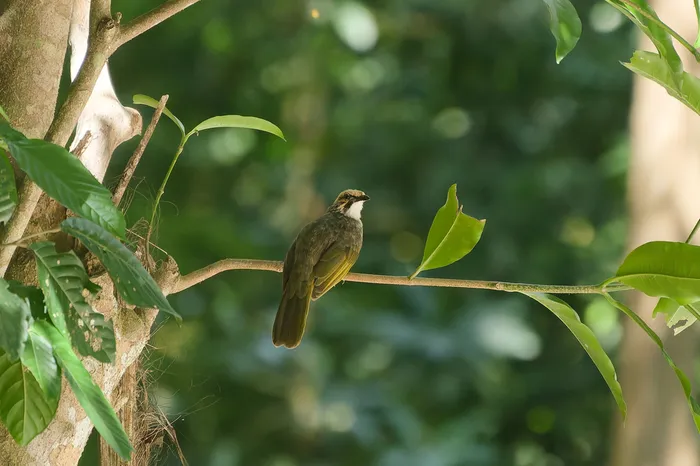
The straw-headed bulbul (Pycnonotus zeylanicus) is a large, straw-crowned bulbul now Critically Endangered because of trapping for the bird trade.
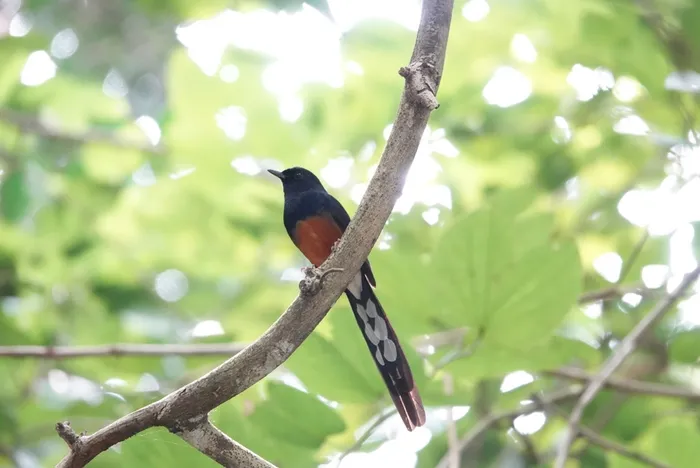
The white-rumped shama (Copsychus malabaricus) is a forest songbird with a rich song whose Indonesian populations have fallen through trapping for trade.
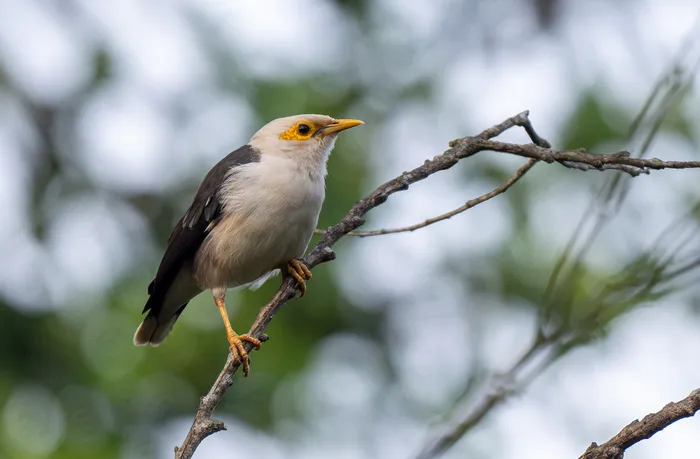
The black-winged myna (Acridotheres melanopterus) is a white, black-winged starling endemic to Java and Bali, almost wiped out in the wild by the bird trade.
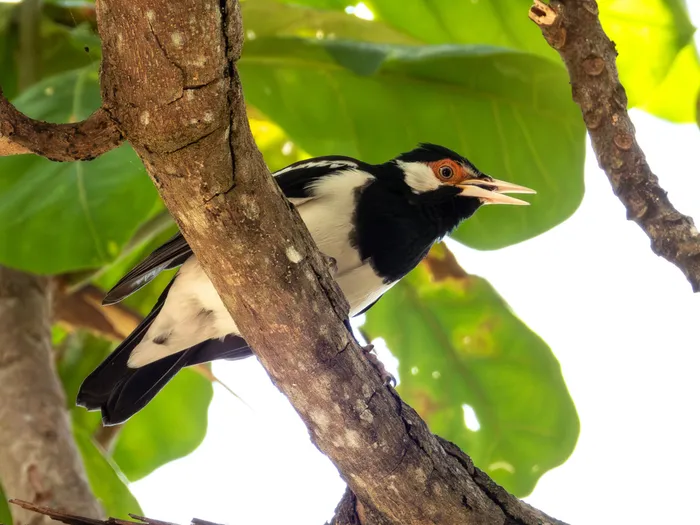
The Javan pied starling (Gracupica jalla) is a black-and-white starling of Java and Bali that may now be extinct in the wild because of the cagebird trade.
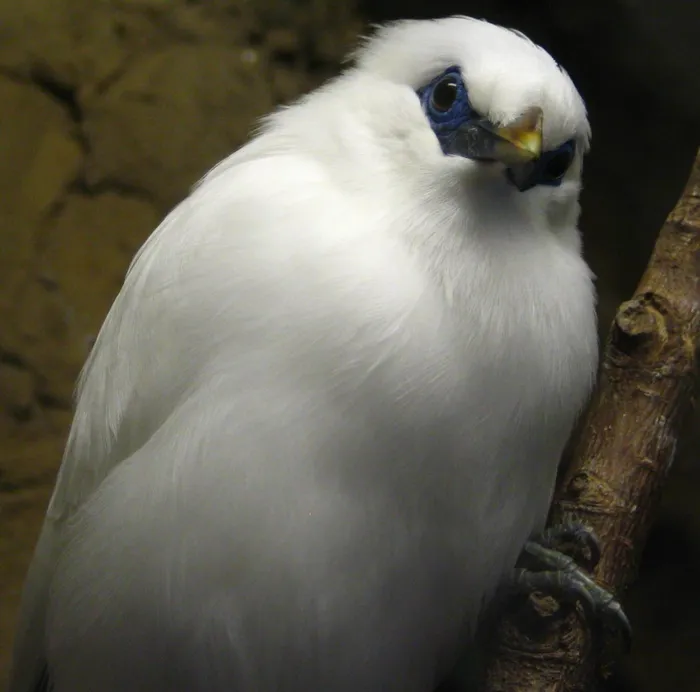
A distinctive white bird of Bali with blue skin around the eyes. Its story connects the bird trade, habitat, conservation breeding, and community stewardship.
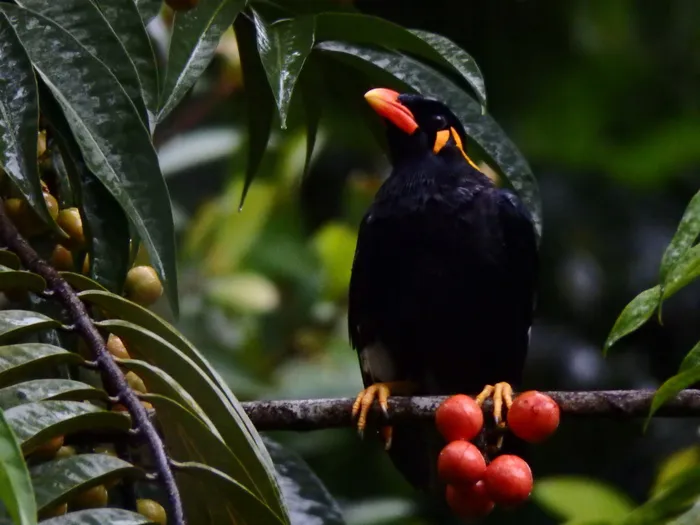
The common hill myna (Gracula religiosa) is a glossy black myna with yellow wattles, famous for its ability to mimic human speech.
The Nias hill myna (Gracula robusta), or beo nias, is the largest hill myna, endemic to Nias, North Sumatra's identity animal, and Critically Endangered.
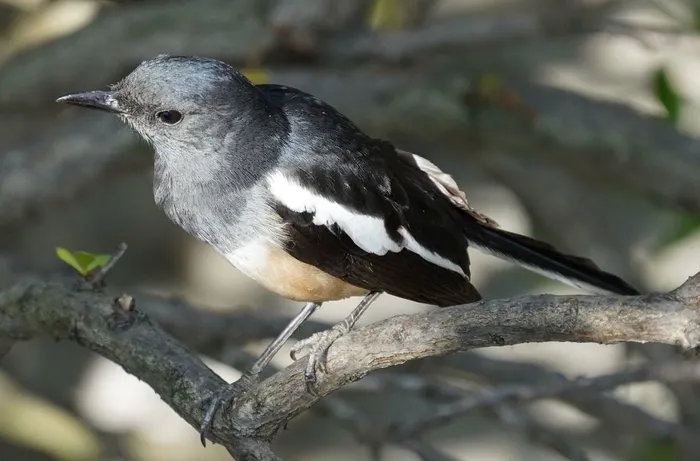
The oriental magpie-robin (Copsychus saularis) is a black-and-white songbird that was once common on Java but is now rare there because of trapping.
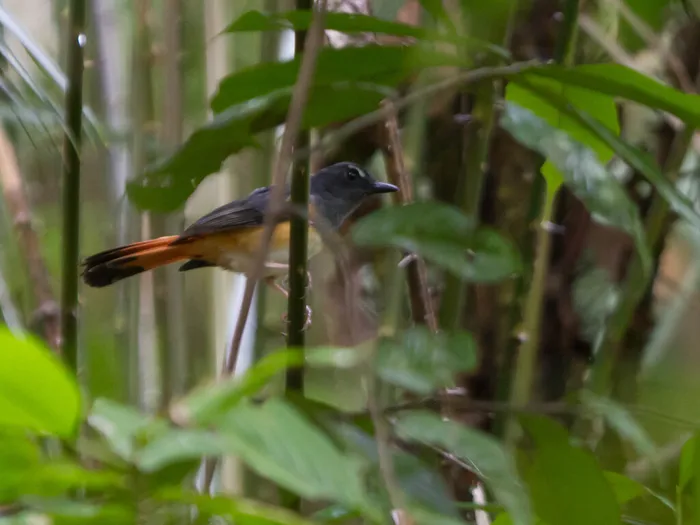
The rufous-tailed shama (Copsychus pyrropygus), Aceh's ceumpala kuneng, is a forest songbird of Sumatra and Borneo and Aceh's identity animal.
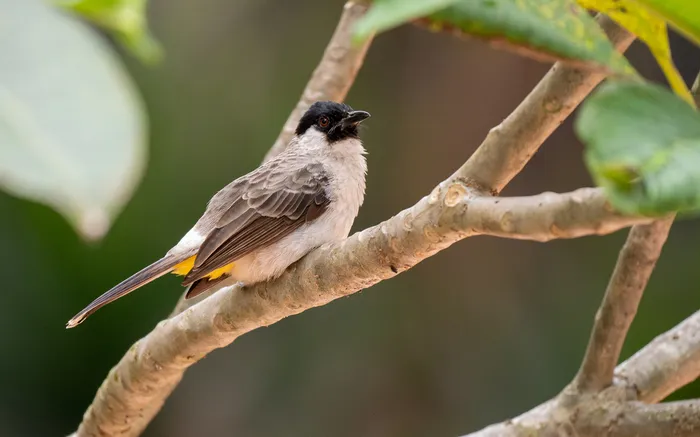
The sooty-headed bulbul (Pycnonotus aurigaster) is a black-capped bulbul native to Java and Bali, common in gardens and towns but widely trapped for sale.
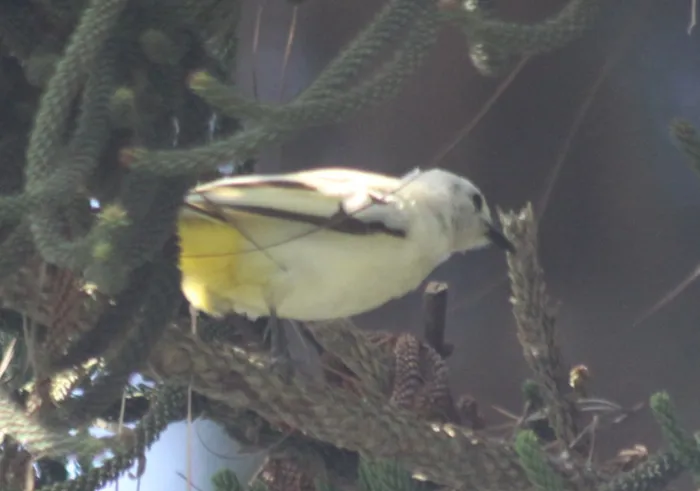
A songbird with a conspicuous yellow vent that often uses gardens, parks and forest edges. Local studies document fruit and insect feeding.
Support this cause from outside Indonesia
If you live outside Indonesia and want to fund work on this issue, you can fund frontline animal rescue with World Animal Rescue Network.
Related site: PanduanHewan’s founder is also a director of World Animal Rescue Network. PanduanHewan itself does not accept donations, and this invitation is not directed at people in Indonesia. Before giving to any organisation, check how it is registered and how it reports on spending.
An Indonesian organisation working on this cause?
Officially registered organisations (a yayasan or perkumpulan with legal status on AHU, and a PUB permit where they raise money from the public) can contact us to be listed on this cause page free of charge. Every request is checked first, and a listing is not an endorsement.
Sources and references
- Marshall et al. (2020) Spatio-temporal dynamics of consumer demand driving the Asian Songbird Crisis, Biological Conservation 241 ↗
- It's in the news: characterising Indonesia's wild bird trade network from media-reported seizure incidents (Biological Conservation, 2020) ↗
- IUCN Red List: Straw-headed Bulbul Pycnonotus zeylanicus (assessed 2020) ↗
- IUCN Red List: Javan Pied Starling Gracupica jalla (assessed 2024) ↗
- IUCN Red List: Black-winged Myna Acridotheres melanopterus (assessed 2021) ↗
- Disentangling the legal and illegal wildlife trade: insights from Indonesian wildlife market surveys (Animals, 2022) ↗
- JDIH BPK: UU No. 1 Tahun 2026 tentang Penyesuaian Pidana, halaman metadata ↗
- Rethinking extinction 'crises': the case of Asian songbird trade (Cambridge Prisms: Extinction, 2024) ↗
- IUCN SSC Asian Songbird Trade Specialist Group: home page ↗
- IUCN SSC Asian Songbird Trade Specialist Group: Priority Taxon List 2026 ↗
- The final straw? An overview of Straw-headed Bulbul Pycnonotus zeylanicus trade in Indonesia (Bird Conservation International, 2018) ↗
- Quantifying market prevalence, abundance, and suitable habitats of bulbuls in Java, Indonesia (Biological Conservation, 2025) ↗
- A silent morning: the songbird trade in Kalimantan, Indonesia (Tropical Conservation Science, 2018) ↗
- Comparisons of songbirds on sale across online and physical markets in Indonesia (Biodiversity and Conservation, 2024) ↗
- Characterizing bird-keeping user-groups on Java reveals distinct behaviours, profiles and potential for change (People and Nature, 2020) ↗
- Risk of secondary extinction in the Asian songbird trade, as exemplified by the selling of crested jayshrikes as master birds (Integrative Conservation, 2026) ↗
- Permen LHK P.106/MENLHK/SETJEN/KUM.1/12/2018 (JDIH Kementerian Kehutanan) ↗
- Using historical genome-wide DNA to unravel the confused taxonomy in a songbird lineage that is extinct in the wild (Evolutionary Applications, 2021) ↗
- Wildlife trade, captive breeding and the imminent extinction of a songbird (Global Ecology and Conservation, 2018) ↗
- Illegal trade pushing the Critically Endangered Black-winged Myna Acridotheres melanopterus towards imminent extinction (Bird Conservation International, 2016) ↗
- IUCN Red List: White-rumped Shama Copsychus malabaricus (assessed 2020) ↗
- Genomes from historic DNA unveil massive hidden extinction and terminal endangerment in a tropical Asian songbird radiation (Molecular Biology and Evolution, 2022) ↗
- Species+ (CITES): Leucopsar rothschildi, CITES listing ↗
- IUCN Red List: Bali Myna Leucopsar rothschildi (assessed 2020) ↗
- Tak masuk daftar dilindungi, burung berkicau tetap diproteksi (berita, 10 Oktober 2018) ↗
- UGM: Pakar UGM sayangkan pencabutan status lima jenis burung dari daftar dilindungi (11 Oktober 2018) ↗
- JDIH BPK: Permen LHK No. 18 Tahun 2024, halaman metadata ↗
- Species+ (CITES): Pycnonotus zeylanicus, CITES listing ↗
- Species+ (CITES): Copsychus malabaricus, CITES listing ↗
- JDIH BPK: Perda Kabupaten Purworejo No. 1 Tahun 2012 tentang Perburuan Burung, Ikan dan Satwa Liar Lainnya ↗
- JDIH BPK: UU No. 32 Tahun 2024, halaman metadata ↗
- JDIH BPK: UU No. 1 Tahun 2023 tentang KUHP, halaman metadata ↗
- JDIH BPK: UU No. 41 Tahun 2014 (perubahan UU 18/2009 tentang Peternakan dan Kesehatan Hewan) ↗
- A more-than-human political ecology of Indonesian songbird trade (Conservation Biology, 2026) ↗
- WHO fact sheet: Influenza (avian and other zoonotic) ↗
- Kemenkes: Tetap waspada risiko penularan flu burung pada manusia (20 Juni 2024) ↗
- Balai Karantina gagalkan penyelundupan 1.968 ekor burung tanpa dokumen (berita, 27 Januari 2025) ↗
- JDIH BPK: Permen LHK No. 17 Tahun 2024 tentang Penyelamatan Jenis Satwa ↗
- IUCN (2019) Guidelines for the management of confiscated, live organisms ↗
- Gakkum Kehutanan: kasus penyelundupan burung dalam paralon di Soekarno-Hatta dilimpahkan ke kejaksaan (17-18 April 2026) ↗
- Kemenhut gagalkan perdagangan 190 burung liar di pelabuhan Surabaya (berita, 3 September 2026) ↗
- Polri: Call Center 110 ↗
- Bird-keeping in Indonesia: conservation impacts and the potential for substitution-based conservation responses (Oryx, 2005) ↗
Checked 2026-10-01. Facts, figures and rules can change; check the date on the original source. Report errors through the corrections page. Send a correction