Quick answer
The issue in brief
Sumatran tigers are endangered because they are poached for their skins, bones, canine teeth and claws, injured or killed in snares set for wild pigs, losing their forests to land conversion and caught up in conflict with people. The government estimates about 600 remain in the wild (2026), and since the Javan and Bali tigers are extinct, the Sumatran tiger is Indonesia's last tiger. It is protected by law: hunting, keeping or trading a tiger or any of its parts carries a prison sentence of up to 15 years.
- IUCN status
- Critically Endangered, with a declining population source ↗
- Population estimate (2026)
- About 600 in the wild, from Aceh to Lampung source ↗
- Population viability analysis
- About 586 adult tigers (2013–2019 data) source ↗
- Habitat loss
- Potential population fell 16.7% in 12 years (2000–2012) source ↗
- Legal protection
- Listed as no. 56 in the annex to Ministerial Regulation P.106/2018 source ↗
- Penalty
- Up to 15 years in prison and/or a fine of up to Rp5 billion (Law 32/2024, Article 40A, as adjusted by Law 1/2026) source ↗
- International trade
- CITES Appendix I since 1975 source ↗
- Indonesia's last tiger
- Javan and Bali tigers listed as Extinct (IUCN 2003 and 2008) source ↗
Why are Sumatran tigers endangered?
The Sumatran tiger (Panthera tigris sumatrae) lives only on the island of Sumatra and is listed as Critically Endangered, meaning it faces a high risk of extinction in the wild. Its numbers are still falling; in July 2026 an official at the Ministry of Environment put the wild population at fewer than 600 individuals.
The main causes are linked. A review of the tiger's conservation status names three: the loss and fragmentation of forest, the direct killing of tigers and their prey, and retaliatory killing after conflict with villagers. In 2026 the Ministry of Forestry listed the same threats: poaching, snares, habitat degradation and conflict between people and wildlife.
Poaching does not always target tigers directly. Wire snares set for wild pigs also injure and kill tigers, while hunting of deer, muntjac and wild pigs leaves less food in the forest. Globally, the IUCN identifies hunting of tigers and their prey as the main driver of tiger decline; in Sumatra, researchers add continuing oil palm expansion and forest degradation.
Losing the tiger would mean more than losing one species. The Ministry of Forestry calls the Sumatran tiger a keystone species: protecting tigers means protecting the health of Sumatra's forests.
Evidence: BKSDA turunkan tim tangani kemunculan harimau di pemukiman masyarakat (ANTARA, 8 Jun 2026) ↗ · Siaran Pers BBTNBBS SP.460/T.7/TU/HMS.3/9/2025: Interaksi negatif antara manusia dan harimau sumatera (6 Sep 2025) ↗ · Smith, Wang & Carbone (2018) Evaluating the effect of forest loss and agricultural expansion on Sumatran tigers from scat surveys. Biological Conservation ↗ · Harimau Sumatera di Ambang Kepunahan, Populasi Kini di Bawah 600 Individu (Tribunnews, 29 Jul 2026) ↗ · Wibisono & Pusparini (2010) Sumatran tiger (Panthera tigris sumatrae): a review of conservation status. Integrative Zoology ↗ · Anak Harimau Sumatra yang Terdeteksi pada Tahun 2025 Kembali Terpantau Tumbuh Sehat di Alam Liar (Siaran Pers Kemenhut SP.312/HKLN/07/2026, 25 Jul 2026) ↗ · Kamera Trap Ungkap Keberadaan 42 Individu Harimau Sumatera di Bengkulu (Siaran Pers Kemenhut SP.148, 4 Agt 2025) ↗ · Kemenhut pastikan tindak tegas pelaku perburuan harimau Sumatera (ANTARA, 6 Mar 2025) ↗ · Harimau Sumatera Terperangkap Jerat di Pasaman, Pemasang Terancam Pidana (Kompas.com, 28 Mei 2026) ↗ · Kementerian Kehutanan Tegaskan Komitmen Perlindungan Harimau Sumatera dan Penindakan Tegas terhadap Pelaku Perburuan (Siaran Pers SP.022, 6 Mar 2025) ↗ · Hadi et al. (2025) Evaluating the efficacy of an integrated law enforcement approach to safeguarding Sumatran tigers and their prey. Journal of Environmental Management ↗ · IUCN Red List: Panthera tigris (Goodrich et al., 2022), e.T15955A214862019 ↗ · Luskin et al. (2017) Sumatran tiger survival threatened by deforestation despite increasing densities in parks. Nature Communications 8:1783 ↗
Why are Sumatran tigers poached, and for which body parts?
In short: their skins, bones, canine teeth, claws and meat. In a case uncovered by Aceh police in 2025, the evidence was one Sumatran tiger skin, 16 claws, two canines and several bones, including a skull. In Rokan Hulu, Riau, in March 2025, officers seized bones, skin and meat from a tiger that had died in a snare.
Why do people poach Sumatran tigers? According to the IUCN, skins, claws and canines are displayed as status symbols, canines and claws are worn as jewellery or amulets, and bones, meat and organs are believed to have healing properties in traditional Chinese medicine. Illegal trade in these high-value products is one of the primary threats to tigers.
Enforcement continues. In March 2025, six suspects were arrested for allegedly killing, transporting and skinning the snared tiger in Rokan Hulu. In 2025, forestry law enforcement officers (Gakkum) stopped an attempt to smuggle 12 tiger canines through Sam Ratulangi Airport in Manado. In July 2026, police in East Tanjung Jabung, Jambi, arrested a collector who had bought a tiger skin online to resell it; they acted on a tip from local people.
The effects show in the forest. In Ulu Masen, Aceh, a camera-trap survey identified 11 tigers: 8 males, only 1 female and 2 of unknown sex, a pattern researchers read as a sign of heavy poaching. A study in one of Asia's most important protected-area landscapes found that law enforcement responded to 26 tiger trafficking cases between 2010 and 2019, and concluded that the poaching threat persists despite snare removals and arrests.
Evidence: Penjual Organ Harimau Sumatera Ditangkap di Aceh, Kulit dan Taring Disita (Kompas.com, 8 Okt 2025) ↗ · Kementerian Kehutanan Tegaskan Komitmen Perlindungan Harimau Sumatera dan Penindakan Tegas terhadap Pelaku Perburuan (Siaran Pers SP.022, 6 Mar 2025) ↗ · IUCN Red List: Panthera tigris (Goodrich et al., 2022), e.T15955A214862019 ↗ · Ditjen Gakkumhut Tegaskan Tindak Penggunaan Kawasan Hutan Ilegal, Bongkar Tambang Ilegal, Serta Gagalkan Penyelundupan Satwa (Siaran Pers SP.061, 6 Mei 2025) ↗ · Polres Tanjab Timur tangkap seorang pelaku perdagangan kulit harimau (ANTARA Jambi, 15 Jul 2026) ↗ · Figel et al. (2024) Intact, under-patrolled forests harbor widespread prey but a male-biased tiger population in the Ulu Masen Ecosystem, Sumatra. Scientific Reports 14 ↗ · Hadi et al. (2025) Evaluating the efficacy of an integrated law enforcement approach to safeguarding Sumatran tigers and their prey. Journal of Environmental Management ↗
How do snares harm Sumatran tigers?
Many tigers are injured or killed not by targeted hunting but by wire snares set for wild pigs. The tiger that died in Rokan Hulu in March 2025 had been caught in a pig snare set by local people. The West Sumatra conservation agency (BKSDA) stresses that such snares also injure and kill tigers, sun bears and other wildlife.
Steel-wire snares tighten as an animal struggles. In May 2026, a female cub of about 9–11 months was found in a rubber garden in Pasaman with four snares around her neck and one on a foreleg. According to BKSDA staff, if an animal stays snared for two days its wounds can start to rot and it may not survive.
Even tigers that survive may lose their chance to return to the wild. Two tigers now cared for at a licensed conservation facility in Lampung each had a leg amputated after being caught in poachers' snares, so they can no longer be released to live independently.
Snare-removal patrols work. In Kerinci Seblat National Park, 4,433 snares were removed during 642 patrols between 2000 and 2010; another study recorded 780 snares removed in 2015–2019. Patrols prompted by tip-offs from local informants were more than 40% more likely to find snares than routine patrols, so public reports really matter.
There are rules too. Ministerial Instruction INS.1/MENLHK/SETJEN/KUM.1/6/2022 told ministry staff, governors, regents and mayors to take an active part in saving wildlife from snaring and hunting. In 2026 the West Sumatra BKSDA issued Circular No. 1 of 2026 banning sling or steel-wire snares for wild pig control, and Aceh's Qanun No. 11 of 2019 prohibits snaring protected wildlife.
Evidence: Kemenhut pastikan tindak tegas pelaku perburuan harimau Sumatera (ANTARA, 6 Mar 2025) ↗ · Kementerian Kehutanan Tegaskan Komitmen Perlindungan Harimau Sumatera dan Penindakan Tegas terhadap Pelaku Perburuan (Siaran Pers SP.022, 6 Mar 2025) ↗ · Harimau Sumatera Terperangkap Jerat di Pasaman, Pemasang Terancam Pidana (Kompas.com, 28 Mei 2026) ↗ · Harimau Sumatera Terjerat Lima Perangkap Babi di Pasaman, BKSDA Lakukan Evakuasi (Kompas.com, 21 Mei 2026) ↗ · Anak Harimau Sumatera di Pasaman Nyaris Tewas, BKSDA: Terlambat Sehari Luka Bisa Membusuk (Kompas.com, 22 Mei 2026) ↗ · ANTARA Lampung (22 Mei 2026): Kemenhut-Pemprov Lampung optimistis populasi harimau sumatra terus berlanjut ↗ · Linkie et al. (2015) Safeguarding Sumatran tigers: evaluating effectiveness of law enforcement patrols and local informant networks. Journal of Applied Ecology ↗ · Hadi et al. (2025) Evaluating the efficacy of an integrated law enforcement approach to safeguarding Sumatran tigers and their prey. Journal of Environmental Management ↗ · Instruksi Penyelamatan Satwa Liar dari Jerat dan Perburuan Telah Dikeluarkan, Implementasi Lapangan? (Mongabay Indonesia, 8 Jul 2022) ↗ · Qanun Aceh Nomor 11 Tahun 2019 tentang Pengelolaan Satwa Liar (teks, JDIH BPK) ↗
How does habitat loss threaten Sumatran tigers?
Sumatran tigers are most abundant in lowland and hill forests; densities are much lower in peat swamp and montane forests. In primary forest, tiger densities are 47% higher than in forest degraded by logging. The problem is that high-quality lowland and hill primary forest is exactly what has been lost fastest.
A study in Nature Communications estimated that Sumatra's tiger numbers fell from about 742 in 2000 to about 618 in 2012; land-use change cut the island's potential tiger population by 16.7% in only 12 years. The researchers name continuing oil palm expansion and forest degradation as ongoing threats.
What forest remains is fragmented. According to the same study, only two robust populations are left, in Gunung Leuser and Kerinci Seblat. Genetic analysis of tiger scats shows the population becoming subdivided because of deforestation and land conversion over the past 30–40 years. In July 2026, a Ministry of Environment official warned that broken forest corridors force tigers into small isolated groups, leading to inbreeding.
According to the environment and forestry ministry (2019), about half of Sumatran tigers live outside conservation areas, in production and protection forests, so their future also depends on how forests outside national parks are managed. Enforcement against habitat destruction matters too: in May 2026 forestry law enforcement officers named a suspect for moving undocumented timber in Bukit Tiga Puluh National Park, Riau, a Sumatran tiger habitat.
Evidence: Luskin et al. (2017) Sumatran tiger survival threatened by deforestation despite increasing densities in parks. Nature Communications 8:1783 ↗ · Smith, Wang & Carbone (2018) Evaluating the effect of forest loss and agricultural expansion on Sumatran tigers from scat surveys. Biological Conservation ↗ · Harimau Sumatera di Ambang Kepunahan, Populasi Kini di Bawah 600 Individu (Tribunnews, 29 Jul 2026) ↗ · KLHK: Populasi Harimau Sumatera Tersisa 603 Ekor (detikNews, 29 Jul 2019) ↗ · Kayu Ilegal di Habitat Harimau Sumatera, Gakkum Kehutanan Tetapkan Tersangka dan Dalami Alur Peredarannya (Siaran Pers Gakkum Kehutanan, 21 Mei 2026) ↗ · IUCN Red List: Panthera tigris (Goodrich et al., 2022), e.T15955A214862019 ↗
How many Sumatran tigers are left in the wild?
There is no exact figure, but the latest official estimates are around 600. In May 2026 the Ministry of Forestry's Director General of Conservation (KSDAE) put the population at about 600, spread from Aceh to Lampung, and in July 2026 a Ministry of Environment official said fewer than 600 remained.
These figures come from a population viability analysis (PVA). The analysis behind the 2018–2028 national Sumatran tiger conservation strategy and action plan estimated 604 wild tigers in 23 landscapes, and in 2019 the environment and forestry ministry reported 603 individuals in 23 habitat patches. Data compiled for the PVA estimated about 586 adult tigers in 2013–2019, while the carrying capacity of all habitat in Sumatra was put at about 1,400. To update the data, a Sumatra-wide tiger survey has been running in 23 landscapes since 2018.
Why do different numbers appear? In March 2024 the then environment and forestry minister said that, based on reports, more than a thousand tigers remained, yet the PVA result quoted in the same news report was about 586 adults. Scientific estimates also carry wide margins: one island-wide estimate was 618 ± 290 tigers for 2012. So 'about 600' is a best estimate, not a head count.
There is some good local news. Camera traps run by the Bengkulu-Lampung BKSDA detected 42 individuals in three landscapes between 2020 and 2025. Two cubs first recorded in the Kerinci Seblat landscape in September 2025 were filmed again, healthy, in 2026, and three cubs were reported born in the wild in Way Kambas.
For comparison, the IUCN estimates that only 3,726 to 5,578 wild tigers remain worldwide, in ten countries.
Evidence: ANTARA Lampung (22 Mei 2026): Kemenhut-Pemprov Lampung optimistis populasi harimau sumatra terus berlanjut ↗ · Harimau Sumatera di Ambang Kepunahan, Populasi Kini di Bawah 600 Individu (Tribunnews, 29 Jul 2026) ↗ · Melihat Strategi dan Rencana Aksi Konservasi Harimau Sumatera 2018-2028. Seperti Apa? (Mongabay Indonesia, 24 Sep 2017) ↗ · KLHK: Populasi Harimau Sumatera Tersisa 603 Ekor (detikNews, 29 Jul 2019) ↗ · Menteri LHK sebut ada lebih seribu ekor harimau sumatra di Sumatera (ANTARA, 6 Mar 2024) ↗ · Luskin et al. (2017) Sumatran tiger survival threatened by deforestation despite increasing densities in parks. Nature Communications 8:1783 ↗ · Kamera Trap Ungkap Keberadaan 42 Individu Harimau Sumatera di Bengkulu (Siaran Pers Kemenhut SP.148, 4 Agt 2025) ↗ · Anak Harimau Sumatra yang Terdeteksi pada Tahun 2025 Kembali Terpantau Tumbuh Sehat di Alam Liar (Siaran Pers Kemenhut SP.312/HKLN/07/2026, 25 Jul 2026) ↗ · IUCN Red List: Panthera tigris (Goodrich et al., 2022), e.T15955A214862019 ↗
Why do tigers enter villages, and how can people and tigers coexist?
According to the KSDAE Director General, the conversion of forest to farmland drives the high level of conflict between people and tigers. An outbreak of African swine fever a few years ago also hit wild pigs, the tiger's main prey in Sumatra, although the Ministry of Forestry says prey availability is now recovering. Young tigers that have just left their mothers must also find territory of their own; when forest shrinks, the nearest village can become their destination.
Around Kerinci Seblat, the chance of meeting a tiger was most closely linked to distance from forest and rivers, landscape connectivity, human population density and tiger presence. Between 2000 and 2013 the area recorded 106 sightings, 83 attacks on livestock, 12 attacks on people and 27 tigers removed, typically by snare or poison.
Conflict harms both sides. In West Lampung, four people died and one was injured in 11 months (February 2024 to January 2025), and in May 2025 a man carrying out illegal activities inside Bukit Barisan Selatan National Park was also killed. In July 2026, two people were killed by a tiger around plantation-forestry camps in Pelalawan, Riau.
Officials usually respond with field checks, camera traps to identify the individual tiger, patrols, outreach and mapping of conflict-prone areas. Teams may drive a tiger away from settlements or set a box trap if it keeps returning; a captured tiger is examined by vets.
Coexistence means preventing attacks before they happen. The West Sumatra BKSDA has worked with villagers to build communal tiger-proof livestock enclosures fenced with three-metre barbed wire. Research in Kerinci Seblat estimated that early intervention in high-risk locations could have prevented up to 51% of attacks on livestock and people and saved 15 tigers. IUCN guidelines also warn that moving an animal can simply move the problem elsewhere.
Evidence: ANTARA Lampung (22 Mei 2026): Kemenhut-Pemprov Lampung optimistis populasi harimau sumatra terus berlanjut ↗ · Harimau Mangsa Ternak Warga di Sumatera Barat, Pola Pemeliharaan Perlu Diperhatikan (Mongabay Indonesia, 16 Mar 2023) ↗ · Struebig et al. (2018) Addressing human-tiger conflict using socio-ecological information on tolerance and risk. Nature Communications 9:3455 ↗ · Siaran Pers BBTNBBS SP.224/T.7/TU/HUMAS/5/2025: Interaksi negatif harimau sumatera dan manusia yang beraktivitas ilegal di dalam kawasan kembali menyebabkan korban jiwa (27 Mei 2025) ↗ · BBKSDA Riau pasang kandang jebak usai dua orang tewas diterkam harimau (ANTARA, 13 Jul 2026) ↗ · Siaran Pers BBTNBBS SP.460/T.7/TU/HMS.3/9/2025: Interaksi negatif antara manusia dan harimau sumatera (6 Sep 2025) ↗ · BKSDA turunkan tim tangani kemunculan harimau di pemukiman masyarakat (ANTARA, 8 Jun 2026) ↗ · Balai KSDA Sumatera Barat Evakuasi Harimau Sumatera yang Masuk Perangkap di Area Permukiman dan Sekolah (Siaran Pers SP.397/HKLN/08/2026, 12 Agt 2026) ↗ · Penanganan Interaksi Negatif Harimau Sumatera di Kab. Indragiri Hilir, Riau (Siaran Pers Kemenhut SP.088, 2 Jun 2025) ↗ · Lindungi ternak dari harimau, BKSDA Sumbar bangun kandang komunal (ANTARA, 29 Feb 2024) ↗ · IUCN SSC Guidelines on Human-Wildlife Conflict and Coexistence, first edition (IUCN, 2023) ↗
What should you do if a tiger is seen near a village?
Keep away and report it. Do not approach, chase or try to catch the tiger. Report the sighting straight away to the nearest conservation agency office (BKSDA) or national park office, or to local officials; in an emergency, call the police on 110.
Also report signs of a tiger, such as footprints, droppings or the remains of prey, so officers can act before anyone is hurt. While a tiger is in the area, officials advise people not to travel alone, especially in the late afternoon and at night, and not to go into forest that is tiger habitat. Keep livestock in secure pens; in some conflict-prone villages the BKSDA has built communal tiger-proof enclosures.
Do not gather round or move closer to take photos. In Pasaman, a snared cub kept struggling because it was surrounded by people, which made its injuries worse. Never set snares, poison or high-voltage electric fences to drive tigers off: they can kill protected animals and can lead to prosecution.
If anyone is injured, take them to the nearest health facility straight away.
Evidence: Balai KSDA Sumatera Barat Evakuasi Harimau Sumatera yang Masuk Perangkap di Area Permukiman dan Sekolah (Siaran Pers SP.397/HKLN/08/2026, 12 Agt 2026) ↗ · BKSDA turunkan tim tangani kemunculan harimau di pemukiman masyarakat (ANTARA, 8 Jun 2026) ↗ · Permen LHK No. 17 Tahun 2024 tentang Penyelamatan Jenis Satwa (teks resmi, JDIH BPK) ↗ · Call Center 110 (Polri) ↗ · Siaran Pers BBTNBBS SP.460/T.7/TU/HMS.3/9/2025: Interaksi negatif antara manusia dan harimau sumatera (6 Sep 2025) ↗ · Anak Harimau Sumatera di Pasaman Nyaris Tewas, BKSDA: Terlambat Sehari Luka Bisa Membusuk (Kompas.com, 22 Mei 2026) ↗ · Lindungi ternak dari harimau, BKSDA Sumbar bangun kandang komunal (ANTARA, 29 Feb 2024) ↗
How are Sumatran tigers rescued, rehabilitated and released?
Wildlife rescue is governed by Ministerial Regulation No. 17 of 2024 on species rescue (in force since 15 October 2024) and carried out by a team appointed by the head of the BKSDA or national park office. Animals coming from conflict with people are covered, and every step must follow animal welfare principles.
The stages can include evacuation from a dangerous site, assessment of the animal's medical condition and behaviour, rehabilitation to restore its health and natural behaviour, habituation to habitat conditions, and release within its natural range. Animals that cannot be released may be placed in a licensed conservation facility. The regulation also provides for euthanasia, which must follow veterinary, ethical and welfare procedures.
A recent example: a female cub of about 18 months was moved away from settlements in Serbajadi, East Aceh, in August 2026. After health monitoring and observation of her wild behaviour and hunting instinct in a habituation enclosure, the Aceh BKSDA released her into Gunung Leuser National Park on 10 September 2026.
Not every tiger can go back. Two tigers that lost a leg to snares are now cared for in a conservation facility because they can no longer live independently in the wild. Health checks matter too: canine distemper virus antibodies were found in 9 of 21 wild-caught Sumatran tigers, and ticks taken from conflict tigers in West Sumatra carried Rickettsia and Anaplasma bacteria that can potentially infect people.
IUCN guidelines stress that any release must deliver a measurable conservation benefit and be followed by monitoring.
Evidence: Database Peraturan BPK: Permen LHK No. 17 Tahun 2024 ↗ · Permen LHK No. 17 Tahun 2024 tentang Penyelamatan Jenis Satwa (teks resmi, JDIH BPK) ↗ · Anak Harimau Sumatra Jering Dilepasliarkan ke TNGL Setelah Sehat (IDN Times Sumut, 15 Sep 2026) ↗ · ANTARA Lampung (22 Mei 2026): Kemenhut-Pemprov Lampung optimistis populasi harimau sumatra terus berlanjut ↗ · Mulia et al. (2021) Exposure of Wild Sumatran Tiger (Panthera tigris sumatrae) to Canine Distemper Virus. Journal of Wildlife Diseases ↗ · Hidayati et al. (2026) Identification of ticks from conflict Sumatran tigers in Bukittinggi, West Sumatra, Indonesia. Open Veterinary Journal 16(2) ↗ · IUCN/SSC Guidelines for Reintroductions and Other Conservation Translocations, Version 1.0 (IUCN, 2013) ↗
Is the Sumatran tiger protected by law?
Yes. The Sumatran tiger (Panthera tigris sumatrae) is listed as no. 56 in the annex to Ministerial Regulation P.106/MENLHK/SETJEN/KUM.1/12/2018 on protected plant and animal species.
Law No. 5 of 1990, as amended by Law No. 32 of 2024 (enacted 7 August 2024), bans anyone from hunting, catching, injuring, killing, keeping, owning, rearing, transporting or trading protected animals, alive or dead (Article 21(2)). Point (c) extends the ban to specimens, body parts and goods made from them, including tiger skins, canines, claws and bones.
Penalties are set in Article 40A(1). As enacted, it set 3 to 15 years in prison plus a category IV to VII fine; since 2 January 2026, Law 1/2026 on criminal-penalty adjustment has removed that minimum, so the penalty is up to 15 years in prison and/or a fine of up to category VII, which is Rp5 billion under Article 79 of the Criminal Code. Sentences can be increased by a third if the offence uses information technology, such as online trading. Tiger-skin sellers arrested in Aceh (2025) and Jambi (2026) were charged under Article 40A(1)(f) in conjunction with Article 21(2)(c).
Cruelty to animals can also be prosecuted under Article 337 of the new Criminal Code (Law No. 1 of 2023, in force since 2 January 2026). Article 66A of Law No. 41 of 2014 prohibits animal abuse and obliges anyone who knows of it to report it to the authorities. In Aceh, Qanun No. 11 of 2019 on wildlife management prohibits snaring and poisoning protected wildlife.
Internationally, all tiger subspecies have been listed in CITES Appendix I since 1975, so all international commercial trade in tigers and their parts has long been prohibited. The IUCN assessed the tiger as Endangered in 2022, while the Sumatran tiger is listed as Critically Endangered.
Evidence: Permen LHK P.106/MENLHK/SETJEN/KUM.1/12/2018 tentang Jenis Tumbuhan dan Satwa yang Dilindungi (lampiran) ↗ · UU No. 32 Tahun 2024 tentang Perubahan atas UU No. 5 Tahun 1990 (teks resmi, JDIH BPK) ↗ · UU No. 1 Tahun 2023 tentang KUHP (teks resmi, JDIH BPK) ↗ · Penjual Organ Harimau Sumatera Ditangkap di Aceh, Kulit dan Taring Disita (Kompas.com, 8 Okt 2025) ↗ · Polres Tanjab Timur tangkap seorang pelaku perdagangan kulit harimau (ANTARA Jambi, 15 Jul 2026) ↗ · Database Peraturan BPK: UU No. 1 Tahun 2023 tentang KUHP ↗ · UU No. 41 Tahun 2014 tentang Perubahan atas UU No. 18 Tahun 2009 tentang Peternakan dan Kesehatan Hewan (teks resmi, JDIH BPK) ↗ · Qanun Aceh Nomor 11 Tahun 2019 tentang Pengelolaan Satwa Liar (teks, JDIH BPK) ↗ · Database Peraturan BPK: Qanun Provinsi Aceh Nomor 11 Tahun 2019 tentang Pengelolaan Satwa Liar ↗ · IUCN Red List: Panthera tigris (Goodrich et al., 2022), e.T15955A214862019 ↗ · Siaran Pers BBTNBBS SP.460/T.7/TU/HMS.3/9/2025: Interaksi negatif antara manusia dan harimau sumatera (6 Sep 2025) ↗ · UU No. 1 Tahun 2026 tentang Penyesuaian Pidana (JDIH BPK) ↗
Are the Javan and Bali tigers extinct?
Yes, both are extinct. The Javan tiger (Panthera tigris sondaica) and the Bali tiger (Panthera tigris balica) were categorised as Extinct on the IUCN Red List in 2003 and 2008. The Sumatran tiger is now the only tiger left in Indonesia.
The Bali tiger died out around the 1940s. The last confirmed sighting of a Javan tiger was in Meru Betiri National Park, East Java, in 1976, and a survey with 35 camera traps there in 1999–2000 found no tigers. The Javan tiger was hunted as a pest while its habitat was converted to farmland and infrastructure.
What about claims that the Javan tiger has been rediscovered? In 2024 a study in the journal Oryx analysed DNA from a single hair found in Sukabumi, West Java, but its authors said that whether the Javan tiger still survives in the wild needs to be confirmed by further genetic and field studies. Reanalyses by other scientists, including one involving an author of the original study, found the data unreliable and the subspecies impossible to confirm. The Indonesian government still describes the Javan and Bali tigers as extinct.
The three tigers are very closely related; the Sumatran tiger is the closest living relative of the Javan and Bali tigers. Some scientists group all three as a single subspecies, the Sunda tiger (Panthera tigris sondaica), so the Sumatran tiger's scientific name is sometimes written that way, while P.106/2018 and the IUCN use Panthera tigris sumatrae.
Evidence: Wirdateti et al. (2024) Is the Javan tiger Panthera tigris sondaica extant? DNA analysis of a recent hair sample. Oryx 58(4) ↗ · IUCN Red List: Panthera tigris (Goodrich et al., 2022), e.T15955A214862019 ↗ · Xue et al. (2015) Genetic ancestry of the extinct Javan and Bali tigers. Journal of Heredity ↗ · Sui et al. (2024) No Reliable Evidence Supports the Presence of Javan Tigers (bioRxiv preprint) ↗ · Khan et al. (2024) Reanalysis of sequences of alleged Javan tiger highlights the difficulties in studying big cats (bioRxiv preprint) ↗ · Harimau Sumatera di Ambang Kepunahan, Populasi Kini di Bawah 600 Individu (Tribunnews, 29 Jul 2026) ↗ · Wilting et al. (2015) Planning tiger recovery: Understanding intraspecific variation for effective conservation. Science Advances 1(5):e1400175 ↗ · Permen LHK P.106/MENLHK/SETJEN/KUM.1/12/2018 tentang Jenis Tumbuhan dan Satwa yang Dilindungi (lampiran) ↗
Timeline
- 1975 All tiger subspecies listed in CITES Appendix I; international commercial trade banned. source ↗
- 1976 Last confirmed sighting of a Javan tiger, in Meru Betiri National Park. source ↗
- 2000 Sumatra's tiger numbers estimated at about 742. source ↗
- 2003 IUCN lists the Javan and Bali tigers as Extinct (confirmed again in 2008). source ↗
- 2012 Island-wide estimate of 618 ± 290 tigers as forest loss continues. source ↗
- 2018 Sumatran tiger listed as no. 56 in the annex to Ministerial Regulation P.106/2018. source ↗
- 2019-07 Ministry reports a PVA figure of 603 tigers in 23 habitat patches. source ↗
- 2019-10 Aceh's Qanun No. 11/2019 bans snaring and poisoning protected wildlife. source ↗
- 2022-06 Ministerial Instruction INS.1/2022 on protecting wildlife from snaring and hunting. source ↗
- 2024-03 PVA data cited by the ministry: about 586 adult tigers (2013–2019). source ↗
- 2024-03 A hair study from Sukabumi sparks Javan tiger claims; its authors say confirmation is needed. source ↗
- 2024-08 Law No. 32 of 2024, amending the 1990 conservation law (Law No. 5 of 1990), is enacted. source ↗
- 2024-10 Ministerial Regulation No. 17/2024 on species rescue comes into force. source ↗
- 2025-03 Six suspects arrested after a snared tiger is killed and skinned in Rokan Hulu, Riau. source ↗
- 2025-05 National park reports four deaths and one injury from tiger conflict in West Lampung in 11 months. source ↗
- 2025-10 Aceh police arrest a seller of tiger skin, claws, canines and bones. source ↗
- 2026-01 New Criminal Code, including Article 337 on animal cruelty, comes into force. source ↗
- 2026-05 Cub caught in five snares rescued in Pasaman; West Sumatra BKSDA bans wire snares for wild pigs. source ↗
- 2026-05 Ministry estimates the population at about 600. source ↗
- 2026-07 Collector who bought a tiger skin online arrested in Jambi. source ↗
- 2026-07 Two cubs in Kerinci Seblat recorded again in good health. source ↗
- 2026-09 Female cub released into Gunung Leuser National Park after habituation. source ↗
How to help
- Never buy, accept, keep or display tiger skins, canines, claws, bones or 'amulets', including items offered online. All of these are banned under Article 21(2)(c) of Law 32/2024.
- Do not share posts selling tiger parts. Save the link or a screenshot, report it to the platform, then report it to forestry law enforcement (Gakkum) at pengaduan.gakkum.kehutanan.go.id or to the nearest BKSDA office.
- Report poaching, snares or tiger trade to the BKSDA or national park office, to Gakkum, or to the police on 110. Tip-offs from the public often start an investigation.
- If you find a snare or a snared animal, keep away and do not try to free it yourself. Note the location and report it to the BKSDA straight away.
- If a tiger is seen near a village, keep away, do not approach or chase it, do not gather round, and report it to the BKSDA or local officials. If anyone is hurt, take them to a health facility straight away.
- Never set snares, poison or high-voltage electric fences, and do not hunt the wild pigs, deer and muntjac that tigers depend on.
- In conflict-prone villages, keep livestock in secure pens and support communal tiger-proof enclosures built with the BKSDA.
- Do not clear land or work without a permit inside national parks and forests that are tiger habitat.
- PanduanHewan does not take donations. Before giving to any tiger appeal, check the organisation with this site's 'how to check an appeal' checklist, and choose a registered, transparent organisation.
- Do not pay to pose with, touch or feed tigers, and do not share content that promotes it. If you want to volunteer, choose programmes that offer no direct contact with tigers: genuine rehabilitation protects an animal's wild behaviour so it can return to the wild.
Common questions
Which body parts are Sumatran tigers poached for?
Skins, bones, canine teeth, claws and meat. Evidence in a 2025 case in Aceh, for example, included a skin, 16 claws, two canines and bones, including a skull.
Source: Penjual Organ Harimau Sumatera Ditangkap di Aceh, Kulit dan Taring Disita (Kompas.com, 8 Okt 2025) ↗ · Kementerian Kehutanan Tegaskan Komitmen Perlindungan Harimau Sumatera dan Penindakan Tegas terhadap Pelaku Perburuan (Siaran Pers SP.022, 6 Mar 2025) ↗
Why do people poach Sumatran tigers?
Because their parts sell: skins, claws and canines are displayed as status symbols or worn as amulets, while bones and organs are believed to have healing properties in traditional medicine. All of this trade is illegal.
Source: IUCN Red List: Panthera tigris (Goodrich et al., 2022), e.T15955A214862019 ↗ · IUCN Red List: Panthera tigris (Goodrich et al., 2022), e.T15955A214862019 ↗ · IUCN Red List: Panthera tigris (Goodrich et al., 2022), e.T15955A214862019 ↗ · UU No. 32 Tahun 2024 tentang Perubahan atas UU No. 5 Tahun 1990 (teks resmi, JDIH BPK) ↗
Why are Sumatran tigers critically endangered?
Because of poaching and snares, the loss and fragmentation of forest, and conflict with people that ends with tigers being killed.
Source: Wibisono & Pusparini (2010) Sumatran tiger (Panthera tigris sumatrae): a review of conservation status. Integrative Zoology ↗ · Anak Harimau Sumatra yang Terdeteksi pada Tahun 2025 Kembali Terpantau Tumbuh Sehat di Alam Liar (Siaran Pers Kemenhut SP.312/HKLN/07/2026, 25 Jul 2026) ↗
How many Sumatran tigers are left in the wild?
About 600, according to the Ministry of Forestry's May 2026 estimate. A population viability analysis put the number of adults at about 586 for 2013–2019.
Source: ANTARA Lampung (22 Mei 2026): Kemenhut-Pemprov Lampung optimistis populasi harimau sumatra terus berlanjut ↗ · Menteri LHK sebut ada lebih seribu ekor harimau sumatra di Sumatera (ANTARA, 6 Mar 2024) ↗
Is the Sumatran tiger extinct?
No. Sumatran tigers still live in the wild in Sumatra, but they are Critically Endangered and their numbers are falling.
Source: Siaran Pers BBTNBBS SP.460/T.7/TU/HMS.3/9/2025: Interaksi negatif antara manusia dan harimau sumatera (6 Sep 2025) ↗ · Anak Harimau Sumatra yang Terdeteksi pada Tahun 2025 Kembali Terpantau Tumbuh Sehat di Alam Liar (Siaran Pers Kemenhut SP.312/HKLN/07/2026, 25 Jul 2026) ↗
Is the Sumatran tiger protected in Indonesia?
Yes. It is listed as no. 56 in the annex to Ministerial Regulation P.106/2018. Hunting, keeping or trading it, or any of its parts, carries up to 15 years in prison under Law 32/2024, as adjusted by Law 1/2026.
Source: Permen LHK P.106/MENLHK/SETJEN/KUM.1/12/2018 tentang Jenis Tumbuhan dan Satwa yang Dilindungi (lampiran) ↗ · UU No. 32 Tahun 2024 tentang Perubahan atas UU No. 5 Tahun 1990 (teks resmi, JDIH BPK) ↗ · UU No. 32 Tahun 2024 tentang Perubahan atas UU No. 5 Tahun 1990 (teks resmi, JDIH BPK) ↗ · UU No. 1 Tahun 2026 tentang Penyesuaian Pidana (JDIH BPK) ↗
Is it legal to keep a tiger skin, tooth or claw as an amulet?
No. Article 21(2)(c) of Law 32/2024 bans keeping, owning, transporting and trading parts of protected animals, including items bought online.
Source: UU No. 32 Tahun 2024 tentang Perubahan atas UU No. 5 Tahun 1990 (teks resmi, JDIH BPK) ↗ · Polres Tanjab Timur tangkap seorang pelaku perdagangan kulit harimau (ANTARA Jambi, 15 Jul 2026) ↗ · UU No. 32 Tahun 2024 tentang Perubahan atas UU No. 5 Tahun 1990 (teks resmi, JDIH BPK) ↗
When did the Javan and Bali tigers go extinct?
The Bali tiger died out around the 1940s. The last confirmed Javan tiger sighting was in 1976 in Meru Betiri; the IUCN lists both as Extinct.
Source: Xue et al. (2015) Genetic ancestry of the extinct Javan and Bali tigers. Journal of Heredity ↗ · Wirdateti et al. (2024) Is the Javan tiger Panthera tigris sondaica extant? DNA analysis of a recent hair sample. Oryx 58(4) ↗ · Wirdateti et al. (2024) Is the Javan tiger Panthera tigris sondaica extant? DNA analysis of a recent hair sample. Oryx 58(4) ↗
Has the Javan tiger been rediscovered?
There is no convincing evidence. A 2024 study of a hair from Sukabumi said further confirmation was needed, and reanalyses found its data unreliable.
Source: Wirdateti et al. (2024) Is the Javan tiger Panthera tigris sondaica extant? DNA analysis of a recent hair sample. Oryx 58(4) ↗ · Sui et al. (2024) No Reliable Evidence Supports the Presence of Javan Tigers (bioRxiv preprint) ↗ · Khan et al. (2024) Reanalysis of sequences of alleged Javan tiger highlights the difficulties in studying big cats (bioRxiv preprint) ↗
Are there still wild tigers in Bali or Java?
No. The Sumatran tiger is the only tiger left in Indonesia, and it lives only on the island of Sumatra.
Source: Wirdateti et al. (2024) Is the Javan tiger Panthera tigris sondaica extant? DNA analysis of a recent hair sample. Oryx 58(4) ↗ · BKSDA turunkan tim tangani kemunculan harimau di pemukiman masyarakat (ANTARA, 8 Jun 2026) ↗
What would happen if the Sumatran tiger went extinct?
Sumatra's forests would lose a keystone species. The Ministry of Forestry says protecting tigers means protecting the health of Sumatra's forest ecosystems.
How can I help Sumatran tigers?
Never buy or keep tiger parts, never set snares, report poaching or trade to forestry law enforcement (Gakkum), the BKSDA or the police on 110, and do not hunt the tiger's prey.
Source: Kementerian Kehutanan Tegaskan Komitmen Perlindungan Harimau Sumatera dan Penindakan Tegas terhadap Pelaku Perburuan (Siaran Pers SP.022, 6 Mar 2025) ↗ · Kementerian Kehutanan Tegaskan Komitmen Perlindungan Harimau Sumatera dan Penindakan Tegas terhadap Pelaku Perburuan (Siaran Pers SP.022, 6 Mar 2025) ↗ · Pengaduan Penegakan Hukum Kehutanan (Ditjen Gakkum Kehutanan) ↗ · Call Center 110 (Polri) ↗ · BKSDA turunkan tim tangani kemunculan harimau di pemukiman masyarakat (ANTARA, 8 Jun 2026) ↗
Animals involved
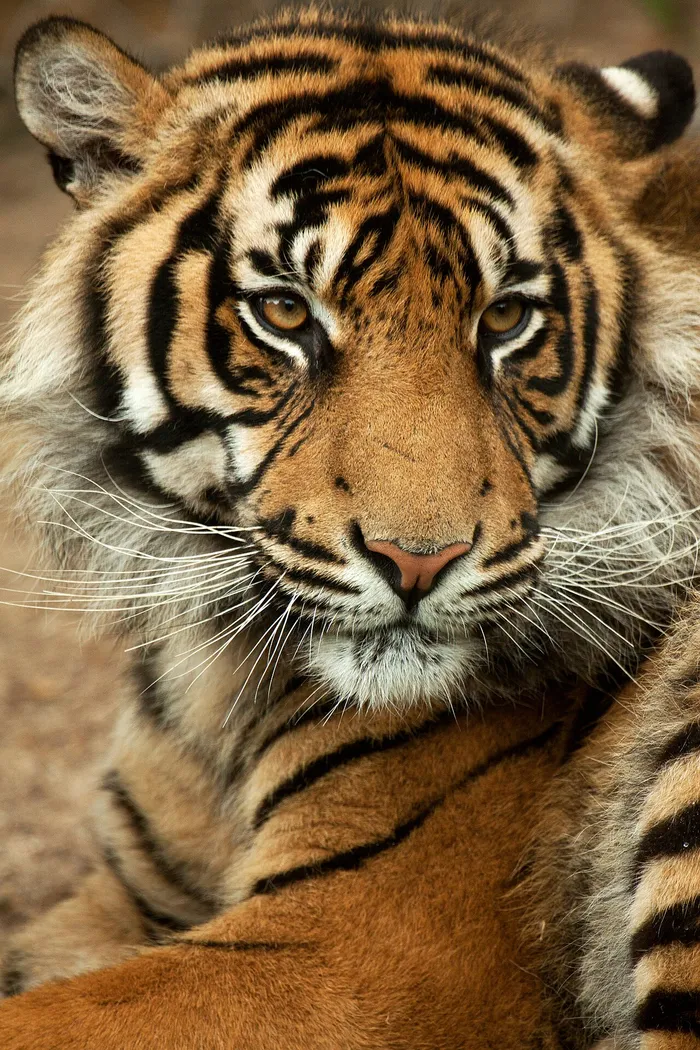
The last surviving Sunda Island tiger population lives in Sumatra. Protecting forest, prey, and movement routes supports a whole living landscape.
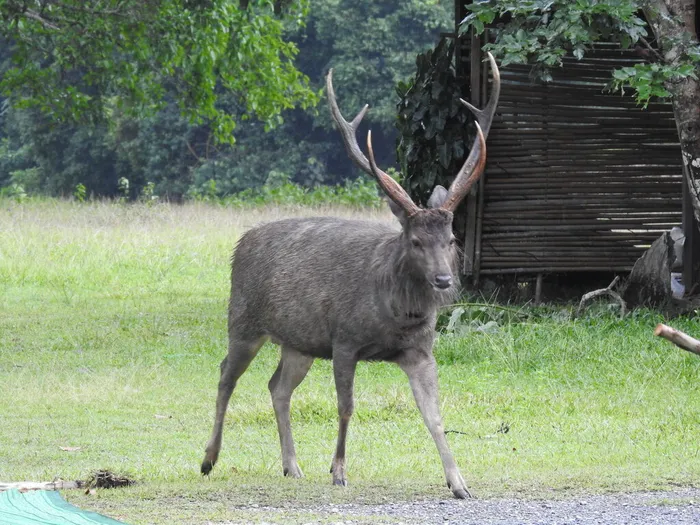
The sambar (Rusa unicolor) is Indonesia's largest deer, found in the forests of Sumatra and Borneo; it is Vulnerable and protected in Indonesia.
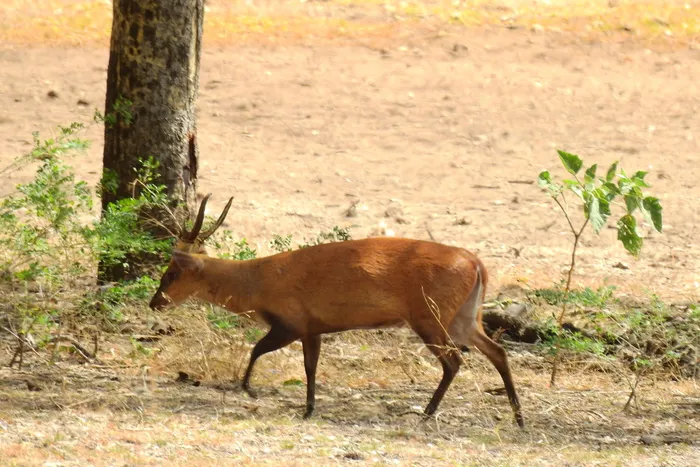
The southern red muntjac (Muntiacus muntjak) is a small deer with short antlers and tusks, found in Sumatra, Borneo, Java, Bali and Lombok.
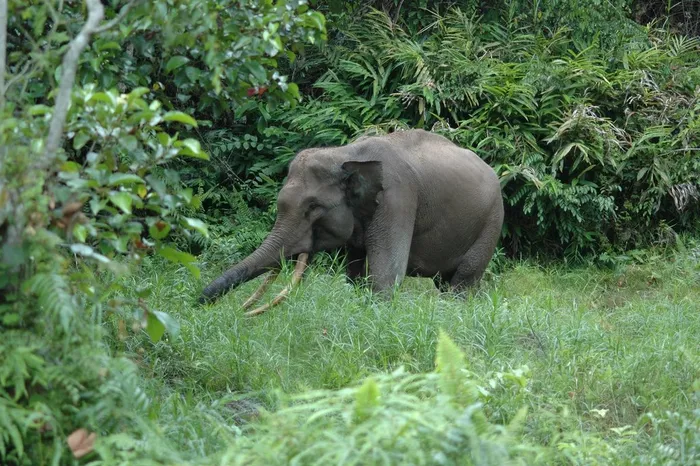
A large herbivore that disperses seeds and shapes forests. Its conservation needs connected movement space and solutions developed with communities living nearby.
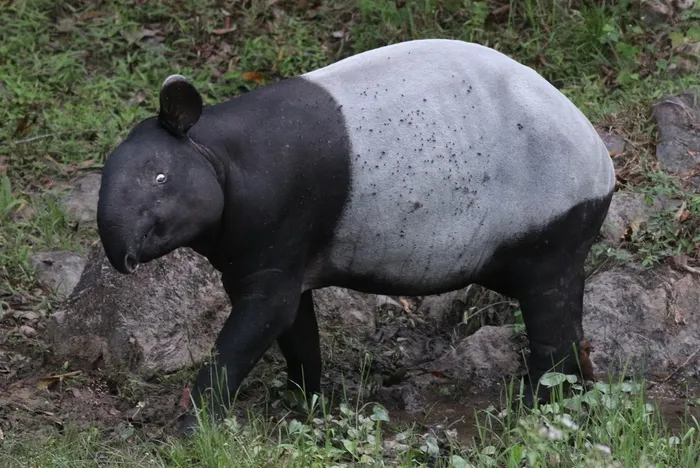
The black-and-white tapir is Asia’s only tapir. Forest, water, and safe movement space support its life in Sumatra.
The world’s smallest bear climbs trees and uses varied forest foods. Its Indonesian name, honey bear, does not describe its entire diet.
Support this cause from outside Indonesia
If you live outside Indonesia and want to fund work on this issue, you can help wild tigers with World Animal Rescue Network.
Related site: PanduanHewan’s founder is also a director of World Animal Rescue Network. PanduanHewan itself does not accept donations, and this invitation is not directed at people in Indonesia. Before giving to any organisation, check how it is registered and how it reports on spending.
An Indonesian organisation working on this cause?
Officially registered organisations (a yayasan or perkumpulan with legal status on AHU, and a PUB permit where they raise money from the public) can contact us to be listed on this cause page free of charge. Every request is checked first, and a listing is not an endorsement.
Sources and references
- Siaran Pers BBTNBBS SP.460/T.7/TU/HMS.3/9/2025: Interaksi negatif antara manusia dan harimau sumatera (6 Sep 2025) ↗
- ANTARA Lampung (22 Mei 2026): Kemenhut-Pemprov Lampung optimistis populasi harimau sumatra terus berlanjut ↗
- Menteri LHK sebut ada lebih seribu ekor harimau sumatra di Sumatera (ANTARA, 6 Mar 2024) ↗
- Luskin et al. (2017) Sumatran tiger survival threatened by deforestation despite increasing densities in parks. Nature Communications 8:1783 ↗
- Permen LHK P.106/MENLHK/SETJEN/KUM.1/12/2018 tentang Jenis Tumbuhan dan Satwa yang Dilindungi (lampiran) ↗
- UU No. 1 Tahun 2026 tentang Penyesuaian Pidana (JDIH BPK) ↗
- IUCN Red List: Panthera tigris (Goodrich et al., 2022), e.T15955A214862019 ↗
- Wirdateti et al. (2024) Is the Javan tiger Panthera tigris sondaica extant? DNA analysis of a recent hair sample. Oryx 58(4) ↗
- BKSDA turunkan tim tangani kemunculan harimau di pemukiman masyarakat (ANTARA, 8 Jun 2026) ↗
- Smith, Wang & Carbone (2018) Evaluating the effect of forest loss and agricultural expansion on Sumatran tigers from scat surveys. Biological Conservation ↗
- Harimau Sumatera di Ambang Kepunahan, Populasi Kini di Bawah 600 Individu (Tribunnews, 29 Jul 2026) ↗
- Wibisono & Pusparini (2010) Sumatran tiger (Panthera tigris sumatrae): a review of conservation status. Integrative Zoology ↗
- Anak Harimau Sumatra yang Terdeteksi pada Tahun 2025 Kembali Terpantau Tumbuh Sehat di Alam Liar (Siaran Pers Kemenhut SP.312/HKLN/07/2026, 25 Jul 2026) ↗
- Kamera Trap Ungkap Keberadaan 42 Individu Harimau Sumatera di Bengkulu (Siaran Pers Kemenhut SP.148, 4 Agt 2025) ↗
- Kemenhut pastikan tindak tegas pelaku perburuan harimau Sumatera (ANTARA, 6 Mar 2025) ↗
- Harimau Sumatera Terperangkap Jerat di Pasaman, Pemasang Terancam Pidana (Kompas.com, 28 Mei 2026) ↗
- Kementerian Kehutanan Tegaskan Komitmen Perlindungan Harimau Sumatera dan Penindakan Tegas terhadap Pelaku Perburuan (Siaran Pers SP.022, 6 Mar 2025) ↗
- Hadi et al. (2025) Evaluating the efficacy of an integrated law enforcement approach to safeguarding Sumatran tigers and their prey. Journal of Environmental Management ↗
- Penjual Organ Harimau Sumatera Ditangkap di Aceh, Kulit dan Taring Disita (Kompas.com, 8 Okt 2025) ↗
- Ditjen Gakkumhut Tegaskan Tindak Penggunaan Kawasan Hutan Ilegal, Bongkar Tambang Ilegal, Serta Gagalkan Penyelundupan Satwa (Siaran Pers SP.061, 6 Mei 2025) ↗
- Polres Tanjab Timur tangkap seorang pelaku perdagangan kulit harimau (ANTARA Jambi, 15 Jul 2026) ↗
- Figel et al. (2024) Intact, under-patrolled forests harbor widespread prey but a male-biased tiger population in the Ulu Masen Ecosystem, Sumatra. Scientific Reports 14 ↗
- Harimau Sumatera Terjerat Lima Perangkap Babi di Pasaman, BKSDA Lakukan Evakuasi (Kompas.com, 21 Mei 2026) ↗
- Anak Harimau Sumatera di Pasaman Nyaris Tewas, BKSDA: Terlambat Sehari Luka Bisa Membusuk (Kompas.com, 22 Mei 2026) ↗
- Linkie et al. (2015) Safeguarding Sumatran tigers: evaluating effectiveness of law enforcement patrols and local informant networks. Journal of Applied Ecology ↗
- Instruksi Penyelamatan Satwa Liar dari Jerat dan Perburuan Telah Dikeluarkan, Implementasi Lapangan? (Mongabay Indonesia, 8 Jul 2022) ↗
- Qanun Aceh Nomor 11 Tahun 2019 tentang Pengelolaan Satwa Liar (teks, JDIH BPK) ↗
- KLHK: Populasi Harimau Sumatera Tersisa 603 Ekor (detikNews, 29 Jul 2019) ↗
- Kayu Ilegal di Habitat Harimau Sumatera, Gakkum Kehutanan Tetapkan Tersangka dan Dalami Alur Peredarannya (Siaran Pers Gakkum Kehutanan, 21 Mei 2026) ↗
- Melihat Strategi dan Rencana Aksi Konservasi Harimau Sumatera 2018-2028. Seperti Apa? (Mongabay Indonesia, 24 Sep 2017) ↗
- Harimau Mangsa Ternak Warga di Sumatera Barat, Pola Pemeliharaan Perlu Diperhatikan (Mongabay Indonesia, 16 Mar 2023) ↗
- Struebig et al. (2018) Addressing human-tiger conflict using socio-ecological information on tolerance and risk. Nature Communications 9:3455 ↗
- Siaran Pers BBTNBBS SP.224/T.7/TU/HUMAS/5/2025: Interaksi negatif harimau sumatera dan manusia yang beraktivitas ilegal di dalam kawasan kembali menyebabkan korban jiwa (27 Mei 2025) ↗
- BBKSDA Riau pasang kandang jebak usai dua orang tewas diterkam harimau (ANTARA, 13 Jul 2026) ↗
- Balai KSDA Sumatera Barat Evakuasi Harimau Sumatera yang Masuk Perangkap di Area Permukiman dan Sekolah (Siaran Pers SP.397/HKLN/08/2026, 12 Agt 2026) ↗
- Penanganan Interaksi Negatif Harimau Sumatera di Kab. Indragiri Hilir, Riau (Siaran Pers Kemenhut SP.088, 2 Jun 2025) ↗
- Lindungi ternak dari harimau, BKSDA Sumbar bangun kandang komunal (ANTARA, 29 Feb 2024) ↗
- IUCN SSC Guidelines on Human-Wildlife Conflict and Coexistence, first edition (IUCN, 2023) ↗
- Permen LHK No. 17 Tahun 2024 tentang Penyelamatan Jenis Satwa (teks resmi, JDIH BPK) ↗
- Call Center 110 (Polri) ↗
- Database Peraturan BPK: Permen LHK No. 17 Tahun 2024 ↗
- Anak Harimau Sumatra Jering Dilepasliarkan ke TNGL Setelah Sehat (IDN Times Sumut, 15 Sep 2026) ↗
- Mulia et al. (2021) Exposure of Wild Sumatran Tiger (Panthera tigris sumatrae) to Canine Distemper Virus. Journal of Wildlife Diseases ↗
- Hidayati et al. (2026) Identification of ticks from conflict Sumatran tigers in Bukittinggi, West Sumatra, Indonesia. Open Veterinary Journal 16(2) ↗
- IUCN/SSC Guidelines for Reintroductions and Other Conservation Translocations, Version 1.0 (IUCN, 2013) ↗
- UU No. 32 Tahun 2024 tentang Perubahan atas UU No. 5 Tahun 1990 (teks resmi, JDIH BPK) ↗
- UU No. 1 Tahun 2023 tentang KUHP (teks resmi, JDIH BPK) ↗
- Database Peraturan BPK: UU No. 1 Tahun 2023 tentang KUHP ↗
- UU No. 41 Tahun 2014 tentang Perubahan atas UU No. 18 Tahun 2009 tentang Peternakan dan Kesehatan Hewan (teks resmi, JDIH BPK) ↗
- Database Peraturan BPK: Qanun Provinsi Aceh Nomor 11 Tahun 2019 tentang Pengelolaan Satwa Liar ↗
- Xue et al. (2015) Genetic ancestry of the extinct Javan and Bali tigers. Journal of Heredity ↗
- Sui et al. (2024) No Reliable Evidence Supports the Presence of Javan Tigers (bioRxiv preprint) ↗
- Khan et al. (2024) Reanalysis of sequences of alleged Javan tiger highlights the difficulties in studying big cats (bioRxiv preprint) ↗
- Wilting et al. (2015) Planning tiger recovery: Understanding intraspecific variation for effective conservation. Science Advances 1(5):e1400175 ↗
- Pengaduan Penegakan Hukum Kehutanan (Ditjen Gakkum Kehutanan) ↗
Checked 2026-10-01. Facts, figures and rules can change; check the date on the original source. Report errors through the corrections page. Send a correction