Quick answer
The issue in brief
The sun bear (Helarctos malayanus) is not officially Endangered: the IUCN Red List classes it as Vulnerable, with an estimated 35% decline over 30 years, and in Indonesia it is protected as entry 130 in the annex to Regulation P.106/2018. Law 5/1990 as amended by Law 32/2024 bans hunting, keeping, transporting or trading sun bears, alive or dead, and their gall bladders, claws or teeth, with up to 15 years in prison. Sun bears cannot legally or safely be kept as pets; they rarely attack people but can cause serious injuries when threatened, so keep away from any bear near a village, report it to the BKSDA, and go to a health facility after any bite or scratch.
- Legal status in Indonesia
- Protected: listed in the P.106/2018 annex (entry 130) source ↗
- IUCN status
- Vulnerable (assessed 2016); population decreasing source ↗
- CITES status
- Appendix I since 28 June 1979 source ↗
- Estimated population decline
- About 35% over the past 30 years; 40% or more for periods that include the future source ↗
- Seizures in Indonesia, 2011–2018
- 71 seizures, representing at least 254 sun bears source ↗
- Penalty for keeping or trading
- Up to 15 years in prison and/or a fine of up to category VII (Law 32/2024 Art. 40A(1), as adjusted by Law 1/2026) source ↗
- Conflict on Sumatran farms
- 45.8% of 120 farmers interviewed had experienced conflict with sun bears source ↗
- Indonesia's only bear
- The sun bear is Indonesia's only bear species and the world's smallest bear source ↗
Are sun bears protected in Indonesia?
Yes. The sun bear (Helarctos malayanus), Indonesia's only bear and the world's smallest, is entry 130 (family Ursidae) in the annex to Environment and Forestry Ministerial Regulation P.106/MENLHK/SETJEN/KUM.1/12/2018 on protected species, issued on 28 December 2018.
The protection is not new. According to the North Sumatra natural resources conservation agency (BBKSDA), the sun bear was already designated a protected animal under Government Regulation 7/1999 on the preservation of plant and animal species.
Because it is on that list, Article 21(2) of Law 5/1990, as amended by Law 32/2024, bans hunting, catching, injuring, killing, storing, owning, keeping, transporting or trading a sun bear, alive (point a) or dead (point b). The ban also covers its parts and products made from them (point c), such as gall bladders, claws, teeth or skins, and online trading without a permit (point g).
Internationally, the sun bear was listed in CITES Appendix II on 1 July 1975 and moved to Appendix I on 28 June 1979, which makes international commercial trade illegal. The IUCN Red List classed it as Vulnerable in its assessment of 5 February 2016, with a decreasing population.
Evidence: Permen LHK No. P.106/MENLHK/SETJEN/KUM.1/12/2018, Lampiran: jenis satwa dilindungi (Ursidae, no. 130) ↗ · Ditjen KSDAE (25 Maret 2024): Translokasi beruang madu dari BKSDA Sumatera Barat ↗ · Ditjen KSDAE (24 Juni 2025): Petugas evakuasi beruang madu penyerahan warga [Langkat, Sumatera Utara] ↗ · UU No. 32 Tahun 2024 tentang Perubahan atas UU No. 5 Tahun 1990 (teks resmi, JDIH BPK) ↗ · Species+ (UNEP-WCMC dan Sekretariat CITES) — Helarctos malayanus, riwayat daftar CITES (data API) ↗ · IUCN Red List: Sun Bear Helarctos malayanus (Scotson et al., dinilai 2016, terbit 2017, versi errata 2018) ↗
Can you keep a sun bear as a pet, and what is the penalty?
No. Keeping a sun bear is banned by Article 21(2)(a) of Law 32/2024, whether the bear was bought, given as a gift or found on a farm. Article 22 of Law 5/1990 allows exceptions only for research, science and species rescue, not for pets.
Penalties for individuals are set by Article 40A(1) of Law 32/2024, originally at least 3 and up to 15 years in prison. Law 1/2026 on Criminal Penalty Adjustment, in force since 2 January 2026, removed special minimum sentences, so the penalty is now up to 15 years and/or a fine of up to category VII, which Article 79 of the Criminal Code sets at Rp5 billion.
Showing off a sun bear on electronic media for commercial purposes without a permit is also banned (Article 21(2)(f)) and, after the adjustment, carries up to 4 years in prison and/or a fine of up to category IV (Rp200 million). Under Article 40C(2), penalties can rise by a third when the crime uses information technology, such as online trading.
Harming a bear can also be prosecuted under Article 337 of the new Criminal Code (Law 1/2023), in force since 2 January 2026, with up to 1 year 6 months in prison when the animal is disabled, seriously injured or killed. Law 41/2014 also bans abuse of animals, including wildlife in its habitat, that causes disability (Article 66A) and requires anyone who knows of it to report it.
Anyone already keeping a sun bear should hand it over to the BKSDA. When it took in a pet bear from a household in Langkat in June 2025, the agency urged residents still keeping protected animals to surrender them to the authorities.
Evidence: UU No. 32 Tahun 2024 tentang Perubahan atas UU No. 5 Tahun 1990 (teks resmi, JDIH BPK) ↗ · UU No. 5 Tahun 1990 tentang Konservasi Sumber Daya Alam Hayati dan Ekosistemnya, Pasal 22 (teks resmi, JDIH BPK) ↗ · UU No. 1 Tahun 2026 tentang Penyesuaian Pidana (teks resmi, JDIH BPK) ↗ · UU No. 1 Tahun 2023 tentang KUHP (teks resmi, JDIH BPK; berlaku 2 Januari 2026) ↗ · UU No. 41 Tahun 2014 tentang Perubahan atas UU No. 18 Tahun 2009 tentang Peternakan dan Kesehatan Hewan (teks resmi, JDIH BPK) ↗ · ANTARA Sumut (24 Juni 2025): Seekor beruang madu betina diserahkan warga Selesai Langkat kepada BKSDA ↗ · Ditjen KSDAE (24 Juni 2025): Petugas evakuasi beruang madu penyerahan warga [Langkat, Sumatera Utara] ↗
Are sun bears friendly? Why they cannot be pets
A sun bear cub may be small, but it is a wild animal. Adults reach 1–1.4 metres and 25–65 kg, with large, curved, sharp claws. According to the IUCN Red List, their jaw muscles are massive and their canines large for their head size, strong enough to bite through the bark of hardwood trees.
None of this changes in a house. A female kept for 12 years in North Sumatra weighed about 50 kg and had to be sedated before she could be moved in May 2021; a pet bear of about 10 years in Langkat was also sedated in June 2025. A male kept as a pet in Central Kalimantan was still wild and not tame when handed over, thin, and missing his canine teeth.
Cubs need their mothers. Sun bears usually have a single cub, with long gaps between births, and cubs under a year old cannot survive without their mother. A Riau BBKSDA vet said rescued cubs must be fed milk until about two years old before they are ready for release.
Captivity also damages behaviour. Research on captive sun bears found stereotypic behaviour, a repetitive behaviour with no practical function that is linked to animal welfare, mainly in the form of pacing. That is why caged sun bears are often seen pacing.
There is also a two-way health risk. At a wildlife rescue centre in Cambodia, sun bears caught human strains of tuberculosis, and researchers warned of the risk of tuberculosis passing in both directions between people and captive bears.
Evidence: Ditjen KSDAE (31 Mei 2024): Beruang madu muncul di Desa Lae Hole, petugas lakukan mitigasi ↗ · IUCN Red List: Sun Bear Helarctos malayanus (Scotson et al., dinilai 2016, terbit 2017, versi errata 2018) ↗ · Ditjen KSDAE (27 Mei 2021): Sudah dipelihara 12 tahun, BBKSDA Sumut evakuasi beruang madu ↗ · ANTARA Sumut (24 Juni 2025): Seekor beruang madu betina diserahkan warga Selesai Langkat kepada BKSDA ↗ · Ditjen KSDAE (1 April 2019): Pelepasliaran beruang madu, Paddington berlari menuju hutan SM Lamandau ↗ · Ditjen KSDAE (25 Maret 2024): Translokasi beruang madu dari BKSDA Sumatera Barat ↗ · Ditjen KSDAE (29 Maret 2023): Beruang madu “Andalas” diserahkan ke BKSDA Sumsel ↗ · Ditjen KSDAE (10 Oktober 2018): Penyelamatan tiga anak beruang di kandang transit Balai Besar KSDA Riau ↗ · Linking Gut Microbiota and Stereotypic Behavior of Endangered Species Under Ex Situ Conservation: First Evidence from Sun Bears, Animals (2025) ↗ · Genomic insights into anthropozoonotic tuberculosis in captive sun bears (Helarctos malayanus) and an Asiatic black bear (Ursus thibetanus) in Cambodia, Scientific Reports (2024) ↗
Where do pet sun bear cubs come from?
The IUCN Red List notes that wild-caught sun bear cubs are mostly traded as pets, and that trade in sun bears and their parts is one of the two most serious threats to the species.
A mother does not give up her cub. A sun bear biologist in Sabah, Malaysia, told the environmental news site Mongabay in 2023 that every cub in the pet trade means two animals gone from the forest, mother and cub, because poachers will always kill the mother, who dies protecting her cub.
In Indonesia, an analysis of seizure data from 2011 to 2018 found 71 cases representing at least 254 sun bears, with a relatively high number of bears being kept as pets.
The demand is real. In North Barito, Central Kalimantan, a newborn cub with its umbilical cord still attached drew offers of Rp1.5–3 million before the family raising it handed it to the BKSDA on 8 November 2024. In Riau, officers collected a cub in December 2020 after seeing a social media post of someone cradling it.
Not every motherless cub comes from poachers. Some are found alone in plantation forests being harvested when the mother does not return, and cubs under a year old cannot survive without her. Such cubs must still be handed to the BKSDA, not kept.
Examples of pet bears handed to the BKSDA: East Kotawaringin, Central Kalimantan (12 September 2017); North Sumatra, after 12 years in a household (May 2021); Banjar, South Kalimantan, a female of about 3 kept since she was small (11 April 2025); and Langkat, a bear of about 10 kept in a cage by a house (June 2025).
Evidence: IUCN Red List: Sun Bear Helarctos malayanus (Scotson et al., dinilai 2016, terbit 2017, versi errata 2018) ↗ · Mongabay (31 Oktober 2023): Conservationists look to defy gloomy outlook for Borneo’s sun bears ↗ · Gomez & Shepherd (2019), Bearly on the radar – an analysis of seizures of bears in Indonesia, European Journal of Wildlife Research 65:89 ↗ · Kompas.com (15 November 2024): Kisah pasutri di Barito Utara rawat beruang madu selama 3 tahun, sering tolak tawaran beli ↗ · Ditjen KSDAE (19 Desember 2020): BBKSDA Riau jemput bayi beruang madu ↗ · Ditjen KSDAE (10 Oktober 2018): Penyelamatan tiga anak beruang di kandang transit Balai Besar KSDA Riau ↗ · Ditjen KSDAE (29 Maret 2023): Beruang madu “Andalas” diserahkan ke BKSDA Sumsel ↗ · Ditjen KSDAE (1 April 2019): Pelepasliaran beruang madu, Paddington berlari menuju hutan SM Lamandau ↗ · Ditjen KSDAE (27 Mei 2021): Sudah dipelihara 12 tahun, BBKSDA Sumut evakuasi beruang madu ↗ · Ditjen KSDAE (14 April 2025): Evakuasi beruang madu dan kukang dari masyarakat [Kalimantan Selatan] ↗ · ANTARA Sumut (24 Juni 2025): Seekor beruang madu betina diserahkan warga Selesai Langkat kepada BKSDA ↗ · Ditjen KSDAE (24 Juni 2025): Petugas evakuasi beruang madu penyerahan warga [Langkat, Sumatera Utara] ↗
Why are sun bears poached? Gall bladders, claws and teeth
Besides cubs, sun bears are hunted for their parts, above all gall bladders and paws, according to the IUCN Red List. Indonesian seizure data for 2011–2018 show parts mostly prized as trophies or talismans, such as claws, teeth and taxidermy, and to a lesser extent for traditional medicine and food.
The trade crosses borders: at least five countries were linked to the trafficking of bears from Indonesia, mostly teeth, claws, gall bladders and paws.
Official cases show the scale. On 25 October 2017, officers in Samarinda seized 184 large and 808 small claws, 67 canine teeth and 24 gall bladders from sun bears, bound for a buyer in Vietnam. In April 2018, officers in Indragiri Hilir, Riau, solved the viral killing of four sun bears. On 9 October 2018, ten suspects in a sun bear hunting and trading case in Lampung were handed to prosecutors.
On 24 January 2019, 172 sun bear canine teeth were seized in the cargo area of Sultan Syarif Kasim II Airport in Pekanbaru. On 26 August 2025, a house search in Malang found a sun bear skin and a necklace of sun bear claws; the case file was declared complete (P-21) in November 2025.
Enforcement lags behind: the seizure analysis found follow-up arrests, prosecutions and convictions extremely low, and the IUCN says wildlife law enforcement is failing to deter the bear trade.
Snares also maim bears, even when set for other animals; camera traps in Indonesia increasingly record bears with missing paws. On 5 June 2025, the Jambi BKSDA rescued a female with severe leg injuries from a wire snare, and on 19 June 2026 the West Sumatra BKSDA rescued a bear caught in a wild boar snare in Pasaman. The West Sumatra BKSDA has issued Circular No. 1 of 2026 banning wire or steel cable snares for controlling wild boar.
Sales of sun bears or their parts, including on social media, can be reported to the Gakkum Kehutanan complaints channel, which has an illegal wildlife trade category, by email to pengaduan.gakkum@kehutanan.go.id or by phone on (021) 5790 2925.
Evidence: IUCN Red List: Sun Bear Helarctos malayanus (Scotson et al., dinilai 2016, terbit 2017, versi errata 2018) ↗ · Gomez & Shepherd (2019), Bearly on the radar – an analysis of seizures of bears in Indonesia, European Journal of Wildlife Research 65:89 ↗ · Ditjen KSDAE (2 November 2017): Perdagangan beruang madu diungkap BKSDA Kaltim, Balai Gakkum Kalimantan dan Bea Cukai Balikpapan ↗ · Ditjen KSDAE (6 April 2018): Kurang dari 24 jam, kasus pembantaian 4 beruang madu terungkap ↗ · Ditjen KSDAE (11 Oktober 2018): Penegakan hukum pelaku perdagangan dan perburuan beruang madu [TN Bukit Barisan Selatan] ↗ · Ditjen KSDAE (8 Mei 2019): Balai Besar KSDA Riau menerima 172 gigi taring beruang madu sitaan ↗ · Gakkum Kehutanan — Siaran pers: jaringan perdagangan satwa liar antarpulau di Malang terungkap (29 Agustus 2025) ↗ · Gakkum Kehutanan — Siaran pers: berkas perdagangan satwa liar antarpulau di Malang dinyatakan lengkap (19 November 2025) ↗ · Ditjen KSDAE (16 Juni 2025): Beruang madu terjerat, BKSDA Jambi bergegas evakuasi ↗ · ANTARA (19 Juni 2026): BKSDA Sumbar evakuasi beruang madu terkena jerat babi ↗ · Pengaduan Gakkum Kehutanan (kanal pengaduan resmi Ditjen Penegakan Hukum Kehutanan) ↗
Are sun bears dangerous to humans?
Sun bears rarely attack people. The IUCN Red List notes that attacks on humans are rare and usually an act of self-defence; under normal circumstances, sun bears avoid humans. The North Sumatra BBKSDA says the same: sun bears rarely attack, but they can become aggressive when they feel threatened by people.
When an attack does happen, the injuries can be serious. Official BKSDA reports record several incidents on farms: two residents of Batanghari, Jambi, were clawed by two bears near a cub caught in a snare (10 April 2017), and a villager on a rubber smallholding in Pelalawan, Riau, was bitten on the leg (22 October 2022).
A coffee picker in Merangin, Jambi, was injured on 25 June 2025; a joint team concluded the attacker was most likely a sun bear, not a Sumatran tiger as first thought. Two oil palm workers in Mentaya Hulu, Central Kalimantan, were attacked on 16 July 2025, and a rubber tapper in Muaro Jambi suffered serious injuries to the face, temple and thigh on 29 October 2025.
In several cases the bear was near its nest or cub: officers found a nest near the Mentaya Hulu attack site, and a suspected nest in an old rubber tree in Pelalawan. Sun bears live alone, except mothers with cubs.
So are sun bears dangerous? They are not aggressive by nature, but they are strong wild animals to keep well away from. Anyone bitten or scratched by a bear should go to a health facility straight away.
Evidence: IUCN Red List: Sun Bear Helarctos malayanus (Scotson et al., dinilai 2016, terbit 2017, versi errata 2018) ↗ · Ditjen KSDAE (28 Juli 2025): Beruang madu muncul, petugas lakukan mitigasi [Dairi, Sumatera Utara] ↗ · Ditjen KSDAE (31 Mei 2024): Beruang madu muncul di Desa Lae Hole, petugas lakukan mitigasi ↗ · Ditjen KSDAE (10 April 2017): Dua orang warga diterkam beruang madu [Batanghari, Jambi] ↗ · Ditjen KSDAE (7 Desember 2022): Memakan korban, BBKSDA Riau tinjau jejak beruang madu ↗ · Ditjen KSDAE (7 Juli 2025): Bukan harimau sumatera, tim gabungan duga serangan di Merangin oleh beruang madu ↗ · ANTARA Kalteng (26 Juli 2025): BKSDA Sampit observasi pasca serangan beruang ↗ · Ditjen KSDAE (3 November 2025): BKSDA Jambi lakukan penanganan cepat kasus serangan beruang madu di Kecamatan Mestong ↗
Why do sun bears come into villages and farms?
The main factor is shrinking forest. The IUCN notes that forest loss and fragmentation may bring bears closer to people and make encounters more likely. Sun bears have been recorded in oil palm plantations, maize fields and orchards, and crop raiding peaks at harvest time on plots along the forest edge.
In west-central Sumatra, 45.8% of 120 farmers interviewed had experienced conflict with sun bears, mostly crop raiding, which peaked as cash crops ripened. In East Kalimantan, crop damage by bears rose after the 1997–98 El Niño drought, and what angered farmers most was damage to old coconut trees.
BKSDA reports show what draws bears in. In Pelalawan, Riau (November 2021), a bear tried to break through a kitchen wall to reach stored honey and honeycomb, then took villagers' chickens. In Dairi, North Sumatra, bears damaged young maize (May 2024) and beehives (July 2025). In Pasaman, West Sumatra (May 2026), a bear damaged areca and coconut palms, and in East Kotawaringin (August 2026) a bear was reported eating the hearts of young oil palms.
Farms cannot replace forest. There is no evidence that sun bears can survive in cleared or farmed land without nearby forest; they gain some nutrition from oil palm fruit, but probably could not live without natural forest for food and cover.
Conflict also endangers bears. The IUCN lists killing in human–bear conflict as an additional threat, and farmers often ring their fields with snares that sometimes catch bears. Research in East Kalimantan found that metal sheeting on coconut trunks stopped bears climbing, at least in the short term.
Evidence: IUCN Red List: Sun Bear Helarctos malayanus (Scotson et al., dinilai 2016, terbit 2017, versi errata 2018) ↗ · Wong, Leader-Williams & Linkie (2015), Managing Human-Sun Bear Conflict in Sumatran Agroforest Systems, Human Ecology 43:255–266 ↗ · Fredriksson (2005), Human–sun bear conflicts in East Kalimantan, Indonesian Borneo, Ursus 16(1):130–137 ↗ · Ditjen KSDAE (4 November 2021): Beruang madu masuk rumah warga di Pelalawan ↗ · Ditjen KSDAE (31 Mei 2024): Beruang madu muncul di Desa Lae Hole, petugas lakukan mitigasi ↗ · Ditjen KSDAE (28 Juli 2025): Beruang madu muncul, petugas lakukan mitigasi [Dairi, Sumatera Utara] ↗ · BKSDA Sumatera Barat (2 Juni 2026): BKSDA Sumbar tangani konflik beruang madu yang resahkan warga di Lubuk Sikaping ↗ · detikNews (24 Agustus 2026): Orang utan dan beruang madu muncul di permukiman warga Kotim, ini kata BKSDA ↗
A sun bear near your village: what should you do?
Keep your distance and report it. Do not approach, chase, feed, photograph at close range or try to catch a bear, including a cub that seems to be alone, because sun bear mothers stay with their cubs and may be close by. Report the bear to the nearest BKSDA or BBKSDA office, and if people are in immediate danger, call the police on 110.
Follow the officers' advice. The North Sumatra BBKSDA asks residents to work in groups and report any new signs of the bear straight away, the West Sumatra BKSDA asks people not to work on their farms alone, and the Riau BBKSDA asks people not to do anything that could endanger themselves or the animal.
Leave it to the officers. In official reports, officers check the site, look for tracks and claw marks, set camera traps and, if needed, a box trap to move the bear. Residents are asked to stay away from traps and report to the BKSDA. In June 2026, a bear caught in a box trap in Pelalawan, Riau, was released far from houses because it was still active and clearly wild.
Do not act against the bear yourself. Injuring or killing a sun bear remains illegal, and officers ask residents not to take the law into their own hands. The BKSDA also asks people to stop setting snares, which endanger wildlife.
If someone is bitten or scratched, take them to a health facility straight away.
Evidence: IUCN Red List: Sun Bear Helarctos malayanus (Scotson et al., dinilai 2016, terbit 2017, versi errata 2018) ↗ · Ditjen KSDAE (10 April 2017): Dua orang warga diterkam beruang madu [Batanghari, Jambi] ↗ · Polri — Call Center 110 ↗ · Ditjen KSDAE (28 Juli 2025): Beruang madu muncul, petugas lakukan mitigasi [Dairi, Sumatera Utara] ↗ · BKSDA Sumatera Barat (2 Juni 2026): BKSDA Sumbar tangani konflik beruang madu yang resahkan warga di Lubuk Sikaping ↗ · Kompas.com (23 Juni 2026): Beruang madu masuk ke permukiman warga di Riau, BBKSDA evakuasi dan lepas liarkan ↗ · Ditjen KSDAE (3 November 2025): BKSDA Jambi lakukan penanganan cepat kasus serangan beruang madu di Kecamatan Mestong ↗ · Ditjen KSDAE (31 Mei 2024): Beruang madu muncul di Desa Lae Hole, petugas lakukan mitigasi ↗ · ANTARA (16 Januari 2026): BKSDA Sampit pasang perangkap untuk beruang madu yang meresahkan warga ↗ · UU No. 32 Tahun 2024 tentang Perubahan atas UU No. 5 Tahun 1990 (teks resmi, JDIH BPK) ↗ · Ditjen KSDAE (7 Desember 2022): Memakan korban, BBKSDA Riau tinjau jejak beruang madu ↗ · Ditjen KSDAE (16 Juni 2025): Beruang madu terjerat, BKSDA Jambi bergegas evakuasi ↗
Why are sun bears endangered, and how many are left?
Officially, the sun bear is Vulnerable on the IUCN Red List, with populations declining across its range. IUCN experts estimate a fall of about 35% over the past 30 years and 40% or more for periods including the future. The main threats are deforestation and commercial hunting.
Sun bears depend on forest, so the area of forest lost is directly linked to their decline. Their range is shrinking and fragmenting, most noticeably in Borneo and Sumatra, largely because of clearing for plantations such as oil palm and rubber and unsustainable logging.
Sumatra and Kalimantan lost 23.5% of their forest in 1990–2005, including more than 40% of lowland forest, and in Kalimantan alone 56% of protected lowland forest was cleared in 1985–2001. In western Sumatra, camera-trap surveys recorded a 5% annual fall in sun bears over seven years.
Fires make it worse. Human-caused fires are shrinking and degrading sun bear habitat, especially in Malaysia and Indonesia, and spread further in El Niño droughts. Between 1997 and 2006, fires affected 16.2 million hectares, or 21% of Borneo's land. On Borneo, long droughts that disrupt fruiting, combined with clearing and fires, have left sun bears starving, even in protected primary forest. In Kalimantan, bear signs in burned forest fell close to zero and reached only 65% of unburned levels ten years later.
How many sun bears are left in Indonesia? There is no firm figure; the IUCN says there are few reliable estimates of sun bear numbers. A tree-cover model projected that populations in Malaysia, Indonesia and Brunei fell by 22% in 2000–2014, and that the decline could pass 50% over 30 years, meeting the Endangered criteria if assessed at population level.
Evidence: IUCN Red List: Sun Bear Helarctos malayanus (Scotson et al., dinilai 2016, terbit 2017, versi errata 2018) ↗ · Scotson et al. (2017), Projecting range-wide sun bear population trends using tree cover and camera-trap bycatch data, PLOS ONE 12:e0185336 ↗
How are rescued sun bears rehabilitated and released?
Rescue of protected animals is governed by Environment and Forestry Ministerial Regulation 17/2024 on species rescue and carried out by a team appointed by the head of the BKSDA or national park office. Bears may come from conflict, seizures, forfeiture, finds, interceptions or handovers by the public.
The first step is a medical and behavioural assessment, which decides between transfer, release, rehabilitation, placement with a conservation institution or euthanasia, all following animal welfare principles. IUCN guidelines stress that confiscated animals must go into quarantine immediately because of the risk of disease, including to people.
Rehabilitation means restoring health and behaviour so that the bear can survive and breed in the wild, followed by habituation to habitat conditions before release. Bears are taught to eat natural food. A former pet bear in Central Kalimantan, for example, spent more than a year on fruit and termites from rotting wood until its canines had grown back normally, and was released in the Lamandau Wildlife Reserve on 26 March 2019.
Bears that are healthy and still wild can be released quickly in areas far from houses, as the Riau BBKSDA did on 30 July 2021 and in June 2026.
Not every bear can return to the forest. IUCN guidelines note that confiscated animals are often physically or mentally unfit for release, and the IUCN Red List calls rehabilitation of ex-captive sun bears rare and fraught with challenges, because release sites are still threatened by forest loss and poaching. Such bears may be placed with a conservation institution, as a bear from a conflict in Pasaman was in North Sumatra in March 2024.
Evidence: Permen LHK No. 17 Tahun 2024 tentang Penyelamatan Jenis Satwa (teks resmi, JDIH BPK) ↗ · IUCN (2019), Guidelines for the management of confiscated, live organisms ↗ · Ditjen KSDAE (29 Maret 2023): Beruang madu “Andalas” diserahkan ke BKSDA Sumsel ↗ · Ditjen KSDAE (1 April 2019): Pelepasliaran beruang madu, Paddington berlari menuju hutan SM Lamandau ↗ · Ditjen KSDAE (1 Agustus 2021): Beruang madu hasil penyerahan Polsek Mandah dilepasliarkan ↗ · Kompas.com (23 Juni 2026): Beruang madu masuk ke permukiman warga di Riau, BBKSDA evakuasi dan lepas liarkan ↗ · IUCN Red List: Sun Bear Helarctos malayanus (Scotson et al., dinilai 2016, terbit 2017, versi errata 2018) ↗ · Ditjen KSDAE (25 Maret 2024): Translokasi beruang madu dari BKSDA Sumatera Barat ↗
Timeline
- 1975-07 The sun bear is listed in CITES Appendix II. source ↗
- 1979-06 The sun bear moves to CITES Appendix I, banning international commercial trade. source ↗
- 1990-08 Law 5/1990 on the conservation of living natural resources and their ecosystems is enacted. source ↗
- 1998 After the 1997–98 El Niño drought, crop damage by sun bears in East Kalimantan is higher than normal. source ↗
- 1999 Government Regulation 7/1999 on species preservation is issued, with the sun bear among protected animals. source ↗
- 2016-02 The IUCN assesses the sun bear as Vulnerable, with a decreasing population. source ↗
- 2017-10 Officers in Samarinda seize hundreds of claws, 67 canine teeth and 24 sun bear gall bladders bound for Vietnam. source ↗
- 2018-04 Officers solve a viral case of four sun bears killed in Indragiri Hilir, Riau. source ↗
- 2018-10 Ten suspects in a sun bear hunting and trading case in Lampung are handed to prosecutors. source ↗
- 2018-12 Regulation P.106/2018 is issued, listing the sun bear as entry 130. source ↗
- 2019-01 172 sun bear canine teeth are seized at Pekanbaru airport. source ↗
- 2019-03 A former pet bear is released in the Lamandau Wildlife Reserve after more than a year of care. source ↗
- 2019 A study of 2011–2018 seizures records 71 cases representing at least 254 sun bears in Indonesia. source ↗
- 2021-05 The North Sumatra BBKSDA removes a sun bear kept by a household for 12 years. source ↗
- 2024-08 Law 32/2024 amends Law 5/1990, including a ban on trading protected animals online. source ↗
- 2024-11 A cub that drew offers of Rp1.5–3 million is handed to the Central Kalimantan BKSDA after three years in a household. source ↗
- 2025-06 A sun bear of about 10 years kept in a cage by a house in Langkat is handed to the BKSDA. source ↗
- 2025-08 A house search in Malang finds a sun bear skin and a necklace of sun bear claws. source ↗
- 2025-10 A rubber tapper in Muaro Jambi is seriously injured in a suspected sun bear attack. source ↗
- 2026-01 The new Criminal Code and Law 1/2026 on Criminal Penalty Adjustment take effect, removing special minimum sentences. source ↗
- 2026-06 The West Sumatra BKSDA rescues a sun bear from a wild boar snare; Circular 1/2026 bans wire and steel cable snares. source ↗
How to help
- Do not buy, accept or keep a sun bear cub, and do not buy gall bladders, claws, teeth, skins or any product claimed to come from a bear.
- Do not like, comment on or share posts that show off or sell sun bears. Report them with the platform's reporting tool.
- Seen a sun bear or its parts for sale? Do not contact the seller. Keep screenshots showing the account, link, location and date, then report through the Gakkum Kehutanan complaints app (pengaduan.gakkum.kehutanan.go.id), by email to pengaduan.gakkum@kehutanan.go.id, by phone on (021) 5790 2925, or to the local BKSDA. If a crime is under way, call the police on 110.
- A sun bear near your farm or village? Keep your distance, do not feed it or try to chase it off yourself, and report it to the nearest BKSDA or BBKSDA office. Follow the officers' instructions and stay away from any box trap.
- Found a cub on its own? Do not touch, pick up or take it home, because its mother may be nearby. Note the location from a safe distance and report it to the BKSDA.
- If you or someone you know is keeping a sun bear, contact the BKSDA to hand it over. Do not release it into a forest yourself.
- Do not set snares on farms. Wire snares maim and kill sun bears and other protected animals.
- Bitten, scratched or injured by a wild animal? Go to a health facility straight away.
- Want to support an organisation that works with sun bears? PanduanHewan does not take donations. Before giving, check the organisation's fundraising permit, legal registration, financial reports and verifiable cooperation with the BKSDA, using PanduanHewan's checklist on how to check an appeal.
- Want to volunteer? Choose programmes that limit contact with animals, because confiscated bears need quarantine and rehabilitation to stay wild. Offers to hold, hand-feed or take selfies with a sun bear are a red flag.
Common questions
Is the sun bear protected in Indonesia?
Yes. The sun bear (Helarctos malayanus) is entry 130 in the annex to Regulation P.106/2018. Article 21(2) of Law 32/2024 bans hunting, keeping, transporting and trading it, alive or dead, including its body parts.
Source: Permen LHK No. P.106/MENLHK/SETJEN/KUM.1/12/2018, Lampiran: jenis satwa dilindungi (Ursidae, no. 130) ↗ · UU No. 32 Tahun 2024 tentang Perubahan atas UU No. 5 Tahun 1990 (teks resmi, JDIH BPK) ↗ · UU No. 32 Tahun 2024 tentang Perubahan atas UU No. 5 Tahun 1990 (teks resmi, JDIH BPK) ↗
Are sun bears dangerous to humans?
Sun bears rarely attack and usually avoid people, but they can become aggressive when threatened, and an attack can cause serious injuries. Keep away, report the bear to the BKSDA, and go to a health facility straight away after any bite or scratch.
Source: IUCN Red List: Sun Bear Helarctos malayanus (Scotson et al., dinilai 2016, terbit 2017, versi errata 2018) ↗ · Ditjen KSDAE (28 Juli 2025): Beruang madu muncul, petugas lakukan mitigasi [Dairi, Sumatera Utara] ↗ · Ditjen KSDAE (3 November 2025): BKSDA Jambi lakukan penanganan cepat kasus serangan beruang madu di Kecamatan Mestong ↗
Can you have a sun bear as a pet?
No. Keeping a sun bear is banned by Article 21(2)(a) of Law 32/2024. As adjusted by Law 1/2026, the penalty is up to 15 years in prison and/or a fine of up to category VII (Rp5 billion). Anyone already keeping one should hand it over to the BKSDA.
Source: UU No. 32 Tahun 2024 tentang Perubahan atas UU No. 5 Tahun 1990 (teks resmi, JDIH BPK) ↗ · UU No. 1 Tahun 2026 tentang Penyesuaian Pidana (teks resmi, JDIH BPK) ↗ · UU No. 1 Tahun 2023 tentang KUHP (teks resmi, JDIH BPK; berlaku 2 Januari 2026) ↗ · ANTARA Sumut (24 Juni 2025): Seekor beruang madu betina diserahkan warga Selesai Langkat kepada BKSDA ↗
Are sun bears friendly, or can they be tamed?
No. Pet bears stay wild: a bear kept as a pet in Central Kalimantan was still wild and not tame when handed over, and one kept for 12 years in North Sumatra had to be sedated before it could be moved.
Source: Ditjen KSDAE (1 April 2019): Pelepasliaran beruang madu, Paddington berlari menuju hutan SM Lamandau ↗ · Ditjen KSDAE (27 Mei 2021): Sudah dipelihara 12 tahun, BBKSDA Sumut evakuasi beruang madu ↗ · Ditjen KSDAE (27 Mei 2021): Sudah dipelihara 12 tahun, BBKSDA Sumut evakuasi beruang madu ↗
Why do captive sun bears pace?
Pacing is the main form of stereotypic behaviour in captive sun bears: a repetitive behaviour with no practical function that is linked to animal welfare.
Source: Linking Gut Microbiota and Stereotypic Behavior of Endangered Species Under Ex Situ Conservation: First Evidence from Sun Bears, Animals (2025) ↗ · Linking Gut Microbiota and Stereotypic Behavior of Endangered Species Under Ex Situ Conservation: First Evidence from Sun Bears, Animals (2025) ↗
Why are sun bears endangered?
The sun bear is listed as Vulnerable because of deforestation and commercial hunting. Trade in live bears and their parts is one of the two most serious threats, and forest fires add to habitat loss.
Source: IUCN Red List: Sun Bear Helarctos malayanus (Scotson et al., dinilai 2016, terbit 2017, versi errata 2018) ↗ · IUCN Red List: Sun Bear Helarctos malayanus (Scotson et al., dinilai 2016, terbit 2017, versi errata 2018) ↗ · IUCN Red List: Sun Bear Helarctos malayanus (Scotson et al., dinilai 2016, terbit 2017, versi errata 2018) ↗ · IUCN Red List: Sun Bear Helarctos malayanus (Scotson et al., dinilai 2016, terbit 2017, versi errata 2018) ↗
How many sun bears are left in Indonesia?
There is no firm figure, because reliable population estimates are few. A model based on tree cover projected that populations in Malaysia, Indonesia and Brunei fell by 22% between 2000 and 2014.
Source: IUCN Red List: Sun Bear Helarctos malayanus (Scotson et al., dinilai 2016, terbit 2017, versi errata 2018) ↗ · Scotson et al. (2017), Projecting range-wide sun bear population trends using tree cover and camera-trap bycatch data, PLOS ONE 12:e0185336 ↗ · Scotson et al. (2017), Projecting range-wide sun bear population trends using tree cover and camera-trap bycatch data, PLOS ONE 12:e0185336 ↗
What should I do if a sun bear comes near my village?
Keep away, do not approach or feed it, and report it to the nearest BKSDA or BBKSDA office straight away. Officers ask residents to work in groups and to stay away from any box trap they set.
Source: Ditjen KSDAE (28 Juli 2025): Beruang madu muncul, petugas lakukan mitigasi [Dairi, Sumatera Utara] ↗ · Ditjen KSDAE (28 Juli 2025): Beruang madu muncul, petugas lakukan mitigasi [Dairi, Sumatera Utara] ↗ · ANTARA (16 Januari 2026): BKSDA Sampit pasang perangkap untuk beruang madu yang meresahkan warga ↗
Is it illegal to buy or sell sun bear bile or gall bladders?
Yes. Article 21(2)(c) of Law 32/2024 bans storing, owning, transporting and trading parts of protected animals. In 2017, officers in Samarinda seized 24 sun bear gall bladders bound for Vietnam.
Source: UU No. 32 Tahun 2024 tentang Perubahan atas UU No. 5 Tahun 1990 (teks resmi, JDIH BPK) ↗ · Ditjen KSDAE (2 November 2017): Perdagangan beruang madu diungkap BKSDA Kaltim, Balai Gakkum Kalimantan dan Bea Cukai Balikpapan ↗ · Ditjen KSDAE (2 November 2017): Perdagangan beruang madu diungkap BKSDA Kaltim, Balai Gakkum Kalimantan dan Bea Cukai Balikpapan ↗ · Ditjen KSDAE (2 November 2017): Perdagangan beruang madu diungkap BKSDA Kaltim, Balai Gakkum Kalimantan dan Bea Cukai Balikpapan ↗
Do sun bears eat people?
Sun bears feed mainly on termites, ants, beetle larvae, stingless bee larvae, honey and a wide range of fruit. Attacks on people are rare and usually an act of self-defence.
Source: IUCN Red List: Sun Bear Helarctos malayanus (Scotson et al., dinilai 2016, terbit 2017, versi errata 2018) ↗ · IUCN Red List: Sun Bear Helarctos malayanus (Scotson et al., dinilai 2016, terbit 2017, versi errata 2018) ↗
Animals involved
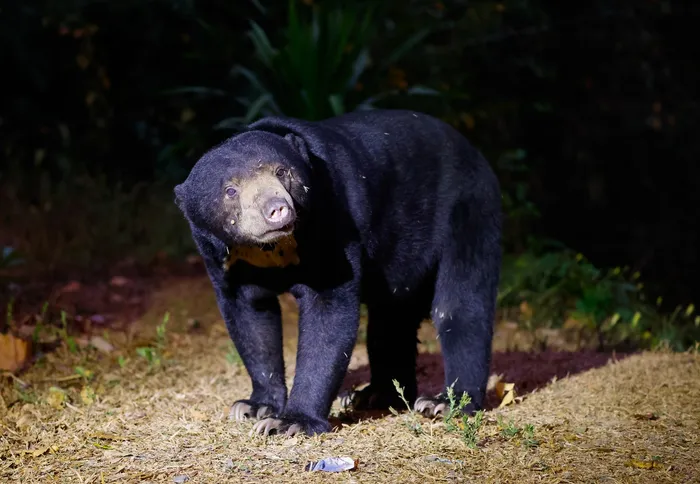
The world’s smallest bear climbs trees and uses varied forest foods. Its Indonesian name, honey bear, does not describe its entire diet.
Support this cause from outside Indonesia
If you live outside Indonesia and want to fund work on this issue, you can fund frontline animal rescue with World Animal Rescue Network.
Related site: PanduanHewan’s founder is also a director of World Animal Rescue Network. PanduanHewan itself does not accept donations, and this invitation is not directed at people in Indonesia. Before giving to any organisation, check how it is registered and how it reports on spending.
An Indonesian organisation working on this cause?
Officially registered organisations (a yayasan or perkumpulan with legal status on AHU, and a PUB permit where they raise money from the public) can contact us to be listed on this cause page free of charge. Every request is checked first, and a listing is not an endorsement.
Sources and references
- Permen LHK No. P.106/MENLHK/SETJEN/KUM.1/12/2018, Lampiran: jenis satwa dilindungi (Ursidae, no. 130) ↗
- IUCN Red List: Sun Bear Helarctos malayanus (Scotson et al., dinilai 2016, terbit 2017, versi errata 2018) ↗
- Species+ (UNEP-WCMC dan Sekretariat CITES) — Helarctos malayanus, riwayat daftar CITES (data API) ↗
- Gomez & Shepherd (2019), Bearly on the radar – an analysis of seizures of bears in Indonesia, European Journal of Wildlife Research 65:89 ↗
- UU No. 1 Tahun 2026 tentang Penyesuaian Pidana (teks resmi, JDIH BPK) ↗
- Wong, Leader-Williams & Linkie (2015), Managing Human-Sun Bear Conflict in Sumatran Agroforest Systems, Human Ecology 43:255–266 ↗
- Ditjen KSDAE (25 Maret 2024): Translokasi beruang madu dari BKSDA Sumatera Barat ↗
- Ditjen KSDAE (24 Juni 2025): Petugas evakuasi beruang madu penyerahan warga [Langkat, Sumatera Utara] ↗
- UU No. 32 Tahun 2024 tentang Perubahan atas UU No. 5 Tahun 1990 (teks resmi, JDIH BPK) ↗
- UU No. 5 Tahun 1990 tentang Konservasi Sumber Daya Alam Hayati dan Ekosistemnya, Pasal 22 (teks resmi, JDIH BPK) ↗
- UU No. 1 Tahun 2023 tentang KUHP (teks resmi, JDIH BPK; berlaku 2 Januari 2026) ↗
- UU No. 41 Tahun 2014 tentang Perubahan atas UU No. 18 Tahun 2009 tentang Peternakan dan Kesehatan Hewan (teks resmi, JDIH BPK) ↗
- ANTARA Sumut (24 Juni 2025): Seekor beruang madu betina diserahkan warga Selesai Langkat kepada BKSDA ↗
- Ditjen KSDAE (31 Mei 2024): Beruang madu muncul di Desa Lae Hole, petugas lakukan mitigasi ↗
- Ditjen KSDAE (27 Mei 2021): Sudah dipelihara 12 tahun, BBKSDA Sumut evakuasi beruang madu ↗
- Ditjen KSDAE (1 April 2019): Pelepasliaran beruang madu, Paddington berlari menuju hutan SM Lamandau ↗
- Ditjen KSDAE (29 Maret 2023): Beruang madu “Andalas” diserahkan ke BKSDA Sumsel ↗
- Ditjen KSDAE (10 Oktober 2018): Penyelamatan tiga anak beruang di kandang transit Balai Besar KSDA Riau ↗
- Linking Gut Microbiota and Stereotypic Behavior of Endangered Species Under Ex Situ Conservation: First Evidence from Sun Bears, Animals (2025) ↗
- Genomic insights into anthropozoonotic tuberculosis in captive sun bears (Helarctos malayanus) and an Asiatic black bear (Ursus thibetanus) in Cambodia, Scientific Reports (2024) ↗
- Mongabay (31 Oktober 2023): Conservationists look to defy gloomy outlook for Borneo’s sun bears ↗
- Kompas.com (15 November 2024): Kisah pasutri di Barito Utara rawat beruang madu selama 3 tahun, sering tolak tawaran beli ↗
- Ditjen KSDAE (19 Desember 2020): BBKSDA Riau jemput bayi beruang madu ↗
- Ditjen KSDAE (14 April 2025): Evakuasi beruang madu dan kukang dari masyarakat [Kalimantan Selatan] ↗
- Ditjen KSDAE (2 November 2017): Perdagangan beruang madu diungkap BKSDA Kaltim, Balai Gakkum Kalimantan dan Bea Cukai Balikpapan ↗
- Ditjen KSDAE (6 April 2018): Kurang dari 24 jam, kasus pembantaian 4 beruang madu terungkap ↗
- Ditjen KSDAE (11 Oktober 2018): Penegakan hukum pelaku perdagangan dan perburuan beruang madu [TN Bukit Barisan Selatan] ↗
- Ditjen KSDAE (8 Mei 2019): Balai Besar KSDA Riau menerima 172 gigi taring beruang madu sitaan ↗
- Gakkum Kehutanan — Siaran pers: jaringan perdagangan satwa liar antarpulau di Malang terungkap (29 Agustus 2025) ↗
- Gakkum Kehutanan — Siaran pers: berkas perdagangan satwa liar antarpulau di Malang dinyatakan lengkap (19 November 2025) ↗
- Ditjen KSDAE (16 Juni 2025): Beruang madu terjerat, BKSDA Jambi bergegas evakuasi ↗
- ANTARA (19 Juni 2026): BKSDA Sumbar evakuasi beruang madu terkena jerat babi ↗
- Pengaduan Gakkum Kehutanan (kanal pengaduan resmi Ditjen Penegakan Hukum Kehutanan) ↗
- Ditjen KSDAE (28 Juli 2025): Beruang madu muncul, petugas lakukan mitigasi [Dairi, Sumatera Utara] ↗
- Ditjen KSDAE (10 April 2017): Dua orang warga diterkam beruang madu [Batanghari, Jambi] ↗
- Ditjen KSDAE (7 Desember 2022): Memakan korban, BBKSDA Riau tinjau jejak beruang madu ↗
- Ditjen KSDAE (7 Juli 2025): Bukan harimau sumatera, tim gabungan duga serangan di Merangin oleh beruang madu ↗
- ANTARA Kalteng (26 Juli 2025): BKSDA Sampit observasi pasca serangan beruang ↗
- Ditjen KSDAE (3 November 2025): BKSDA Jambi lakukan penanganan cepat kasus serangan beruang madu di Kecamatan Mestong ↗
- Fredriksson (2005), Human–sun bear conflicts in East Kalimantan, Indonesian Borneo, Ursus 16(1):130–137 ↗
- Ditjen KSDAE (4 November 2021): Beruang madu masuk rumah warga di Pelalawan ↗
- BKSDA Sumatera Barat (2 Juni 2026): BKSDA Sumbar tangani konflik beruang madu yang resahkan warga di Lubuk Sikaping ↗
- detikNews (24 Agustus 2026): Orang utan dan beruang madu muncul di permukiman warga Kotim, ini kata BKSDA ↗
- Polri — Call Center 110 ↗
- Kompas.com (23 Juni 2026): Beruang madu masuk ke permukiman warga di Riau, BBKSDA evakuasi dan lepas liarkan ↗
- ANTARA (16 Januari 2026): BKSDA Sampit pasang perangkap untuk beruang madu yang meresahkan warga ↗
- Scotson et al. (2017), Projecting range-wide sun bear population trends using tree cover and camera-trap bycatch data, PLOS ONE 12:e0185336 ↗
- Permen LHK No. 17 Tahun 2024 tentang Penyelamatan Jenis Satwa (teks resmi, JDIH BPK) ↗
- IUCN (2019), Guidelines for the management of confiscated, live organisms ↗
- Ditjen KSDAE (1 Agustus 2021): Beruang madu hasil penyerahan Polsek Mandah dilepasliarkan ↗
Checked 2026-10-01. Facts, figures and rules can change; check the date on the original source. Report errors through the corrections page. Send a correction