Quick answer
The issue in brief
Kopi luwak is made from coffee beans that Asian palm civets have eaten and excreted. It was once collected from wild civets, but most now comes from wild-caught civets kept in cages, and a study of 29 tourist plantations in Bali found no civet with all five freedoms met. The species is not listed in the P.106/2018 annex, but capture is governed by quotas and permits, Regulation 37/2015 sets cage standards, and animal cruelty is a crime under Article 337 of Indonesia's Criminal Code.
- Legal status of the Asian palm civet
- Not listed in the P.106/2018 annex (only civet-family entries 131–133 are listed) source ↗
- IUCN Red List
- Least Concern (2015 assessment) source ↗
- CITES
- Appendix III (listed by India) since 16 March 1989 source ↗
- Welfare of caged civets (Bali)
- No civet had all five freedoms met source ↗
- Origin of civets at agrotourism sites
- 96.2% of 156 civets at 40 sites were caught from the wild source ↗
- Civets for sale in 14 Java–Bali animal markets (2016–2020)
- 1,501 animals, found in every market source ↗
- Pet-trade quota for palm civets (2020)
- 29 animals for all of Indonesia source ↗
- Minimum individual cage (Regulation 37/2015)
- At least 2 x 3 x 3 metres source ↗
- Animal cruelty penalty (Criminal Code Art. 337)
- Up to 1 year in prison or a category II fine source ↗
- Wildlife attractions harming welfare
- 18 of 24 attraction types reviewed (2015) source ↗
What is kopi luwak and how is it made?
Kopi luwak is coffee made from beans that an Asian palm civet (Paradoxurus hermaphroditus, luwak in Indonesian) has eaten and passed in its droppings. Indonesian Agriculture Ministry Regulation No. 37/Permentan/KB.120/6/2015 requires the beans to be whole, still in their parchment skin, and able to sprout if planted. So yes, kopi luwak really does come from civet poop.
According to the regulation's annex, the beans are collected as soon as the civet defecates, washed under running water until clean and white, dried to about 12% moisture, then hulled, sorted and roasted. Washing is described as a critical step for halal status and food safety.
The Asian palm civet is a cat-sized animal (about 1.3–5 kg) that lives alone, is active at night and likes to climb. In the wild it prefers fruit, including ripe coffee cherries, but also eats rats, insects and eggs. By swallowing fruit and passing the seeds, it disperses seeds. According to the IUCN, it is native to Sumatra, Java and Borneo and copes well near people, coffee farms included.
Kopi luwak is one of the world's most expensive coffees because supply is limited and demand is strong. In 2014 its price was reported at up to USD 200–400 per kilogram.
Evidence: Permentan No. 37/Permentan/KB.120/6/2015 tentang Cara Produksi Kopi Luwak melalui Pemeliharaan Luwak yang Memenuhi Prinsip Kesejahteraan Hewan (JDIH BPK) ↗ · IUCN Red List: Common Palm Civet Paradoxurus hermaphroditus (Duckworth et al., assessed 2015, amended 2024) ↗ · Gluconobacter dominates the gut microbiome of the Asian palm civet Paradoxurus hermaphroditus that produces kopi luwak, PeerJ (2020) ↗ · D'Cruze et al. (2014), What is the true cost of the world's most expensive coffee?, Oryx 48(2): 170–171 ↗
Wild vs caged kopi luwak: what is the difference?
Kopi luwak was originally collected from wild civets: workers picked up the beans that civets had passed in plantations and forests. According to a 2014 article in the journal Oryx, this traditional method does not threaten civet welfare or conservation, because no animals are taken from the wild.
As demand grew, production shifted to caged civets. The annex to Regulation 37/2015 notes that most kopi luwak now comes from kept civets. A 2016 study in Bali also described a growing trend for "caged" civet coffee, in which live civets are caught in the wild and kept in cages.
Civets are not the only animals used. Oryx reported that protected binturongs (Arctictis binturong) were also used on civet coffee farms, and the regulation's annex says the musang bulan, which it matches to the masked palm civet (Paguma larvata), is used in some regions.
On taste, the annex credits kopi luwak's flavour to enzymes in the civet's gut. However, a 2021 review in the journal Foods suggested that the chemical differences reported may come from the type of coffee: wild civets may prefer the sweeter liberica, while caged civets are usually fed arabica or robusta.
For buyers, wild and caged coffee are almost impossible to tell apart. According to Oryx, producers commonly mix farmed and traditional beans before selling to middlemen, so consumers may unknowingly buy coffee from caged civets.
Evidence: Permentan No. 37/Permentan/KB.120/6/2015 tentang Cara Produksi Kopi Luwak melalui Pemeliharaan Luwak yang Memenuhi Prinsip Kesejahteraan Hewan (JDIH BPK) ↗ · D'Cruze et al. (2014), What is the true cost of the world's most expensive coffee?, Oryx 48(2): 170–171 ↗ · Carder et al. (2016), The animal welfare implications of civet coffee tourism in Bali, Animal Welfare 25(2) (abstract) ↗ · Lachenmeier & Schwarz (2021), Digested civet coffee beans (kopi luwak): an unfortunate trend in specialty coffee caused by mislabeling of Coffea liberica?, Foods 10(6): 1329 ↗
Is kopi luwak cruel? What studies of caged civets found
A study published in 2016 assessed the housing of 48 wild-caught civets at 16 tourist-oriented coffee plantations in Bali, scoring eight factors such as mobility, hygiene, shelter, noise, food and water. It found inadequate conditions and a negative impact on the civets.
A study of 29 civet coffee tourism plantations in Bali (published 2024) found 99 civets. Not one had all five freedoms met, and the welfare standards observed did not meet Indonesian laws and regulations.
A 2020 doctoral thesis counted 156 civets at 40 agrotourism sites, 96.2% of them caught locally from the wild. No plantation met all legal requirements: 95% of cages were below the legal minimum size, every sleeping box was lower than the required 2 metres, and some civets had been used for up to 15 years although the limit is 5. Some 73.5% of civets were awake in daytime, even though civets are nocturnal, and some showed distress and stereotypic behaviour.
An analysis of 3,364 tourist reviews of 25 sites in Bali (2022) suggested that civets were probably sedated so that tourists could take souvenir photos. A 2015 global review gave civet coffee attractions a welfare score of -3, the lowest on its scale.
There are better findings too: one breeding facility in the Malabar Mountains of West Java (2022) was rated "very good", but still fell short on freedom from pain, injury and disease and on freedom from fear and distress. Its assessors also noted that welfare violations are often found in kopi luwak production.
Evidence: Carder et al. (2016), The animal welfare implications of civet coffee tourism in Bali, Animal Welfare 25(2) (abstract) ↗ · Lewis-Whelan et al. (2024), Welfare and management of civets in civet coffee tourism plantations, J Appl Anim Welf Sci 27(3) (abstract) ↗ · Roberts (2020), The Asian palm civet: baseline findings in ecology, captive husbandry and effects of trade in civet coffee, PhD thesis, Oxford Brookes University ↗ · Hooper (2022), Cat-Poo-Chino and captive wildlife: tourist perceptions of Balinese kopi luwak agrotourism, Society & Animals (abstract) ↗ · Moorhouse et al. (2015), The customer isn't always right: conservation and animal welfare implications of the increasing demand for wildlife tourism, PLoS One 10(10): e0138939 ↗ · Putri, Mayasari & Hiroyuki (2022), Gambaran kesejahteraan musang luwak tangkar penghasil biji kopi luwak Pegunungan Malabar, Jawa Barat, Acta Veterinaria Indonesiana 10(1): 58–70 ↗
Where do caged civets come from? The trade and wild populations
Most caged civets are caught in the wild. A survey of 14 animal markets on Java and Bali, visited 179 times between February 2016 and February 2020, counted 1,501 Asian palm civets for sale. Civets were found in every market surveyed and made up 22% of all wild animals recorded. A 2024 Bali study estimated that 400 to 800 civets are sold each year from the markets that supply tourism plantations.
These numbers far exceed official quotas. The 2020 quota for trading palm civets as pets was 29 animals nationwide. In the 2024 national wildlife capture quota from the Directorate General of Natural Resources and Ecosystem Conservation (KSDAE), the only mammals on the list of CITES-listed species were two flying foxes; the Asian palm civet does not appear. The market researchers concluded that most of the wild mammal trade in Java's and Bali's markets is illegal.
The IUCN Red List classes the species as Least Concern because it is so widespread, but its population is decreasing. According to the IUCN, civet coffee and a craze for pet civets have increased capture from the wild in Indonesia, the effects are unknown, and the category should be reviewed. The IUCN also warns that confiscated civets are usually released close to where they were seized, even though Asian palm civets may comprise several species, so careless releases risk hybridisation between populations.
Evidence: Morcatty et al. (2022), Risk of viral infectious diseases from live bats, primates, rodents and carnivores for sale in Indonesian wildlife markets, Viruses 14(12): 2756 ↗ · Lewis-Whelan et al. (2024), Welfare and management of civets in civet coffee tourism plantations, J Appl Anim Welf Sci 27(3) (abstract) ↗ · Ditjen KSDAE KLHK — Kuota Pengambilan Tumbuhan Alam dan Penangkapan Satwa Liar Periode Tahun 2024 (arsip Balai Kliring Kehati) ↗ · IUCN Red List: Common Palm Civet Paradoxurus hermaphroditus (Duckworth et al., assessed 2015, amended 2024) ↗
Is the Asian palm civet protected in Indonesia?
The Asian palm civet (Paradoxurus hermaphroditus) is not listed in the annex to Regulation P.106/2018, Indonesia's list of protected species. Of the civet family (Viverridae), the annex lists only the binturong, otter civet and Sulawesi palm civet (entries 131–133). The Malay civet (Viverra tangalunga) is not listed in the P.106/2018 annex either.
That does not mean civets may be caught or sold freely. Article 44 of Government Regulation 8/1999 requires an annual quota for each wild species taken from the wild, and Article 133 of Ministerial Regulation 18/2024 says capture must follow quotas set each year by the Director General of KSDAE. KSDAE states that use beyond the quota or without a permit is an offence carrying administrative or criminal sanctions.
Can you keep a civet as a pet? Under Article 118 of Regulation 18/2024, wild animals kept for pleasure must come from captive breeding or the legal trade in captive-bred animals, and keeping them requires an approval from the regional conservation office (BKSDA). Keepers must follow ethical and welfare standards and may not sell, abandon or release the animal without approval.
Internationally, the Asian palm civet has been in CITES Appendix III, at India's request, since 16 March 1989. Its Least Concern status on the IUCN Red List comes from a 2015 assessment flagged as needing an update.
The binturong is a different case. Because it is in the P.106/2018 annex, Article 21(2)(a) of Law 5/1990, as amended by Law 32/2024, bans hunting, catching, keeping, transporting or trading a live binturong, with up to 15 years in prison and/or a fine of up to category VII (Rp5 billion) since Law 1/2026 removed the minimum sentence on 2 January 2026. On 29 September 2026, a resident of Pekalongan, Central Java, caught a binturong at first mistaken for a palm civet, and it was handed to the BKSDA.
Evidence: Permen LHK No. P.106/MENLHK/SETJEN/KUM.1/12/2018, Lampiran: jenis satwa dilindungi (famili Viverridae, no. 131–133) ↗ · PP No. 8 Tahun 1999 tentang Pemanfaatan Jenis Tumbuhan dan Satwa Liar (JDIH BPK) ↗ · Permen LHK No. 18 Tahun 2024 tentang Pemanfaatan Jenis TSL dalam bentuk Penangkaran, Pemeliharaan untuk Kesenangan, Perdagangan, dan Peragaan (JDIH BPK) ↗ · Ditjen KSDAE Kementerian Kehutanan — Kuota Pemanfaatan Spesies ↗ · Species+ (UNEP-WCMC and CITES Secretariat) — Paradoxurus hermaphroditus, CITES listing (API data) ↗ · IUCN Red List: Common Palm Civet Paradoxurus hermaphroditus (Duckworth et al., assessed 2015, amended 2024) ↗ · UU No. 32 Tahun 2024 tentang Perubahan atas UU No. 5 Tahun 1990 (JDIH BPK) ↗ · Kompas.com — Warga Pekalongan tangkap binturong satwa dilindungi, sempat dikira luwak (29 September 2026) ↗ · UU No. 1 Tahun 2026 tentang Penyesuaian Pidana (JDIH BPK) ↗
Are there rules for caged civets? Indonesia's welfare standard and cruelty law
Yes. Agriculture Ministry Regulation No. 37/Permentan/KB.120/6/2015, issued on 16 June 2015 and still listed as in force in the national legal database (JDIH BPK), requires civet coffee production to meet the five freedoms, including freedom from pain, injury and disease and freedom from abuse.
Its annex sets measurable standards: at least 14 days' quarantine and vaccination, especially against rabies, for newly caught civets; individual cages of at least 2 x 3 x 3 metres with a sleeping box at least 2 metres up; coffee cherries at most three times a week, as they are not a civet's main food; a vet check at least every two weeks; and no more than five years in production, after which a civet is released if suitable or kept as a pet. A Kopi Luwak Competent Authority handles certification. Yet field research found no plantation meeting all these rules and concluded that they are not enforced.
General animal welfare rules are now set out in Agriculture Ministry Regulation No. 32 of 2025 (issued 1 December 2025), which uses the same five freedoms and defines animals as including both kept animals and those living in the wild.
Animal cruelty is also a crime. Article 66A of Law 41/2014 bans abusing or misusing an animal so that it is disabled or unproductive, and requires anyone who knows of such abuse to report it. Since 2 January 2026, Article 337 of the Criminal Code (Law 1/2023) carries up to 1 year in prison or a category II fine for hurting or injuring an animal excessively or without a proper purpose. If the animal is ill for more than a week, disabled, seriously injured or killed, the maximum rises to 1 year and 6 months or a category III fine. Article 338 also punishes using an animal beyond its natural abilities in ways that can damage its health or kill it.
Evidence: Permentan No. 37/Permentan/KB.120/6/2015 tentang Cara Produksi Kopi Luwak melalui Pemeliharaan Luwak yang Memenuhi Prinsip Kesejahteraan Hewan (JDIH BPK) ↗ · Roberts (2020), The Asian palm civet: baseline findings in ecology, captive husbandry and effects of trade in civet coffee, PhD thesis, Oxford Brookes University ↗ · Permentan No. 32 Tahun 2025 tentang Penyelenggaraan Kesejahteraan Hewan (JDIH BPK) ↗ · UU No. 41 Tahun 2014 tentang Perubahan atas UU No. 18 Tahun 2009 (Peternakan dan Kesehatan Hewan), JDIH BPK ↗ · UU No. 1 Tahun 2023 tentang KUHP (JDIH BPK) ↗
How can you tell genuine kopi luwak? SNI, labels and certification
Fakes do exist. The annex to Regulation 37/2015 records fake kopi luwak and civet beans mixed with ordinary beans, and in 2015 the Agriculture Ministry said that kopi luwak produced in a hurry generally fails the Indonesian National Standard (SNI).
For product quality, Regulation 37/2015 refers to the SNI for coffee beans, SNI 01-2907-2008. The National Standardisation Agency (BSN) also listed a standard for kopi luwak production systems in its 2018 standards programme. Welfare is covered by a separate certification: products from producers that pass an audit by the Kopi Luwak Competent Authority may carry a label on the pack.
Authenticity cannot be judged by looking or tasting. A 2013 study noted that there was no reliable, standardised way to confirm genuine kopi luwak, and proposed chemical markers (citric acid, malic acid and the ratio of inositol to pyroglutamic acid) that could tell genuine kopi luwak from fakes and blends. The regulation's annex cites the same markers, but the tests are done in a laboratory.
"Wild" labels are also hard to verify. According to Oryx (2014), civet coffee is not labelled well enough for buyers to tell whether it comes from wild civets, and a 2020 thesis concluded that claims of limited production and wild origin are false and misleading. A 2021 review in the journal Foods argued that, from an animal-protection point of view, kopi luwak from caged civets should not be endorsed.
Evidence: Permentan No. 37/Permentan/KB.120/6/2015 tentang Cara Produksi Kopi Luwak melalui Pemeliharaan Luwak yang Memenuhi Prinsip Kesejahteraan Hewan (JDIH BPK) ↗ · Diskominfo Provinsi Jawa Timur — Diminati pasar dunia, produksi kopi luwak harus SNI (24 Juli 2015) ↗ · BSN — Tingkatkan produktivitas kopi Indonesia, BSN kembangkan SNI kopi ↗ · Jumhawan et al. (2013), Selection of discriminant markers for authentication of Asian palm civet coffee (kopi luwak): a metabolomics approach, J Agric Food Chem (abstract) ↗ · D'Cruze et al. (2014), What is the true cost of the world's most expensive coffee?, Oryx 48(2): 170–171 ↗ · Roberts (2020), The Asian palm civet: baseline findings in ecology, captive husbandry and effects of trade in civet coffee, PhD thesis, Oxford Brookes University ↗ · Lachenmeier & Schwarz (2021), Digested civet coffee beans (kopi luwak): an unfortunate trend in specialty coffee caused by mislabeling of Coffea liberica?, Foods 10(6): 1329 ↗
Are civets dangerous? Zoonotic disease risk and the SARS link
Civets have been linked to a major outbreak before. SARS emerged in China from November 2002 and spread to 28 other countries; WHO recorded 8,096 probable cases and 774 deaths. Studies in a live-animal market in early 2003 found viruses closely related to SARS-CoV in masked palm civets (Paguma larvata). The evidence later pointed to horseshoe bats as the natural reservoir, with civets as an intermediate host that passed the virus to people.
The civet in the SARS story is the masked palm civet, not the Asian palm civet. However, the annex to Regulation 37/2015 says the musang bulan, which it matches to Paguma larvata, is also used for kopi luwak in some regions. The most convincing transmission case involved a waitress and a customer at a restaurant that kept SARS-positive civets in cages, and along the trading chain cross-species spread is thought to occur through faeces, urine, blood or aerosols.
In Indonesia, a 2022 survey of markets on Java and Bali found that eight of the 15 animal groups on sale host 17 zoonotic virus species; some, including rabies, can pass through bites and scratches. The Asian palm civet itself is described as a potential zoonotic disease host. That is why Regulation 37/2015 requires newly caught civets to be health-checked, vaccinated (especially against rabies) and quarantined in a separate cage. In 2021, WHO, OIE and UNEP called on national authorities to suspend the trade in live, wild-caught mammals for food or breeding.
Do not hold, feed or pose holding a civet. If you are bitten or scratched by a civet or any other wild animal, go to a health facility straight away.
Evidence: WHO — Severe acute respiratory syndrome (SARS), health topic ↗ · WHO — Summary of probable SARS cases with onset of illness from 1 November 2002 to 31 July 2003 ↗ · Review of bats and SARS, Emerging Infectious Diseases 12(12) (2006) ↗ · Wang & Eaton (2007), Bats, civets and the emergence of SARS, Curr Top Microbiol Immunol 315 ↗ · Permentan No. 37/Permentan/KB.120/6/2015 tentang Cara Produksi Kopi Luwak melalui Pemeliharaan Luwak yang Memenuhi Prinsip Kesejahteraan Hewan (JDIH BPK) ↗ · Morcatty et al. (2022), Risk of viral infectious diseases from live bats, primates, rodents and carnivores for sale in Indonesian wildlife markets, Viruses 14(12): 2756 ↗ · Common palm civets Paradoxurus hermaphroditus are positively associated with humans and forest degradation, Journal of Animal Ecology (2022) (abstract) ↗ · WHO, OIE & UNEP (2021), Reducing public health risks associated with the sale of live wild animals of mammalian species in traditional food markets (interim guidance) ↗
Wildlife selfies, animal shows and holding wild animals: what is the harm?
Kopi luwak is only one form of wildlife tourism. A 2015 global review assessed 24 types of wildlife tourist attraction visited by 3.6 to 6 million tourists a year. Eighteen types harmed the welfare of 230,000 to 550,000 animals, yet only 7.8% of tourist reviews were negative for welfare or conservation reasons. The review found that 80% or more of tourists do not recognise or respond to the animals' welfare. At civet coffee plantations, guides even described civets as "vegetarian" on 38.3% of visits.
Using wild animals as photo props is a recognised welfare concern. A 2018 study of sloth selfies in Brazil and Peru found that on average five people held each sloth during a single observation, and for 48.6% of the time the sloths' heads or limbs were manipulated or they were held up by their claws. A 2023 study notes that wildlife selfies shared online may involve animals captured illegally and kept in poor conditions, and a six-country survey (2025) suggested that social media may make such interactions seem normal.
In Indonesia, Article 28 of Government Regulation 8/1999 allows conservation and formal education institutions to display wild animals; anyone else needs a permit from the Minister. On 30 November 2020, the Riau BBKSDA received a call-centre report about animals at an entertainment venue and found a protected leopard cat and three Asian palm civets, one of them sick; the owner handed them over voluntarily. On 7 November 2025, the South Sumatra BKSDA removed six protected animals from an agrotourism animal park in Lubuk Linggau because its operator had no permit.
Evidence: Moorhouse et al. (2015), The customer isn't always right: conservation and animal welfare implications of the increasing demand for wildlife tourism, PLoS One 10(10): e0138939 ↗ · Roberts (2020), The Asian palm civet: baseline findings in ecology, captive husbandry and effects of trade in civet coffee, PhD thesis, Oxford Brookes University ↗ · Carder et al. (2018), The impact of 'selfie' tourism on the behaviour and welfare of brown-throated three-toed sloths, Animals 8(11): 216 ↗ · Elephant 'selfies': evaluating a social-media wildlife-selfie warning, PLoS One 18(4) (2023) ↗ · Moorhouse, Elwin & D'Cruze (2025), Emotional and attitudinal responses to social media depictions of human–wildlife interactions at wildlife tourist attractions, Conservation Biology 40(1): e70130 ↗ · PP No. 8 Tahun 1999 tentang Pemanfaatan Jenis Tumbuhan dan Satwa Liar (JDIH BPK) ↗ · Ditjen KSDAE — BBKSDA Riau amankan musang luwak dan kucing hutan dari tempat hiburan (2 Desember 2020) ↗ · Linggau Pos — BKSDA Sumatera Selatan amankan 6 satwa dilindungi di Lubuk Linggau (7 November 2025) ↗
How can tourists choose kopi luwak and wildlife experiences responsibly?
The safest choice for civets is not to buy kopi luwak from caged civets and not to visit places that display caged civets. The researchers who assessed 29 plantations in Bali recommended that tourists be told about their low welfare standards so they can choose for themselves. If you want to try wild kopi luwak, remember that "wild" labels are hard to prove: ask for evidence of animal-welfare certification under Regulation 37/2015.
At a coffee agrotourism site, compare what you see with the minimums in Regulation 37/2015: an individual cage of at least 2 x 3 x 3 metres, a sleeping box at least 2 metres above the floor, and coffee cherries not fed every day. Civets are nocturnal; a civet that looks limp or stays asleep while being held for photos in daytime is a warning sign, as research suggests some are sedated for photos.
For other wildlife experiences, avoid attractions that let you hold, ride, feed or pose with wild animals. In the 2015 review, only five types of sanctuary (which take in animals from other captive facilities) and one type of wild-animal watching had a positive or neutral effect on both welfare and conservation.
If you see protected species being kept or traded without a permit, report it to the local BKSDA or to Gakkum Kehutanan (the forestry law enforcement directorate). Law 41/2014 requires anyone who knows of animal cruelty to report it; call the police on 110.
Evidence: Lewis-Whelan et al. (2024), Welfare and management of civets in civet coffee tourism plantations, J Appl Anim Welf Sci 27(3) (abstract) ↗ · D'Cruze et al. (2014), What is the true cost of the world's most expensive coffee?, Oryx 48(2): 170–171 ↗ · Permentan No. 37/Permentan/KB.120/6/2015 tentang Cara Produksi Kopi Luwak melalui Pemeliharaan Luwak yang Memenuhi Prinsip Kesejahteraan Hewan (JDIH BPK) ↗ · Hooper (2022), Cat-Poo-Chino and captive wildlife: tourist perceptions of Balinese kopi luwak agrotourism, Society & Animals (abstract) ↗ · Moorhouse et al. (2015), The customer isn't always right: conservation and animal welfare implications of the increasing demand for wildlife tourism, PLoS One 10(10): e0138939 ↗ · Pengaduan Gakkum Kehutanan (aplikasi pengaduan resmi Ditjen Penegakan Hukum Kehutanan) ↗ · UU No. 41 Tahun 2014 tentang Perubahan atas UU No. 18 Tahun 2009 (Peternakan dan Kesehatan Hewan), JDIH BPK ↗ · Polri — Call Center 110 ↗
Timeline
- 1989-03 The Asian palm civet is added to CITES Appendix III at India's request (16 March 1989). source ↗
- 2002-11 The SARS outbreak emerges in China and spreads to 28 other countries. source ↗
- 2003 Studies in a live-animal market find SARS-like viruses in masked palm civets (Paguma larvata). source ↗
- 2014 An article in the journal Oryx highlights caged civet coffee production and opaque supply chains. source ↗
- 2015 The IUCN assesses the Asian palm civet as Least Concern. source ↗
- 2015-06 Regulation 37/2015 on producing kopi luwak in line with animal welfare principles is issued (16 June 2015). source ↗
- 2015-10 A global review of wildlife tourist attractions finds that 18 of 24 attraction types harm animal welfare. source ↗
- 2016 A welfare study of 48 civets at 16 tourist plantations in Bali is published. source ↗
- 2018-12 Regulation P.106/2018 is issued; the Asian palm civet is not listed in its annex. source ↗
- 2020-02 A four-year survey of 14 animal markets on Java and Bali ends, having recorded 1,501 Asian palm civets for sale. source ↗
- 2020-11 The Riau BBKSDA receives three Asian palm civets and a leopard cat handed over by an entertainment venue. source ↗
- 2021-04 WHO, OIE and UNEP call for a suspension of the trade in live, wild-caught mammals for food. source ↗
- 2024 A study of 29 tourist plantations in Bali finds no civet with all five freedoms met. source ↗
- 2024 Ministerial Regulation 18/2024 sets rules on breeding, keeping, trading and displaying wild animals, including annual capture quotas. source ↗
- 2025-11 The South Sumatra BKSDA removes six protected animals from an unlicensed agrotourism animal park in Lubuk Linggau. source ↗
- 2025-12 Agriculture Ministry Regulation 32/2025 on animal welfare is issued (1 December 2025). source ↗
- 2026-01 The new Criminal Code takes effect on 2 January 2026, including Article 337 on animal cruelty. source ↗
- 2026-09 A Pekalongan resident catches a binturong first mistaken for a palm civet; it is handed to the BKSDA. source ↗
How to help
- Do not buy kopi luwak from caged civets, and do not visit plantations, cafés or agrotourism sites that display civets in cages.
- Do not hold, feed or take photos with civets or other wild animals. Do not share such photos or videos, and report posts selling wild animals using the platform's reporting tool.
- Do not buy civets from markets or online sellers. Wild animals may be kept as pets only if they are captive-bred and the keeper has an approval from the regional conservation office (BKSDA).
- Seen a binturong or another protected species being kept, displayed or sold? Do not contact the seller. Keep evidence (photos, links, location, date) and report it to the local BKSDA or to Gakkum Kehutanan via pengaduan.gakkum.kehutanan.go.id, by email to pengaduan.gakkum@kehutanan.go.id or by phone on (021) 5790 2925.
- Seen a civet or other animal being abused, for example injured, starved or caged without water? Report it to the police on 110 or to your local animal health office. Law 41/2014 requires anyone who knows of animal cruelty to report it.
- If you are bitten or scratched by a civet or any other wild animal, go to a health facility straight away.
- Choose experiences that let you watch wild animals in their habitat from a safe distance, not ones that offer direct contact, rides or photo sessions.
- Want to donate to wildlife rescue? PanduanHewan does not take donations. Check the legal status and reporting of any fundraising organisation first, using the "how to check an appeal" guide on this site.
- Thinking of volunteering? Choose programmes that work under a BKSDA permit and do not offer volunteers the chance to hold, feed or pose with animals.
Common questions
Is kopi luwak halal?
The annex to Regulation 37/2015 cites Fatwa No. 07 of 2010 of the Indonesian Ulema Council (MUI), which rules that kopi luwak is mutanajjis (touched by impurity) rather than impure in itself, and halal once washed, provided the beans are whole in their parchment and can still sprout. Halal status does not settle the civet welfare questions covered on this page.
Source: Permentan No. 37/Permentan/KB.120/6/2015 tentang Cara Produksi Kopi Luwak melalui Pemeliharaan Luwak yang Memenuhi Prinsip Kesejahteraan Hewan (JDIH BPK) ↗ · Permentan No. 37/Permentan/KB.120/6/2015 tentang Cara Produksi Kopi Luwak melalui Pemeliharaan Luwak yang Memenuhi Prinsip Kesejahteraan Hewan (JDIH BPK) ↗
Are musang and luwak the same animal?
Luwak is the local name for one civet species in Indonesia, so it is often called musang luwak; because it smells of pandan, it is also called musang pandan. Other civets are different species, such as the binturong and the Sulawesi palm civet (listed in the P.106/2018 annex) and the Malay civet (not listed in the P.106/2018 annex).
Source: Permentan No. 37/Permentan/KB.120/6/2015 tentang Cara Produksi Kopi Luwak melalui Pemeliharaan Luwak yang Memenuhi Prinsip Kesejahteraan Hewan (JDIH BPK) ↗ · Permentan No. 37/Permentan/KB.120/6/2015 tentang Cara Produksi Kopi Luwak melalui Pemeliharaan Luwak yang Memenuhi Prinsip Kesejahteraan Hewan (JDIH BPK) ↗ · Permen LHK No. P.106/MENLHK/SETJEN/KUM.1/12/2018, Lampiran: jenis satwa dilindungi (famili Viverridae, no. 131–133) ↗
Can I keep an Asian palm civet as a pet?
Only under strict conditions. Article 118 of Regulation 18/2024 says wild animals kept for pleasure must come from captive breeding or the legal trade in captive-bred animals, and require an approval. The 2020 pet-trade quota for palm civets was just 29 animals nationwide, while 1,501 civets were recorded for sale in 14 Java and Bali animal markets in a 2016–2020 survey. Do not buy civets from markets or online sellers.
Source: Permen LHK No. 18 Tahun 2024 tentang Pemanfaatan Jenis TSL dalam bentuk Penangkaran, Pemeliharaan untuk Kesenangan, Perdagangan, dan Peragaan (JDIH BPK) ↗ · Permen LHK No. 18 Tahun 2024 tentang Pemanfaatan Jenis TSL dalam bentuk Penangkaran, Pemeliharaan untuk Kesenangan, Perdagangan, dan Peragaan (JDIH BPK) ↗ · Morcatty et al. (2022), Risk of viral infectious diseases from live bats, primates, rodents and carnivores for sale in Indonesian wildlife markets, Viruses 14(12): 2756 ↗ · Morcatty et al. (2022), Risk of viral infectious diseases from live bats, primates, rodents and carnivores for sale in Indonesian wildlife markets, Viruses 14(12): 2756 ↗
Why is kopi luwak so expensive?
Because supply is limited and demand is strong. In 2014 its price was reported at up to USD 200–400 per kilogram. However, research at Indonesian agrotourism sites concluded that claims of limited production and wild origin are false and misleading.
Source: Gluconobacter dominates the gut microbiome of the Asian palm civet Paradoxurus hermaphroditus that produces kopi luwak, PeerJ (2020) ↗ · D'Cruze et al. (2014), What is the true cost of the world's most expensive coffee?, Oryx 48(2): 170–171 ↗ · Roberts (2020), The Asian palm civet: baseline findings in ecology, captive husbandry and effects of trade in civet coffee, PhD thesis, Oxford Brookes University ↗
Is there cruelty-free kopi luwak?
Collecting beans passed by wild civets does not take animals from the wild, so it does not threaten their welfare. The problem is that products are rarely labelled well enough, and beans from caged civets are commonly mixed with traditional ones. Without evidence of certification, treat "wild" or "cruelty-free" claims as unproven.
Source: D'Cruze et al. (2014), What is the true cost of the world's most expensive coffee?, Oryx 48(2): 170–171 ↗ · D'Cruze et al. (2014), What is the true cost of the world's most expensive coffee?, Oryx 48(2): 170–171 ↗ · D'Cruze et al. (2014), What is the true cost of the world's most expensive coffee?, Oryx 48(2): 170–171 ↗
Can binturongs be used to make civet coffee?
No. The binturong is entry 131 in the P.106/2018 annex, so catching, keeping or trading a live binturong is banned under Article 21(2)(a) of Law 5/1990 as amended by Law 32/2024, with a prison sentence of up to 15 years (Law 1/2026 removed the minimum). A 2014 article in Oryx reported binturongs being used on civet coffee farms.
Source: Permen LHK No. P.106/MENLHK/SETJEN/KUM.1/12/2018, Lampiran: jenis satwa dilindungi (famili Viverridae, no. 131–133) ↗ · UU No. 32 Tahun 2024 tentang Perubahan atas UU No. 5 Tahun 1990 (JDIH BPK) ↗ · UU No. 32 Tahun 2024 tentang Perubahan atas UU No. 5 Tahun 1990 (JDIH BPK) ↗ · D'Cruze et al. (2014), What is the true cost of the world's most expensive coffee?, Oryx 48(2): 170–171 ↗ · UU No. 1 Tahun 2026 tentang Penyesuaian Pidana (JDIH BPK) ↗
Did palm civets spread SARS?
The civet linked to SARS in 2003 was the masked palm civet (Paguma larvata), not the Asian palm civet (Paradoxurus hermaphroditus). Horseshoe bats are the most likely natural reservoir, with civets acting as an intermediate host. Even so, the Asian palm civet is described as a potential host of zoonotic diseases.
Source: Review of bats and SARS, Emerging Infectious Diseases 12(12) (2006) ↗ · Review of bats and SARS, Emerging Infectious Diseases 12(12) (2006) ↗ · Wang & Eaton (2007), Bats, civets and the emergence of SARS, Curr Top Microbiol Immunol 315 ↗ · Common palm civets Paradoxurus hermaphroditus are positively associated with humans and forest degradation, Journal of Animal Ecology (2022) (abstract) ↗
What should I do if a civet bites or scratches me?
Go to a health facility straight away. Some viruses carried by wild animals, including rabies, can be passed on through bites and scratches.
Animals involved
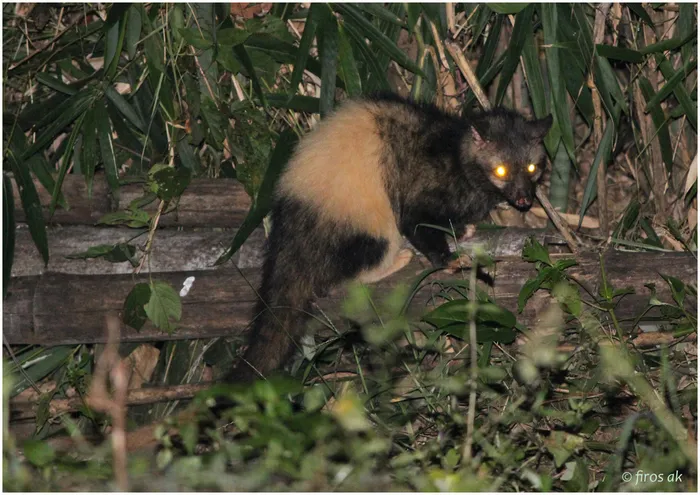
Asian Palm Civet (Paradoxurus hermaphroditus). The Asian palm civet can use varied habitats; captivity and civet-coffee production should be distinguished from its wild behaviour.
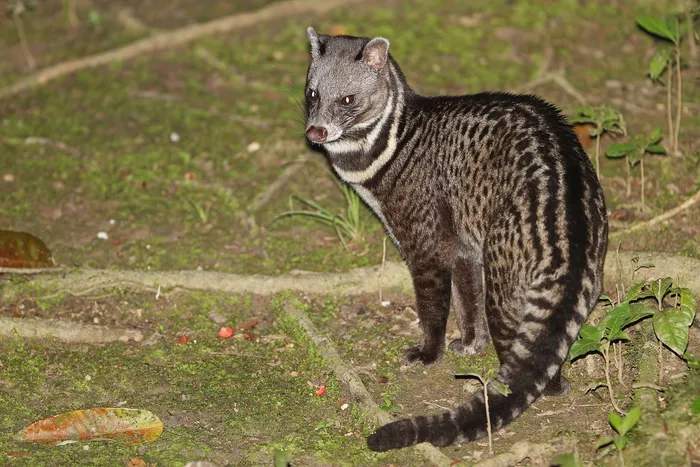
The Malay civet (Viverra tangalunga) is a ground-dwelling, black-spotted civet with a black-and-white banded tail, common in the forests of Sumatra and Borneo.
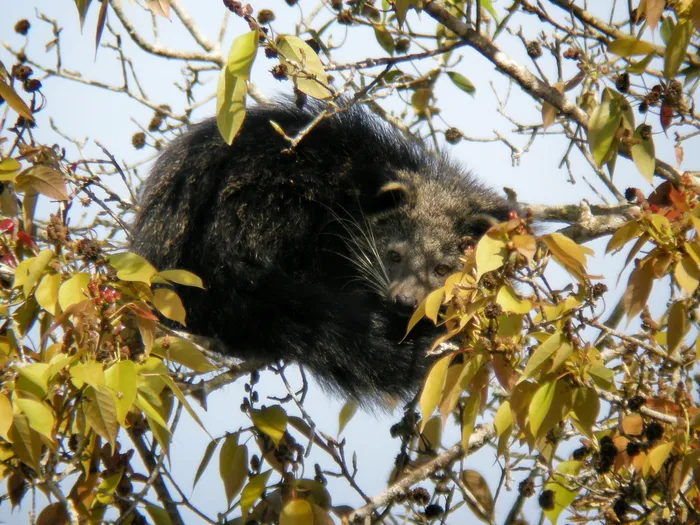
The binturong (Arctictis binturong) is the largest civet, a tree-dwelling mammal with a gripping tail, found in the forests of Sumatra, Borneo and Java.
Support this cause from outside Indonesia
If you live outside Indonesia and want to fund work on this issue, you can fund frontline animal rescue with World Animal Rescue Network.
Related site: PanduanHewan’s founder is also a director of World Animal Rescue Network. PanduanHewan itself does not accept donations, and this invitation is not directed at people in Indonesia. Before giving to any organisation, check how it is registered and how it reports on spending.
An Indonesian organisation working on this cause?
Officially registered organisations (a yayasan or perkumpulan with legal status on AHU, and a PUB permit where they raise money from the public) can contact us to be listed on this cause page free of charge. Every request is checked first, and a listing is not an endorsement.
Sources and references
- Permen LHK No. P.106/MENLHK/SETJEN/KUM.1/12/2018, Lampiran: jenis satwa dilindungi (famili Viverridae, no. 131–133) ↗
- IUCN Red List: Common Palm Civet Paradoxurus hermaphroditus (Duckworth et al., assessed 2015, amended 2024) ↗
- Species+ (UNEP-WCMC and CITES Secretariat) — Paradoxurus hermaphroditus, CITES listing (API data) ↗
- Lewis-Whelan et al. (2024), Welfare and management of civets in civet coffee tourism plantations, J Appl Anim Welf Sci 27(3) (abstract) ↗
- Roberts (2020), The Asian palm civet: baseline findings in ecology, captive husbandry and effects of trade in civet coffee, PhD thesis, Oxford Brookes University ↗
- Morcatty et al. (2022), Risk of viral infectious diseases from live bats, primates, rodents and carnivores for sale in Indonesian wildlife markets, Viruses 14(12): 2756 ↗
- Permentan No. 37/Permentan/KB.120/6/2015 tentang Cara Produksi Kopi Luwak melalui Pemeliharaan Luwak yang Memenuhi Prinsip Kesejahteraan Hewan (JDIH BPK) ↗
- UU No. 1 Tahun 2023 tentang KUHP (JDIH BPK) ↗
- Moorhouse et al. (2015), The customer isn't always right: conservation and animal welfare implications of the increasing demand for wildlife tourism, PLoS One 10(10): e0138939 ↗
- Gluconobacter dominates the gut microbiome of the Asian palm civet Paradoxurus hermaphroditus that produces kopi luwak, PeerJ (2020) ↗
- D'Cruze et al. (2014), What is the true cost of the world's most expensive coffee?, Oryx 48(2): 170–171 ↗
- Carder et al. (2016), The animal welfare implications of civet coffee tourism in Bali, Animal Welfare 25(2) (abstract) ↗
- Lachenmeier & Schwarz (2021), Digested civet coffee beans (kopi luwak): an unfortunate trend in specialty coffee caused by mislabeling of Coffea liberica?, Foods 10(6): 1329 ↗
- Hooper (2022), Cat-Poo-Chino and captive wildlife: tourist perceptions of Balinese kopi luwak agrotourism, Society & Animals (abstract) ↗
- Putri, Mayasari & Hiroyuki (2022), Gambaran kesejahteraan musang luwak tangkar penghasil biji kopi luwak Pegunungan Malabar, Jawa Barat, Acta Veterinaria Indonesiana 10(1): 58–70 ↗
- Ditjen KSDAE KLHK — Kuota Pengambilan Tumbuhan Alam dan Penangkapan Satwa Liar Periode Tahun 2024 (arsip Balai Kliring Kehati) ↗
- PP No. 8 Tahun 1999 tentang Pemanfaatan Jenis Tumbuhan dan Satwa Liar (JDIH BPK) ↗
- Permen LHK No. 18 Tahun 2024 tentang Pemanfaatan Jenis TSL dalam bentuk Penangkaran, Pemeliharaan untuk Kesenangan, Perdagangan, dan Peragaan (JDIH BPK) ↗
- Ditjen KSDAE Kementerian Kehutanan — Kuota Pemanfaatan Spesies ↗
- UU No. 32 Tahun 2024 tentang Perubahan atas UU No. 5 Tahun 1990 (JDIH BPK) ↗
- Kompas.com — Warga Pekalongan tangkap binturong satwa dilindungi, sempat dikira luwak (29 September 2026) ↗
- UU No. 1 Tahun 2026 tentang Penyesuaian Pidana (JDIH BPK) ↗
- Permentan No. 32 Tahun 2025 tentang Penyelenggaraan Kesejahteraan Hewan (JDIH BPK) ↗
- UU No. 41 Tahun 2014 tentang Perubahan atas UU No. 18 Tahun 2009 (Peternakan dan Kesehatan Hewan), JDIH BPK ↗
- Diskominfo Provinsi Jawa Timur — Diminati pasar dunia, produksi kopi luwak harus SNI (24 Juli 2015) ↗
- BSN — Tingkatkan produktivitas kopi Indonesia, BSN kembangkan SNI kopi ↗
- Jumhawan et al. (2013), Selection of discriminant markers for authentication of Asian palm civet coffee (kopi luwak): a metabolomics approach, J Agric Food Chem (abstract) ↗
- WHO — Severe acute respiratory syndrome (SARS), health topic ↗
- WHO — Summary of probable SARS cases with onset of illness from 1 November 2002 to 31 July 2003 ↗
- Review of bats and SARS, Emerging Infectious Diseases 12(12) (2006) ↗
- Wang & Eaton (2007), Bats, civets and the emergence of SARS, Curr Top Microbiol Immunol 315 ↗
- Common palm civets Paradoxurus hermaphroditus are positively associated with humans and forest degradation, Journal of Animal Ecology (2022) (abstract) ↗
- WHO, OIE & UNEP (2021), Reducing public health risks associated with the sale of live wild animals of mammalian species in traditional food markets (interim guidance) ↗
- Carder et al. (2018), The impact of 'selfie' tourism on the behaviour and welfare of brown-throated three-toed sloths, Animals 8(11): 216 ↗
- Elephant 'selfies': evaluating a social-media wildlife-selfie warning, PLoS One 18(4) (2023) ↗
- Moorhouse, Elwin & D'Cruze (2025), Emotional and attitudinal responses to social media depictions of human–wildlife interactions at wildlife tourist attractions, Conservation Biology 40(1): e70130 ↗
- Ditjen KSDAE — BBKSDA Riau amankan musang luwak dan kucing hutan dari tempat hiburan (2 Desember 2020) ↗
- Linggau Pos — BKSDA Sumatera Selatan amankan 6 satwa dilindungi di Lubuk Linggau (7 November 2025) ↗
- Pengaduan Gakkum Kehutanan (aplikasi pengaduan resmi Ditjen Penegakan Hukum Kehutanan) ↗
- Polri — Call Center 110 ↗
Checked 2026-10-01. Facts, figures and rules can change; check the date on the original source. Report errors through the corrections page. Send a correction