Quick answer
The issue in brief
Most forest and land fires (karhutla) in Kalimantan and Sumatra are started by people, often to clear land, and spread through peat dried out by long El Niño dry seasons. Official SiPongi data show 202,004 hectares burned from January to July 2026, and in August and September conservation officers (BKSDA) evacuated dozens of orangutans and other animals from fire areas. If you see a fire or an affected animal, keep away and report it to the Forestry Ministry fire post, Manggala Agni, 112 or BKSDA.
- Area burned, January–July 2026
- 202,004 hectares (47% more than 2019 and 80% more than 2023 for the same period) source ↗
- Worst season in SiPongi data
- 2015: 2,611,411 hectares burned source ↗
- Animals evacuated by BKSDA West Kalimantan (to 17 Sep 2026)
- 23 orangutans, 9 pangolins, 3 slow lorises, 1 proboscis monkey, 1 civet, 1 silvered langur source ↗
- Respiratory infection (ISPA) cases linked to the fires (to 16 Sep 2026)
- More than 151,000 cases in 7 provinces source ↗
- Penalty for clearing land by burning
- Up to 10 years in prison and/or a category VI fine (Rp2 billion): Law 32/2009 Article 108 as adjusted by Law 1/2026 source ↗
- Status of Bornean and Sumatran orangutans
- Critically Endangered on the IUCN Red List source ↗
- Report a fire or smoke
- Forestry Ministry fire post: 021-5704618, WhatsApp +62 8131-00-35000 source ↗
Indonesia forest fires 2026: where are they and how big?
The 2026 fire season came with a strong El Niño. In late July 2026 the weather agency BMKG said El Niño was active and could become very strong, with fire risk rising from July and peaking in August and September. Its five priority provinces were Riau, West Kalimantan, Central Kalimantan, South Sumatra and Jambi.
The Forestry Ministry's official SiPongi data put the indicated burned area from January to July 2026 at 202,004.30 hectares, 47% more than the same period of 2019 and 80% more than 2023. About 57% lay in designated forest areas and 43% on other land. Up to July, West Kalimantan had the largest burned area (38,310.86 hectares); Riau recorded 15,738.92 hectares and Central Kalimantan 7,634.46. As of 1 October 2026 the SiPongi summary only runs to July, so there are no official burned-area figures yet for August or September.
The worst fire and smoke in August and September were in West and Central Kalimantan, also home to wild orangutans. On 2 September 2026 air quality in parts of both provinces was rated Very Unhealthy and visibility in Pontianak fell to about 200 metres. ASEAN raised Regional Alert Level 3 on 26 August, and on 5 September Indonesia's Foreign Ministry said the smoke had reached Sabah and Sarawak, Singapore, Brunei Darussalam and the Philippines, including Manila.
Evidence: BMKG (29 Juli 2026): BMKG perkuat antisipasi dampak El Nino 2026, fokus jaga ketersediaan air dan cegah karhutla ↗ · SiPongi+ Kementerian Kehutanan: Indikasi luas kebakaran hutan dan lahan per provinsi ↗ · Kementerian Kehutanan (13 Agustus 2026): Menhut: karhutla perlu diantisipasi, dampaknya terhadap masyarakat harus diminimalkan ↗ · SiPongi+ Kementerian Kehutanan: data rekapitulasi luas karhutla per provinsi 2015–2026 (data resmi di balik halaman Indikasi Luas Kebakaran) ↗ · Kementerian Kehutanan, Siaran Pers SP.482/HKLN/09/2026 (3 September 2026): Riau zero hotspot, Kemenhut terus perkuat pengendalian karhutla Kalimantan ↗ · Erb et al. (2018), Wildfire smoke impacts activity and energetics of wild Bornean orangutans, Scientific Reports 8:7606 ↗ · ABC News (4 September 2026): Indonesia battling wildfires as smoke haze spreads as far as the Philippines ↗ · ANTARA (7 September 2026): Indonesia’s 2026 fire season strains ASEAN haze response ↗
Why are there forest fires in Indonesia every year?
Most fires in Indonesia are started by people. BMKG explained that a strong El Niño had caused drought across most of the country, but an ignition source such as human activity was still needed, and experts said the 2026 fires were mainly caused by human activities. Globally, the WHO estimates that 80–95% of wildfires are ignited by people.
Fire is used because it is cheap. The World Bank found the 2015 fires were set to prepare farmland and to gain land cheaply, then spread out of control, fed by drought and El Niño, in the absence of controlled burning or adequate law enforcement. Research in Central Kalimantan found fires there were driven mainly by slash-and-burn farming, plus fire used to clear fishing areas and in land disputes.
The 2026 pattern is similar. The Forestry Ministry outlined several alleged causes, including land illegally sold and then burned for oil palm, and fire used to clear land for road building. The Environment Ministry, which sealed off 57 companies in Sumatra and Kalimantan, found that 95% of the burned locations on their land were oil palm plantations and almost 5% sugarcane.
Why every year? Repeated burning makes landscapes ever more fire-prone, and strong El Niño droughts make it worse. For 2026, BMKG forecast a drier and longer dry season than normal, with El Niño lasting into early 2027.
Evidence: ABC News (4 September 2026): Indonesia battling wildfires as smoke haze spreads as far as the Philippines ↗ · WHO fact sheet: Wildfires (31 July 2026) ↗ · World Bank (2016), The Cost of Fire: An Economic Analysis of Indonesia’s 2015 Fire Crisis ↗ · Harrison et al. (2024), Impacts of fire and prospects for recovery in a tropical peat forest ecosystem, PNAS 121:e2307216121 ↗ · Katadata (30 September 2026): KLH segel 57 entitas usaha imbas karhutla ↗ · Erb et al. (2018), Wildfire smoke impacts activity and energetics of wild Bornean orangutans, Scientific Reports 8:7606 ↗ · BMKG, siaran pers (10 Juni 2026): Puncak musim kemarau Agustus 2026, perkuat kesiapan hadapi dampak El Nino ↗
Why are peatland fires so hard to put out?
Wet peat does not burn easily, which is why BMKG uses weather modification to keep water levels normal and the peat saturated. But over recent decades peat swamp forests have been cleared and drained for farming, and drainage and irrigation canals have altered the hydrology, making the peat far more flammable. The World Bank notes that draining and converting peatland, largely for oil palm, worsens the haze.
Dry peat ignites easily and can burn underground, travelling unseen before breaking out somewhere unexpected. Peat fires can smoulder for days or even months until people or rain put them out. That is why ground crews, who find, suppress and cool the fire, are essential; water-bombing and weather modification can only support them.
Peat burns incompletely, releasing more emissions and particles. In 2015 about 33% of the burned area was peatland, and its haze blanketed parts of Indonesia and the region.
Peat is also about livelihoods: the head of the national research agency (BRIN) says 41 million people live around peat hydrological areas. Experts who met the President in September 2026 proposed water injection, village-run water pumps and alternative incomes such as sago, among other ideas.
Evidence: BMKG (29 Juli 2026): BMKG perkuat antisipasi dampak El Nino 2026, fokus jaga ketersediaan air dan cegah karhutla ↗ · Erb et al. (2018), Wildfire smoke impacts activity and energetics of wild Bornean orangutans, Scientific Reports 8:7606 ↗ · Orangutan Population and Habitat Viability Assessment 2016, final report (Kementerian LHK dan IUCN SSC CPSG) ↗ · World Bank (2016), The Cost of Fire: An Economic Analysis of Indonesia’s 2015 Fire Crisis ↗ · Harrison et al. (2024), Impacts of fire and prospects for recovery in a tropical peat forest ecosystem, PNAS 121:e2307216121 ↗ · ANTARA (7 September 2026): Indonesia’s 2026 fire season strains ASEAN haze response ↗ · Kementerian Kehutanan (13 Agustus 2026): Menhut: karhutla perlu diantisipasi, dampaknya terhadap masyarakat harus diminimalkan ↗ · ANTARA (24 September 2026): Menhut jelaskan Badan Pengelola Gambut langsung di bawah Presiden ↗
How big were the 2015, 2019 and 2023 fire seasons?
The Forestry Ministry's SiPongi data show three major seasons since 2015. The indicated burned area nationwide was 2,611,411 hectares in 2015, 1,649,258 hectares in 2019 and 1,161,193 hectares in 2023. In the other years from 2016 to 2025 it ranged from about 165,000 to 529,000 hectares a year.
The peat provinces of Sumatra and Kalimantan bear the brunt. In 2015 South Sumatra (646,299 hectares) and Central Kalimantan (583,833 hectares) had the largest burned areas, and the same two led again in 2019 (336,798 and 317,749 hectares). In 2023 South Kalimantan (190,395 hectares) and Central Kalimantan (165,896 hectares) were at the top.
The 2015 fires were an environmental and economic disaster. The World Bank estimated they cost Indonesia US$16.1 billion (Rp221 trillion). That year's peat fires were also the most severe fire activity and smoke pollution recorded since NASA's Earth-observing satellites began in the early 2000s.
Evidence: SiPongi+ Kementerian Kehutanan: data rekapitulasi luas karhutla per provinsi 2015–2026 (data resmi di balik halaman Indikasi Luas Kebakaran) ↗ · Kementerian Sekretariat Negara (24 September 2026): Presiden putuskan bentuk BPGMN, perkuat pencegahan karhutla dari desa ↗ · World Bank (2016), The Cost of Fire: An Economic Analysis of Indonesia’s 2015 Fire Crisis ↗ · Erb et al. (2018), Wildfire smoke impacts activity and energetics of wild Bornean orangutans, Scientific Reports 8:7606 ↗
How do the fires affect orangutans and other animals?
Fire kills and injures animals directly, and its smoke can kill indirectly. A 2016 orangutan population assessment notes that fire also destroys and fragments habitat and lowers the forest's carrying capacity, leaving some survivors with debilitating injuries.
Smoke alone does harm. In the Tuanan peat swamp forest in Central Kalimantan, adult male orangutans rested more, travelled less and burned fat reserves after the 2015 smoke. During heavy smoke they also called less often and with weaker voices, changes that mostly lasted two months after the air cleared.
The damage lasts. Sixteen years of data from Sebangau National Park show habitat structure, tree density and canopy cover in burned forest fell by 58 to 98%. Major fires crashed valuable fish populations within three months and drove a decline in threatened vertebrates over nine months.
In 2026 the toll was visible. Manggala Agni firefighters in Ketapang found a dead pangolin at a fire site and said snakes were the animals most often found dead (22 August). In early September, BKSDA West Kalimantan confirmed the death of an adult male orangutan found collapsed in an oil palm plantation near the fires; changes in his lungs were thought to be linked to smoke. Evacuation figures count only rescued animals, not those that died or were never found.
Survivors are often pushed into plantations and villages once their forest has burned. A study of orangutan translocations from 2005 to 2022 found 127 of 743 captures (17%) mentioned forest fires. In Sumatra, core Sumatran orangutan populations include the Tripa and Trumon-Singkil peat swamps, a forest type that is particularly vulnerable to fire.
Evidence: Orangutan Population and Habitat Viability Assessment 2016, final report (Kementerian LHK dan IUCN SSC CPSG) ↗ · Erb et al. (2018), Wildfire smoke impacts activity and energetics of wild Bornean orangutans, Scientific Reports 8:7606 ↗ · Erb et al. (2023), Wildfire smoke linked to vocal changes in wild Bornean orangutans, iScience 26:107088 ↗ · Harrison et al. (2024), Impacts of fire and prospects for recovery in a tropical peat forest ecosystem, PNAS 121:e2307216121 ↗ · detikTravel/ANTARA (22 Agustus 2026): Karhutla mengancam satwa, ular dan trenggiling ditemukan mati di Kalbar ↗ · Katadata (3 September 2026): Orangutan Sempurna tewas, paru-paru rusak diduga akibat menghirup asap karhutla ↗ · Katadata (11 September 2026): BKSDA Kalbar evakuasi 24 satwa liar terdampak karhutla ↗ · Kementerian Kehutanan, Siaran Pers SP.534/HKLN/09/2026 (17 September 2026): Upaya serius Kemenhut rescue satwa liar terdampak karhutla ↗ · Outcomes of orangutan wild-to-wild translocations reveal conservation and welfare risks (2025), PLOS ONE ↗
What happens to animals rescued from the fires?
Wildlife rescue is led by the Forestry Ministry's conservation offices (BKSDA) with partners and local people. Ministerial Regulation 17/2024 on species rescue covers threatened animals whose habitat has shrunk, become isolated or been damaged by natural disasters or human activity, including animals affected by disasters.
The 2026 scale was large. By 17 September, BKSDA West Kalimantan had recorded 23 orangutans evacuated, plus 9 pangolins, 3 slow lorises, a proboscis monkey, a civet and a silvered langur. In Palangka Raya on 25 and 26 September, a joint team rescued a female orangutan of about four who had clung to a tree with burns to both hands and feet.
Officers secure the animal, check its health, then move it to safe forest or to a rehabilitation centre. Release can be delayed until the weather improves and the forest is confirmed safe from fire.
Moving animals is no automatic fix. IUCN guidelines require conservation translocations to bring a measurable conservation benefit and to manage disease risk, and a study of orangutans recommends wild-to-wild translocation only in exceptional circumstances, with monitoring after release. Preventing fires and protecting the remaining forest matter far more than rescue.
Evidence: Permen LHK No. 17 Tahun 2024 tentang Penyelamatan Jenis Satwa (JDIH BPK) ↗ · Kementerian Kehutanan, Siaran Pers SP.534/HKLN/09/2026 (17 September 2026): Upaya serius Kemenhut rescue satwa liar terdampak karhutla ↗ · ANTARA (30 September 2026): Tim gabungan evakuasi orang utan dari lokasi karhutla di Palangka Raya ↗ · Katadata (3 September 2026): Orangutan Sempurna tewas, paru-paru rusak diduga akibat menghirup asap karhutla ↗ · IUCN/SSC (2013), Guidelines for Reintroductions and Other Conservation Translocations, version 1.0 ↗ · Outcomes of orangutan wild-to-wild translocations reveal conservation and welfare risks (2025), PLOS ONE ↗
Is the haze dangerous to health?
Fire smoke carries fine PM2.5 particles that can enter the airways and raise the risk of acute respiratory infections (ISPA); the WHO says about 90% of the particle mass from wildfires is PM2.5. Smoke also contains carbon monoxide, a poisonous gas that cuts the oxygen reaching the heart and brain. Children, pregnant women, older people and anyone with asthma or lung disease are most at risk.
As of 21 August 2026 the Health Ministry reported fires in 87 districts and cities across seven provinces, with about 3 million people in 37 of them directly exposed to haze. By 16 September more than 151,000 ISPA cases had been recorded and 1,898 health workers deployed. The smoke crossed borders too: Manila's air quality reached acutely unhealthy levels from 30 August to 2 September 2026.
The Health Ministry advises wearing a mask when air quality worsens, limiting time outdoors and checking the air quality index on an official app. If you have shortness of breath, a persistent cough, chest pain or severe eye irritation, go to the nearest community health centre (puskesmas) or hospital. The Halo Kemenkes line is 1500-567. This page gives no medication advice; follow health workers' instructions.
Evidence: Kementerian Kesehatan (21 Agustus 2026): Menkes: pakai masker dan pantau kualitas udara untuk cegah dampak asap karhutla ↗ · WHO fact sheet: Wildfires (31 July 2026) ↗ · Erb et al. (2018), Wildfire smoke impacts activity and energetics of wild Bornean orangutans, Scientific Reports 8:7606 ↗ · ANTARA (21 September 2026): Kemenkes kirim 1.898 nakes respons 151 ribu ISPA akibat karhutla ↗ · ABC News (4 September 2026): Indonesia battling wildfires as smoke haze spreads as far as the Philippines ↗
Is it illegal to burn land in Indonesia?
Clearing land by burning is illegal. Law 32/2009 on Environmental Protection and Management, as amended by the Job Creation law, bans anyone from clearing land by burning (Article 69(1)(h)). The local-custom exception is narrow: at most 2 hectares per household, for local crop varieties, inside a firebreak. It gives companies no legal basis for clearing land at commercial scale.
The penalty is in Article 108. The original 2009 text set a minimum of three years in prison; since 2 January 2026 the annex to Law 1/2026 on criminal-penalty adjustment sets it at up to 10 years and/or a fine of up to category VI, which is Rp2 billion under the Criminal Code. The Environment Ministry can also impose administrative sanctions and bring civil claims.
Article 56 of Law 39/2014 on Plantations bans plantation businesses from clearing or working land by burning and requires them to have fire-control systems and equipment. The penalty is up to 10 years in prison and a fine of up to category VI (Rp2 billion); for corporations the maximum fine rises by a third. The Forestry Law, as amended by the Job Creation law, also bans burning forests.
The animals are protected too. Law 5/1990 as amended by Law 32/2024 bans burning in nature reserve areas (Article 19(2)) and bans hunting, catching, injuring, killing, owning or keeping protected animals (Article 21(2)(a)). Bornean and Sumatran orangutans, Sunda pangolins, proboscis monkeys and silvered langurs are listed as protected in the annex of Regulation P.106/2018, so they may not be caught or kept even when found fleeing a fire. Hurting any animal without proper purpose is animal cruelty under Article 337 of the Criminal Code (in force since 2 January 2026), and Article 66A of Law 41/2014 also bans animal abuse.
Evidence: UU No. 32 Tahun 2009 tentang Perlindungan dan Pengelolaan Lingkungan Hidup (JDIH BPK) ↗ · JDIH Kabupaten Sukoharjo: Hukumnya membakar hutan untuk membuka lahan ↗ · JDIH BPK: metadata UU No. 1 Tahun 2026 tentang Penyesuaian Pidana ↗ · JDIH BPK: metadata UU No. 1 Tahun 2023 (KUHP) ↗ · Katadata (30 September 2026): KLH segel 57 entitas usaha imbas karhutla ↗ · UU No. 39 Tahun 2014 tentang Perkebunan (JDIH BPK) ↗ · UU No. 32 Tahun 2024 tentang Perubahan atas UU No. 5 Tahun 1990 tentang Konservasi Sumber Daya Alam Hayati dan Ekosistemnya (JDIH BPK) ↗ · Permen LHK No. P.106/MENLHK/SETJEN/KUM.1/12/2018 tentang Jenis Tumbuhan dan Satwa yang Dilindungi (JDIH Kementerian Kehutanan) ↗ · UU No. 41 Tahun 2014 tentang Perubahan atas UU No. 18 Tahun 2009 tentang Peternakan dan Kesehatan Hewan (JDIH BPK) ↗
What are the government and communities doing about the fires?
The front line is Manggala Agni, the Forestry Ministry's forest-fire brigade, set up in 2002 for prevention, firefighting and post-fire work. Villages have Masyarakat Peduli Api (MPA), volunteers trained or briefed to help control fires. In early September 2026, joint operations involved Manggala Agni, the armed forces, police, national and regional disaster agencies, BMKG, MPA groups, companies and local governments, backed by 53 aircraft.
Peat restoration began with the Peatland Restoration Agency (2016) and continued under the Peatland and Mangrove Restoration Agency (BRGM), tasked with restoring about 1.2 million hectares of peat in four years. BRGM's mandate ended on 31 December 2024 and peat management passed to the Forestry Ministry. On 24 September 2026 the President decided to create a National Peat and Mangrove Management Agency (BPGMN) to strengthen prevention in six peat provinces, with a village-based approach that includes MPA groups.
Enforcement stepped up in 2026. By 29 September police had handled 341 reports and named 196 individual suspects, and by 30 September four corporations. The Forestry Ministry sanctioned 26 permit holders linked to about 10,959 hectares of fires, revoking five companies' permits on 21 September. The Environment Ministry sealed off 57 companies in Sumatra and Kalimantan.
Evidence: Ditjen Gakkum Kehutanan: Kemenhut perkuat kapasitas Manggala Agni untuk kendalikan kebakaran hutan ↗ · Permen LHK No. P.32/MENLHK/SETJEN/KUM.1/3/2016 tentang Pengendalian Kebakaran Hutan dan Lahan (JDIH BPK) ↗ · Kementerian Kehutanan, Siaran Pers SP.482/HKLN/09/2026 (3 September 2026): Riau zero hotspot, Kemenhut terus perkuat pengendalian karhutla Kalimantan ↗ · Perpres No. 120 Tahun 2020 tentang Badan Restorasi Gambut dan Mangrove (JDIH BPK) ↗ · ANTARA (24 September 2026): Menhut jelaskan Badan Pengelola Gambut langsung di bawah Presiden ↗ · Kementerian Sekretariat Negara (24 September 2026): Presiden putuskan bentuk BPGMN, perkuat pencegahan karhutla dari desa ↗ · VIVA (29 September 2026): 341 kasus karhutla diusut, 196 orang jadi tersangka ↗ · RRI (1 Oktober 2026): Bareskrim Polri tetapkan empat korporasi jadi tersangka karhutla ↗ · Periskop (29 September 2026): Karhutla 10.958 hektare, Kemenhut cabut 5 PBPH dan bekukan 13 izin ↗ · Kementerian Kehutanan, Siaran Pers SP.544/HKLN/09/2026 (21 September 2026): Menhut kembali cabut izin 5 perusahaan terkait karhutla ↗ · Katadata (30 September 2026): KLH segel 57 entitas usaha imbas karhutla ↗
How do I report a forest fire or an animal affected by fire?
If you see smoke, flames or other signs of fire, report it early to the Forestry Ministry's fire post (Posko Karhutla): phone 021-5704618, WhatsApp +62 8131-00-35000 or email posko.karhutla@kehutanan.go.id. You can also call the nearest Manggala Agni operations area (Daops), which fights fires 24 hours a day free of charge. Give your name, the coordinates and, if safe, photos or video.
If people or homes are at risk, call 112, Indonesia's single emergency number for fires and natural disasters, run at national and regional level. Suspected deliberate burning can also be reported to the police on 110. Do not enter a fire area or try to fight the fire yourself.
If you find an orangutan or other wild animal affected by fire, do not catch, move or keep it. The Forestry Ministry asks people to call officers, give the exact location, describe the animal's condition, take photos only if safe, and leave the rest to officers. The 24-hour wildlife rescue lines are BKSDA West Kalimantan 0811-577-6767, BKSDA Central Kalimantan 0811-5218-500 and BKSDA East Kalimantan 0821-1333-8181. Elsewhere, contact the local BKSDA office.
For health problems from smoke, call Halo Kemenkes on 1500-567 or visit a community health centre (puskesmas). Hotspot and burned-area updates are published on SiPongi+ (sipongi.gakkum.kehutanan.go.id).
Evidence: Kementerian Kehutanan, Siaran Pers SP.501/HKLN/09/2026 (7 September 2026): Cek informasi terbaru karhutla Kemenhut ↗ · Ditjen Gakkum Kehutanan: Mekanisme pelaporan kejadian kebakaran hutan dan lahan, Balai Dalkarhut Wilayah Sumatera ↗ · Permenkominfo No. 10 Tahun 2016 tentang Layanan Nomor Tunggal Panggilan Darurat (JDIH BPK) ↗ · Website resmi Polri ↗ · Kementerian Kehutanan, Siaran Pers SP.534/HKLN/09/2026 (17 September 2026): Upaya serius Kemenhut rescue satwa liar terdampak karhutla ↗ · Katadata (11 September 2026): BKSDA Kalbar evakuasi 24 satwa liar terdampak karhutla ↗ · RRI (6 September 2026): Tangani dampak karhutla, Kemenhut perkuat call center penyelamatan satwa ↗ · Kementerian Kesehatan (21 Agustus 2026): Menkes: pakai masker dan pantau kualitas udara untuk cegah dampak asap karhutla ↗
Timeline
- 1997 The 1997 fires are recorded as Indonesia's most disastrous up to that time. source ↗
- 2002 The Manggala Agni forest-fire brigade is set up. source ↗
- 2009-10 Law 32/2009 on Environmental Protection and Management is enacted. source ↗
- 2014-10 Law 39/2014 on Plantations is enacted. source ↗
- 2015 The worst season in SiPongi data: 2,611,411 hectares burned. source ↗
- 2015 The World Bank puts the cost of the 2015 fires to Indonesia at US$16.1 billion. source ↗
- 2016-03 Ministerial Regulation P.32/2016 on forest and land fire control is issued. source ↗
- 2019 1,649,258 hectares burn nationwide. source ↗
- 2020-12 Presidential Regulation 120/2020 on the Peatland and Mangrove Restoration Agency (BRGM) is issued. source ↗
- 2023 1,161,193 hectares burn nationwide. source ↗
- 2024-12 BRGM's mandate ends on 31 December 2024. source ↗
- 2026-01 Law 1/2026 on criminal-penalty adjustment takes effect on 2 January 2026. source ↗
- 2026-07 BMKG says the 2026 El Niño has reached the strong category. source ↗
- 2026-08 Health Ministry: about 3 million people in 37 districts and cities directly exposed to haze (21 August). source ↗
- 2026-08 ASEAN raises Regional Alert Level 3 for transboundary haze (26 August). source ↗
- 2026-09 BKSDA West Kalimantan records 23 orangutans and 16 other animals evacuated from fire areas (17 September). source ↗
- 2026-09 The Forestry Ministry revokes five companies' permits over the fires (21 September). source ↗
- 2026-09 The President decides to create a National Peat and Mangrove Management Agency (BPGMN) (24 September). source ↗
- 2026-09 Police have named 196 individual suspects in fire cases (29 September). source ↗
- 2026-09 National police name four corporations as suspects (to 30 September). source ↗
How to help
- Never burn land, rubbish or scrub, especially in the dry season; back villages that clear land without fire.
- Report smoke or flames early: the Forestry Ministry fire post on 021-5704618 (WhatsApp +62 8131-00-35000), the nearest Manggala Agni office, or 112.
- If a wild animal flees a fire near you, keep away and call BKSDA; do not catch, feed, keep or move it.
- Never buy or accept a wild animal offered as a fire victim; report the offer to BKSDA or the police.
- Do not visit rescue sites or film fire-affected animals for social media; share the official hotlines, not the animals' locations.
- Follow the Health Ministry's haze advice: wear a mask, spend less time outdoors and check the air quality.
- Plan how you would evacuate pets and livestock if smoke or fire comes near.
- To help on the ground, ask your village, the regional disaster agency (BPBD) or Manggala Agni about community fire groups (MPA); never enter a fire area without training.
- Before giving to an appeal for animals rescued from fires, check the organisation's legal registration, fundraising permit and spending reports.
Common questions
What does karhutla mean?
Karhutla is short for kebakaran hutan dan lahan, the official term for forest and land fires. From January to July 2026 about 57% of the burned area was in designated forest areas and 43% on other land.
Source: Kementerian Kehutanan, Siaran Pers SP.544/HKLN/09/2026 (21 September 2026): Menhut kembali cabut izin 5 perusahaan terkait karhutla ↗ · Kementerian Kehutanan (13 Agustus 2026): Menhut: karhutla perlu diantisipasi, dampaknya terhadap masyarakat harus diminimalkan ↗
When did the 2026 Kalimantan fires start, and are they out?
Fires burned from early 2026 (202,004 hectares by July), but BMKG expected the risk to rise from July and peak in August and September. High-confidence hotspots fell to 688 nationwide on 21 September 2026, but peat fires can smoulder underground for a long time, so check SiPongi+ and local authorities.
Source: SiPongi+ Kementerian Kehutanan: Indikasi luas kebakaran hutan dan lahan per provinsi ↗ · BMKG (29 Juli 2026): BMKG perkuat antisipasi dampak El Nino 2026, fokus jaga ketersediaan air dan cegah karhutla ↗ · Kementerian Sekretariat Negara (21 September 2026): Pemerintah perkuat pengendalian karhutla, hotspot nasional turun 844 titik ↗ · Harrison et al. (2024), Impacts of fire and prospects for recovery in a tropical peat forest ecosystem, PNAS 121:e2307216121 ↗
Does El Niño cause the fires?
El Niño does not light the fires. It makes the dry season drier and longer, so land, especially peat, burns more easily, but the ignition still comes from people.
Source: ABC News (4 September 2026): Indonesia battling wildfires as smoke haze spreads as far as the Philippines ↗ · BMKG, siaran pers (10 Juni 2026): Puncak musim kemarau Agustus 2026, perkuat kesiapan hadapi dampak El Nino ↗
How many orangutans have been affected by the 2026 fires?
As of 1 October 2026 we have not found an official national figure. By 17 September 2026, BKSDA West Kalimantan had recorded 23 orangutans evacuated, and in early September an adult male was confirmed dead. Evacuation figures count only rescued animals, not those that died or were never found.
Source: Kementerian Kehutanan, Siaran Pers SP.534/HKLN/09/2026 (17 September 2026): Upaya serius Kemenhut rescue satwa liar terdampak karhutla ↗ · Katadata (3 September 2026): Orangutan Sempurna tewas, paru-paru rusak diduga akibat menghirup asap karhutla ↗ · Katadata (11 September 2026): BKSDA Kalbar evakuasi 24 satwa liar terdampak karhutla ↗
Can I keep a baby orangutan I find after a fire?
No. Orangutans are listed in the annex of Regulation P.106/2018 as protected, and Law 5/1990 as amended by Law 32/2024 bans catching, owning or keeping protected animals. Call BKSDA so that officers can deal with it.
Source: Permen LHK No. P.106/MENLHK/SETJEN/KUM.1/12/2018 tentang Jenis Tumbuhan dan Satwa yang Dilindungi (JDIH Kementerian Kehutanan) ↗ · UU No. 32 Tahun 2024 tentang Perubahan atas UU No. 5 Tahun 1990 tentang Konservasi Sumber Daya Alam Hayati dan Ekosistemnya (JDIH BPK) ↗ · Kementerian Kehutanan, Siaran Pers SP.534/HKLN/09/2026 (17 September 2026): Upaya serius Kemenhut rescue satwa liar terdampak karhutla ↗
Animals involved
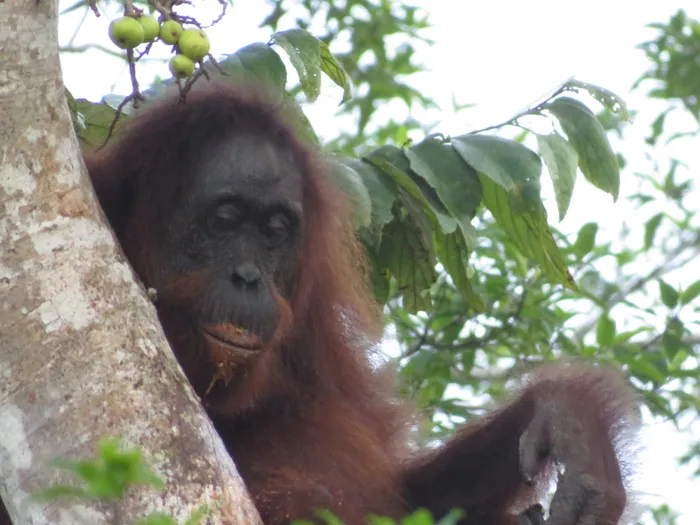
A great ape of Borneo’s forests, including Kalimantan’s peat swamps. Population diversity and connections between habitats are central to its conservation.
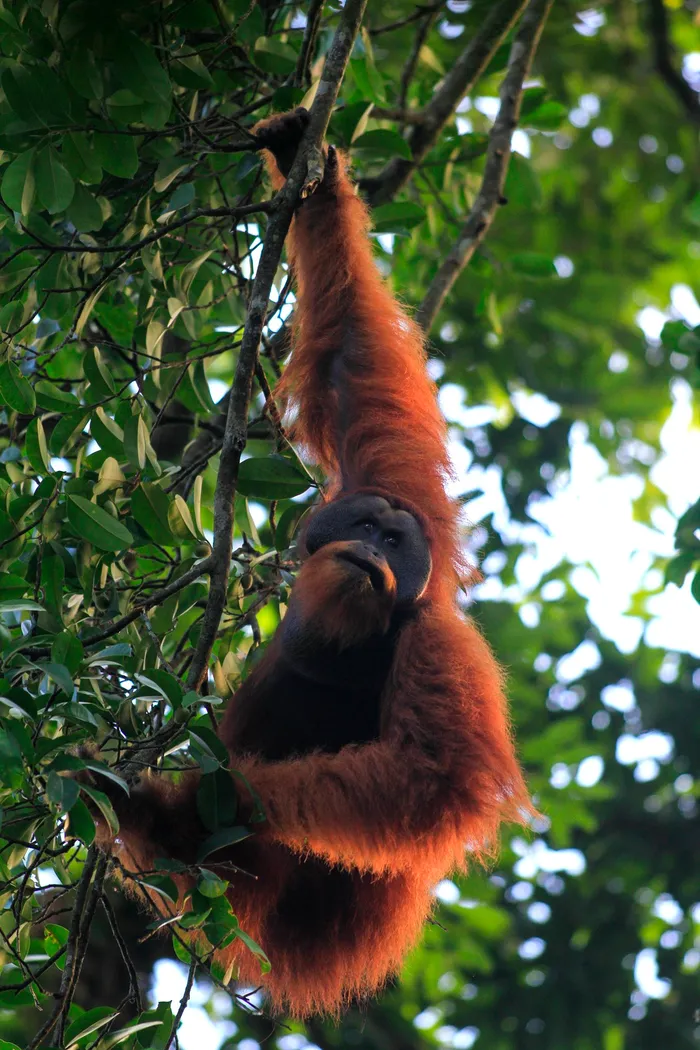
A great ape of northern Sumatra’s forest canopy. Its future depends on connected forests, regenerating trees, and safe coexistence with people.
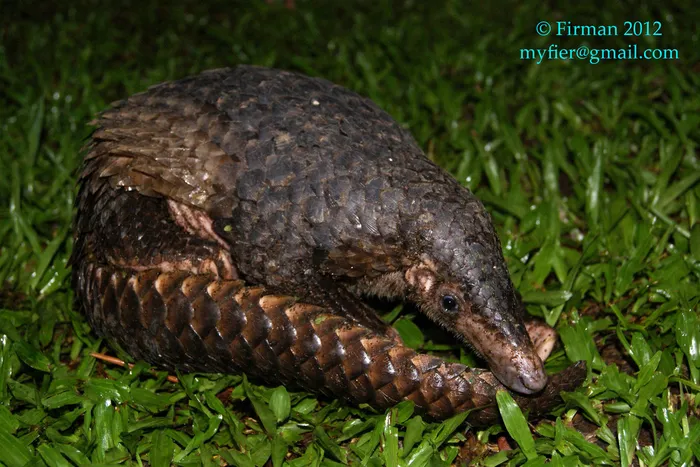
A scaled, ant- and termite-eating mammal threatened by illegal trade. Climbing and secretive behaviour make direct observation difficult.
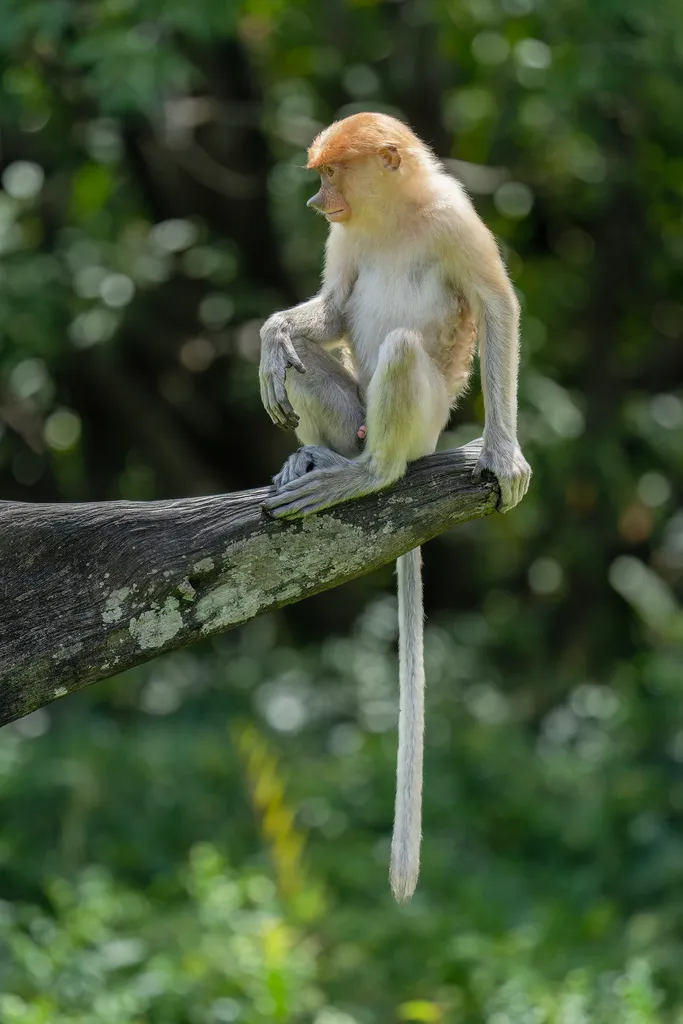
A Borneo-endemic primate closely linked to river forests, mangroves, and swamps. The male’s large nose is only one of its distinctive adaptations.
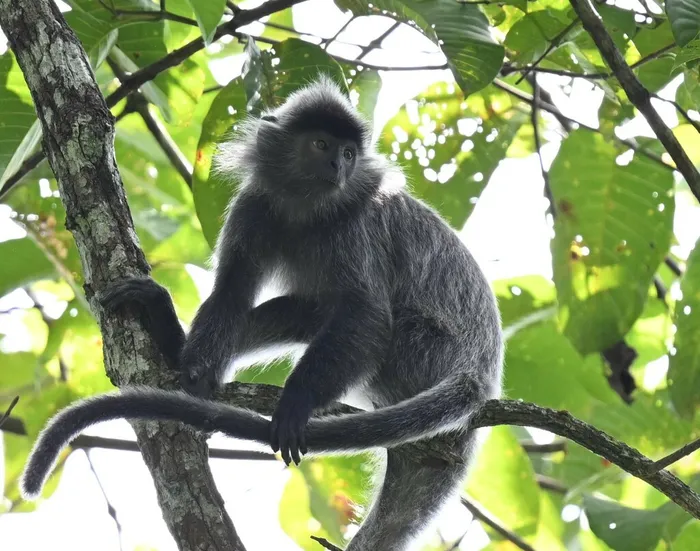
Silvered Leaf Monkey (Trachypithecus cristatus). Silvered leaf monkeys use coastal, mangrove and riverine forest; presence at one site cannot stand for their status across Borneo or Sumatra.
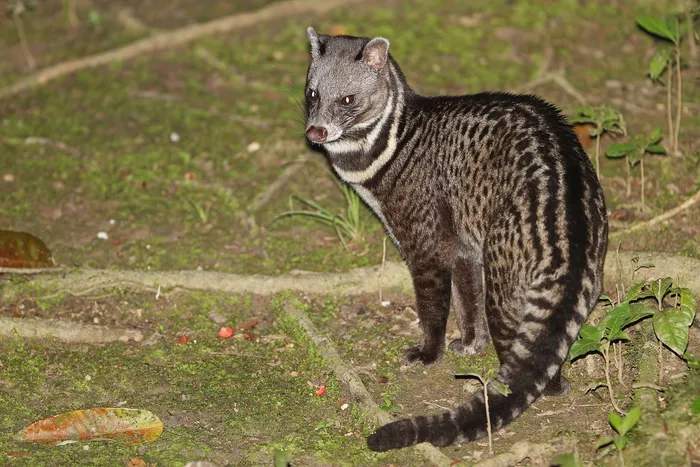
The Malay civet (Viverra tangalunga) is a ground-dwelling, black-spotted civet with a black-and-white banded tail, common in the forests of Sumatra and Borneo.
Support this cause from outside Indonesia
If you live outside Indonesia and want to fund work on this issue, you can help Kalimantan’s orangutans and wildlife affected by fires with World Animal Rescue Network.
Related site: PanduanHewan’s founder is also a director of World Animal Rescue Network. PanduanHewan itself does not accept donations, and this invitation is not directed at people in Indonesia. Before giving to any organisation, check how it is registered and how it reports on spending.
An Indonesian organisation working on this cause?
Officially registered organisations (a yayasan or perkumpulan with legal status on AHU, and a PUB permit where they raise money from the public) can contact us to be listed on this cause page free of charge. Every request is checked first, and a listing is not an endorsement.
Sources and references
- SiPongi+ Kementerian Kehutanan: Indikasi luas kebakaran hutan dan lahan per provinsi ↗
- SiPongi+ Kementerian Kehutanan: data rekapitulasi luas karhutla per provinsi 2015–2026 (data resmi di balik halaman Indikasi Luas Kebakaran) ↗
- Kementerian Kehutanan, Siaran Pers SP.534/HKLN/09/2026 (17 September 2026): Upaya serius Kemenhut rescue satwa liar terdampak karhutla ↗
- ANTARA (21 September 2026): Kemenkes kirim 1.898 nakes respons 151 ribu ISPA akibat karhutla ↗
- JDIH Kabupaten Sukoharjo: Hukumnya membakar hutan untuk membuka lahan ↗
- Orangutan Population and Habitat Viability Assessment 2016, final report (Kementerian LHK dan IUCN SSC CPSG) ↗
- Kementerian Kehutanan, Siaran Pers SP.501/HKLN/09/2026 (7 September 2026): Cek informasi terbaru karhutla Kemenhut ↗
- BMKG (29 Juli 2026): BMKG perkuat antisipasi dampak El Nino 2026, fokus jaga ketersediaan air dan cegah karhutla ↗
- Kementerian Kehutanan (13 Agustus 2026): Menhut: karhutla perlu diantisipasi, dampaknya terhadap masyarakat harus diminimalkan ↗
- Kementerian Kehutanan, Siaran Pers SP.482/HKLN/09/2026 (3 September 2026): Riau zero hotspot, Kemenhut terus perkuat pengendalian karhutla Kalimantan ↗
- Erb et al. (2018), Wildfire smoke impacts activity and energetics of wild Bornean orangutans, Scientific Reports 8:7606 ↗
- ABC News (4 September 2026): Indonesia battling wildfires as smoke haze spreads as far as the Philippines ↗
- ANTARA (7 September 2026): Indonesia’s 2026 fire season strains ASEAN haze response ↗
- WHO fact sheet: Wildfires (31 July 2026) ↗
- World Bank (2016), The Cost of Fire: An Economic Analysis of Indonesia’s 2015 Fire Crisis ↗
- Harrison et al. (2024), Impacts of fire and prospects for recovery in a tropical peat forest ecosystem, PNAS 121:e2307216121 ↗
- Katadata (30 September 2026): KLH segel 57 entitas usaha imbas karhutla ↗
- BMKG, siaran pers (10 Juni 2026): Puncak musim kemarau Agustus 2026, perkuat kesiapan hadapi dampak El Nino ↗
- ANTARA (24 September 2026): Menhut jelaskan Badan Pengelola Gambut langsung di bawah Presiden ↗
- Kementerian Sekretariat Negara (24 September 2026): Presiden putuskan bentuk BPGMN, perkuat pencegahan karhutla dari desa ↗
- Erb et al. (2023), Wildfire smoke linked to vocal changes in wild Bornean orangutans, iScience 26:107088 ↗
- detikTravel/ANTARA (22 Agustus 2026): Karhutla mengancam satwa, ular dan trenggiling ditemukan mati di Kalbar ↗
- Katadata (3 September 2026): Orangutan Sempurna tewas, paru-paru rusak diduga akibat menghirup asap karhutla ↗
- Katadata (11 September 2026): BKSDA Kalbar evakuasi 24 satwa liar terdampak karhutla ↗
- Outcomes of orangutan wild-to-wild translocations reveal conservation and welfare risks (2025), PLOS ONE ↗
- Permen LHK No. 17 Tahun 2024 tentang Penyelamatan Jenis Satwa (JDIH BPK) ↗
- ANTARA (30 September 2026): Tim gabungan evakuasi orang utan dari lokasi karhutla di Palangka Raya ↗
- IUCN/SSC (2013), Guidelines for Reintroductions and Other Conservation Translocations, version 1.0 ↗
- Kementerian Kesehatan (21 Agustus 2026): Menkes: pakai masker dan pantau kualitas udara untuk cegah dampak asap karhutla ↗
- JDIH BPK: metadata UU No. 32 Tahun 2009 ↗
- JDIH BPK: metadata UU No. 1 Tahun 2026 tentang Penyesuaian Pidana ↗
- JDIH BPK: metadata UU No. 1 Tahun 2023 (KUHP) ↗
- JDIH BPK: metadata UU No. 39 Tahun 2014 tentang Perkebunan ↗
- UU No. 32 Tahun 2024 tentang Perubahan atas UU No. 5 Tahun 1990 tentang Konservasi Sumber Daya Alam Hayati dan Ekosistemnya (JDIH BPK) ↗
- Permen LHK No. P.106/MENLHK/SETJEN/KUM.1/12/2018 tentang Jenis Tumbuhan dan Satwa yang Dilindungi (JDIH Kementerian Kehutanan) ↗
- UU No. 41 Tahun 2014 tentang Perubahan atas UU No. 18 Tahun 2009 tentang Peternakan dan Kesehatan Hewan (JDIH BPK) ↗
- Ditjen Gakkum Kehutanan: Kemenhut perkuat kapasitas Manggala Agni untuk kendalikan kebakaran hutan ↗
- JDIH BPK: metadata Permen LHK No. 32 Tahun 2016 ↗
- Perpres No. 120 Tahun 2020 tentang Badan Restorasi Gambut dan Mangrove (JDIH BPK) ↗
- VIVA (29 September 2026): 341 kasus karhutla diusut, 196 orang jadi tersangka ↗
- RRI (1 Oktober 2026): Bareskrim Polri tetapkan empat korporasi jadi tersangka karhutla ↗
- Periskop (29 September 2026): Karhutla 10.958 hektare, Kemenhut cabut 5 PBPH dan bekukan 13 izin ↗
- Kementerian Kehutanan, Siaran Pers SP.544/HKLN/09/2026 (21 September 2026): Menhut kembali cabut izin 5 perusahaan terkait karhutla ↗
- Ditjen Gakkum Kehutanan: Mekanisme pelaporan kejadian kebakaran hutan dan lahan, Balai Dalkarhut Wilayah Sumatera ↗
- Permenkominfo No. 10 Tahun 2016 tentang Layanan Nomor Tunggal Panggilan Darurat (JDIH BPK) ↗
- Website resmi Polri ↗
- RRI (6 September 2026): Tangani dampak karhutla, Kemenhut perkuat call center penyelamatan satwa ↗
- Kementerian Sekretariat Negara (21 September 2026): Pemerintah perkuat pengendalian karhutla, hotspot nasional turun 844 titik ↗
Checked 2026-10-01. Facts, figures and rules can change; check the date on the original source. Report errors through the corrections page. Send a correction