Quick answer
The issue in brief
Keeping a slow loris is illegal in Indonesia. The Sunda, Javan and Philippine slow lorises (N. coucang, N. javanicus and N. menagensis) are listed in the annex to Environment and Forestry Regulation P.106/2018, and Law 5/1990 as amended by Law 32/2024 bans anyone from owning, keeping or trading protected animals, with up to 15 years in prison. Slow lorises are also venomous primates whose bites can trigger anaphylaxis, and traded lorises often have their teeth clipped, so many die or can never be released: do not buy one, share pet-loris videos or touch one, and report sales to Gakkum Kehutanan (forestry law enforcement) or the BKSDA.
- Legal status in Indonesia
- Protected: listed in the P.106/2018 annex (entries 73–75) source ↗
- Javan slow loris (IUCN)
- Critically Endangered source ↗
- Sunda slow loris (IUCN)
- Endangered source ↗
- Philippine slow loris, N. menagensis (IUCN)
- Vulnerable source ↗
- CITES
- Appendix I since 13 September 2007 (the whole genus Nycticebus) source ↗
- Penalty for keeping or selling
- Up to 15 years in prison and/or a fine of up to category VII source ↗
- Teeth removed
- 64% of 180 confiscated lorises (2008–2011) source ↗
- Died after confiscation
- 28.6% of 77 confiscated Sunda slow lorises, within the first 6 months source ↗
- Anaphylaxis cases from bites
- 13 cases in the medical literature (compiled 2024) source ↗
- Lorises in Java and Bali markets
- 228 animals in 5 of 6 markets (2012–2014) source ↗
Why shouldn't a slow loris be kept as a pet?
There are three main reasons: slow lorises are protected by law, they are venomous, and they cannot live decently in a home. A slow loris is a small nocturnal primate from Asia that lives entirely in trees and feeds on plant gum (exudates) and live prey; in a lowland forest in Central Java, gum is the Javan slow loris's main food.
Because their dietary and habitat needs are so specialised, slow lorises have not thrived even in the best captive settings. In captivity they are known to suffer from many health problems, including dental disease, obesity, wasting and kidney disease, all of which have been linked to diet.
The harm is plain in lorises confiscated from the trade. Of 77 Sunda slow lorises seized together in Indonesia, 28.6% died within the first six months, mostly from traumatic injuries, and every infant died. A quarter of the survivors (25.4%) showed abnormal behaviour.
Evidence: Permen LHK No. P.106/MENLHK/SETJEN/KUM.1/12/2018, Lampiran: jenis satwa dilindungi (Lorisidae, no. 73–75) ↗ · Quarles et al. (2023), Normal redefined, Frontiers in Conservation Science ↗ · Dewi et al. (2022), The sticky tasty: the nutritional content of the exudativorous diet of the Javan slow loris in a lowland forest, Primates (abstrak) ↗ · Cabana, Dierenfeld, Wirdateti, Donati & Nekaris (2018), Trialling nutrient recommendations for slow lorises (Nycticebus spp.) based on wild feeding ecology, Journal of Animal Physiology and Animal Nutrition (abstrak) ↗ · Fuller et al. (2018), Welfare impacts of the illegal wildlife trade in a cohort of confiscated greater slow lorises, Journal of Applied Animal Welfare Science (abstrak) ↗
Are slow lorises protected in Indonesia?
Yes. The annex to Environment and Forestry Ministerial Regulation P.106/2018 on protected plant and animal species lists three slow lorises in the family Lorisidae: Nycticebus coucang (kukang, entry 73), N. javanicus (kukang jawa, entry 74) and N. menagensis (kukang kalimantan, entry 75). Slow lorises have been on Indonesia's protected species list since 1973.
Article 21(2) of Law 5/1990 as amended by Law 32/2024 bans anyone from hunting, catching, injuring, killing, storing, owning, keeping, transporting and/or trading a live protected animal (point a). The ban also covers body parts and goods made from protected animals (point c), commercial display on electronic media without a permit (point f) and unlicensed trading through electronic media (point g).
Environment and Forestry Regulation 18/2024 does allow wild animals to be kept for pleasure, but only captive-bred animals or lawful trade in captive-bred stock, with an approval, marking and valid papers, and for protected species only from the second captive generation. Researchers reviewing loris videos concluded that captive breeding rarely succeeds and legal trade is restricted, so most lorises on social media were obtained illegally.
A note on names: in 2013 researchers split the Bornean slow loris into four species, N. menagensis, N. bancanus, N. borneanus and N. kayan. The last three names are not listed in the P.106/2018 annex. The whole genus Nycticebus is listed in CITES Appendix I.
Evidence: Permen LHK No. P.106/MENLHK/SETJEN/KUM.1/12/2018, Lampiran: jenis satwa dilindungi (Lorisidae, no. 73–75) ↗ · Nekaris & Nijman (2018), Successful prosecution of slow loris traders in Indonesia, Oryx ↗ · UU No. 32 Tahun 2024, Pasal 21 ayat (2) huruf g ↗ · Permen LHK No. 18 Tahun 2024, Pasal 119 ayat (4) ↗ · Quarles et al. (2023), Normal redefined, Frontiers in Conservation Science ↗ · Munds, Nekaris & Ford (2013), Taxonomy of the Bornean slow loris, with new species Nycticebus kayan, American Journal of Primatology (abstrak) ↗ · Species+ (UNEP-WCMC dan Sekretariat CITES) — Nycticebus spp., riwayat daftar CITES (data API) ↗
Which law bans keeping a slow loris, and what is the penalty?
Keeping, owning or trading a live slow loris, including online without a permit, is punishable under Article 40A(1) of Law 32/2024. Since 2 January 2026, Law 1/2026 on Criminal Penalty Adjustment has removed special minimum sentences (originally at least 3 years in prison) and set the penalty at up to 15 years in prison and/or a fine of up to category VII, which is Rp5 billion under Article 79 of the Criminal Code.
Law 32/2024 also says these penalties may be increased by one third when the offence is committed using information technology (Article 40C(2)). In a 2025 Javan slow loris trading case in Batang, Gakkum Kehutanan charged the suspect under Article 40A(1)(d) and (f) in conjunction with Article 21(2)(a) and (c) of Law 32/2024.
General animal cruelty rules also exist. Article 337 of the new Criminal Code (Law 1/2023), in force since 2 January 2026, punishes anyone who hurts or injures an animal or harms its health excessively or without proper purpose; if the animal is disabled, gravely injured or dies, the maximum is 1 year 6 months in prison. Article 66A of Law 41/2014 bans abuse of animals that leaves them disabled, and that law defines animals to include those living in their habitat.
The law is being enforced. On 15 February 2018 a trader in Lubuk Basung, West Sumatra, was sentenced to 3.5 years in prison for trading slow lorises. In August 2024 the environment and forestry ministry arrested a trader in West Kalimantan during an attempted sale of two orangutans and a slow loris. In October 2025 Gakkum Kehutanan and the Central Java police arrested a teenager under 18 in Batang while exposing a network trading Javan slow lorises and other species online.
Evidence: UU No. 32 Tahun 2024, Pasal 40C ayat (2) ↗ · UU No. 1 Tahun 2026 tentang Penyesuaian Pidana, konsiderans menimbang ↗ · UU No. 1 Tahun 2023 tentang KUHP, Pasal 337 ayat (2) ↗ · Gakkum Kehutanan — Siaran pers: pelaku perdagangan satwa liar dilindungi ditangkap di Kabupaten Batang, Jawa Tengah (7 Oktober 2025) ↗ · UU No. 41 Tahun 2014, Pasal 1 (definisi Hewan) ↗ · Nekaris & Nijman (2018), Successful prosecution of slow loris traders in Indonesia, Oryx ↗ · detikNews (22 Agustus 2024) — KLHK tangkap pedagang ilegal 2 ekor anak orang utan dan 1 kukang di Kalbar ↗
How much is a slow loris, and can you buy one?
PanduanHewan does not list prices or sellers. Trading live slow lorises, including online without a permit, is banned by Article 21(2) of Law 5/1990 as amended by Law 32/2024, and a buyer who then owns or keeps one breaks the same ban. Researchers monitoring markets in Java and Bali in 2012–2014 found that all the primate trade they observed was illegal, and a study of loris videos concluded that most lorises shown on social media were obtained illegally.
Buying a loris to "rescue" it is also a mistake. Indonesia's environment ministry says demand for exotic animals is still the main driver of illegal trade, and that conservation succeeds when fewer people want to buy wild-caught animals.
If you see a slow loris on offer, do not contact or bargain with the seller. Keep evidence and report it to Gakkum Kehutanan or the BKSDA (see how to help, below).
Evidence: UU No. 32 Tahun 2024, Pasal 21 ayat (2) huruf g ↗ · Nijman et al. (2017), Changes in the primate trade in Indonesian wildlife markets over a 25-year period, American Journal of Primatology (abstrak) ↗ · Quarles et al. (2023), Normal redefined, Frontiers in Conservation Science ↗ · Kementerian Lingkungan Hidup/BPLH — Melawan perdagangan satwa liar demi masa depan Indonesia (5 Agustus 2026) ↗
How big is the slow loris trade in Indonesia?
In 2007 researchers described slow lorises as the most common protected primates in the Southeast Asian pet trade. In surveys of six wildlife markets in Jakarta, Bandung, Garut and Denpasar in 2012–2014, researchers recorded 228 slow lorises of three species in five of the markets. Of the protected primates, only slow lorises stayed common in trade throughout the 25 years studied.
A survey of 14 wildlife markets in 10 cities in Java and Bali, visited 179 times between February 2016 and February 2020, recorded 141 slow lorises for sale in five markets. Researchers write that open trade in markets and on social media still flourishes, despite the extreme threat it poses to slow lorises' survival.
Much of the wildlife trade has moved online. These figures cover all wildlife, not only lorises: in 2025 officers rescued 54,488 wild animals from illegal trade, and cyber patrols found hundreds of accounts and more than a thousand posts offering protected species. By August 2024 the forestry law enforcement directorate had taken down 3,982 pieces of illegal plant and wildlife trade content that year. In the 2025 Batang case, Gakkum said the crime was moving online and starting to involve teenagers.
Evidence: Nekaris & Jaffe (2007), Unexpected diversity of slow lorises (Nycticebus spp.) within the Javan pet trade, Contributions to Zoology (abstrak) ↗ · Nijman et al. (2017), Changes in the primate trade in Indonesian wildlife markets over a 25-year period, American Journal of Primatology (abstrak) ↗ · Morcatty et al. (2022), Risk of Viral Infectious Diseases from Live Bats, Primates, Rodents and Carnivores for Sale in Indonesian Wildlife Markets, Viruses ↗ · Nekaris & Nijman (2018), Successful prosecution of slow loris traders in Indonesia, Oryx ↗ · Kementerian Lingkungan Hidup/BPLH — Melawan perdagangan satwa liar demi masa depan Indonesia (5 Agustus 2026) ↗ · detikNews (22 Agustus 2024) — KLHK tangkap pedagang ilegal 2 ekor anak orang utan dan 1 kukang di Kalbar ↗ · Gakkum Kehutanan — Siaran pers: pelaku perdagangan satwa liar dilindungi ditangkap di Kabupaten Batang, Jawa Tengah (7 Oktober 2025) ↗
What is wrong with cute slow loris videos, such as "tickling" clips?
Videos of pet slow lorises being "tickled" began going viral in 2009. One upload reached 9,338,000 views and 12,411 comments before it was taken down. In the first months, a quarter of commenters said they wanted a loris as a pet.
What looks cute is a sign of distress. A threatened loris may raise both arms above its head and clasp them together, the "venom pose", which brings secretion from its arm glands quickly to its mouth. Researchers describe the loris in the viral "tickle" video as being in a defence pose, and note that pet and photo-prop lorises near people often show raised arms, stress faces, hair loss and excess venom production.
A 2023 study of 100 slow loris videos from three social media platforms found the most common unnatural conditions were daylight (93%), human-made settings (91%) and signs of stress or ill health (76%). Videos showing stress or ill health drew more views than videos of healthy lorises in natural conditions. Even images of primates being cared for in rehabilitation centres can feed the idea that baby primates make cute pets.
In Indonesia, displaying protected animals on electronic media for commercial purposes without a permit is banned by Article 21(2)(f) of Law 32/2024. Indonesia's environment ministry lists not sharing wildlife-trade content as one of the simple actions that make a big difference.
Evidence: Nekaris et al. (2013), Tickled to Death, PLoS ONE ↗ · Fitzpatrick, Ligabue-Braun & Nekaris (2023), Slowly Making Sense, Toxins ↗ · Quarles et al. (2023), Normal redefined, Frontiers in Conservation Science ↗ · Norconk et al. (2020), Reducing the primate pet trade: Actions for primatologists, American Journal of Primatology ↗ · UU No. 32 Tahun 2024, Pasal 21 ayat (2) huruf f ↗ · Kementerian Lingkungan Hidup/BPLH — Melawan perdagangan satwa liar demi masa depan Indonesia (5 Agustus 2026) ↗
Why are slow lorises' teeth clipped?
Slow lorises are the only venomous primates, and traders often cut their teeth to make them seem more suitable as pets. Illegally traded lorises routinely have their front teeth clipped out inhumanely. This stops them from being returned to the wild and often kills them.
Rehabilitation records show the scale. Of 180 confiscated lorises from Java, Sumatra and Borneo received by one rehabilitation centre in 2008–2011, 64% had already lost their teeth, ending any hope of release, and 61 (34%) died despite intensive veterinary care. In another group of 77 confiscated Sunda slow lorises, dental problems made up 19.3% of medical events.
The damage lasts. A 2026 study of rehabilitating Javan slow lorises says dental clipping in the pet trade may cause lasting disruption along the mouth–gut axis and undermine their physiological readiness for release. Under Environment and Forestry Regulation 17/2024, animals judged unfit for release are placed in a special facility or a public conservation institution, used as breeding stock in a captive-breeding unit, or used for education or research.
Evidence: Nekaris & Nijman (2018), Successful prosecution of slow loris traders in Indonesia, Oryx ↗ · Quarles et al. (2023), Normal redefined, Frontiers in Conservation Science ↗ · Nekaris et al. (2013), Tickled to Death, PLoS ONE ↗ · Fuller et al. (2018), Welfare impacts of the illegal wildlife trade in a cohort of confiscated greater slow lorises, Journal of Applied Animal Welfare Science (abstrak) ↗ · Langgeng et al. (2026), Oral and gut microbiomes reveal potential physiological constraints on release readiness in rehabilitating Javan slow lorises, American Journal of Primatology (abstrak) ↗ · Permen LHK No. 17 Tahun 2024, Pasal 34 ayat (2) ↗
Are slow lorises venomous? What a slow loris bite can do
Yes, slow lorises are venomous. Slow and pygmy lorises of Southeast Asia have the only confirmed two-step venom system: secretion from a gland on the arm is combined with saliva, and the mixture can be toxic to other mammals, including humans, causing mild to severe symptoms. Venomous slow loris bites have been shown to be dangerous and can cause severe necrotic wounds.
Slow loris bites have been reported to cause anaphylaxis, both in the wild in Southeast Asia and among people handling captive lorises. A 2024 case report from West Kalimantan compiled 13 anaphylaxis cases in the medical literature, nine of them with shock. In that case, a man picked up a loris intending to keep it as a pet, and it bit a friend who stroked its head.
A survey of people who work with slow lorises recorded symptoms including anaphylactic shock, pins and needles, blood in the urine, breathlessness, extreme pain, infection and general malaise, with healing times from one day to more than eight months. The researchers warn that because lorises look cute, the public may not realise their bite is venomous.
Rabies can infect mammals, including wildlife, and in the West Kalimantan case doctors recommended rabies vaccination. Treatment decisions belong to health workers. Do not catch, hold or stroke a slow loris; if you are bitten or scratched, go to a health facility straight away.
Evidence: Fitzpatrick, Ligabue-Braun & Nekaris (2023), Slowly Making Sense, Toxins ↗ · Barrett et al. (2021), Risky Business: The Function of Play in a Venomous Mammal — The Javan Slow Loris (Nycticebus javanicus), Toxins ↗ · Muldani, Llano Sanchez & Farey (2024), BMJ Case Reports ↗ · Gardiner et al. (2018), Survey of practitioners handling slow lorises (Primates: Nycticebus): an assessment of the harmful effects of slow loris bites, Journal of Venom Research ↗ · WHO — Rabies fact sheet ↗
How are rescued slow lorises rehabilitated and released?
Rescue of protected animals is governed by Environment and Forestry Regulation 17/2024 on species rescue. Rehabilitation means restoring an animal's health and behaviour so it can survive and breed once released, through quarantine (physical and health checks), isolation and recovery of natural behaviour. Medical and behavioural assessments must involve a veterinarian, contact with people outside quarantine is restricted, and genetic tests are done when animals in quarantine vary in species.
Getting the species right matters for lorises. Researchers who examined 34 lorises rescued from the trade in Java found four distinct groupings, and noted in 2007 that hard releases of lorises of unknown geographic origin were common. The rules now require release within the species' range or an area with similar habitat, of animals that are physically healthy and wild in behaviour, with the Director General's approval for protected species, and at least three days of habituation for rehabilitated animals.
Success is not guaranteed. One rehabilitation centre in Indonesia that received 180 slow lorises in 2008–2011 judged more than 85% of them unsuitable for release. Of 23 lorises released in 2010–2013 and radio-tracked, 11 died, on average 76 days after release. IUCN guidelines say returning confiscated animals to the wild responsibly can be extremely difficult and needs long-term commitment and significant resources.
Recent examples: in June 2025 the Jambi BKSDA released two lorises voluntarily surrendered by residents, after medical observation at its rescue facility. In August 2025 eight Javan slow lorises, victims of trade, surrenders or electric shocks, were moved to habituation enclosures in Ujung Kulon National Park, at a site chosen for its natural food, low wild loris numbers and distance from settlements. On 14 September 2026 two rehabilitated lorises were released in the Sibolangit nature reserve.
Evidence: Permen LHK No. 17 Tahun 2024, Pasal 25 ayat (3) huruf a ↗ · Nekaris & Jaffe (2007), Unexpected diversity of slow lorises (Nycticebus spp.) within the Javan pet trade, Contributions to Zoology (abstrak) ↗ · Moore, Wihermanto & Nekaris (2014), Endangered Species Research (abstrak) ↗ · IUCN (2019), Guidelines for the management of confiscated, live organisms ↗ · Ditjen KSDAE — Kukang kembali ke alam: upaya BKSDA Jambi (Juni 2025) ↗ · Ditjen KSDAE — BBKSDA Jabar dan BTN Ujung Kulon lepas 8 kukang jawa di TN Ujung Kulon (Agustus 2025) ↗ · Ditjen KSDAE — Dua individu kukang kembali ke hutan, puncak peringatan Hari Kukang Internasional 2026 di TWA Sibolangit ↗
Are slow lorises endangered? IUCN and CITES status
Yes. On the IUCN Red List, the Javan slow loris is Critically Endangered, the Sunda slow loris Endangered and the Philippine slow loris (N. menagensis) Vulnerable. Of the Bornean species split off in 2013, N. bancanus is Critically Endangered.
All slow lorises (Nycticebus spp.) have been listed in CITES Appendix I since 13 September 2007, moved up from Appendix II; the Sunda slow loris had been in Appendix II since 1 July 1975. The date 13 September is now marked as International Slow Loris Day. International trade in Appendix I species may be allowed only in truly exceptional circumstances.
The main threats are habitat loss, use in Asian traditional medicine, and capture for the photo-prop and pet trades. Habitat loss and fragmentation also bring people and lorises into contact more often, leading to more bites.
Evidence: IUCN Red List via GBIF — Nycticebus javanicus ↗ · IUCN Red List via GBIF — Nycticebus coucang ↗ · IUCN Red List via GBIF — Nycticebus menagensis ↗ · Munds, Nekaris & Ford (2013), Taxonomy of the Bornean slow loris, with new species Nycticebus kayan, American Journal of Primatology (abstrak) ↗ · IUCN Red List via GBIF — Nycticebus bancanus ↗ · Species+ (UNEP-WCMC dan Sekretariat CITES) — Nycticebus spp., riwayat daftar CITES (data API) ↗ · Species+ (UNEP-WCMC dan Sekretariat CITES) — Nycticebus coucang, riwayat daftar CITES (data API) ↗ · Ditjen KSDAE — Dua individu kukang kembali ke hutan, puncak peringatan Hari Kukang Internasional 2026 di TWA Sibolangit ↗ · Permen LHK No. 18 Tahun 2024, Pasal 1 angka 25 (definisi Apendiks I) ↗ · Nekaris et al. (2013), Tickled to Death, PLoS ONE ↗ · Muldani, Llano Sanchez & Farey (2024), BMJ Case Reports ↗
Timeline
- 1973 Slow lorises are added to Indonesia's protected species list. source ↗
- 1975-07 The Sunda slow loris is listed in CITES Appendix II. source ↗
- 2007-09 All slow lorises (Nycticebus spp.) move up to CITES Appendix I on 13 September. source ↗
- 2009 A video of a pet slow loris being "tickled" goes viral. source ↗
- 2013 Researchers split the Bornean slow loris into four species. source ↗
- 2014 Surveys in 2012–2014 record 228 slow lorises in five of six wildlife markets in Java and Bali. source ↗
- 2018-02 A slow loris trader in Lubuk Basung, West Sumatra, is sentenced to 3.5 years in prison. source ↗
- 2018-12 Regulation P.106/2018 is issued; its annex lists three slow loris species. source ↗
- 2024-08 Law 32/2024 amending Law 5/1990 is enacted on 7 August. source ↗
- 2024-08 The ministry arrests a trader in West Kalimantan during a sale of two orangutans and a slow loris. source ↗
- 2024-10 Regulation 17/2024 on species rescue is issued. source ↗
- 2025-06 The Jambi BKSDA releases two lorises voluntarily surrendered by residents. source ↗
- 2025-08 Eight Javan slow lorises are moved to habituation enclosures in Ujung Kulon National Park. source ↗
- 2025-10 Gakkum Kehutanan exposes online trading of Javan slow lorises and other species in Batang. source ↗
- 2026-01 The new Criminal Code (Law 1/2023), including Article 337 on animal cruelty, takes effect on 2 January. source ↗
- 2026-01 Law 1/2026 on penalty adjustment takes effect on 2 January; Article 40A(1) of Law 32/2024 becomes up to 15 years in prison and/or a category VII fine. source ↗
- 2026-01 A loris that entered a home in Tanah Datar is reported, examined and released. source ↗
- 2026-09 Two rehabilitated lorises are released in the Sibolangit reserve for International Slow Loris Day. source ↗
How to help
- Do not buy a slow loris, even to "rescue" it, and do not buy products claimed to come from lorises, such as "slow loris oil".
- Do not like, comment on or share videos and photos of pet or "tickled" lorises. Report sale or cruelty content with the platform's reporting tool.
- Do not pose for photos with lorises at tourist spots, animal cafés or shows, and do not post photos of yourself with primates.
- Seen a slow loris for sale, including online? Do not contact the seller. Keep screenshots showing the account, link and date, then report through the Gakkum Kehutanan complaints app (pengaduan.gakkum.kehutanan.go.id), by email to pengaduan.gakkum@kehutanan.go.id, by phone on (021) 5790 2925, or to the local BKSDA. If the crime is under way or there is a threat of violence, call the police on 110.
- Seen a slow loris being harmed? Report it to the SPKT desk at the nearest police station, and also to Gakkum Kehutanan or the BKSDA.
- A loris in your house or garden? Do not catch, hold or keep it. Call the BKSDA or the local fire and rescue service (Damkar).
- If you or someone you know keeps a slow loris, contact the BKSDA to hand it over. Do not release it into a forest yourself.
- Bitten or scratched by a slow loris? Go to a health facility straight away.
- Want to support an organisation that works with slow lorises? PanduanHewan does not take donations. Before giving, check the fundraising permit, legal registration, financial reports and a verifiable partnership with the BKSDA, using PanduanHewan's checklist on how to check an appeal.
- Want to volunteer? Choose programmes that limit contact with animals, as rehabilitation is meant to restrict human contact. Offers to hold, hand-feed or take selfies with a slow loris are red flags.
Common questions
I already keep a slow loris. What should I do?
Contact your local BKSDA to hand it over. Environment and Forestry Regulation 17/2024 recognises surrendered animals, meaning animals handed in by people who kept them, of their own accord; in 2025, for example, the Jambi BKSDA released two lorises that residents had voluntarily surrendered. Do not release it into a forest yourself: releasing a protected animal requires an assessment and the Director General's approval.
Source: Permen LHK No. 17 Tahun 2024, Pasal 7 ayat (6) ↗ · Ditjen KSDAE — Kukang kembali ke alam: upaya BKSDA Jambi (Juni 2025) ↗ · Permen LHK No. 17 Tahun 2024, Pasal 8 ayat (1) ↗ · Permen LHK No. 17 Tahun 2024, Pasal 22 huruf a ↗ · BKSDA Sumatera Selatan — Evakuasi dan pelepasliaran satwa kukang hasil serahan masyarakat (Juli 2026) ↗
Can a slow loris bite give you rabies?
WHO says rabies infects mammals, including wildlife. In a published case of a slow loris bite in West Kalimantan, doctors recommended rabies vaccination. Only a health worker can judge the risk, so do not handle a slow loris, and if you are bitten or scratched, go to a health facility straight away.
Source: WHO — Rabies fact sheet ↗ · Muldani, Llano Sanchez & Farey (2024), BMJ Case Reports ↗
Why do slow lorises come into houses, and what should I do?
A loris in a settlement may have strayed from its habitat, like one found near houses in Musi Rawas in 2026. Do not catch, hold or keep it; call the BKSDA or the local fire and rescue service (Damkar). In January 2026 in Tanah Datar, West Sumatra, a student reported a loris inside their home; the fire service's animal unit removed it, the BKSDA rescue team examined it, and it was released at night, as lorises are nocturnal.
Source: BKSDA Sumatera Selatan — Evakuasi dan pelepasliaran satwa kukang hasil serahan masyarakat (Juli 2026) ↗ · BKSDA Sumatera Selatan — Evakuasi dan pelepasliaran satwa kukang hasil serahan masyarakat (Juli 2026) ↗ · BKSDA Sumatera Barat — Selamatkan si ‘malu-malu’: kukang masuk rumah warga di Tanah Datar dilepasliarkan (Januari 2026) ↗ · BKSDA Sumatera Barat — Selamatkan si ‘malu-malu’: kukang masuk rumah warga di Tanah Datar dilepasliarkan (Januari 2026) ↗ · BKSDA Sumatera Barat — Selamatkan si ‘malu-malu’: kukang masuk rumah warga di Tanah Datar dilepasliarkan (Januari 2026) ↗ · BKSDA Sumatera Barat — Selamatkan si ‘malu-malu’: kukang masuk rumah warga di Tanah Datar dilepasliarkan (Januari 2026) ↗ · BKSDA Sumatera Barat — Selamatkan si ‘malu-malu’: kukang masuk rumah warga di Tanah Datar dilepasliarkan (Januari 2026) ↗
Is "slow loris oil" (minyak kukang) legal?
Trading or owning products made from slow loris body parts is illegal. Article 21(2)(c) of Law 5/1990 as amended by Law 32/2024 bans storing, owning, transporting and trading body parts of protected animals or goods made from them, and slow lorises are listed in the P.106/2018 annex. Researchers note myths in Indonesia about the magical and curative powers of lorises, and use in Asian traditional medicine is one of the main threats to slow lorises.
Source: UU No. 32 Tahun 2024, Pasal 21 ayat (2) huruf c ↗ · Permen LHK No. P.106/MENLHK/SETJEN/KUM.1/12/2018, Lampiran: jenis satwa dilindungi (Lorisidae, no. 73–75) ↗ · Nekaris, Shepherd, Starr & Nijman (2010), Exploring cultural drivers for wildlife trade via an ethnoprimatological approach, American Journal of Primatology (abstrak) ↗ · Nekaris et al. (2013), Tickled to Death, PLoS ONE ↗
Can a slow loris with clipped teeth be released?
Usually not. Losing its teeth ends a loris's hope of release, and Environment and Forestry Regulation 17/2024 requires released animals to be physically healthy and wild in behaviour. Lorises unfit for release go to a special facility or conservation institution, become breeding stock, or are used for education or research.
Source: Nekaris et al. (2013), Tickled to Death, PLoS ONE ↗ · Nekaris et al. (2013), Tickled to Death, PLoS ONE ↗ · Permen LHK No. 17 Tahun 2024, Pasal 19 ayat (1) ↗ · Permen LHK No. 17 Tahun 2024, Pasal 34 ayat (2) ↗
Why does a slow loris raise its arms above its head?
It is not a sign of happiness. When threatened, a slow loris may raise both arms above its head and clasp them together (the "venom pose") so that secretion from its arm glands reaches its mouth quickly. Pet and photo-prop lorises often show raised arms as a sign of stress near people.
Source: Fitzpatrick, Ligabue-Braun & Nekaris (2023), Slowly Making Sense: A Review of the Two-Step Venom System within Slow and Pygmy Lorises, Toxins ↗ · Fitzpatrick, Ligabue-Braun & Nekaris (2023), Slowly Making Sense, Toxins ↗ · Quarles, Feddema, Campera & Nekaris (2023), Normal redefined: Exploring decontextualization of lorises (Nycticebus & Xanthonycticebus spp.) on social media platforms, Frontiers in Conservation Science ↗
Is a slow loris the same as a sloth?
No. A slow loris is a small nocturnal primate from Asia. Sloths are different mammals that are also nocturnal, slow-moving and round-faced, which makes them look cute. Both face similar threats and are in high demand in the illegal pet trade and the photo-prop industry.
Source: Quarles et al. (2023), Normal redefined, Frontiers in Conservation Science ↗ · Quarles et al. (2023), Normal redefined, Frontiers in Conservation Science ↗ · Quarles et al. (2023), Normal redefined, Frontiers in Conservation Science ↗
Animals involved
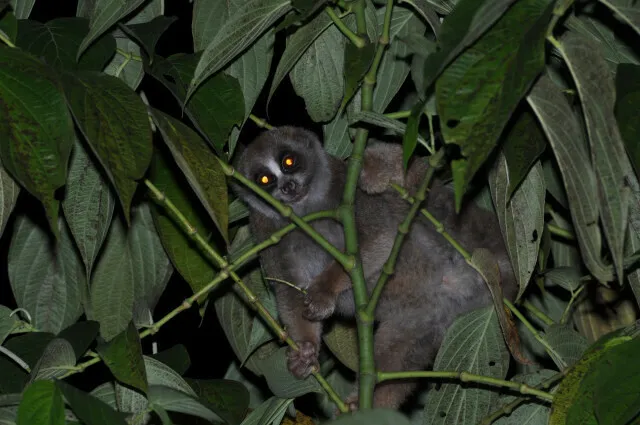
The Sunda slow loris (Nycticebus coucang) is a slow, venomous nocturnal primate of Sumatra, threatened by the pet trade and protected in Indonesia.
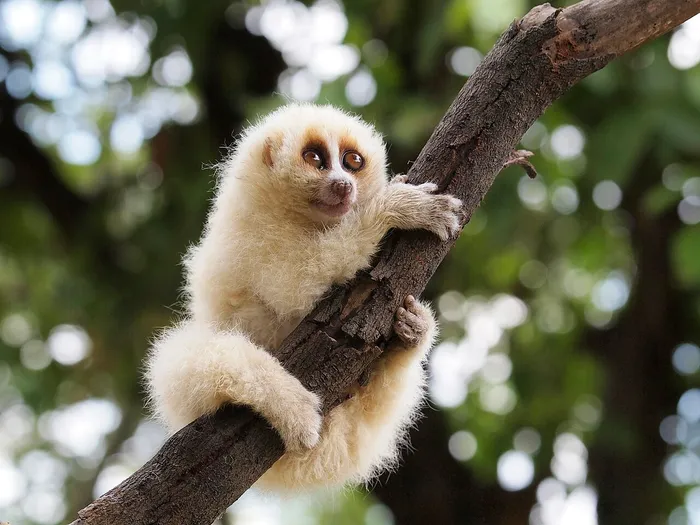
A nocturnal, tree-dwelling primate of Java threatened by wildlife trade. Understanding its behaviour helps turn curiosity into respectful observation.
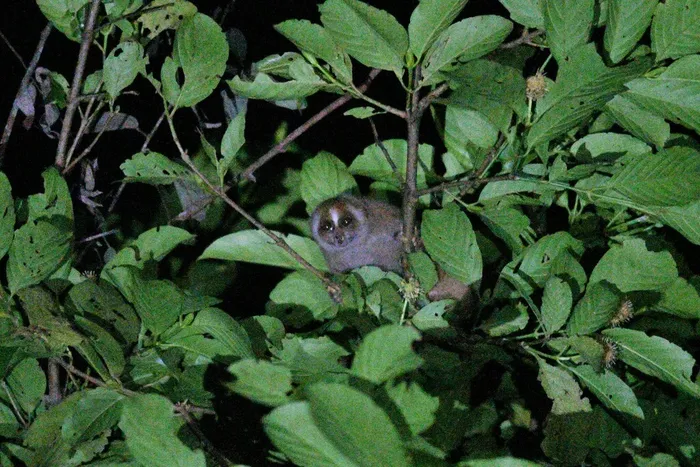
The Philippine slow loris (Nycticebus menagensis) is a small, venomous, nocturnal primate of coastal north and east Borneo, threatened by the pet trade.
Support this cause from outside Indonesia
If you live outside Indonesia and want to fund work on this issue, you can help slow lorises through rescue and rehabilitation with World Animal Rescue Network.
Related site: PanduanHewan’s founder is also a director of World Animal Rescue Network. PanduanHewan itself does not accept donations, and this invitation is not directed at people in Indonesia. Before giving to any organisation, check how it is registered and how it reports on spending.
An Indonesian organisation working on this cause?
Officially registered organisations (a yayasan or perkumpulan with legal status on AHU, and a PUB permit where they raise money from the public) can contact us to be listed on this cause page free of charge. Every request is checked first, and a listing is not an endorsement.
Sources and references
- Permen LHK No. P.106/MENLHK/SETJEN/KUM.1/12/2018 (penetapan) ↗
- IUCN Red List via GBIF — Nycticebus javanicus ↗
- IUCN Red List via GBIF — Nycticebus coucang ↗
- IUCN Red List via GBIF — Nycticebus menagensis ↗
- Species+ (UNEP-WCMC dan Sekretariat CITES) — Nycticebus spp., riwayat daftar CITES (data API) ↗
- UU No. 1 Tahun 2026 tentang Penyesuaian Pidana, Pasal IX ↗
- Nekaris et al. (2013), Tickled to Death, PLoS ONE ↗
- Fuller et al. (2018), Welfare impacts of the illegal wildlife trade in a cohort of confiscated greater slow lorises, Journal of Applied Animal Welfare Science (abstrak) ↗
- Muldani, Llano Sanchez & Farey (2024), BMJ Case Reports ↗
- Nijman, Spaan, Rode-Margono, Wirdateti & Nekaris (2017), Changes in the primate trade in Indonesian wildlife markets over a 25-year period, American Journal of Primatology (abstrak) ↗
- Quarles et al. (2023), Normal redefined, Frontiers in Conservation Science ↗
- Dewi et al. (2022), The sticky tasty: the nutritional content of the exudativorous diet of the Javan slow loris in a lowland forest, Primates (abstrak) ↗
- Cabana, Dierenfeld, Wirdateti, Donati & Nekaris (2018), Trialling nutrient recommendations for slow lorises (Nycticebus spp.) based on wild feeding ecology, Journal of Animal Physiology and Animal Nutrition (abstrak) ↗
- Nekaris & Nijman (2018), Successful prosecution of slow loris traders in Indonesia, Oryx ↗
- UU No. 32 Tahun 2024 (pengesahan) ↗
- Permen LHK No. 18 Tahun 2024, Pasal 1 angka 25 (definisi Apendiks I) ↗
- Munds, Nekaris & Ford (2013), Taxonomy of the Bornean slow loris, with new species Nycticebus kayan, American Journal of Primatology (abstrak) ↗
- UU No. 1 Tahun 2023 tentang KUHP, Pasal 337 ayat (2) ↗
- Gakkum Kehutanan — Siaran pers: pelaku perdagangan satwa liar dilindungi ditangkap di Kabupaten Batang, Jawa Tengah (7 Oktober 2025) ↗
- UU No. 41 Tahun 2014, Pasal 1 (definisi Hewan) ↗
- detikNews (22 Agustus 2024) — KLHK tangkap pedagang ilegal 2 ekor anak orang utan dan 1 kukang di Kalbar ↗
- Kementerian Lingkungan Hidup/BPLH — Melawan perdagangan satwa liar demi masa depan Indonesia (5 Agustus 2026) ↗
- Nekaris & Jaffe (2007), Unexpected diversity of slow lorises (Nycticebus spp.) within the Javan pet trade, Contributions to Zoology (abstrak) ↗
- Morcatty et al. (2022), Risk of Viral Infectious Diseases from Live Bats, Primates, Rodents and Carnivores for Sale in Indonesian Wildlife Markets, Viruses ↗
- Fitzpatrick, Ligabue-Braun & Nekaris (2023), Slowly Making Sense, Toxins ↗
- Norconk et al. (2020), Reducing the primate pet trade: Actions for primatologists, American Journal of Primatology ↗
- Langgeng et al. (2026), Oral and gut microbiomes reveal potential physiological constraints on release readiness in rehabilitating Javan slow lorises, American Journal of Primatology (abstrak) ↗
- Permen LHK No. 17 Tahun 2024 (penetapan) ↗
- Barrett et al. (2021), Risky Business: The Function of Play in a Venomous Mammal — The Javan Slow Loris (Nycticebus javanicus), Toxins ↗
- Gardiner et al. (2018), Survey of practitioners handling slow lorises (Primates: Nycticebus): an assessment of the harmful effects of slow loris bites, Journal of Venom Research ↗
- WHO — Rabies fact sheet ↗
- Moore, Wihermanto & Nekaris (2014), Endangered Species Research (abstrak) ↗
- IUCN (2019), Guidelines for the management of confiscated, live organisms ↗
- Ditjen KSDAE — Kukang kembali ke alam: upaya BKSDA Jambi (Juni 2025) ↗
- Ditjen KSDAE — BBKSDA Jabar dan BTN Ujung Kulon lepas 8 kukang jawa di TN Ujung Kulon (Agustus 2025) ↗
- Ditjen KSDAE — Dua individu kukang kembali ke hutan, puncak peringatan Hari Kukang Internasional 2026 di TWA Sibolangit ↗
- IUCN Red List via GBIF — Nycticebus bancanus ↗
- Species+ (UNEP-WCMC dan Sekretariat CITES) — Nycticebus coucang, riwayat daftar CITES (data API) ↗
- BKSDA Sumatera Selatan — Evakuasi dan pelepasliaran satwa kukang hasil serahan masyarakat (Juli 2026) ↗
- BKSDA Sumatera Barat — Selamatkan si ‘malu-malu’: kukang masuk rumah warga di Tanah Datar dilepasliarkan (Januari 2026) ↗
- Nekaris, Shepherd, Starr & Nijman (2010), Exploring cultural drivers for wildlife trade via an ethnoprimatological approach, American Journal of Primatology (abstrak) ↗
Checked 2026-10-01. Facts, figures and rules can change; check the date on the original source. Report errors through the corrections page. Send a correction