Quick answer
The issue in brief
Yes: all six sea turtle species in Indonesia are listed under Regulation P.106/2018 and Fisheries Decree 66/2025, so catching, keeping, storing or trading turtles, their eggs, meat or shell can bring up to 15 years in prison. The main threats are trade, bycatch and plastic, and turtle meat has killed people who ate it. Never buy turtle products, choose hatchling releases that do not hold hatchlings, and report trade to Gakkum, the BKSDA, KKP on 141 or the police on 110.
- Turtle species in Indonesia
- 6 of the world's 7 sea turtle species, all fully protected source ↗
- Annex to P.106/2018
- Rows 700–704 and 709 (loggerhead, green, hawksbill, olive ridley, flatback, leatherback) source ↗
- Maximum penalty
- 15 years in prison and/or a category VII fine (Rp5 billion) source ↗
- Hawksbill IUCN status
- Critically Endangered globally source ↗
- Leatherback nest decline
- Down 78.3% at Jamursba Medi, Papua, 1984–2011 source ↗
- Hawksbill shell exports from Indonesia
- An estimated 2,521,569 turtles over 85 years, the world's largest exporter source ↗
- Turtle meat poisoning victims (worldwide)
- Over 2,400 victims and 420 deaths recorded source ↗
- Effect of holding hatchlings
- Swimming speed down by over 12% after 6 hours of holding source ↗
- Bycatch at Paloh
- About 967 turtles a year in one gillnet fishery (conservative estimate) source ↗
Are sea turtles protected in Indonesia?
Yes, under several overlapping rules. All six turtle species in Indonesia are listed in the annex to Environment and Forestry Ministerial Regulation P.106/2018 on protected species: the loggerhead (row 700), green turtle (701), hawksbill (702), olive ridley (703), flatback (704) and leatherback (709). Marine Affairs and Fisheries Ministerial Decree No. 66 of 2025, issued on 29 October 2025, also gives all six full protection at every stage of life, including their body parts and derived products.
Article 21(2) of Law 5/1990, as amended by Law 32/2024, bans anyone from hunting, catching, keeping, storing, owning, transporting or trading live protected animals, and from storing, owning, transporting or trading dead ones, their parts and goods made from them. Point (d) bans taking, trading, storing or owning their eggs and nests, and point (g) bans unlicensed trade through electronic media. So a buyer who keeps turtle eggs or shell is also caught by the ban.
Article 40A(1) of Law 32/2024, as adjusted by Law 1/2026 on Criminal Penalty Adjustment, sets up to 15 years in prison and/or a category VII fine for individuals, which Article 79 of the Criminal Code puts at Rp5 billion. Because turtles are also protected 'fish' species, the Fisheries Law applies too: in 2025 the Pontianak District Court convicted an egg smuggler under Article 88 with Article 16(1) of Law 31/2004.
Cruelty can also be charged under Article 337 of the new Criminal Code (Law 1/2023, in force since 2 January 2026), with up to 1 year 6 months if the animal is disabled or dies, and under Article 66A of Law 41/2014. For sea turtles, the conservation rules above carry far heavier penalties.
Evidence: JDIH Kementerian Kehutanan — Permen LHK P.106/MENLHK/SETJEN/KUM.1/12/2018 tentang Jenis Tumbuhan dan Satwa yang Dilindungi (lampiran) ↗ · JDIH KKP — Keputusan Menteri Kelautan dan Perikanan Nomor 66 Tahun 2025 tentang Jenis Ikan yang Dilindungi ↗ · JDIH BPK — UU No. 32 Tahun 2024 tentang Perubahan atas UU No. 5 Tahun 1990 ↗ · JDIH BPK — UU No. 1 Tahun 2026 tentang Penyesuaian Pidana (Lampiran, no. 183) ↗ · JDIH BPK — UU No. 1 Tahun 2023 tentang Kitab Undang-Undang Hukum Pidana ↗ · JDIH BPK — UU No. 41 Tahun 2014 tentang Peternakan dan Kesehatan Hewan ↗ · Dandapala (Mahkamah Agung RI) — PN Pontianak vonis 4 bulan penjara penyelundup 5.400 telur penyu (9 September 2025) ↗
Which sea turtles live in Indonesia, and how endangered are they?
Six of the world's seven sea turtle species occur in Indonesia. The green turtle is the most common, nesting at Jamursba Medi (West Papua), Sangalaki (Berau), Paloh (Sambas), Pangumbahan (West Java), Sukamade (Meru Betiri) and Perancak (Bali), among other sites. Hawksbills live on reefs around small islands in the Java Sea, Flores Sea and Makassar and Karimata straits. Olive ridleys nest on Bali's south coast; loggerheads and flatbacks are rare.
On the IUCN Red List, the hawksbill is Critically Endangered; the olive ridley, leatherback and loggerhead are Vulnerable; and the flatback is Data Deficient. Since October 2025 the green turtle, a keystone species of seagrass meadows and coral reefs, has been assessed globally as Least Concern, thanks to decades of conservation. The IUCN still warns that the taking of turtles and eggs and fisheries bycatch remain significant causes of death, and the species' legal protection in Indonesia is unchanged.
The West Pacific leatherback subpopulation is Critically Endangered. Papua's Bird's Head, whose main beaches are Jamursba Medi and Wermon, hosts 75% of leatherback nesting in the western Pacific, yet annual nests at Jamursba Medi fell by 78.3%, from 14,522 in 1984 to 1,596 in 2011. All sea turtles are listed in CITES Appendix I, which bans their international trade.
Evidence: KKP (PPID) — Spanduk larangan pemanfaatan penyu ↗ · JDIH KKP — Keputusan Menteri Kelautan dan Perikanan Nomor 66 Tahun 2025 tentang Jenis Ikan yang Dilindungi ↗ · IUCN SSC Marine Turtle Specialist Group — Marine turtle Red List assessments ↗ · IUCN — Red List update press release, 10 October 2025 ↗ · Tapilatu et al. 2013, Long-term decline of the western Pacific leatherback, Dermochelys coriacea (Ecosphere 4: art25) ↗ · Species+ (UNEP-WCMC/CITES Secretariat) — Chelonia mydas, CITES listing ↗ · Kompas — Ternyata konsumsi penyu belimbing berisiko pidana dan kematian (9 Februari 2026) ↗ · Miller et al. 2019, The historical development of complex global trafficking networks for marine wildlife (Science Advances) ↗
Is it legal to buy, sell or eat turtle eggs in Indonesia?
No. Taking, trading, storing or owning turtle eggs is banned by Article 21(2)(d) of Law 32/2024, and Fisheries Decree 66/2025 protects turtles at every life stage, eggs included. The ban covers offers on social media and online shops too. PanduanHewan deliberately gives no places or prices. If you see eggs offered, take screenshots and report it.
The trade is still being uncovered. In June and July 2025, KKP, the Ministry of Marine Affairs and Fisheries, stopped smuggled consignments of 1,950 and 5,400 turtle eggs in Sambas, West Kalimantan, then exposed a cross-border network; one suspect admitted shipping 96,050 eggs from the Riau Islands. In August 2025, KKP and the Anambas police stopped the trade of 671 eggs and returned them to their habitat.
In September 2025, the Pontianak District Court gave the defendant in the 5,400-egg case four months in prison and a Rp1 billion fine. On whether turtle eggs are halal, the Indonesian Ulema Council's Fatwa No. 4 of 2014 rules that hunting and illegally trading rare animals is haram, and the eggs carry health risks (see the next section).
Evidence: JDIH BPK — UU No. 32 Tahun 2024 tentang Perubahan atas UU No. 5 Tahun 1990 ↗ · JDIH KKP — Keputusan Menteri Kelautan dan Perikanan Nomor 66 Tahun 2025 tentang Jenis Ikan yang Dilindungi ↗ · KKP — Siaran Pers SP.256/SJ.5/VI/2025 (19 Juni 2025) ↗ · KKP — Siaran Pers SP.286/SJ.5/VII/2025: KKP gagalkan penyelundupan 5.400 telur penyu di Kalbar (8 Juli 2025) ↗ · KKP — Siaran Pers SP.307/SJ.5/VII/2025: KKP ungkap jaringan penyelundup telur penyu lintas negara (19 Juli 2025) ↗ · KKP — Siaran Pers SP.337/SJ.5/VIII/2025: KKP-Polri gagalkan perdagangan 671 telur penyu di Anambas (14 Agustus 2025) ↗ · Dandapala (Mahkamah Agung RI) — PN Pontianak vonis 4 bulan penjara penyelundup 5.400 telur penyu (9 September 2025) ↗ · Majelis Ulama Indonesia — Fatwa Nomor 4 Tahun 2014 tentang Pelestarian Satwa Langka untuk Menjaga Keseimbangan Ekosistem ↗
Is turtle meat safe to eat? Turtle poisoning explained
No. Eating turtle meat can cause chelonitoxism, a food poisoning that can kill; reported symptoms include stomach pain, diarrhoea, vomiting, a burning mouth and throat, and dehydration. A 2024 scientific review counted more than 2,400 victims and 420 deaths across all documented incidents, mostly in remote parts of the Indo-Pacific. The exact cause is still unknown. Toxins from cyanobacteria growing on the seagrass and seaweed that green turtles eat are suspected, but the evidence is limited.
It has happened in Indonesia. In February 2018, villagers in Taileleu, Mentawai Islands, were poisoned after eating turtle meat at a feast; three died, two of them toddlers. In Micronesia in 2010, four children and two adults died after sharing a hawksbill, and investigators stressed that all sea turtle species can be toxic. In March 2024, a poisoning on Pemba Island, Tanzania, killed nine people.
Reptile meat and eggs can also carry bacteria such as Salmonella and Vibrio, and parasites. Turtle eating persists: in January 2026 a leatherback freed from a fishing net in Mentawai was later caught by a neighbouring hamlet and eaten. Anyone who feels ill after eating turtle meat or eggs should go to a health facility straight away.
Evidence: Semmouri et al. 2024, Health risks associated with the consumption of sea turtles: a review of chelonitoxism incidents (Science of the Total Environment) ↗ · ANTARA Sumbar — Belasan warga Taileleu Mentawai keracunan daging penyu, tiga meninggal (25 Februari 2018) ↗ · Pavlin et al. 2015, Mass poisoning after consumption of a hawksbill turtle, Federated States of Micronesia, 2010 (WPSAR) ↗ · Magnino et al. 2009, Biological risks associated with consumption of reptile products (International Journal of Food Microbiology) ↗ · Kompas — Warga konsumsi penyu di Mentawai, pakar peringatkan risiko keracunan (8 Februari 2026) ↗
Why is hawksbill tortoiseshell banned?
Hawksbills declined worldwide through intense commercial exploitation for their shell, traded as tortoiseshell or bekko, for stuffed specimens, and for eggs and meat. A study of 150 years of trade records estimates that networks centred on Southeast Asia harvested 9 million hawksbills, with Japan the largest importer (80.2%). Indonesia was the largest exporter (28.1%), an estimated 2,521,569 turtles over 85 years, 71% of them in 1976–1980.
CITES listed the hawksbill in Appendix I in 1977, banning international trade, and Indonesia brought CITES into force in 1979. Even so, researchers have reported disguised hawksbill harvests, local shell processing and poaching by foreign vessels in Indonesia. At home, Law 32/2024 bans storing, owning or trading goods made from the parts of protected animals, so tortoiseshell bracelets, rings and ornaments are illegal goods.
Live hawksbills are still hunted too. In September 2026 the South-west Papua regional police named a foreign national as a suspect for hunting a hawksbill in the Raja Ampat conservation area, under Article 40A(1)(d) and Article 40B(2) of Law 32/2024. Evidence seized included the turtle's skeleton and shell.
Evidence: Vargas et al. 2016, Phylogeography, genetic diversity, and management units of hawksbill turtles in the Indo-Pacific (Journal of Heredity) ↗ · Limpus & Miller 1990, The use of measured scutes of hawksbill turtles in the management of the tortoiseshell (bekko) trade (Wildlife Research) ↗ · Miller et al. 2019, The historical development of complex global trafficking networks for marine wildlife (Science Advances) ↗ · JDIH BPK — UU No. 32 Tahun 2024 tentang Perubahan atas UU No. 5 Tahun 1990 ↗ · ANTARA Papua Tengah — Polda PBD tetapkan seorang WNA tersangka perburuan penyu sisik (23 September 2026) ↗
How does fishing bycatch threaten sea turtles in Indonesia?
Bycatch, turtles caught by accident in nets or on hooks, remains a significant cause of death, says the IUCN. Small-scale gillnets are thought to be a major driver of declines in several turtle populations, and Southeast Asia is a suspected global bycatch hotspot. Onboard observers at the Paloh drift gillnet fishery in West Kalimantan conservatively estimated about 967 turtles caught each year in that fishery alone.
Solutions have been tested in Indonesia. In trials at Paloh, lights fitted to nets cut turtle bycatch by 61.4% while the catch of target fish stayed similar. Indonesia's National Action Plan for sea turtle conservation makes reducing bycatch a priority. Fisheries Regulation 36/2023 requires turtle excluder devices (TEDs) on certain trawl nets and bans fixed fish aggregating devices in turtle migration routes.
Netted turtles also risk being eaten: in January 2026, people in Mentawai freed a leatherback from a fishing net, but it was caught again and eaten. A turtle caught by accident is still protected; report such incidents to the KKP call centre on 141.
Evidence: IUCN — Red List update press release, 10 October 2025 ↗ · Gautama et al. 2022, Reducing sea turtle bycatch with net illumination in an Indonesian small-scale coastal gillnet fishery (Frontiers in Marine Science) ↗ · JDIH BPK — Permen KP No. 36 Tahun 2023 tentang Penempatan Alat Penangkapan Ikan dan Alat Bantu Penangkapan Ikan ↗ · Kompas — Warga konsumsi penyu di Mentawai, pakar peringatkan risiko keracunan (8 Februari 2026) ↗ · KKP — situs resmi Kementerian Kelautan dan Perikanan (kaki halaman: Call Center KKP) ↗
Do turtle hatcheries in Bali and elsewhere in Indonesia help?
Semi-natural hatcheries, where eggs from threatened nests are moved to a guarded stretch of beach, are widely used in Indonesia, though rarely evaluated. They can save eggs: at Alas Purwo National Park, East Java, no natural nest survived predators over two years. But hatchery temperatures must stay within safe limits and not unnaturally skew hatchling sex ratios.
Community protection of nesting beaches works too. On Buru Island, Maluku, the theft rate of leatherback nests reportedly fell from 94% to zero by 2024, and Buru's waters were designated a conservation area under Fisheries Decree 69/2025.
For adult turtles seized from traders, Environment and Forestry Regulation 17/2024 on species rescue sets out health and behaviour assessments: animals that are healthy and behave naturally may be released, others are rehabilitated. In May 2023 the Bali BKSDA released 18 seized green turtles after health checks and tagging. Keeping turtles without a permit is banned; in August 2025, four turtles kept at a resort in the Anambas conservation area were released.
Evidence: Herawati et al. 2026, Hatching success of olive ridley sea turtles in semi-natural nests at Batu Hiu Beach (Ecology and Evolution) ↗ · Maulany et al. 2012, Emergence success and sex ratio of natural and relocated nests of olive ridley turtles from Alas Purwo National Park, East Java (Copeia) ↗ · Kompas — Pulau Buru ditetapkan jadi kawasan konservasi baru penyu belimbing (17 November 2025) ↗ · JDIH BPK — Permen LHK No. 17 Tahun 2024 tentang Penyelamatan Jenis Satwa ↗ · detikNews — BKSDA Bali imbau masyarakat tak pelihara-perdagangkan penyu (18 Mei 2023) ↗ · JDIH BPK — UU No. 32 Tahun 2024 tentang Perubahan atas UU No. 5 Tahun 1990 ↗ · KKP — Siaran Pers SP.337/SJ.5/VIII/2025: KKP-Polri gagalkan perdagangan 671 telur penyu di Anambas (14 Agustus 2025) ↗
Is releasing baby turtles in Bali ethical?
Hatchlings usually leave the nest at night as the sand cools, then swim for about 24 hours non-stop to escape predator-rich shallows, powered by leftover yolk. So guidance from IOSEA, the Indian Ocean–South-East Asian marine turtle agreement under the Convention on Migratory Species (CMS), says to release hatchlings as soon as possible, not keep them in buckets, sacks, ponds or tanks for convenience or scheduled public releases.
Research backs this up. In laboratory tests, green turtle hatchlings swam over 12% slower after six hours held in a hatchery. Some hatcheries, including in Indonesia, time releases to peak tourist numbers. IOSEA calls holding hatchlings for days 'for their protection' unjustified, and says it is seen as an excuse to attract tourists.
Practice in Indonesia varies: in September 2026 an IPB University lecturer called about a week after hatching the ideal release time, unlike the IOSEA guidance. If you want to watch, choose an event that releases hatchlings as they emerge, keeps onlookers out of their path, bans camera flashes, which disorient hatchlings, and varies the release spot, since predators gather at routine sites. Raising hatchlings in tanks (head-starting) does not tackle threats such as bycatch and poaching.
Evidence: CMS IOSEA Marine Turtle MOU — Holding and Headstarting Sea Turtle Hatchlings (advisory paper) ↗ · Pilcher & Enderby 2001, Effects of prolonged retention in hatcheries on green turtle hatchling swimming speed and survival (Journal of Herpetology) ↗ · March et al. 2019, Physiological changes in post-hatchling green turtles following short-term fasting: implications for release protocols (Conservation Physiology) ↗ · IPB University — Dosen IPB University jelaskan cara lepas tukik yang sesuai animal welfare (14 September 2026) ↗
Does plastic kill sea turtles?
Yes. An analysis of two datasets, necropsies of 246 turtles and 706 stranding records, found a 50% chance of death once a turtle had 14 pieces of plastic in its gut. A global risk model ranks the eastern Indian Ocean and Southeast Asia among the highest-risk regions; turtles in their open-ocean life stage are most at risk, and the olive ridley is the most at-risk species.
Southeast Asia is estimated to produce a third of the world's marine plastic pollution, yet evidence on its effects on large marine animals there lags behind other regions. Presidential Regulation 83/2018 on marine debris set a target of handling 70% of plastic waste at sea by 2025. Everyday, cut single-use plastic and never leave rubbish, fishing line or nets on the beach.
Evidence: Wilcox et al. 2018, A quantitative analysis linking sea turtle mortality and plastic debris ingestion (Scientific Reports) ↗ · Schuyler et al. 2016, Risk analysis reveals global hotspots for marine debris ingestion by sea turtles (Global Change Biology) ↗ · Omeyer et al. 2023, Interactions between marine megafauna and plastic pollution in Southeast Asia (Science of the Total Environment) ↗ · JDIH BPK — Perpres No. 83 Tahun 2018 tentang Penanganan Sampah Laut ↗
Where do I report sea turtle trade or poaching in Indonesia?
Report sales of turtles, eggs, meat or shell, including online, through the Gakkum Kehutanan complaints app (category 'Perdagangan Ilegal Satwa Liar'), pengaduan.gakkum@kehutanan.go.id, (021) 5790 2925, or the local BKSDA. As turtles are also protected fish species, the KKP call centre on 141 takes reports too. If a crime is under way or anyone is threatened, call the police on 110.
Tip-offs from the public often start a case. The 5,400-egg smuggling attempt in Sambas in 2025 was uncovered thanks to information from residents, as was the seizure of 21 live green turtles in Buleleng, Bali, in June 2026. In Bali in 2023, a report about turtle meat sales led police to 21 live green turtles kept in a pool at a dealer's home.
Do not contact, bargain with or buy from a seller to 'rescue' a turtle, and do not reshare the post. Keep screenshots of the account name, link, date and photos for officers. PanduanHewan's emergency guide on reporting wildlife trade explains the steps.
Evidence: Gakkum Kehutanan — Pengaduan Penegakan Hukum Kehutanan ↗ · JDIH KKP — Keputusan Menteri Kelautan dan Perikanan Nomor 66 Tahun 2025 tentang Jenis Ikan yang Dilindungi ↗ · KKP — situs resmi Kementerian Kelautan dan Perikanan (kaki halaman: Call Center KKP) ↗ · Polri — Call Center 110 ↗ · KKP — Siaran Pers SP.286/SJ.5/VII/2025: KKP gagalkan penyelundupan 5.400 telur penyu di Kalbar (8 Juli 2025) ↗ · Tribratanews Polri — Polda Bali gagalkan perdagangan ilegal 21 penyu hijau di perairan Buleleng (20 Juni 2026) ↗ · ANTARA — Polda Bali tangkap pengepul 21 penyu hijau kiriman dari Madura (1 Mei 2023) ↗
Timeline
- 1977 CITES lists the hawksbill in Appendix I, banning its international trade. source ↗
- 1979 CITES takes effect in Indonesia, after a surge in tortoiseshell exports in 1976–1980. source ↗
- 1981 All Cheloniidae sea turtles are placed in CITES Appendix I. source ↗
- 2011 Leatherback nests at Jamursba Medi number 1,596, down 78.3% since 1984. source ↗
- 2014-01 The Indonesian Ulema Council issues Fatwa No. 4 of 2014: hunting and illegally trading rare animals is haram. source ↗
- 2018-02 Turtle meat poisoning in Taileleu, Mentawai, kills three people, two of them toddlers. source ↗
- 2018-12 Regulation P.106/2018 is issued; all six turtle species are in its annex. source ↗
- 2023-11 Fisheries Regulation 36/2023 requires turtle excluder devices on certain trawls. source ↗
- 2024-08 Law 32/2024 amends Law 5/1990; individuals trading protected animals face 3–15 years in prison and a category IV–VII fine. source ↗
- 2025-07 KKP stops 5,400 smuggled turtle eggs in Sambas and uncovers a cross-border network. source ↗
- 2025-09 Pontianak District Court imposes four months in prison and a Rp1 billion fine in the 5,400-egg case. source ↗
- 2025-10 The IUCN moves the green turtle globally from Endangered to Least Concern. source ↗
- 2025-10 Fisheries Decree 66/2025 is issued on 29 October, giving all six turtle species full protection. source ↗
- 2025-11 Buru Island's waters are designated a leatherback conservation area (Fisheries Decree 69/2025). source ↗
- 2026-01 Law 1/2026 on Criminal Penalty Adjustment takes effect on 2 January 2026, adjusting the penalties in Law 32/2024. source ↗
- 2026-06 Bali police seize 21 live green turtles at Pegametan Beach, Buleleng. source ↗
- 2026-09 South-west Papua police name a suspect for hunting a hawksbill in Raja Ampat. source ↗
How to help
- Never buy, eat or accept turtle eggs, meat, oil or tortoiseshell souvenirs, and never take turtle products abroad.
- Report turtle sales or poaching to Gakkum Kehutanan, the BKSDA, the KKP call centre on 141 or the police on 110, and to the platform hosting the sale.
- Do not reshare posts selling turtles, and do not take selfies holding turtles or hatchlings.
- If you see a turtle nesting, keep your distance, switch off torches and flashes, and do not touch the turtle, nest or eggs.
- Choose hatchling releases that let hatchlings go as soon as they emerge, without holding them for tourist schedules.
- Avoid places that keep adult turtles in pools for photos or feeding; ask about their permits and agreements with the BKSDA or KKP.
- Before donating or volunteering, check the group is registered and formally works with the BKSDA or KKP, and use PanduanHewan's 'how to check an appeal' checklist.
- Cut single-use plastic, never leave fishing line or nets on the beach, and report stranded turtles to KKP on 141 without pushing them back to sea.
Common questions
Are turtle eggs halal?
The Indonesian Ulema Council's Fatwa No. 4 of 2014 rules that hunting and illegally trading rare animals is haram. Under state law, taking, storing, owning or trading turtle eggs is banned by Article 21(2)(d) of Law 32/2024.
Source: Majelis Ulama Indonesia — Fatwa Nomor 4 Tahun 2014 tentang Pelestarian Satwa Langka untuk Menjaga Keseimbangan Ekosistem ↗ · JDIH BPK — UU No. 32 Tahun 2024 tentang Perubahan atas UU No. 5 Tahun 1990 ↗
What is the penalty for selling turtle eggs?
Up to 15 years in prison and/or a category VII fine (Rp5 billion), under Article 40A(1) of Law 32/2024 as adjusted by Law 1/2026. In 2025 a court in Pontianak gave a smuggler of 5,400 eggs four months and a Rp1 billion fine.
Source: JDIH BPK — UU No. 1 Tahun 2026 tentang Penyesuaian Pidana (Lampiran, no. 183) ↗ · JDIH BPK — UU No. 1 Tahun 2023 tentang Kitab Undang-Undang Hukum Pidana ↗ · Dandapala (Mahkamah Agung RI) — PN Pontianak vonis 4 bulan penjara penyelundup 5.400 telur penyu (9 September 2025) ↗
How long do turtle eggs take to hatch?
Sea turtle embryos incubate for about 6 to 13 weeks, depending on the species and nest conditions. In hatcheries, hatchlings are usually expected to emerge about 45–55 days after the eggs are laid.
Source: CMS IOSEA Marine Turtle MOU — Holding and Headstarting Sea Turtle Hatchlings (advisory paper) ↗ · CMS IOSEA Marine Turtle MOU — Holding and Headstarting Sea Turtle Hatchlings (advisory paper) ↗
What is a tukik?
Tukik is Indonesian for a sea turtle hatchling. Hatchlings usually emerge at night and need to crawl to the sea themselves, which is believed to help them return to breed in the same region.
Source: IPB University — Dosen IPB University jelaskan cara lepas tukik yang sesuai animal welfare (14 September 2026) ↗ · CMS IOSEA Marine Turtle MOU — Holding and Headstarting Sea Turtle Hatchlings (advisory paper) ↗ · CMS IOSEA Marine Turtle MOU — Holding and Headstarting Sea Turtle Hatchlings (advisory paper) ↗
Can I buy tortoiseshell bracelets or rings as souvenirs?
No. Law 32/2024 bans storing, owning and trading goods made from protected animals' parts, and Fisheries Decree 66/2025 protects turtle products. Sea turtles are also in CITES Appendix I, which bans international trade.
Source: JDIH BPK — UU No. 32 Tahun 2024 tentang Perubahan atas UU No. 5 Tahun 1990 ↗ · JDIH KKP — Keputusan Menteri Kelautan dan Perikanan Nomor 66 Tahun 2025 tentang Jenis Ikan yang Dilindungi ↗ · Species+ (UNEP-WCMC/CITES Secretariat) — Chelonia mydas, CITES listing ↗
Is the green turtle still endangered?
In October 2025 the IUCN moved the green turtle globally from Endangered to Least Concern, but some subpopulations remain threatened, such as the North Indian Ocean one (Vulnerable). In Indonesia it remains listed in P.106/2018 (row 701) and Fisheries Decree 66/2025.
Source: IUCN — Red List update press release, 10 October 2025 ↗ · IUCN SSC Marine Turtle Specialist Group — Marine turtle Red List assessments ↗ · JDIH Kementerian Kehutanan — Permen LHK P.106/MENLHK/SETJEN/KUM.1/12/2018 tentang Jenis Tumbuhan dan Satwa yang Dilindungi (lampiran) ↗ · JDIH KKP — Keputusan Menteri Kelautan dan Perikanan Nomor 66 Tahun 2025 tentang Jenis Ikan yang Dilindungi ↗
What should I do if I find turtle eggs or hatchlings on a beach?
Do not take or move the eggs; taking a protected animal's eggs is banned. Let hatchlings crawl to the sea on their own, keep lights away, and report it to the BKSDA or KKP on 141.
Source: JDIH BPK — UU No. 32 Tahun 2024 tentang Perubahan atas UU No. 5 Tahun 1990 ↗ · CMS IOSEA Marine Turtle MOU — Holding and Headstarting Sea Turtle Hatchlings (advisory paper) ↗ · CMS IOSEA Marine Turtle MOU — Holding and Headstarting Sea Turtle Hatchlings (advisory paper) ↗ · KKP — situs resmi Kementerian Kelautan dan Perikanan (kaki halaman: Call Center KKP) ↗
Animals involved
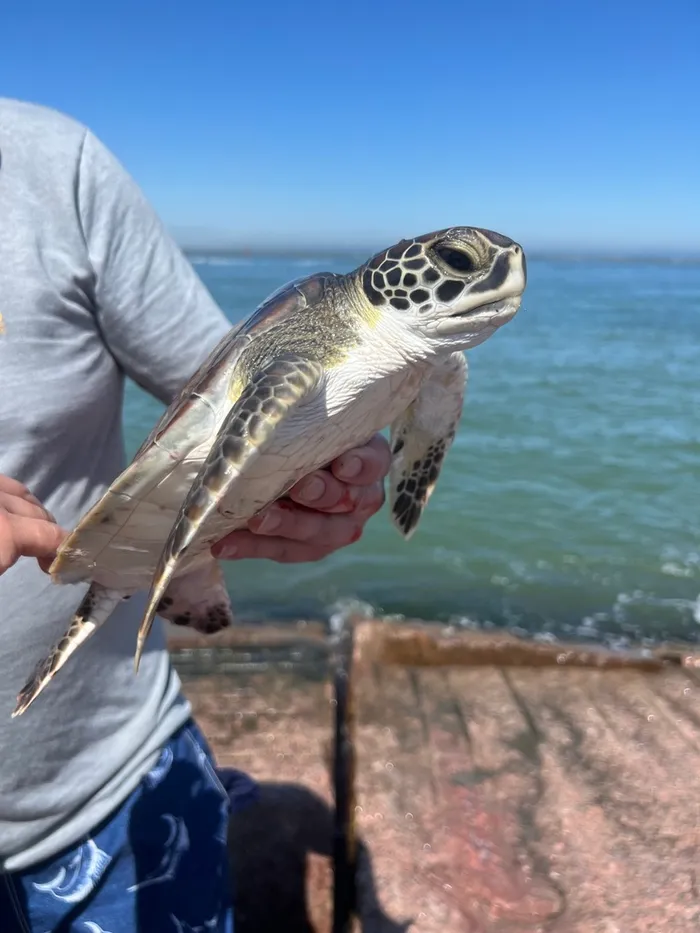
A marine reptile connecting seagrass meadows, coastal waters, and nesting beaches. Global recovery does not remove the threats turtles face at individual sites.
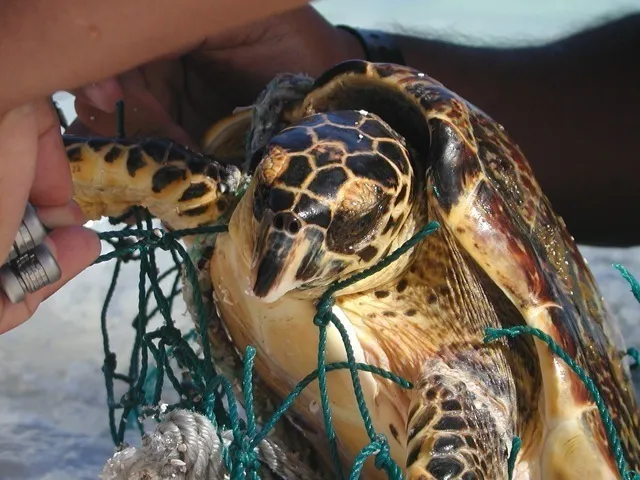
A pointed-beaked turtle closely associated with coral reefs. Shell trade, accidental capture, and habitat loss connect human choices with its future.
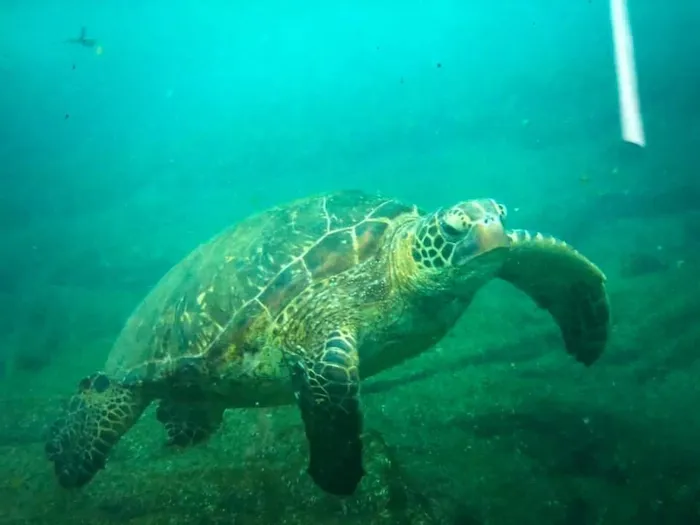
A relatively small turtle that travels through open seas and returns to beaches to nest. Not every population performs its famous mass-nesting behaviour.
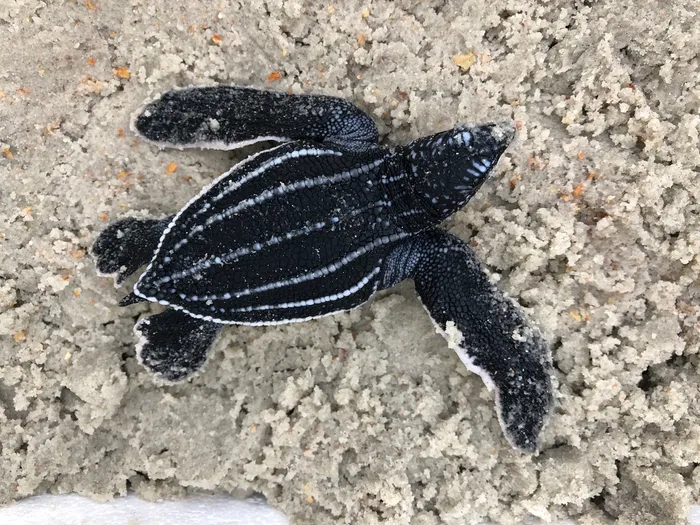
The leatherback (Dermochelys coriacea) is the world's largest turtle, with a leathery shell; in Indonesia it nests mainly in Tambrauw, Southwest Papua.
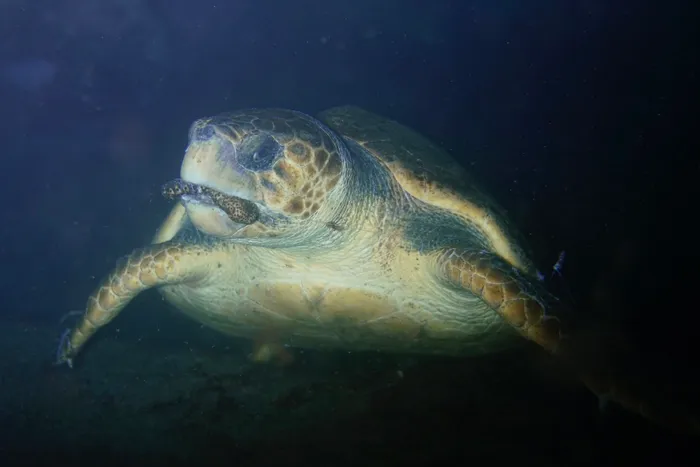
The loggerhead turtle (Caretta caretta) is a big-headed sea turtle that is very rare in Indonesian waters and fully protected by law.
Support this cause from outside Indonesia
If you live outside Indonesia and want to fund work on this issue, you can help sea turtles with rescue and beach protection with World Animal Rescue Network.
Related site: PanduanHewan’s founder is also a director of World Animal Rescue Network. PanduanHewan itself does not accept donations, and this invitation is not directed at people in Indonesia. Before giving to any organisation, check how it is registered and how it reports on spending.
An Indonesian organisation working on this cause?
Officially registered organisations (a yayasan or perkumpulan with legal status on AHU, and a PUB permit where they raise money from the public) can contact us to be listed on this cause page free of charge. Every request is checked first, and a listing is not an endorsement.
Sources and references
- KKP (PPID) — Spanduk larangan pemanfaatan penyu ↗
- JDIH Kementerian Kehutanan — Permen LHK P.106/MENLHK/SETJEN/KUM.1/12/2018 tentang Jenis Tumbuhan dan Satwa yang Dilindungi (lampiran) ↗
- JDIH BPK — UU No. 1 Tahun 2026 tentang Penyesuaian Pidana (Lampiran, no. 183) ↗
- IUCN SSC Marine Turtle Specialist Group — Marine turtle Red List assessments ↗
- Tapilatu et al. 2013, Long-term decline of the western Pacific leatherback, Dermochelys coriacea (Ecosphere 4: art25) ↗
- Miller et al. 2019, The historical development of complex global trafficking networks for marine wildlife (Science Advances) ↗
- Semmouri et al. 2024, Health risks associated with the consumption of sea turtles: a review of chelonitoxism incidents (Science of the Total Environment) ↗
- Pilcher & Enderby 2001, Effects of prolonged retention in hatcheries on green turtle hatchling swimming speed and survival (Journal of Herpetology) ↗
- Gautama et al. 2022, Reducing sea turtle bycatch with net illumination in an Indonesian small-scale coastal gillnet fishery (Frontiers in Marine Science) ↗
- JDIH KKP — Keputusan Menteri Kelautan dan Perikanan Nomor 66 Tahun 2025 tentang Jenis Ikan yang Dilindungi ↗
- JDIH BPK — UU No. 32 Tahun 2024 tentang Perubahan atas UU No. 5 Tahun 1990 ↗
- JDIH BPK — UU No. 1 Tahun 2023 tentang Kitab Undang-Undang Hukum Pidana ↗
- JDIH BPK — UU No. 41 Tahun 2014 tentang Peternakan dan Kesehatan Hewan ↗
- Dandapala (Mahkamah Agung RI) — PN Pontianak vonis 4 bulan penjara penyelundup 5.400 telur penyu (9 September 2025) ↗
- IUCN — Red List update press release, 10 October 2025 ↗
- Species+ (UNEP-WCMC/CITES Secretariat) — Chelonia mydas, CITES listing ↗
- Kompas — Ternyata konsumsi penyu belimbing berisiko pidana dan kematian (9 Februari 2026) ↗
- KKP — Siaran Pers SP.256/SJ.5/VI/2025 (19 Juni 2025) ↗
- KKP — Siaran Pers SP.286/SJ.5/VII/2025: KKP gagalkan penyelundupan 5.400 telur penyu di Kalbar (8 Juli 2025) ↗
- KKP — Siaran Pers SP.307/SJ.5/VII/2025: KKP ungkap jaringan penyelundup telur penyu lintas negara (19 Juli 2025) ↗
- KKP — Siaran Pers SP.337/SJ.5/VIII/2025: KKP-Polri gagalkan perdagangan 671 telur penyu di Anambas (14 Agustus 2025) ↗
- Majelis Ulama Indonesia — Fatwa Nomor 4 Tahun 2014 tentang Pelestarian Satwa Langka untuk Menjaga Keseimbangan Ekosistem ↗
- ANTARA Sumbar — Belasan warga Taileleu Mentawai keracunan daging penyu, tiga meninggal (25 Februari 2018) ↗
- Pavlin et al. 2015, Mass poisoning after consumption of a hawksbill turtle, Federated States of Micronesia, 2010 (WPSAR) ↗
- Magnino et al. 2009, Biological risks associated with consumption of reptile products (International Journal of Food Microbiology) ↗
- Kompas — Warga konsumsi penyu di Mentawai, pakar peringatkan risiko keracunan (8 Februari 2026) ↗
- Vargas et al. 2016, Phylogeography, genetic diversity, and management units of hawksbill turtles in the Indo-Pacific (Journal of Heredity) ↗
- Limpus & Miller 1990, The use of measured scutes of hawksbill turtles in the management of the tortoiseshell (bekko) trade (Wildlife Research) ↗
- ANTARA Papua Tengah — Polda PBD tetapkan seorang WNA tersangka perburuan penyu sisik (23 September 2026) ↗
- JDIH BPK — Permen KP No. 36 Tahun 2023 tentang Penempatan Alat Penangkapan Ikan dan Alat Bantu Penangkapan Ikan ↗
- Herawati et al. 2026, Hatching success of olive ridley sea turtles in semi-natural nests at Batu Hiu Beach (Ecology and Evolution) ↗
- Maulany et al. 2012, Emergence success and sex ratio of natural and relocated nests of olive ridley turtles from Alas Purwo National Park, East Java (Copeia) ↗
- Kompas — Pulau Buru ditetapkan jadi kawasan konservasi baru penyu belimbing (17 November 2025) ↗
- JDIH BPK — Permen LHK No. 17 Tahun 2024 tentang Penyelamatan Jenis Satwa ↗
- detikNews — BKSDA Bali imbau masyarakat tak pelihara-perdagangkan penyu (18 Mei 2023) ↗
- CMS IOSEA Marine Turtle MOU — Holding and Headstarting Sea Turtle Hatchlings (advisory paper) ↗
- March et al. 2019, Physiological changes in post-hatchling green turtles following short-term fasting: implications for release protocols (Conservation Physiology) ↗
- IPB University — Dosen IPB University jelaskan cara lepas tukik yang sesuai animal welfare (14 September 2026) ↗
- Wilcox et al. 2018, A quantitative analysis linking sea turtle mortality and plastic debris ingestion (Scientific Reports) ↗
- Schuyler et al. 2016, Risk analysis reveals global hotspots for marine debris ingestion by sea turtles (Global Change Biology) ↗
- Omeyer et al. 2023, Interactions between marine megafauna and plastic pollution in Southeast Asia (Science of the Total Environment) ↗
- JDIH BPK — Perpres No. 83 Tahun 2018 tentang Penanganan Sampah Laut ↗
- Gakkum Kehutanan — Pengaduan Penegakan Hukum Kehutanan ↗
- Polri — Call Center 110 ↗
- Tribratanews Polri — Polda Bali gagalkan perdagangan ilegal 21 penyu hijau di perairan Buleleng (20 Juni 2026) ↗
- ANTARA — Polda Bali tangkap pengepul 21 penyu hijau kiriman dari Madura (1 Mei 2023) ↗
Checked 2026-10-01. Facts, figures and rules can change; check the date on the original source. Report errors through the corrections page. Send a correction