Quick answer
The issue in brief
Topeng monyet is a street show using long-tailed macaques that are chained and trained to stand like people; Jakarta banned it in 2013 and several Javan provinces followed on animal-welfare and disease grounds. The long-tailed macaque is not on the annex of Indonesia's protected-species regulation (P.106/2018), but the IUCN lists it as Endangered and its trade requires permits, quotas and CITES Appendix II paperwork. Cruelty to a monkey is a crime under Article 337 of the new Criminal Code; report shows to the police, Satpol PP or BKSDA, and never pay for, film or share performances or abuse videos.
- IUCN Red List status
- Endangered, assessed 28 October 2024, published 2025 source ↗
- Population decline (IUCN)
- 50–70% over three generations (about 30 years) source ↗
- Indonesian protected-species list
- Not on the P.106/2018 annex (the crested black macaque and moor macaque are) source ↗
- CITES
- Appendix II since 4 February 1977 (whole primate order) source ↗
- Indonesia's 2026 CITES export quota
- 1,929 live adults, minimum body weight 2 kg source ↗
- Legal international trade 2010–2019
- About 450,000 live animals, roughly 90% of CITES-monitored primate trade source ↗
- First topeng monyet ban
- Jakarta, October 2013 (in full from 2014) source ↗
- Penalty for animal cruelty (Criminal Code Art. 337)
- Up to 1 year in prison or a category II fine; up to 18 months or category III if the animal is maimed or dies source ↗
- Long-tailed macaques in pet-macaque content
- 29% of videos analysed (September 2023 report) source ↗
What is topeng monyet, and why is it considered cruel?
Topeng monyet (literally "monkey mask") is a street show using long-tailed macaques (Macaca fascicularis). The monkey is usually chained by the neck or leg and made to hold an umbrella, dance or ride a toy motorbike to music. Reports of shows received by the government have come from Java, Bali, Kalimantan and Sumatra.
To perform, the monkeys are trained from a young age. A handler in Malang told Mongabay (2019) that monkeys are trained almost daily for months to stand, wear a mask and push a cart. Animal-welfare campaigners quoted by detikcom (2013) said training involved beating and hanging the monkeys so that they keep standing on two legs, which is not natural for a monkey.
In a police and Satpol PP raid in Tulungagung, East Java, in February 2022, a female monkey made to ride a replica motorbike was found very thin and missing her canine teeth, which were believed to have been pulled out during training. The Ministry of Forestry's conservation directorate (Ditjen KSDAE) calls topeng monyet training cruel and far removed from animal-welfare standards.
Indonesian law sets a benchmark: Government Regulation (PP) 95/2012 requires animals to be free from fear and distress and free to express natural behaviour. Long-tailed macaques need a social group and room to explore, needs that the East Java conservation agency (BBKSDA Jatim) says cannot be met properly in an artificial setting, let alone on a chain.
The shows also rely on rental networks. In late 2025, Jakarta's food security, marine and agriculture agency said the trend had fallen sharply but that monkey-rental networks were still moving from place to place.
Evidence: Medcom.id — Jateng larang atraksi topeng monyet (24 Oktober 2021) ↗ · Ditjen KSDAE — Pelepasliaran monyet eks topeng monyet Jawa Barat (29 Oktober 2018) ↗ · Mongabay Indonesia — Demi menghibur manusia, monyet pun tersiksa (22 Juni 2019) ↗ · detikNews — Penyiksaan topeng monyet, dari dipukuli hingga digantung (25 Oktober 2013) ↗ · TribunJatim — Petugas amankan monyet dalam rombongan topeng monyet Tulungagung (7 Februari 2022) ↗ · JDIH BPK — PP No. 95 Tahun 2012 tentang Kesehatan Masyarakat Veteriner dan Kesejahteraan Hewan ↗ · Ditjen KSDAE — Monyet 'liar' yang terpenjara diserahkan ke BBKSDA Jawa Timur (18 Juni 2026) ↗ · Kompas.com — Topeng monyet tetap eksis di Jakarta karena identitas sosial yang turun-temurun (1 Desember 2025) ↗
Are dancing monkey shows banned in Indonesia?
Yes, in a number of regions. Jakarta came first: in October 2013 Governor Joko Widodo confirmed that topeng monyet would be banned in the capital from 2014. Satpol PP, the civil-order police, raided shows in five districts of Jakarta on 22 October 2013, and the provincial government bought the seized monkeys for Rp1 million each, vaccinated them and sent them to Ragunan Zoo.
According to Kompas, the Jakarta policy rested on four legal bases, including Government Regulation 95/2012 on veterinary public health and animal welfare and Jakarta's regional regulations on rabies-susceptible animals (11/1995) and public order (8/2007). In 2025 the city's food security agency said oversight continued under PP 95/2012, Regional Regulation 11/1995 and Governor Regulation 199/2016 on rabies-carrying animals.
Other provinces followed with circulars from their governors. West Java issued circular No. 524.31/1504/Rek on 30 March 2015, with Bandung as the pilot city, and Ditjen KSDAE records that Yogyakarta, Central Java and East Java took the same step, followed by Banten. Central Java issued a governor's circular in 2018, and the Governor of East Java issued a letter banning topeng monyet performances dated 8 January 2019.
Nationally, the Director General of KSDAE issued circular S.292/KSDAE/KKH/KSA.2/5/2018 on handling topeng monyet activity on 4 May 2018. Outside Jakarta, the bans we traced are circulars or governor's letters; we found no regional bylaw specifically on performing animals. Enforcement involves Satpol PP, the police and the BKSDA (the regional conservation agency).
A ban does not end the practice overnight. Ditjen KSDAE notes that after Jakarta's ban, topeng monyet moved to other large cities. In 2022 a troupe from Cirebon was raided in Tulungagung; according to a local campaigner, such groups look for areas where enforcement is thought to be lax.
Evidence: Kompas.com — Jokowi larang topeng monyet, monyetnya dibeli dan dipelihara di Ragunan (18 Oktober 2013) ↗ · The Jakarta Post — Jokowi moves to ban masked monkey shows (21 October 2013) ↗ · Kompas.com — Jokowi: Kasihan monyetnya, kurus-kurus kayak saya (23 Oktober 2013) ↗ · Kompas.com — Topeng monyet tetap eksis di Jakarta karena identitas sosial yang turun-temurun (1 Desember 2025) ↗ · Ditjen KSDAE — Pelepasliaran monyet eks topeng monyet Jawa Barat (29 Oktober 2018) ↗ · Medcom.id — Jateng larang atraksi topeng monyet (24 Oktober 2021) ↗ · Mongabay Indonesia — Demi menghibur manusia, monyet pun tersiksa (22 Juni 2019) ↗ · TribunJatim — Petugas amankan monyet dalam rombongan topeng monyet Tulungagung (7 Februari 2022) ↗
Do macaques carry diseases that can spread to people?
Yes, and this is one of the official reasons for banning topeng monyet. Indonesia's Ministry of Health lists dogs, bats, cats and monkeys as the main animals that spread rabies. Rabies can be fatal, but the ministry says prompt care after exposure effectively prevents symptoms and death.
Macaques can also carry B virus (herpes B). The US Centers for Disease Control and Prevention (CDC) says infection in people is extremely rare but can be serious and even deadly, and usually follows the bite or scratch of an infected macaque. There is no vaccine.
Performing monkeys have been studied in Indonesia. A 2005 study of 20 topeng monyet macaques in Jakarta found simian foamy virus in 52.9% of them and antibodies to B virus in 5.3%. A follow-up study (2006) found evidence of exposure to human measles, rubella and parainfluenza viruses in performing monkeys, a sign that disease can pass both ways between people and monkeys.
The Yogyakarta conservation agency (2019) explained that disease can pass through bites, scratches, spit, body fluids and contaminated objects, citing tuberculosis and measles as examples. Of 170 monkeys seized in Jakarta between 2013 and 2018, the national news agency Antara reported that 18% tested positive for tuberculosis and all had worms.
A 2026 scientific review of primates and disease in Indonesia named knowlesi malaria, B virus, simian foamy virus, the Mycobacterium tuberculosis complex and gut parasites as priority pathogens, and noted that primate-specific pathogen monitoring is missing from national surveillance.
So do not touch, feed or pose holding a monkey, whether it is a performing, pet or wild animal. If a monkey bites or scratches you, go to a health facility straight away; PanduanHewan's guide to suspected rabies exposure explains what to tell the health worker.
Evidence: Kemenkes Ditjen Kesehatan Lanjutan — Mengenal penyakit rabies (12 Juni 2023) ↗ · CDC — About B virus ↗ · IUCN SSC Primate Specialist Group — Pengamatan primata di kebun binatang dan suaka satwa ↗ · IUCN SSC Primate Specialist Group — Watching captive primates in zoos and sanctuaries ↗ · Schillaci et al. 2005, Trop Med Int Health — Enzootic simian viruses among urban performance monkeys in Indonesia ↗ · Schillaci et al. 2006, Am J Trop Med Hyg — Human respiratory viruses among urban performing monkeys in Indonesia ↗ · Ditjen KSDAE — Zoonosis di balik atraksi topeng monyet (BKSDA Yogyakarta, 20 Agustus 2019) ↗ · ANTARA — Menghalau topeng monyet (10 Maret 2019) ↗ · Sophian 2026, J Med Primatol — Non-human primates and zoonotic disease in Indonesia: a One Health review ↗
Is the long-tailed macaque protected in Indonesia? What the law says
The long-tailed macaque is not on the annex of P.106/2018, the regulation that lists Indonesia's protected plant and animal species. From the genus Macaca, the annex lists the moor macaque (M. maura), crested black macaque (M. nigra), booted macaque (M. ochreata), Pagai macaque (M. pagensis) and Tonkean macaque (M. tonkeana). For listed species, Article 21(2) of Law 5/1990, as amended by Law 32/2024, forbids anyone to hunt, capture, own, keep, transport or trade them.
That does not mean they may be caught and sold freely. Under Government Regulation 8/1999, only a business incorporated in Indonesia and recommended by the Minister may trade wild animals, and the Minister sets capture and trade quotas on the advice of the Scientific Authority. Ditjen KSDAE states that use outside a quota or without a permit is an offence carrying administrative or criminal sanctions.
Cruelty to a monkey is a crime. Under the new Criminal Code (Law 1/2023), in force since 2 January 2026, Article 337 punishes anyone who hurts or injures an animal, or harms its health, excessively or without proper purpose with up to one year in prison or a category II fine (up to Rp10 million). If the animal is ill for over a week, maimed, seriously injured or dies, the maximum rises to 18 months or a category III fine (Rp50 million).
Article 338 prohibits using an animal beyond its natural abilities in ways that can damage its health, threaten its safety or kill it, echoing Article 92 of PP 95/2012. Its official explanation says it is not meant to criminalise cultural, customary, religious or faith-based activities, so each case is for the authorities to assess.
Article 66A of Law 41/2014 forbids anyone to abuse or misuse an animal so that it is disabled or unproductive, and obliges anyone who knows of such abuse to report it to the authorities. Law 1/2026 on criminal-penalty adjustment changed the penalty for that offence (Article 91B) to a fine of up to category II.
Internationally, the long-tailed macaque has been in CITES Appendix II since 4 February 1977, as part of the listing of the entire primate order. This means international trade in live animals and their parts requires permits and is monitored.
Evidence: JDIH Kementerian Kehutanan — Permen LHK P.106/MENLHK/SETJEN/KUM.1/12/2018, lampiran (famili Cercopithecidae) ↗ · JDIH BPK — UU No. 32 Tahun 2024 (perubahan UU 5/1990), Pasal 21 ↗ · JDIH BPK — PP No. 8 Tahun 1999 tentang Pemanfaatan Jenis Tumbuhan dan Satwa Liar ↗ · Ditjen KSDAE — Kuota pemanfaatan spesies ↗ · JDIH BPK — UU No. 1 Tahun 2023 tentang KUHP ↗ · JDIH BPK — PP No. 95 Tahun 2012 tentang Kesehatan Masyarakat Veteriner dan Kesejahteraan Hewan ↗ · JDIH BPK — UU No. 41 Tahun 2014 (perubahan UU 18/2009 tentang Peternakan dan Kesehatan Hewan), Pasal 66A ↗ · JDIH BPK — UU No. 1 Tahun 2026 tentang Penyesuaian Pidana (Lampiran, angka 115: UU 41/2014 Pasal 91B) ↗ · Species+ (UNEP-WCMC/CITES) — Macaca fascicularis: CITES listing and export quotas ↗ · IUCN Red List — Macaca fascicularis (Hansen et al. 2025, e.T12551A273015436) ↗
Is the long-tailed macaque endangered?
Yes. The IUCN Red List classifies the long-tailed macaque as Endangered. The latest assessment, carried out on 28 October 2024 and published in 2025, kept the category first given in 2022. Before that the species was listed as Vulnerable (2020 and 2021) and Least Concern (2008).
The IUCN infers a 50–70% decline over the past three generations (about 30 years) from habitat loss and heavy exploitation, and suspects a similar fall over the next 30 years because the threats continue: habitat loss, conflict with people, the pet trade, subsistence hunting and international trade for pharmaceutical and biomedical research. In Indonesia, it notes a possible large decline in southern Sumatra between 1995 and 2023.
Many people assume the species is safe because it is easy to see at forest edges, in plantations and at tourist sites. The IUCN notes the opposite: high densities where people feed macaques lead to negative interactions that end in culling and capture. Some researchers dispute that the population is declining and consider the extinction risk low, but the IUCN kept the Endangered category in its 2025 reassessment.
Evidence: IUCN Red List — Macaca fascicularis (Hansen et al. 2025, e.T12551A273015436) ↗ · Hilborn & Smith 2024, Am J Primatol — Is the long-tailed macaque at risk of extinction? ↗
Why are long-tailed macaques traded and exported for research?
The long-tailed macaque is the most heavily traded primate, mainly because of demand for biomedical research and toxicology testing. According to the IUCN, about 450,000 live animals were traded legally between countries in 2010–2019, roughly 90% of the global primate trade monitored through CITES.
Indonesia is one of the suppliers. An analysis of CITES data for 2010–2019 found that 95.6% of exports of live long-tailed macaques came from eight countries, including Indonesia, with 1,569 animals recorded from Indonesia in 2019; the international trade over the decade was valued at around US$1.25 billion. The Species+ database records Indonesia's CITES export quotas as 2,070 animals for 2021, 1,680 for 2022 and 1,929 live adults for 2026.
Most trade is reported as captive-bred, but the IUCN warns that this excludes wild monkeys caught to top up breeding stock, and that in some countries wild-caught macaques are passed off as captive-born. In February 2025 the CITES Animals Committee recommended that all member countries suspend trade in long-tailed macaques with Cambodia. Indonesia is one of only two countries to have given CITES a non-detriment finding, a study showing that exports do not harm the wild population.
Domestic trade for pets and entertainment is much harder to count. The IUCN cites a survey that recorded 9,727 long-tailed macaques offered for sale, in markets and online, in Java and Sumatra during 2020–2021, and estimates that 10,000–20,000 must be taken from the wild each year just to meet pet demand in Java and Bali.
Evidence: IUCN Red List — Macaca fascicularis (Hansen et al. 2025, e.T12551A273015436) ↗ · Hansen et al. 2022, Frontiers in Conservation Science — Monetary value of live trade in the long-tailed macaque ↗ · Warne et al. 2023, One Health — Is biomedical research demand driving a monkey business? ↗ · Species+ (UNEP-WCMC/CITES) — Macaca fascicularis: CITES listing and export quotas ↗
Can you keep a pet monkey in Indonesia? The problem with pet and chained macaques
Monkeys sold as pets in Indonesia almost certainly come from the wild. The IUCN notes that no breeding facility claims to sell long-tailed macaques to private buyers in Indonesia, and Ditjen KSDAE says infants are caught in the forest by hunters and sold. A 2023 report on pet-macaque content found that babies are sometimes taken from their mothers at just one day old.
A cute infant grows into a strong adult with wild instincts. Monkeys handed to the East Java conservation agency follow a pattern: kept since infancy, they break their cages, escape and roam the neighbourhood as adults, and are surrendered when owners can no longer cope. A 2024 study of 53 macaques rescued from illegal trade found that human-reared monkeys showed more abnormal behaviour in social situations.
Many pet monkeys live with a chain around the neck. In July 2025 a male macaque with a worn chain around its neck was secured in Pamekasan, Madura; the East Java agency said the chain suggested it had very likely been someone's pet. Government Regulation 8/1999 requires anyone keeping a wild animal for pleasure to look after its health, comfort and safety and to provide housing that meets standards.
Do not release a pet monkey into forest or farmland. The head of the East Java agency warns that animals used to people can cause conflict and endanger safety if released carelessly. Hand the monkey over to the nearest BKSDA instead; surrendered monkeys go to a transit facility for medical checks, behavioural observation and rehabilitation.
Evidence: IUCN Red List — Macaca fascicularis (Hansen et al. 2025, e.T12551A273015436) ↗ · Ditjen KSDAE — Pelepasliaran monyet eks topeng monyet Jawa Barat (29 Oktober 2018) ↗ · The Cruelty You Don't See — report on pet macaques in social media content (September 2023) ↗ · Ditjen KSDAE — Akhir perjalanan peliharaan, monyet ekor panjang dipulihkan di Gresik (1 Juli 2026) ↗ · Ditjen KSDAE — Dua monyet diserahkan: satwa liar bukan untuk dipelihara (26 September 2025) ↗ · Rey et al. 2024, F1000Research — Impacts of illegal trade on socio-emotional and behavioural skills in macaques ↗ · Ditjen KSDAE — Monyet dari Pamekasan, harapan baru di alam liar (30 Juli 2025) ↗ · JDIH BPK — PP No. 8 Tahun 1999 tentang Pemanfaatan Jenis Tumbuhan dan Satwa Liar ↗ · Ditjen KSDAE — Konflik monyet ekor panjang dan manusia di Jember, tujuh orang terluka (19 September 2025) ↗ · Ditjen KSDAE — Monyet 'liar' yang terpenjara diserahkan ke BBKSDA Jawa Timur (18 Juni 2026) ↗
Monkey abuse videos on social media: how big is the problem?
Primates are among the five animal groups seen most often in cruelty content on social media. A 2021 monitoring report logged 5,480 videos over 13 months on three main platforms, viewed more than 5.3 billion times. A September 2023 follow-up on pet macaques found 1,266 links showing over 2,800 types of cruelty; more than 60% showed overt physical abuse, long-tailed macaques featured in 29% of videos, mostly infants, and the videos had over 12 billion views.
The IUCN cites 3,348 posts showing long-tailed macaques found between September 2021 and January 2024. Watching and sharing such content is not neutral: a study of one viral lemur video found that as tweets about the video rose, so did tweets from people saying they wanted a lemur as a pet.
Indonesian police have acted against producers. In September 2022, Tasikmalaya police arrested two people who tortured baby macaques to death for videos sold abroad. In June 2023 CBS News reported that, after a BBC investigation into a monkey-torture ring, Indonesian police had arrested two suspects; one was serving three years and the other had been sentenced to eight months. In February 2024, West Kalimantan police arrested a local government worker in Singkawang and found 58 videos of macaques tortured to buyers' orders.
Major platforms ban this content. YouTube's policy, for example, prohibits content showing a person maliciously mistreating an animal and causing it distress, and YouTube says reports are anonymous.
Evidence: Making Money from Misery — report on animal cruelty content on social media (2021) ↗ · The Cruelty You Don't See — report on pet macaques in social media content (September 2023) ↗ · IUCN Red List — Macaca fascicularis (Hansen et al. 2025, e.T12551A273015436) ↗ · Clarke et al. 2019, PLOS ONE — A viral video and pet lemurs on Twitter ↗ · detikJabar — 5 fakta konten penyiksaan sadis bayi monyet di Tasikmalaya (14 September 2022) ↗ · CBS News — Monkey torture video ring exposed by BBC investigation (20 June 2023) ↗ · Kompas.com — ASN Singkawang siksa monyet, videonya dijual Rp1 juta ke orang luar negeri (10 Februari 2024) ↗ · YouTube Help — Violent or graphic content policies (animal abuse) ↗ · YouTube Help — Report inappropriate videos, channels and other content ↗
What happens to rescued and former dancing monkeys? Quarantine, rehabilitation and release
The handling of seized or surrendered animals is governed by Ministerial Regulation (Permen LHK) 17/2024 on species rescue. An animal's medical condition and behaviour are assessed by a team appointed by the head of the regional office (the BKSDA or national park), which then recommends treatment, care, transfer, release or, in certain conditions, euthanasia.
Animals not yet fit for release are rehabilitated: at least 14 days' quarantine with physical and laboratory checks, isolation if they carry a contagious disease, and recovery of natural behaviour, with treatment by or under a vet and regular medical and behavioural records. Only animals that are healthy, wild in behaviour and genetically diverse may be released, into an assessed habitat, by a team the regional head appoints; for species outside the protected list, the regional head approves the release.
Not every monkey can go back to the wild. If, after behavioural rehabilitation, a monkey is judged unfit for release, the regulation directs it to a special facility or public zoo, to a breeding unit, or to education and research. The IUCN guidelines on confiscated animals say it is not unusual for such animals to be fit only for long-term captive care, and say confiscated animals should not be released without a convincing plan, not least because of the risk of spreading disease.
In West Java, 17 of 59 former dancing monkeys formed two groups after long rehabilitation and were prepared in 2018 for release in the Gunung Tilu Nature Reserve after a habitat survey. In 2023, 23 monkeys surrendered by performers in Madiun were due for release in the Nusa Barong Wildlife Reserve, Jember, after care in Bandung. The official sources we found give no per-animal rehabilitation cost; the Madiun performers each received Rp3.5 million to change jobs.
Evidence: JDIH BPK — Permen LHK No. 17 Tahun 2024 tentang Penyelamatan Jenis Satwa ↗ · IUCN SSC — Guidelines for the management of confiscated, live organisms (2019) ↗ · Ditjen KSDAE — Pelepasliaran monyet eks topeng monyet Jawa Barat (29 Oktober 2018) ↗ · ANTARA Jatim — Pekerja topeng monyet di Madiun serahkan 23 kera ekor panjang ke BKSDA (2 Maret 2023) ↗
Monkeys in residential areas: why does conflict happen?
Conflict is often triggered by feeding and by pet monkeys that escape or are released. In Klungkung village, Jember, a long-tailed macaque bit seven people over almost three weeks up to mid-September 2025, four of them children; the East Java conservation agency suspected it was a former pet. The agency also warns that monkeys used to being fed may wait for food and even attack people carrying it.
If a monkey enters a house or village, follow PanduanHewan's emergency guide on monkeys in residential areas and call the fire and rescue service (Damkar) or the BKSDA. Do not feed or corner the monkey, and if anyone is bitten or scratched, go to a health facility straight away.
Timeline
- 1977-02 The whole primate order, including the long-tailed macaque, is listed in CITES Appendix II. source ↗
- 2008 The IUCN assesses the long-tailed macaque as Least Concern. source ↗
- 2013-10 Jakarta's governor bans topeng monyet; Satpol PP raids shows in five districts on 22 October. source ↗
- 2015-03 West Java issues governor's circular No. 524.31/1504/Rek (30 March), with Bandung as the pilot city. source ↗
- 2018-05 The Director General of KSDAE issues circular S.292 on handling topeng monyet (4 May). source ↗
- 2018-10 Seventeen of 59 former dancing monkeys in West Java complete rehabilitation and are prepared for release. source ↗
- 2019-01 The Governor of East Java issues a letter banning topeng monyet performances (8 January). source ↗
- 2020 The IUCN uplists the long-tailed macaque to Vulnerable. source ↗
- 2022 The IUCN assesses the long-tailed macaque as Endangered. source ↗
- 2022-02 Police and Satpol PP in Tulungagung raid a topeng monyet troupe from Cirebon and secure a monkey missing its canine teeth. source ↗
- 2022-09 Tasikmalaya police arrest makers of baby macaque torture content sold abroad. source ↗
- 2023-03 Performers in Kertosari, Madiun, hand 23 long-tailed macaques to the East Java conservation agency (1 March). source ↗
- 2023-06 International media expose a ring commissioning torture videos of long-tailed macaques filmed in Indonesia. source ↗
- 2024-02 West Kalimantan police arrest a man in Singkawang who made 58 macaque torture videos. source ↗
- 2024-10 Ministerial Regulation 17/2024 on species rescue is enacted (11 October). source ↗
- 2025-02 The CITES Animals Committee recommends suspending trade in long-tailed macaques with Cambodia. source ↗
- 2025 The IUCN publishes a reassessment that keeps the species Endangered. source ↗
- 2025-09 A long-tailed macaque thought to be a former pet bites seven people in Jember. source ↗
- 2026-01 The new Criminal Code takes effect on 2 January, including Article 337 on animal cruelty. source ↗
- 2026-06 Indonesia's 2026 CITES export quota of 1,929 live adult long-tailed macaques is published (19 June). source ↗
How to help
- Do not give money to, linger at, film or share topeng monyet shows. Spectators' money and attention keep the practice profitable.
- Do not buy a monkey, even to "rescue" it from a seller. Every purchase makes room for the next infant taken from the wild.
- Report topeng monyet shows to the local Satpol PP or the police (Polri call centre 110). Report wildlife trading or keeping to the BKSDA or through the Gakkum Kehutanan complaints service. Note the time and place, take photos from a safe distance and do not confront anyone.
- Report monkey abuse videos with the Report button on the platform where they appear. Do not like, comment on or share them, even to condemn them, so that you do not help spread them.
- If you keep a monkey and can no longer care for it, hand it over to the nearest BKSDA. Never release it yourself into forest, farmland or a village.
- Do not feed wild monkeys at the roadside or at tourist sites.
- If you want to donate, choose a legally registered organisation that is open about its permits and accounts, and use PanduanHewan's checklist on how to check an animal appeal. PanduanHewan does not take donations.
- If you want to volunteer, choose a programme that does not offer the chance to hold, carry, feed or take photos with monkeys. IUCN primatologists advise visitors to avoid interacting with, feeding or being photographed with captive primates.
Common questions
Why is topeng monyet banned?
Ditjen KSDAE gives three reasons: the training is cruel and falls far short of animal-welfare standards, the monkeys can pass diseases to people, and the practice fuels conflict. Jakarta banned it in 2013, followed by West Java, Central Java, Yogyakarta, East Java and Banten.
Source: Ditjen KSDAE — Pelepasliaran monyet eks topeng monyet Jawa Barat (29 Oktober 2018) ↗
Is the long-tailed macaque a protected species in Indonesia?
The long-tailed macaque is not on the annex of P.106/2018, Indonesia's protected-species list. However, the IUCN lists it as Endangered, trade is legal only with permits and quotas under Government Regulation 8/1999, international trade falls under CITES Appendix II, and cruelty to it is still a crime under Article 337 of the Criminal Code.
Source: JDIH Kementerian Kehutanan — Permen LHK P.106/MENLHK/SETJEN/KUM.1/12/2018, lampiran (famili Cercopithecidae) ↗ · Ditjen KSDAE — Kuota pemanfaatan spesies ↗
Can monkeys spread rabies?
Yes. Indonesia's Ministry of Health lists monkeys among the main animals that spread rabies, and macaques can also carry B virus. If a monkey bites or scratches you, go to a health facility straight away, even if the wound looks minor.
Source: Kemenkes Ditjen Kesehatan Lanjutan — Mengenal penyakit rabies (12 Juni 2023) ↗ · CDC — About B virus ↗
What is the penalty for cruelty to a monkey under the new Criminal Code?
Article 337 of the Criminal Code (Law 1/2023), in force since 2 January 2026, carries up to one year in prison or a category II fine. If the animal is ill for more than a week, maimed, seriously injured or dies, the penalty rises to 18 months or a category III fine.
Source: JDIH BPK — UU No. 1 Tahun 2023 tentang KUHP ↗ · JDIH BPK — UU No. 1 Tahun 2023 tentang KUHP ↗
Is it legal to keep a long-tailed macaque as a pet in Indonesia?
Government Regulation 8/1999 covers keeping wild animals for pleasure and requires keepers to look after the animal's health, comfort and safety; the animal must come from a legal source. In practice, monkeys sold in Indonesia are almost certainly wild-caught, and the East Java conservation agency urges people not to keep wild animals.
Source: JDIH BPK — PP No. 8 Tahun 1999 tentang Pemanfaatan Jenis Tumbuhan dan Satwa Liar ↗ · JDIH BPK — PP No. 8 Tahun 1999 tentang Pemanfaatan Jenis Tumbuhan dan Satwa Liar ↗ · Ditjen KSDAE — Konflik monyet ekor panjang dan manusia di Jember, tujuh orang terluka (19 September 2025) ↗
Where do I report a dancing monkey show or monkey abuse?
Report a topeng monyet show to Satpol PP or the police (Polri call centre 110); raids in Jakarta involve Satpol PP and the BKSDA. Report wildlife trading or keeping to the BKSDA or the Gakkum Kehutanan complaints service, and report abuse videos to the platform.
Source: Kompas.com — Topeng monyet tetap eksis di Jakarta karena identitas sosial yang turun-temurun (1 Desember 2025) ↗ · Polri — Call Center 110 ↗ · Gakkum Kehutanan — Pengaduan penegakan hukum kehutanan ↗ · YouTube Help — Report inappropriate videos, channels and other content ↗
Are long-tailed macaques exported for research?
Yes. The IUCN calls the long-tailed macaque the most heavily traded primate, mainly for biomedical research and toxicology testing. Indonesia is one of the exporting countries, and its CITES export quota for 2026 is 1,929 live adults.
Source: IUCN Red List — Macaca fascicularis (Hansen et al. 2025, e.T12551A273015436) ↗ · Species+ (UNEP-WCMC/CITES) — Macaca fascicularis: CITES listing and export quotas ↗
Can former dancing monkeys return to the wild?
Some can, after quarantine, medical checks and behavioural rehabilitation, if they are judged healthy and wild and the release site has been assessed. Those unfit for release are sent to a special facility or zoo, a breeding unit, or education and research.
Source: JDIH BPK — Permen LHK No. 17 Tahun 2024 tentang Penyelamatan Jenis Satwa ↗ · JDIH BPK — Permen LHK No. 17 Tahun 2024 tentang Penyelamatan Jenis Satwa ↗
Animals involved
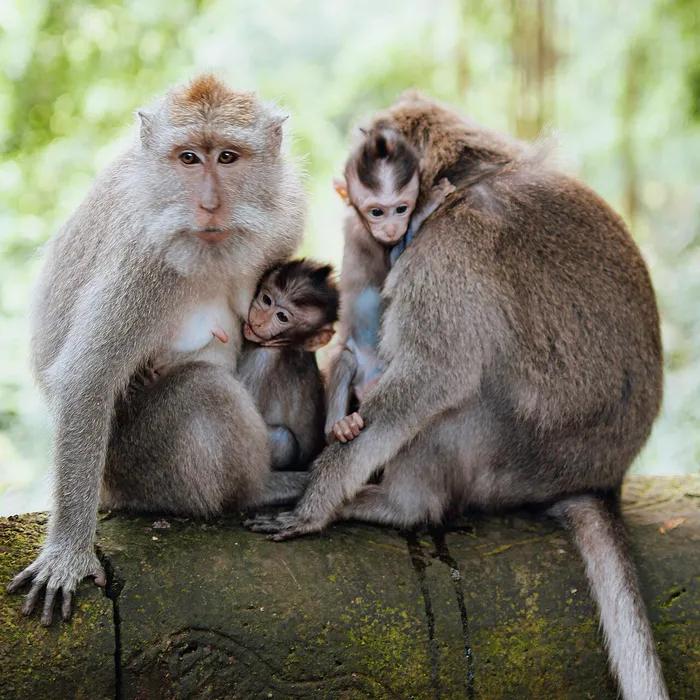
A social primate using forests, riversides, mangroves and settlement edges. Food and human encounters vary by place; frequent sightings do not describe the condition of the whole population.
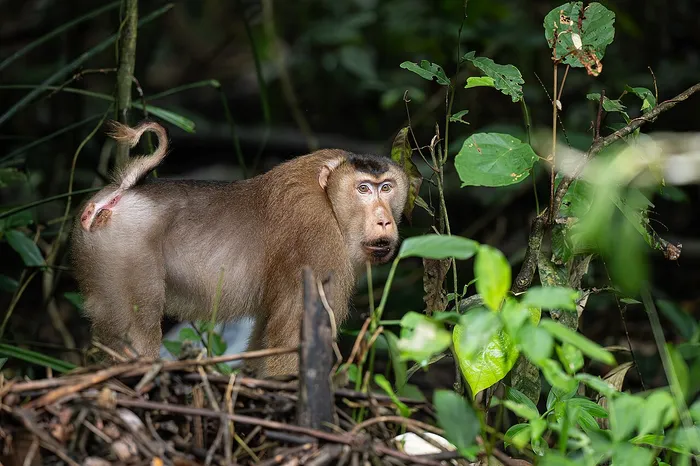
Southern Pig-tailed Macaque (Macaca nemestrina). The southern pig-tailed macaque has a relatively short pig-like tail; it differs from long-tailed macaques and occurs on the Malay Peninsula (southern Thailand and Peninsular Malaysia), Sumatra, Bangka and Borneo.
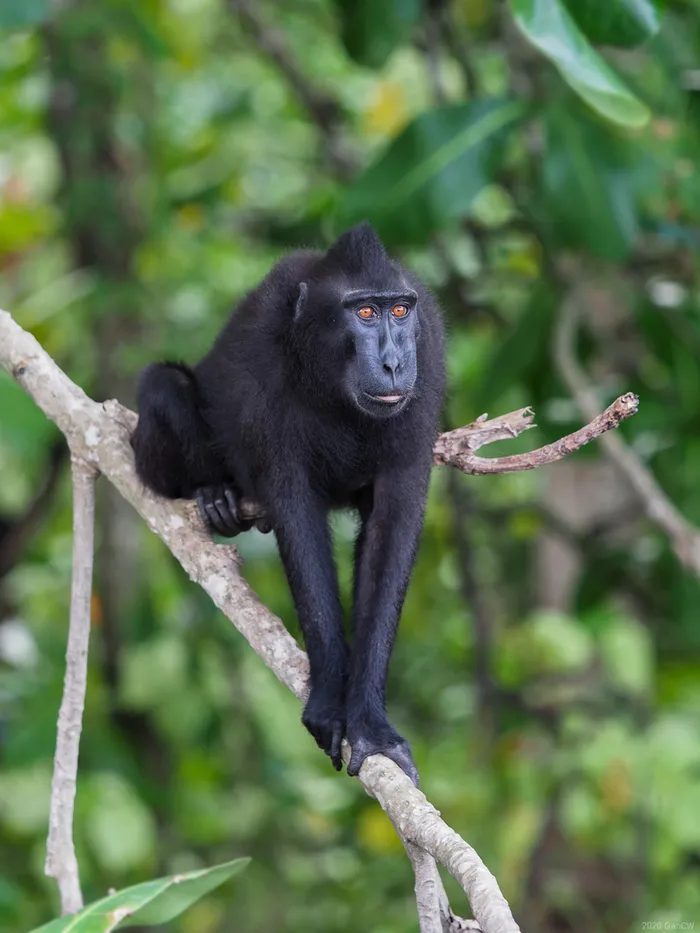
The crested black macaque is a distinctive North Sulawesi primate. Tangkoko field studies connect fruit availability, ranging and the future of its forest habitat.
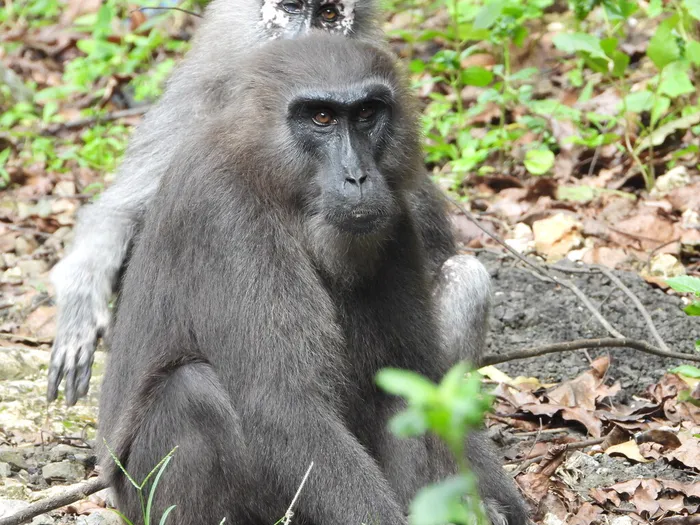
Moor Macaque (Macaca maura). The moor macaque has dark brown-to-black fur and a paler rump patch; it differs from the crested macaque of northern Sulawesi.
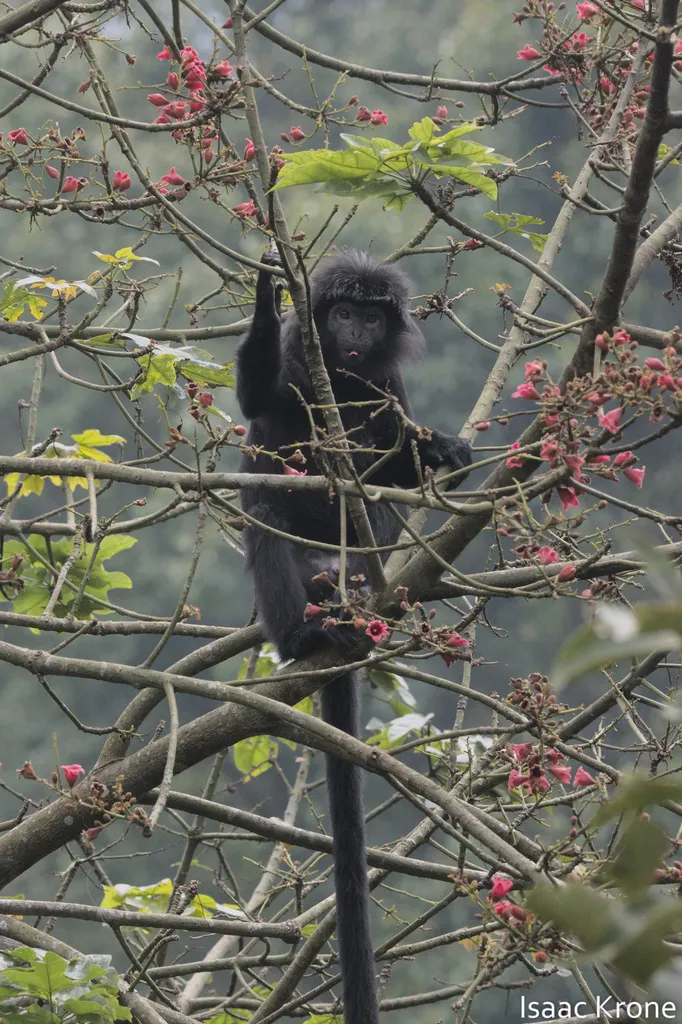
Javan Lutung (Trachypithecus auratus). Javan lutungs are usually glossy dark as adults, while young may be orange; age-related colour should not be mistaken for another species.
Support this cause from outside Indonesia
If you live outside Indonesia and want to fund work on this issue, you can fund frontline animal rescue with World Animal Rescue Network.
Related site: PanduanHewan’s founder is also a director of World Animal Rescue Network. PanduanHewan itself does not accept donations, and this invitation is not directed at people in Indonesia. Before giving to any organisation, check how it is registered and how it reports on spending.
An Indonesian organisation working on this cause?
Officially registered organisations (a yayasan or perkumpulan with legal status on AHU, and a PUB permit where they raise money from the public) can contact us to be listed on this cause page free of charge. Every request is checked first, and a listing is not an endorsement.
Sources and references
- IUCN Red List — Macaca fascicularis (Hansen et al. 2025, e.T12551A273015436) ↗
- JDIH Kementerian Kehutanan — Permen LHK P.106/MENLHK/SETJEN/KUM.1/12/2018, lampiran (famili Cercopithecidae) ↗
- Species+ (UNEP-WCMC/CITES) — Macaca fascicularis: CITES listing and export quotas ↗
- Kompas.com — Jokowi larang topeng monyet, monyetnya dibeli dan dipelihara di Ragunan (18 Oktober 2013) ↗
- JDIH BPK — UU No. 1 Tahun 2023 tentang KUHP ↗
- The Cruelty You Don't See — report on pet macaques in social media content (September 2023) ↗
- Medcom.id — Jateng larang atraksi topeng monyet (24 Oktober 2021) ↗
- Ditjen KSDAE — Pelepasliaran monyet eks topeng monyet Jawa Barat (29 Oktober 2018) ↗
- Mongabay Indonesia — Demi menghibur manusia, monyet pun tersiksa (22 Juni 2019) ↗
- detikNews — Penyiksaan topeng monyet, dari dipukuli hingga digantung (25 Oktober 2013) ↗
- TribunJatim — Petugas amankan monyet dalam rombongan topeng monyet Tulungagung (7 Februari 2022) ↗
- JDIH BPK — PP No. 95 Tahun 2012 tentang Kesehatan Masyarakat Veteriner dan Kesejahteraan Hewan ↗
- Ditjen KSDAE — Monyet 'liar' yang terpenjara diserahkan ke BBKSDA Jawa Timur (18 Juni 2026) ↗
- Kompas.com — Topeng monyet tetap eksis di Jakarta karena identitas sosial yang turun-temurun (1 Desember 2025) ↗
- The Jakarta Post — Jokowi moves to ban masked monkey shows (21 October 2013) ↗
- Kompas.com — Jokowi: Kasihan monyetnya, kurus-kurus kayak saya (23 Oktober 2013) ↗
- Kemenkes Ditjen Kesehatan Lanjutan — Mengenal penyakit rabies (12 Juni 2023) ↗
- CDC — About B virus ↗
- IUCN SSC Primate Specialist Group — Pengamatan primata di kebun binatang dan suaka satwa ↗
- IUCN SSC Primate Specialist Group — Watching captive primates in zoos and sanctuaries ↗
- Schillaci et al. 2005, Trop Med Int Health — Enzootic simian viruses among urban performance monkeys in Indonesia ↗
- Schillaci et al. 2006, Am J Trop Med Hyg — Human respiratory viruses among urban performing monkeys in Indonesia ↗
- Ditjen KSDAE — Zoonosis di balik atraksi topeng monyet (BKSDA Yogyakarta, 20 Agustus 2019) ↗
- ANTARA — Menghalau topeng monyet (10 Maret 2019) ↗
- Sophian 2026, J Med Primatol — Non-human primates and zoonotic disease in Indonesia: a One Health review ↗
- JDIH BPK — UU No. 32 Tahun 2024 (perubahan UU 5/1990), Pasal 21 ↗
- JDIH BPK — PP No. 8 Tahun 1999 tentang Pemanfaatan Jenis Tumbuhan dan Satwa Liar ↗
- Ditjen KSDAE — Kuota pemanfaatan spesies ↗
- JDIH BPK — UU No. 41 Tahun 2014 (perubahan UU 18/2009 tentang Peternakan dan Kesehatan Hewan), Pasal 66A ↗
- JDIH BPK — UU No. 1 Tahun 2026 tentang Penyesuaian Pidana (Lampiran, angka 115: UU 41/2014 Pasal 91B) ↗
- Hilborn & Smith 2024, Am J Primatol — Is the long-tailed macaque at risk of extinction? ↗
- Hansen et al. 2022, Frontiers in Conservation Science — Monetary value of live trade in the long-tailed macaque ↗
- Warne et al. 2023, One Health — Is biomedical research demand driving a monkey business? ↗
- Ditjen KSDAE — Akhir perjalanan peliharaan, monyet ekor panjang dipulihkan di Gresik (1 Juli 2026) ↗
- Ditjen KSDAE — Dua monyet diserahkan: satwa liar bukan untuk dipelihara (26 September 2025) ↗
- Rey et al. 2024, F1000Research — Impacts of illegal trade on socio-emotional and behavioural skills in macaques ↗
- Ditjen KSDAE — Monyet dari Pamekasan, harapan baru di alam liar (30 Juli 2025) ↗
- Ditjen KSDAE — Konflik monyet ekor panjang dan manusia di Jember, tujuh orang terluka (19 September 2025) ↗
- Making Money from Misery — report on animal cruelty content on social media (2021) ↗
- Clarke et al. 2019, PLOS ONE — A viral video and pet lemurs on Twitter ↗
- detikJabar — 5 fakta konten penyiksaan sadis bayi monyet di Tasikmalaya (14 September 2022) ↗
- CBS News — Monkey torture video ring exposed by BBC investigation (20 June 2023) ↗
- Kompas.com — ASN Singkawang siksa monyet, videonya dijual Rp1 juta ke orang luar negeri (10 Februari 2024) ↗
- YouTube Help — Violent or graphic content policies (animal abuse) ↗
- YouTube Help — Report inappropriate videos, channels and other content ↗
- JDIH BPK — Permen LHK No. 17 Tahun 2024 tentang Penyelamatan Jenis Satwa ↗
- IUCN SSC — Guidelines for the management of confiscated, live organisms (2019) ↗
- ANTARA Jatim — Pekerja topeng monyet di Madiun serahkan 23 kera ekor panjang ke BKSDA (2 Maret 2023) ↗
- Polri — Call Center 110 ↗
- Gakkum Kehutanan — Pengaduan penegakan hukum kehutanan ↗
- Species+ API (UNEP-WCMC/CITES) — Macaca fascicularis record, CITES quotas with publication dates ↗
Checked 2026-10-01. Facts, figures and rules can change; check the date on the original source. Report errors through the corrections page. Send a correction