
Recognising the species
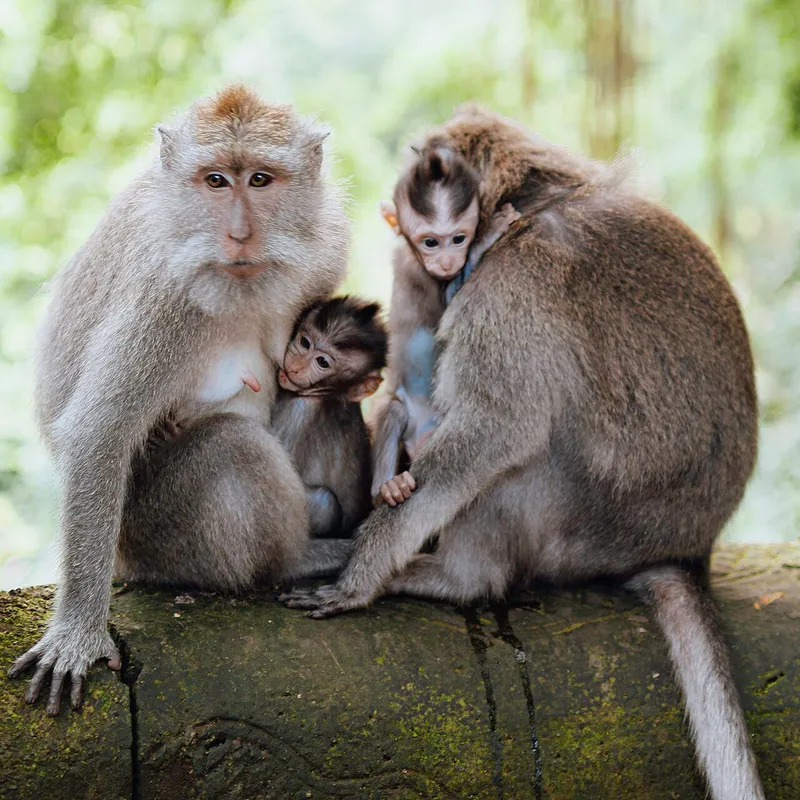
The long-tailed macaque has a relatively long tail, grey-brown coat and paler face. “Crab-eating macaque” refers to one food it sometimes takes, not a universal main diet. The scientific name Macaca fascicularis distinguishes it from the crested black macaque and other Indonesian monkeys.
Forests, riversides and mangroves
This species is recorded in primary and secondary forest, along rivers and in mangroves. Its ability to use disturbed habitats helps explain sightings near farms and settlements. Urban encounters, however, do not show that every group or its natural habitat is secure.
Food and group life
These macaques eat fruit, leaves, flowers, insects and occasionally small animals such as crabs. The mix changes with habitat and natural food availability. They live in socially complex groups, and young remain dependent on their mothers. Human feeding can change foraging behaviour and increase conflict.
Encounters without creating conflict
When encountering macaques on a trail or settlement edge, give them space, secure food and waste, and do not touch or feed them. Singapore’s wildlife agency emphasizes preventing access to human food. That principle is useful, while injured animals or serious conflicts need locally appropriate professional help.
Reading records and status carefully
Many observation records are not a count of individuals or a population trend. Frequently visited sites can generate repeated photos while remote forest is under-recorded. A global conservation assessment also differs from each local group’s condition; check a source’s date, geography and method before using a number to claim the species is secure.
Sources & references
- Animal Diversity Web — Macaca fascicularis ↗
- Singapore Animal & Veterinary Service — Macaques ↗
- Singapore NParks — Macaca fascicularis ↗
- GBIF — accepted Macaca fascicularis taxon ↗
References can change. Check dates and context in the original source.