Quick answer
The issue in brief
Between about 50 and 100 Javan rhinos are left, all in Ujung Kulon National Park in Indonesia: a 2025 report to CITES gives a minimum of about 50, while Indonesia's Ministry of Forestry estimated 87–100 in September 2025. The species is Critically Endangered because this single small population faces horn poaching, inbreeding, an invasive palm and natural disasters. Sumatran rhinos are also Critically Endangered, with an estimated 34–47 left according to the same report or fewer than 100 according to the ministry, and 10 lived in the Way Kambas breeding sanctuary in early 2025.
- Javan rhino, Ministry of Forestry estimate
- 87–100 animals, only in Ujung Kulon National Park (22 September 2025) source ↗
- Javan rhino, minimum estimate in the CITES report
- 50 animals (2025), down from 76 reported in 2023 source ↗
- Javan rhinos killed by poachers, 2019–2023
- Up to 26, according to the 2024 police investigation source ↗
- Killings proven in court
- 10 Javan rhinos (reconstruction of the verdicts, June 2026) source ↗
- Sumatran rhino, population estimate
- 34–47 animals (report to CITES, 2025) source ↗
- Rhinos at the Sumatran Rhino Sanctuary, Way Kambas
- 10: 4 males and 6 females (January 2025) source ↗
- IUCN status
- Critically Endangered, both species source ↗
- CITES
- Appendix I since 1 July 1975 source ↗
- Protection in Indonesia
- Regulation P.106/2018 annex rows 111 (Sumatran rhino) and 112 (Javan rhino) source ↗
Why are Javan and Sumatran rhinos endangered?
Indonesia is the last home of two Asian rhino species: the one-horned Javan rhino (Rhinoceros sondaicus) and the two-horned Sumatran rhino (Dicerorhinus sumatrensis). Both are Critically Endangered on the IUCN Red List.
Javan rhinos survive only in Ujung Kulon National Park in Banten. The 2020 IUCN assessment listed the species as Critically Endangered because so few animals breed: of about 68 rhinos at the time, only around a third were thought to be reproducing. The entire species lives as a single population in one national park.
Sumatran rhinos face a different problem. They are scattered in small pockets across Sumatra and Kalimantan (Indonesian Borneo). The IUCN records a decline of more than 80% over three generations and estimates a 90% chance of extinction within 60 years without successful intervention.
The threats reinforce one another. The Ministry of Forestry says the challenges go beyond poaching to fragmented habitat and inbreeding. In Sumatra, the IUCN names small-population effects, human disturbance and poaching as the three main threats. In Ujung Kulon, volcanic eruptions and disease from livestock add to the risk.
Evidence: Siaran pers SP.16/2026: Putusan persidangan, 10 badak jawa menjadi korban perburuan liar di Taman Nasional Ujung Kulon (Balai TN Ujung Kulon, 21 Jun 2026) ↗ · Pusat penangkaran badak sumatera di Way Kambas Lampung Timur diperluas (ANTARA Lampung, 8 Jan 2025) ↗ · Peringatan Hari Badak Sedunia 2025, Badak Lestari Bumi Berseri (Kementerian Kehutanan, siaran pers SP.209, 22 Sep 2025) ↗ · Ellis & Talukdar (2020) Rhinoceros sondaicus, The IUCN Red List of Threatened Species 2020: e.T19495A18493900 (assessment PDF) ↗ · Ellis & Talukdar (2020) Dicerorhinus sumatrensis, The IUCN Red List of Threatened Species 2020: e.T6553A18493355 (assessment PDF) ↗ · Kemenhut: Populasi badak jawa dan sumatera tersisa sekitar 100 ekor (ANTARA, 22 Sep 2025) ↗
How many Javan rhinos are left? Official figures and estimates for 2025–2026
Figures differ. On World Rhino Day, 22 September 2025, the Ministry of Forestry estimated the Javan rhino population at 87–100. The director general for conservation added that the ministry believed there were fewer than 100.
The rhino status report prepared by the IUCN rhino specialist groups for the 20th CITES Conference of the Parties (2025) takes a different approach. Indonesia reported 76 Javan rhinos in 2023, but it later emerged that as many as 26 had been killed by two poaching gangs in 2019–2023. The report therefore uses a minimum estimate of 50, a fall of about 33% in the known population.
A figure of around 80 also circulates. In April 2024, after a new calf was caught on a camera trap, the Ujung Kulon count was put at 82. The CITES report notes, however, that scientists had already questioned the 2023 count because 18 of the rhinos in it had not been seen on camera traps for three years.
There is good news too. The park reported three new individuals in March–April 2025, and monitoring teams filmed a mother with a new calf on 29 January 2026. Because each figure uses a different method and year, PanduanHewan shows the range: from a minimum of about 50 to 87–100 animals.
Evidence: Peringatan Hari Badak Sedunia 2025, Badak Lestari Bumi Berseri (Kementerian Kehutanan, siaran pers SP.209, 22 Sep 2025) ↗ · Kemenhut: Populasi badak jawa dan sumatera tersisa sekitar 100 ekor (ANTARA, 22 Sep 2025) ↗ · African and Asian Rhinoceroses – Status, Conservation and Trade: report by the IUCN SSC rhino specialist groups to CITES (CoP20 Doc. 84, Annex 3, 2025; archived copy) ↗ · Satu individu baru badak Jawa ditemukan di Taman Nasional Ujung Kulon (VOA Indonesia, 6 Apr 2024) ↗ · Individu baru anak badak jawa tertangkap kamera di Ujung Kulon (Kompas.com, 8 Apr 2024) ↗ · Siaran pers SP.054/2025: Temuan 3 individu baru badak jawa di Taman Nasional Ujung Kulon (Balai TN Ujung Kulon, 3 Mei 2025) ↗ · Anakan badak jawa terekam di TN Ujung Kulon, bukti habitat terjaga dan pengamanan efektif (Kementerian Kehutanan, siaran pers SP.25, 4 Feb 2026) ↗
Javan rhino poaching in Ujung Kulon: 26 rhinos or 10?
For years Javan rhinos were thought to be safe from poaching. The 2020 IUCN assessment still said there had been no known poaching in Ujung Kulon for 20 years. The case came to light only after police in Banten received a report on 29 May 2023 about missing camera traps and fewer signs of rhinos in the park.
In June 2024, Banten police said 26 Javan rhinos had been killed by two poaching gangs from a village near the park. The figure came from the suspects' testimony and was later used in the 2025 report to CITES. One poacher even kept maps of rhino distribution taken from 2020–2023 camera-trap data.
The number proven in court is smaller. On 21 June 2026, the Ujung Kulon park authority reconstructed all the legal facts in the final verdicts and concluded that 10 Javan rhinos were killed: six shot by one gunman (five males and one female) and at least four by the other gang. The gap between 26 and 10 has not been officially explained; 26 comes from the suspects' statements, while 10 is what the verdicts proved.
The poachers used home-made guns of the local "locok" type, cut the rhinos' throats, hacked off the horns and sold them in Jakarta. Most victims were males with visible horns, which reduced the number of breeding males and skewed the sex ratio.
The sentences: two gunmen received 12 years in prison, four gang members 11 years, a middleman who sold horns 4 years and 6 months, and a buyer-side intermediary 1 year after the Supreme Court overturned his acquittal in April 2025. All were also fined Rp100 million. The first 12-year sentence, handed down by Pandeglang District Court on 5 June 2024, was described by the park as the heaviest in the history of wildlife poaching cases in Indonesia.
Sentences above 5 years were possible because the poachers were also charged under Emergency Law 12/1951 on firearms. For the poaching itself they were charged under the old Law 5/1990, which carried a maximum of 5 years in prison. Since 2024 the whole Ujung Kulon peninsula has been closed to human activity other than rhino protection and monitoring, and police and the army have tightened security.
Evidence: Ellis & Talukdar (2020) Rhinoceros sondaicus, The IUCN Red List of Threatened Species 2020: e.T19495A18493900 (assessment PDF) ↗ · African and Asian Rhinoceroses – Status, Conservation and Trade: report by the IUCN SSC rhino specialist groups to CITES (CoP20 Doc. 84, Annex 3, 2025; archived copy) ↗ · 26 badak jawa mati diburu, pengamanan Ujung Kulon lemah? (Mongabay Indonesia, 12 Jun 2024) ↗ · Siaran pers SP.16/2026: Putusan persidangan, 10 badak jawa menjadi korban perburuan liar di Taman Nasional Ujung Kulon (Balai TN Ujung Kulon, 21 Jun 2026) ↗ · Siaran pers: 6 pemburu badak jawa divonis 11–12 tahun penjara (Balai Taman Nasional Ujung Kulon, 13 Feb 2025) ↗ · UU No. 5 Tahun 1990 tentang Konservasi Sumber Daya Alam Hayati dan Ekosistemnya (teks asli, JDIH BPK) ↗ · Siaran pers SP.054/2025: Temuan 3 individu baru badak jawa di Taman Nasional Ujung Kulon (Balai TN Ujung Kulon, 3 Mei 2025) ↗ · Satu individu baru badak Jawa ditemukan di Taman Nasional Ujung Kulon (VOA Indonesia, 6 Apr 2024) ↗
Why are rhinos poached, and what is rhino horn made of?
Rhino horn is made of keratin, the same protein found in fingernails and hair. Unlike a sheep's horn, which has a bone core, a rhino horn is keratin all the way through.
Rhinos are poached because their horns fetch high prices on the black market. The IUCN assessment names excessive demand for horn and other rhino products for Chinese and related traditional medicine systems as the long-term cause of the Javan rhino's collapse. Horn is also consumed for cultural and social-status reasons.
Its medicinal value is unproven. A 2020 study in Global Ecology and Conservation recommends that demand-reduction efforts stress the lack of efficacy of rhino-based traditional medicine, working with medical doctors.
The money involved is large. In the Ujung Kulon case, evidence seized from a horn-selling middleman included a cash deposit slip for Rp525 million dated 8 August 2022. In Palembang, two men who sold rhino horn and ivory cigarette pipes without a permit were sentenced to 4 years in prison and fined Rp500 million on 5 February 2025.
Buying, keeping or selling rhino horn, whole or worked, is a crime in Indonesia. The Ministry of Forestry stresses that parts of protected animals still may not be traded even after being made into carvings, ornaments or collectibles.
Evidence: Rhinoceros horn mineral and metal concentrations vary by sample location, depth, and color (Scientific Reports, 2024) ↗ · Creating artificial rhino horns from horse hair (Scientific Reports, 2019) ↗ · Ellis & Talukdar (2020) Rhinoceros sondaicus, The IUCN Red List of Threatened Species 2020: e.T19495A18493900 (assessment PDF) ↗ · Will legal international rhino horn trade save wild rhino populations? (Global Ecology and Conservation, 2020) ↗ · Siaran pers SP.16/2026: Putusan persidangan, 10 badak jawa menjadi korban perburuan liar di Taman Nasional Ujung Kulon (Balai TN Ujung Kulon, 21 Jun 2026) ↗ · 2 terdakwa penjual cula badak dan gading gajah divonis 4 tahun penjara (detikSumbagsel, 6 Feb 2025) ↗ · UU No. 32 Tahun 2024 tentang Perubahan atas UU No. 5 Tahun 1990 (teks resmi, JDIH BPK) ↗ · Gakkum Kehutanan ungkap jaringan perdagangan gading gajah di Bali melalui patroli siber (Kementerian Kehutanan, 2 Jun 2026) ↗
What else threatens Javan rhinos? Arenga palm, volcanoes, tsunamis and inbreeding
The Javan rhino's habitat is small and getting poorer. The arenga palm (Arenga obtusifolia) dominates the forest canopy in many parts of Ujung Kulon and stops rhino food plants from growing. Figures cited by the IUCN put arenga cover at about 60% (18,000 ha) of the peninsula.
Javan rhinos also compete for food with banteng (Bos javanicus), which number up to 800 in Ujung Kulon, and can catch diseases from local livestock. The park, once thought able to hold more than 100 rhinos, may now support as few as 70.
Natural disasters are a major risk for a population that lives in one place. The 1883 eruption of Krakatau devastated Ujung Kulon; rhinos returned once the forest recovered, but the IUCN warns that a similar large eruption today would leave no rhinos to recolonise the area. In December 2018 the collapse of Anak Krakatau caused a tsunami, although the rhinos were not affected.
The hardest long-term threat is genetic. Small populations are prone to inbreeding and to a build-up of harmful mutations. In November 2025 the Ministry of Forestry said that, according to the latest scientific study, the Javan rhino faces extinction within 50 years because of low genetic diversity, inbreeding and limited habitat.
That is why a single wave of poaching matters so much. A 2015 population and habitat viability assessment concluded that the Ujung Kulon population absolutely cannot tolerate poaching.
Evidence: Ellis & Talukdar (2020) Rhinoceros sondaicus, The IUCN Red List of Threatened Species 2020: e.T19495A18493900 (assessment PDF) ↗ · von Seth et al. (2021) Genomic insights into the conservation status of the world's last remaining Sumatran rhinoceros populations, Nature Communications 12: 2393 ↗ · Kementerian Kehutanan sampaikan penjelasan resmi terkait Musofa, badak jawa hasil translokasi, wafat akibat penyakit kronis bawaan (siaran pers SP.345, 28 Nov 2025) ↗
How is the Javan rhino being saved? A second population and the death of Musofa
The idea of a second population is not new. The government published a rhino conservation strategy and action plan in 2007. Surveys of candidate sites on Java, at Gunung Honje, Gunung Halimun, Masigit Kareumbi and Leuweung Sancang, ranked Gunung Honje as the best habitat.
In June 2010 the government launched the Javan Rhino Study and Conservation Area (JRSCA) in the Gunung Honje area, still inside Ujung Kulon National Park. It covers 5,100 ha, was fenced in stages in 2010 and 2021–2022, and contains a 40-ha care paddock. Up to 2019, six rhinos had been recorded there.
In August 2025 the Ministry of Forestry set a target of establishing a second population by 2029 through Operation Merah Putih, which moves rhinos from the Ujung Kulon peninsula to the JRSCA. The park authority stresses that the JRSCA is not an artificial habitat but fenced native rhino habitat. Under Ministerial Regulation 17/2024, translocation means moving animals within or out of their habitat in a way that is safe for animals and people.
The first rhino moved, Musofa, entered a pit trap on 3 November 2025, was carried by a navy marine amphibious vehicle and reached the JRSCA care paddock unhurt on 5 November. On 7 November 2025 Musofa died. A necropsy by the IPB University pathology team found chronic damage to the liver, lungs and brain and a significant parasite infection of the gut.
The ministry concluded that Musofa died of a chronic illness present long before the translocation, and called the case a lesson for strengthening early detection of wildlife disease and translocation safety protocols. It shows the dilemma of a second population: every move carries risk, but keeping a whole species on one peninsula is risky too.
Evidence: Ellis & Talukdar (2020) Rhinoceros sondaicus, The IUCN Red List of Threatened Species 2020: e.T19495A18493900 (assessment PDF) ↗ · Siaran pers SP.191/2025: JRSCA, habitat asli badak jawa – translokasi di dalam kawasan Taman Nasional Ujung Kulon (8 Sep 2025) ↗ · Kemenhut siap translokasi badak jawa untuk membentuk populasi kedua (ANTARA, 22 Agu 2025) ↗ · Permen LHK No. 17 Tahun 2024 tentang Penyelamatan Jenis Satwa (teks resmi, JDIH BPK) ↗ · Kementerian Kehutanan sampaikan penjelasan resmi terkait Musofa, badak jawa hasil translokasi, wafat akibat penyakit kronis bawaan (siaran pers SP.345, 28 Nov 2025) ↗
How many Sumatran rhinos are left in Sumatra and Borneo?
Sumatran rhino numbers are even less certain than Javan rhino numbers. The 2025 report to CITES says no concerted effort to count them is known, so it keeps the estimate of 34–47 in Indonesia. The Ministry of Forestry says fewer than 100. In 2007 the estimate was still 180–200.
In southern Sumatra, signs of wild rhinos are getting rarer. Searches in Bukit Barisan Selatan and Way Kambas national parks found no fresh footprints, and the IUCN Asian Rhino Specialist Group reports no authentic records from southern Sumatra in the past two years. Hopes now rest on northern Sumatra, including the Leuser area and Aceh.
When a population splinters into groups of two to five animals, rhinos struggle to find mates. Females that go a long time without pregnancy can also develop reproductive disorders. A 2021 genome study found that the Sumatran and Bornean populations carry a high load of harmful mutations, so small populations risk inbreeding depression.
In Kalimantan, the Bornean subspecies (Dicerorhinus sumatrensis harrissoni) has almost vanished. A tiny population was found in East Kalimantan in 2012; a female rescued in 2016 with a snare wound later died, and another female was captured in November 2018. As of June 2026, only two Bornean rhinos are officially identified, both female: Pahu, cared for in a rhino sanctuary in East Kalimantan, and Pari, still living wild in Mahakam Ulu, whom officials plan to move to the sanctuary.
Malaysia has already lost its Sumatran rhinos: the IUCN records that the populations in Peninsular Malaysia and Sabah are gone. Indonesia is now the only country where the species is known for certain to survive; its presence in Myanmar is uncertain.
Evidence: African and Asian Rhinoceroses – Status, Conservation and Trade: report by the IUCN SSC rhino specialist groups to CITES (CoP20 Doc. 84, Annex 3, 2025; archived copy) ↗ · Peringatan Hari Badak Sedunia 2025, Badak Lestari Bumi Berseri (Kementerian Kehutanan, siaran pers SP.209, 22 Sep 2025) ↗ · 2024–2025 Report of the IUCN SSC Asian Rhino Specialist Group (IUCN Species Survival Commission, 2025) ↗ · Hanya tersisa dua ekor betina, badak Pari Mahulu di Kaltim segera ditranslokasi demi cegah kepunahan (Kompas.com, 9 Jun 2026) ↗ · Ellis & Talukdar (2020) Dicerorhinus sumatrensis, The IUCN Red List of Threatened Species 2020: e.T6553A18493355 (assessment PDF) ↗ · von Seth et al. (2021) Genomic insights into the conservation status of the world's last remaining Sumatran rhinoceros populations, Nature Communications 12: 2393 ↗
How many Sumatran rhinos are in captivity? The Way Kambas sanctuary and its calves
The Sumatran Rhino Sanctuary (Suaka Rhino Sumatera, SRS) is a semi-wild breeding facility in a special zone of Way Kambas National Park, Lampung, run by the national park authority with partners. Built in 1997 on 100 ha, it gained another 100 ha in 2019. Its purpose is to produce calves to keep the species alive, with a view to releasing them into the wild in future.
By the end of 2023 the sanctuary had recorded five births: Andatu (2012), Delilah (born 11 May 2016), Sedah Mirah (2022), a female calf of the mother Ratu (30 September 2023) and Indra, a 25-kg male (25 November 2023). Indra's mother is Delilah, herself born at the sanctuary, so the programme now spans generations.
In January 2025 there were 10 rhinos at the SRS, 4 males and 6 females. The head of Way Kambas National Park said the 200 ha were no longer enough because new births were expected in 2026, and an extension for five more rhinos had been approved. The sanctuary vet expected three females could become pregnant in 2025.
The government is also developing assisted reproductive technology (ART) and a biobank with IPB University, and plans a Sumatran rhino sanctuary in East Aceh. The 2021 genome study suggests that moving genes between populations could help prevent future inbreeding depression.
The Way Kambas park authority invites local people to help through a partnership to plant rhino food trees. Members of the public do not need to, and should not, touch or feed rhinos in order to help.
Evidence: Menteri LHK sampaikan kabar gembira kelahiran satu ekor badak sumatera di Taman Nasional Way Kambas (Balai Kliring Keanekaragaman Hayati, 30 Sep 2023) ↗ · Pusat penangkaran badak sumatera di Way Kambas Lampung Timur diperluas (ANTARA Lampung, 8 Jan 2025) ↗ · Seekor anak badak jantan lahir di Taman Nasional Way Kambas (ANTARA, 26 Nov 2023) ↗ · Kemenhut: Populasi badak jawa dan sumatera tersisa sekitar 100 ekor (ANTARA, 22 Sep 2025) ↗ · Peringatan Hari Badak Sedunia 2025, Badak Lestari Bumi Berseri (Kementerian Kehutanan, siaran pers SP.209, 22 Sep 2025) ↗ · von Seth et al. (2021) Genomic insights into the conservation status of the world's last remaining Sumatran rhinoceros populations, Nature Communications 12: 2393 ↗
The last Javan rhino in Vietnam: what happened in 2010?
Javan rhinos once ranged from Bangladesh, Myanmar, Thailand, Laos, Cambodia, Vietnam and probably southern China down to the Malay Peninsula, Sumatra and Java. From the mid-19th century the species disappeared from almost all of that range. Its last record on Sumatra dates from 1959.
The mainland subspecies, Rhinoceros sondaicus annamiticus, held out longest in Cat Tien National Park in Vietnam. Its last animal was poached in May 2010 and found with its horn removed. The Vietnamese population was declared extinct the same year, leaving Indonesia as the Javan rhino's only home.
The lesson applies to Ujung Kulon: a small, isolated population can be wiped out even inside a national park. The report to CITES lists 3–5 Javan rhinos in Vietnam in 2007; by its 2012 entry they are listed as extinct.
Evidence: Ellis & Talukdar (2020) Rhinoceros sondaicus, The IUCN Red List of Threatened Species 2020: e.T19495A18493900 (assessment PDF) ↗ · Satu individu baru badak Jawa ditemukan di Taman Nasional Ujung Kulon (VOA Indonesia, 6 Apr 2024) ↗ · African and Asian Rhinoceroses – Status, Conservation and Trade: report by the IUCN SSC rhino specialist groups to CITES (CoP20 Doc. 84, Annex 3, 2025; archived copy) ↗
Are Javan and Sumatran rhinos protected? Indonesian law, CITES and IUCN status
Yes. The Sumatran rhino (Dicerorhinus sumatrensis) and the Javan rhino (Rhinoceros sondaicus) are rows 111 and 112 in the annex of Ministerial Regulation P.106/2018 on protected plant and animal species.
Article 21(2) of Law 5/1990, as amended by Law 32/2024, bans anyone from hunting, catching, injuring, killing, keeping, owning, rearing, transporting or trading protected animals, including their parts and goods made from them, such as horn. Article 40A(1) originally set 3–15 years in prison and a fine of category IV (Rp200 million) to VII (Rp5 billion). Since 2 January 2026, Law 1/2026 on criminal-penalty adjustment has removed that minimum, so offenders face up to 15 years in prison and/or a fine of up to category VII (Rp5 billion). Penalties can be increased by a third when information technology is used (Article 40C(2)).
By comparison, Law 5/1990 before the amendment carried a maximum of 5 years in prison and a Rp100 million fine. The animal-cruelty article in the new Criminal Code (Law 1/2023, Article 337, in force since 2 January 2026) is far lighter: at most 1 year and 6 months if the animal dies.
Internationally, both species have been on CITES Appendix I since 1 July 1975. This means international trade in their specimens is banned, except imports for non-commercial purposes such as research, with both export and import permits. The IUCN Red List classes both as Critically Endangered in assessments published in 2020.
Enforcement involves the police, national park authorities, the Forestry Law Enforcement Directorate (Gakkum) and the regional conservation agencies (BKSDA). In the Ujung Kulon case, a joint operation by Banten police, the park authority, Gakkum and the national police K9 unit on 7–16 May 2024 arrested one suspect, while five others surrendered.
Evidence: Permen LHK P.106/MENLHK/SETJEN/KUM.1/12/2018 tentang Jenis Tumbuhan dan Satwa yang Dilindungi (lampiran) ↗ · UU No. 32 Tahun 2024 tentang Perubahan atas UU No. 5 Tahun 1990 (teks resmi, JDIH BPK) ↗ · UU No. 1 Tahun 2023 tentang KUHP (teks resmi, JDIH BPK; berlaku 2 Januari 2026) ↗ · UU No. 5 Tahun 1990 tentang Konservasi Sumber Daya Alam Hayati dan Ekosistemnya (teks asli, JDIH BPK) ↗ · Database Peraturan BPK: UU No. 1 Tahun 2023 tentang KUHP ↗ · CITES Species+: Rhinoceros sondaicus, CITES listing (API record) ↗ · CITES Species+: Dicerorhinus sumatrensis, CITES listing (API record) ↗ · CITES: The CITES Appendices (archived copy, 30 Mar 2026) ↗ · Ellis & Talukdar (2020) Rhinoceros sondaicus, The IUCN Red List of Threatened Species 2020: e.T19495A18493900 (assessment PDF) ↗ · Ellis & Talukdar (2020) Dicerorhinus sumatrensis, The IUCN Red List of Threatened Species 2020: e.T6553A18493355 (assessment PDF) ↗ · Siaran pers: 6 pemburu badak jawa divonis 11–12 tahun penjara (Balai Taman Nasional Ujung Kulon, 13 Feb 2025) ↗ · UU No. 1 Tahun 2026 tentang Penyesuaian Pidana (JDIH BPK) ↗
Timeline
- 1883 The eruption of Krakatau devastates Ujung Kulon; Javan rhinos later return as the forest recovers. source ↗
- 1959 Last record of the Javan rhino on Sumatra. source ↗
- 1975-07 Javan and Sumatran rhinos are listed on CITES Appendix I. source ↗
- 1997 The Sumatran Rhino Sanctuary is built in Way Kambas National Park, on 100 ha. source ↗
- 2010-05 The last Javan rhino in Vietnam is poached in Cat Tien National Park. source ↗
- 2010-06 The government launches the JRSCA at Gunung Honje in Ujung Kulon National Park. source ↗
- 2012 Andatu becomes the first rhino born at the Sumatran Rhino Sanctuary. source ↗
- 2018-11 A female Sumatran rhino in East Kalimantan is caught in a rescue capture operation. source ↗
- 2018-12 The collapse of Anak Krakatau triggers a tsunami; Javan rhinos are not affected. source ↗
- 2018-12 Regulation P.106/2018 is issued, listing the Sumatran and Javan rhinos as rows 111 and 112. source ↗
- 2023-05 Banten police receive a report of missing camera traps in Ujung Kulon, the start of the poaching investigation. source ↗
- 2023-09 A female Sumatran rhino calf is born to Ratu at the Sumatran Rhino Sanctuary. source ↗
- 2023-11 A male Sumatran rhino calf is born to Delilah, the fifth birth at the Sumatran Rhino Sanctuary. source ↗
- 2024-03 A new Javan rhino calf is caught on camera; the count is put at 82. source ↗
- 2024-06 Pandeglang District Court hands down the first 12-year sentence for a Javan rhino poacher. source ↗
- 2024-06 Banten police say 26 Javan rhinos were killed by two poaching gangs in 2019–2023. source ↗
- 2024-08 Law 32/2024, amending Law 5/1990, is enacted, raising penalties for killing protected animals. source ↗
- 2025-02 Six Javan rhino poachers are sentenced to 11–12 years at Pandeglang District Court. source ↗
- 2025-09 The Ministry of Forestry estimates the Javan rhino population at 87–100. source ↗
- 2025-11 Musofa, the first Javan rhino translocated to the JRSCA, dies of chronic disease. source ↗
- 2025 The IUCN rhino specialists' report for CITES CoP20 cuts the minimum Javan rhino estimate to 50. source ↗
- 2026-01 A Javan rhino mother and new calf are filmed by a camera trap in the Cigenter block. source ↗
- 2026-06 Only two Bornean rhinos are officially identified, both female. source ↗
- 2026-06 Ujung Kulon park authority: court verdicts prove 10 Javan rhinos were poached. source ↗
How to help
- Do not buy, order, keep or sell rhino horn or anything claimed to be made from it, including products sold as medicine, amulets or jewellery. Horn is only keratin, and trading it is a crime.
- Report offers of horn or other rhino parts, online or in shops, to the Forestry Law Enforcement Directorate (pengaduan.gakkum.kehutanan.go.id), the nearest BKSDA or national park office, or the police on 110. Keep screenshots and links, and do not contact or haggle with the seller.
- Report posts selling protected animals to the platform where they appear, and do not share them.
- Do not post rhino locations, camera-trap photos with location details or patrol information on social media. Camera-trap distribution data has been used by poachers in Ujung Kulon.
- If you visit Ujung Kulon National Park, follow the park rules: the Ujung Kulon peninsula is closed to all activity other than rhino protection and monitoring. Be wary of tours that promise a Javan rhino sighting.
- If you live near rhino habitat, do not set snares or graze livestock inside the park: snares injure rhinos and livestock can spread disease. Join official park partnership schemes, such as planting rhino food trees.
- When you share information, give population figures with their source and date, and explain that estimates differ. Do not spread claims that the Javan rhino is already extinct.
- Before donating to a "rhino adoption" scheme or any other appeal, check the organisation's fundraising permit and legal registration with PanduanHewan's guide to checking an appeal. PanduanHewan itself does not take donations.
- If you want to volunteer, choose programmes that work under a national park or BKSDA permit, offer no direct contact with rhinos, and are open about their activities and funding.
Common questions
Are Javan rhinos extinct?
No. Javan rhinos still live in Ujung Kulon National Park in Banten, the only place the species survives, and a new calf was filmed in January 2026. The population that has gone extinct is Vietnam's, whose last animal was poached in 2010.
Source: Peringatan Hari Badak Sedunia 2025, Badak Lestari Bumi Berseri (Kementerian Kehutanan, siaran pers SP.209, 22 Sep 2025) ↗ · Anakan badak jawa terekam di TN Ujung Kulon, bukti habitat terjaga dan pengamanan efektif (Kementerian Kehutanan, siaran pers SP.25, 4 Feb 2026) ↗ · Ellis & Talukdar (2020) Rhinoceros sondaicus, The IUCN Red List of Threatened Species 2020: e.T19495A18493900 (assessment PDF) ↗
How many Javan rhinos are left in 2026?
Estimates differ. The Ministry of Forestry puts the number at 87–100 (September 2025), while the IUCN rhino specialists' report to CITES (2025) uses a minimum estimate of 50 after accounting for rhinos killed by poachers in 2019–2023. All of them live in Ujung Kulon.
Source: Peringatan Hari Badak Sedunia 2025, Badak Lestari Bumi Berseri (Kementerian Kehutanan, siaran pers SP.209, 22 Sep 2025) ↗ · African and Asian Rhinoceroses – Status, Conservation and Trade: report by the IUCN SSC rhino specialist groups to CITES (CoP20 Doc. 84, Annex 3, 2025; archived copy) ↗
Are there any Javan rhinos in captivity?
No. According to the 2020 IUCN assessment, there are no Javan rhinos in captivity, and only 22 have ever been known to be held in captivity. All Javan rhinos live in the wild in Ujung Kulon.
How many Sumatran rhinos are in captivity?
In January 2025 the Sumatran Rhino Sanctuary in Way Kambas National Park held 10 Sumatran rhinos: 4 males and 6 females. Five of them were born at the sanctuary between 2012 and 2023. In East Kalimantan, one female, Pahu, is also cared for in a sanctuary.
Source: Pusat penangkaran badak sumatera di Way Kambas Lampung Timur diperluas (ANTARA Lampung, 8 Jan 2025) ↗ · Seekor anak badak jantan lahir di Taman Nasional Way Kambas (ANTARA, 26 Nov 2023) ↗ · Hanya tersisa dua ekor betina, badak Pari Mahulu di Kaltim segera ditranslokasi demi cegah kepunahan (Kompas.com, 9 Jun 2026) ↗
What is rhino horn made of, and does it work as medicine?
Rhino horn is made of keratin, the same material as fingernails and hair. Its medicinal value is unproven; researchers recommend that demand-reduction campaigns stress the lack of efficacy of rhino-based medicine.
Source: Rhinoceros horn mineral and metal concentrations vary by sample location, depth, and color (Scientific Reports, 2024) ↗ · Will legal international rhino horn trade save wild rhino populations? (Global Ecology and Conservation, 2020) ↗
Why are Javan rhinos poached?
For their horns. In the Ujung Kulon case, poachers cut off the horns and sold them in Jakarta. Most of the rhinos killed were males, whose horns are more visible.
Source: Siaran pers SP.16/2026: Putusan persidangan, 10 badak jawa menjadi korban perburuan liar di Taman Nasional Ujung Kulon (Balai TN Ujung Kulon, 21 Jun 2026) ↗ · African and Asian Rhinoceroses – Status, Conservation and Trade: report by the IUCN SSC rhino specialist groups to CITES (CoP20 Doc. 84, Annex 3, 2025; archived copy) ↗
Are there still rhinos in Borneo?
As of June 2026, only two Bornean rhinos are officially identified, both female. Pahu is cared for in a rhino sanctuary in East Kalimantan, while Pari still lives wild in Mahakam Ulu and is due to be moved to the sanctuary.
Source: Hanya tersisa dua ekor betina, badak Pari Mahulu di Kaltim segera ditranslokasi demi cegah kepunahan (Kompas.com, 9 Jun 2026) ↗ · Hanya tersisa dua ekor betina, badak Pari Mahulu di Kaltim segera ditranslokasi demi cegah kepunahan (Kompas.com, 9 Jun 2026) ↗
What happened to Musofa the Javan rhino?
Musofa was the first Javan rhino moved from the Ujung Kulon peninsula to the JRSCA, in November 2025. Musofa died on 7 November 2025; according to the Ministry of Forestry, the necropsy showed chronic disease of the liver, lungs and brain that predated the translocation.
Source: Kementerian Kehutanan sampaikan penjelasan resmi terkait Musofa, badak jawa hasil translokasi, wafat akibat penyakit kronis bawaan (siaran pers SP.345, 28 Nov 2025) ↗ · Kementerian Kehutanan sampaikan penjelasan resmi terkait Musofa, badak jawa hasil translokasi, wafat akibat penyakit kronis bawaan (siaran pers SP.345, 28 Nov 2025) ↗ · Kementerian Kehutanan sampaikan penjelasan resmi terkait Musofa, badak jawa hasil translokasi, wafat akibat penyakit kronis bawaan (siaran pers SP.345, 28 Nov 2025) ↗
Is it legal to keep an inherited rhino horn?
Law 32/2024 bans anyone from keeping, owning, transporting or trading parts of protected animals and goods made from them. Do not sell or give it away; ask the local BKSDA what to do.
Source: UU No. 32 Tahun 2024 tentang Perubahan atas UU No. 5 Tahun 1990 (teks resmi, JDIH BPK) ↗
Can you see Javan rhinos in Ujung Kulon National Park?
Almost certainly not. The Ujung Kulon peninsula, the rhinos' main habitat, is closed to all human activity other than rhino protection and monitoring. Rhinos are monitored with camera traps, and most published images come from those cameras.
Source: Siaran pers SP.054/2025: Temuan 3 individu baru badak jawa di Taman Nasional Ujung Kulon (Balai TN Ujung Kulon, 3 Mei 2025) ↗ · African and Asian Rhinoceroses – Status, Conservation and Trade: report by the IUCN SSC rhino specialist groups to CITES (CoP20 Doc. 84, Annex 3, 2025; archived copy) ↗
How do I report rhino horn for sale?
Report it to the Forestry Law Enforcement Directorate at pengaduan.gakkum.kehutanan.go.id, to the nearest BKSDA or national park office, or to the police on 110. The Gakkum form asks for a description of the incident, details of the person reported and evidence such as photos or documents. The Ministry of Forestry asks the public to report every offer of protected animals or their parts.
Source: Pengaduan Penegakan Hukum Kehutanan (Ditjen Gakkum Kehutanan) ↗ · Pengaduan Penegakan Hukum Kehutanan (Ditjen Gakkum Kehutanan) ↗ · Call Center 110 (Polri) ↗ · Gakkum Kehutanan ungkap jaringan perdagangan gading gajah di Bali melalui patroli siber (Kementerian Kehutanan, 2 Jun 2026) ↗
What are the IUCN and CITES statuses of Javan and Sumatran rhinos?
Both are Critically Endangered on the IUCN Red List (2020 assessments) and have been on CITES Appendix I since 1 July 1975, which bans commercial international trade. In Indonesia both are listed in the annex of Regulation P.106/2018.
Source: Ellis & Talukdar (2020) Rhinoceros sondaicus, The IUCN Red List of Threatened Species 2020: e.T19495A18493900 (assessment PDF) ↗ · Ellis & Talukdar (2020) Dicerorhinus sumatrensis, The IUCN Red List of Threatened Species 2020: e.T6553A18493355 (assessment PDF) ↗ · CITES Species+: Rhinoceros sondaicus, CITES listing (API record) ↗ · CITES: The CITES Appendices (archived copy, 30 Mar 2026) ↗ · Permen LHK P.106/MENLHK/SETJEN/KUM.1/12/2018 tentang Jenis Tumbuhan dan Satwa yang Dilindungi (lampiran) ↗
Animals involved
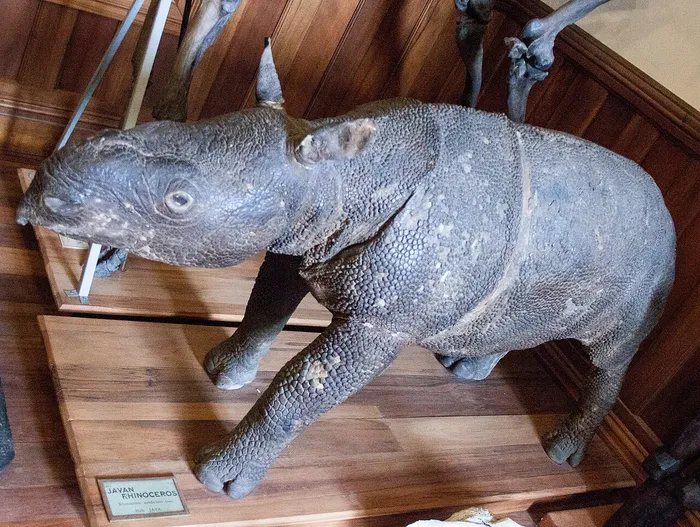
A one-horned rhinoceros with a single surviving wild population in Ujung Kulon. Strong protection and careful habitat management underpin its future.
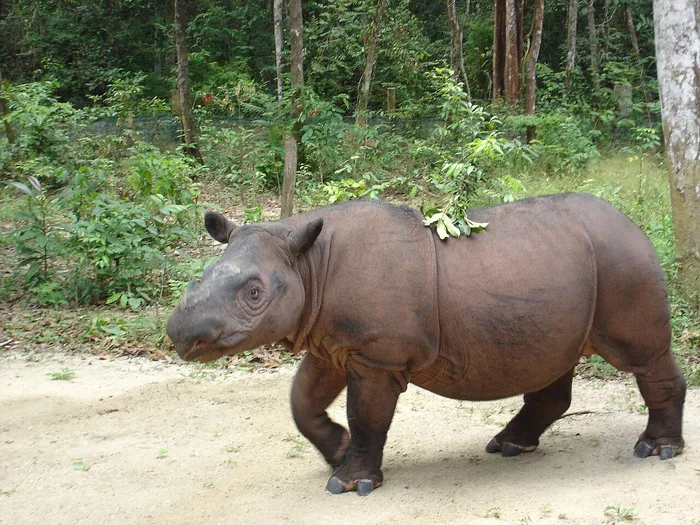
The smallest living rhino and the only two-horned Asian rhino. Isolated populations make finding mates and protecting habitat particular challenges.
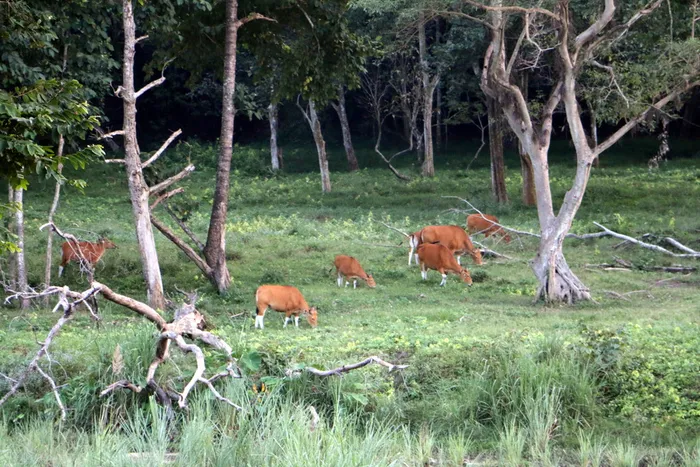
An Asian wild cattle species related to Bali cattle. Its global status changed to Critically Endangered in 2024, underlining the need to protect wild populations.
Support this cause from outside Indonesia
If you live outside Indonesia and want to fund work on this issue, you can help protect rhinos with World Animal Rescue Network.
Related site: PanduanHewan’s founder is also a director of World Animal Rescue Network. PanduanHewan itself does not accept donations, and this invitation is not directed at people in Indonesia. Before giving to any organisation, check how it is registered and how it reports on spending.
An Indonesian organisation working on this cause?
Officially registered organisations (a yayasan or perkumpulan with legal status on AHU, and a PUB permit where they raise money from the public) can contact us to be listed on this cause page free of charge. Every request is checked first, and a listing is not an endorsement.
Sources and references
- Peringatan Hari Badak Sedunia 2025, Badak Lestari Bumi Berseri (Kementerian Kehutanan, siaran pers SP.209, 22 Sep 2025) ↗
- African and Asian Rhinoceroses – Status, Conservation and Trade: report by the IUCN SSC rhino specialist groups to CITES (CoP20 Doc. 84, Annex 3, 2025; archived copy) ↗
- Siaran pers SP.16/2026: Putusan persidangan, 10 badak jawa menjadi korban perburuan liar di Taman Nasional Ujung Kulon (Balai TN Ujung Kulon, 21 Jun 2026) ↗
- Pusat penangkaran badak sumatera di Way Kambas Lampung Timur diperluas (ANTARA Lampung, 8 Jan 2025) ↗
- CITES Species+: Rhinoceros sondaicus, CITES listing (API record) ↗
- Permen LHK P.106/MENLHK/SETJEN/KUM.1/12/2018 tentang Jenis Tumbuhan dan Satwa yang Dilindungi (lampiran) ↗
- Ellis & Talukdar (2020) Rhinoceros sondaicus, The IUCN Red List of Threatened Species 2020: e.T19495A18493900 (assessment PDF) ↗
- Ellis & Talukdar (2020) Dicerorhinus sumatrensis, The IUCN Red List of Threatened Species 2020: e.T6553A18493355 (assessment PDF) ↗
- Kemenhut: Populasi badak jawa dan sumatera tersisa sekitar 100 ekor (ANTARA, 22 Sep 2025) ↗
- Satu individu baru badak Jawa ditemukan di Taman Nasional Ujung Kulon (VOA Indonesia, 6 Apr 2024) ↗
- Individu baru anak badak jawa tertangkap kamera di Ujung Kulon (Kompas.com, 8 Apr 2024) ↗
- Siaran pers SP.054/2025: Temuan 3 individu baru badak jawa di Taman Nasional Ujung Kulon (Balai TN Ujung Kulon, 3 Mei 2025) ↗
- Anakan badak jawa terekam di TN Ujung Kulon, bukti habitat terjaga dan pengamanan efektif (Kementerian Kehutanan, siaran pers SP.25, 4 Feb 2026) ↗
- 26 badak jawa mati diburu, pengamanan Ujung Kulon lemah? (Mongabay Indonesia, 12 Jun 2024) ↗
- Siaran pers: 6 pemburu badak jawa divonis 11–12 tahun penjara (Balai Taman Nasional Ujung Kulon, 13 Feb 2025) ↗
- UU No. 5 Tahun 1990 tentang Konservasi Sumber Daya Alam Hayati dan Ekosistemnya (teks asli, JDIH BPK) ↗
- Rhinoceros horn mineral and metal concentrations vary by sample location, depth, and color (Scientific Reports, 2024) ↗
- Creating artificial rhino horns from horse hair (Scientific Reports, 2019) ↗
- Will legal international rhino horn trade save wild rhino populations? (Global Ecology and Conservation, 2020) ↗
- 2 terdakwa penjual cula badak dan gading gajah divonis 4 tahun penjara (detikSumbagsel, 6 Feb 2025) ↗
- UU No. 32 Tahun 2024 tentang Perubahan atas UU No. 5 Tahun 1990 (teks resmi, JDIH BPK) ↗
- Gakkum Kehutanan ungkap jaringan perdagangan gading gajah di Bali melalui patroli siber (Kementerian Kehutanan, 2 Jun 2026) ↗
- von Seth et al. (2021) Genomic insights into the conservation status of the world's last remaining Sumatran rhinoceros populations, Nature Communications 12: 2393 ↗
- Kementerian Kehutanan sampaikan penjelasan resmi terkait Musofa, badak jawa hasil translokasi, wafat akibat penyakit kronis bawaan (siaran pers SP.345, 28 Nov 2025) ↗
- Siaran pers SP.191/2025: JRSCA, habitat asli badak jawa – translokasi di dalam kawasan Taman Nasional Ujung Kulon (8 Sep 2025) ↗
- Kemenhut siap translokasi badak jawa untuk membentuk populasi kedua (ANTARA, 22 Agu 2025) ↗
- Permen LHK No. 17 Tahun 2024 tentang Penyelamatan Jenis Satwa (teks resmi, JDIH BPK) ↗
- 2024–2025 Report of the IUCN SSC Asian Rhino Specialist Group (IUCN Species Survival Commission, 2025) ↗
- Hanya tersisa dua ekor betina, badak Pari Mahulu di Kaltim segera ditranslokasi demi cegah kepunahan (Kompas.com, 9 Jun 2026) ↗
- Menteri LHK sampaikan kabar gembira kelahiran satu ekor badak sumatera di Taman Nasional Way Kambas (Balai Kliring Keanekaragaman Hayati, 30 Sep 2023) ↗
- Seekor anak badak jantan lahir di Taman Nasional Way Kambas (ANTARA, 26 Nov 2023) ↗
- UU No. 1 Tahun 2023 tentang KUHP (teks resmi, JDIH BPK; berlaku 2 Januari 2026) ↗
- Database Peraturan BPK: UU No. 1 Tahun 2023 tentang KUHP ↗
- CITES Species+: Dicerorhinus sumatrensis, CITES listing (API record) ↗
- CITES: The CITES Appendices (archived copy, 30 Mar 2026) ↗
- UU No. 1 Tahun 2026 tentang Penyesuaian Pidana (JDIH BPK) ↗
- Pengaduan Penegakan Hukum Kehutanan (Ditjen Gakkum Kehutanan) ↗
- Call Center 110 (Polri) ↗
Checked 2026-10-01. Facts, figures and rules can change; check the date on the original source. Report errors through the corrections page. Send a correction