
Quick answer
IUCN status: Critically EndangeredSumatran rhinoceros at a glance
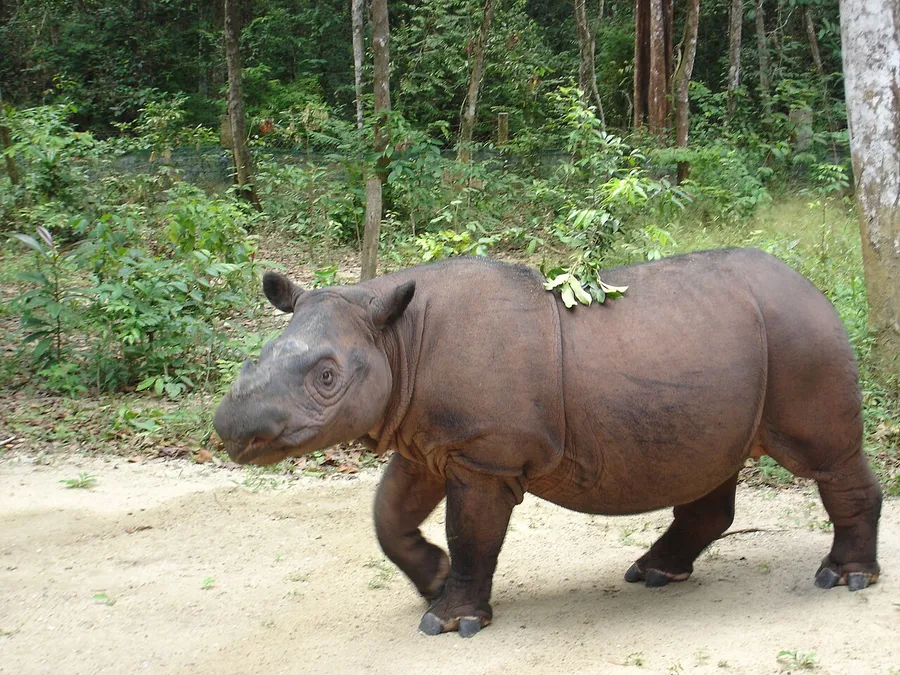
The Sumatran rhinoceros (Dicerorhinus sumatrensis) is a mammal in the family Rhinocerotidae. Range in Indonesia: Remaining Indonesian habitat pockets in Sumatra and Kalimantan. It is endemic to Indonesia, living naturally only in Now only Sumatra and East Kalimantan; formerly also Malaysia and mainland Asia. Diet: forest vegetation; a herbivore. IUCN Red List status: Critically Endangered. It is a legally protected species in Indonesia (Regulation P.106/2018).
| Scientific name | Dicerorhinus sumatrensis |
|---|---|
| Indonesian name | Badak Sumatera |
| Group | Mammals |
| Family | Rhinocerotidae |
| Range in Indonesia | Remaining Indonesian habitat pockets in Sumatra and Kalimantan |
| Linked habitats | Tropical Rainforests |
| Horns | Two |
| Diet | Forest vegetation |
| Feature | More conspicuous hair than other rhinos |
| IUCN status | Critically Endangered · International Rhino Foundation — Sumatran rhino |
| Legal protection in Indonesia | Protected · Regulation P.106/2018 · annex no. 111 |
| Population estimate | An estimated 34–47 Sumatran rhinos in the wild · International Rhino Foundation — Sumatran rhino |
| Body weight | 600–950 kg; 1.0–1.5 m at the shoulder · International Rhino Foundation — Sumatran rhino |
| Lifespan | 35–40 years · International Rhino Foundation — Sumatran rhino |
| Diet type | Herbivore (plant-eater) — browser: leaves and twigs of saplings and shrubs · Animal Diversity Web |
| Reproduction | Giving birth to live young (viviparous) · Animal Diversity Web |
| Observance days | World Rhino Day (22 September) |
| Active | Nocturnal (active at night) — This pattern may partly reflect poaching pressure. · Handbook of the Mammals of the World, Vol. 2 Hoofed Mammals (Wilson & Mittermeier eds., Lynx Edicions 2011), Rhinocerotidae: Dicerorhinus sumatrensis account (Plazi treatment) |
| Endemic to Indonesia | Yes — Now only Sumatra and East Kalimantan; formerly also Malaysia and mainland Asia · IUCN Red List |
In this guide (11)
A small rhino with two horns
Dicerorhinus sumatrensis differs from the Javan rhino in body form, hair, and number of horns. Calves have a thicker covering that changes with age. Both Indonesian rhinos need conservation, but their management needs and population circumstances should be understood separately.
Evidence: WWF — Sumatran rhino ↗
The name does not define the whole range
The Sumatran rhino’s historical range extended far beyond the island in its name. Conservation sources place the remaining groups in Sumatra and Kalimantan. A photograph or report from Kalimantan therefore does not automatically concern a different rhino species; check scientific name and source context.
Evidence: WWF — Sumatran rhino ↗ · International Rhino Foundation — Sumatran rhino ↗
When individuals are too far apart
Fragmentation can separate rhinos so opportunities to find a mate become limited. Forest presence does not by itself mean a population can reproduce. This explains why conservation combines habitat protection with specialist reproductive management, rather than simply increasing the area marked as protected on a map.
Evidence: WWF — Sumatran rhino ↗ · International Rhino Foundation — Sumatran rhino ↗
The role of sanctuaries and research
International Rhino Foundation’s Sumatran Rhino Sanctuary account describes conservation breeding and veterinary and keeper monitoring of mothers and calves. The programme includes an insurance population for the species’ future. A sanctuary birth does not by itself establish wild recovery; habitat protection and continued monitoring remain necessary.
Evidence: International Rhino Foundation — Sumatran Rhino Sanctuary ↗
Protect the future without exposing locations
Support habitat protection and programmes that explain methods and outcomes. Do not share coordinates, recent movement routes, or camera locations. Comparing Javan and Sumatran rhino profiles helps show why conservation strategies cannot simply be copied from one species to another.
Explore related habitats
These habitat relationships are supported by species sources in this guide. This is not a complete range map.
Scientific classification of the Sumatran rhinoceros
| Kingdom | Animalia |
|---|---|
| Phylum | Chordata |
| Class | Mammalia |
| Order | Perissodactyla |
| Family | Rhinocerotidae |
| Genus | Dicerorhinus |
| Species | Dicerorhinus sumatrensis |
Source: GBIF Backbone Taxonomy, adjusted to the ranks commonly used in school biology (for example class Reptilia).
Common questions about the Sumatran rhinoceros
What is the scientific name of the Sumatran rhinoceros?
The scientific name of the Sumatran rhinoceros is Dicerorhinus sumatrensis, in the family Rhinocerotidae. In Indonesian it is called Badak Sumatera.
What kind of animal is the Sumatran rhinoceros?
The Sumatran rhinoceros is a mammal in the family Rhinocerotidae. By diet it is a herbivore (plant-eater): a browser: leaves and twigs of saplings and shrubs. It is also endemic to Indonesia.
Where does the Sumatran rhinoceros live in Indonesia?
In Indonesia, this guide records the Sumatran rhinoceros in: Remaining Indonesian habitat pockets in Sumatra and Kalimantan.
The Sumatran rhinoceros is endemic to Indonesia and lives naturally only in Now only Sumatra and East Kalimantan; formerly also Malaysia and mainland Asia. Source: IUCN Red List.
Source-supported habitats: Tropical Rainforests.
What does the Sumatran rhinoceros eat?
Diet of the Sumatran rhinoceros: forest vegetation. That makes it a herbivore (plant-eater). Source: Animal Diversity Web.
How does the Sumatran rhinoceros reproduce?
The Sumatran rhinoceros reproduces by giving birth to live young (viviparous). Source: Animal Diversity Web.
Is the Sumatran rhinoceros nocturnal?
The cited source records the Sumatran rhinoceros as nocturnal (active at night). This pattern may partly reflect poaching pressure. Source: Handbook of the Mammals of the World, Vol. 2 Hoofed Mammals (Wilson & Mittermeier eds., Lynx Edicions 2011), Rhinocerotidae: Dicerorhinus sumatrensis account (Plazi treatment).
See also the list of nocturnal and diurnal animals in Indonesia.
What are the main features of the Sumatran rhinoceros?
Key features of the Sumatran rhinoceros, from this guide’s sources: Feature: more conspicuous hair than other rhinos; Body weight: 600–950 kg; 1.0–1.5 m at the shoulder.
How big is the Sumatran rhinoceros?
Body weight: 600–950 kg; 1.0–1.5 m at the shoulder. Source: International Rhino Foundation — Sumatran rhino.
How large is the population of the Sumatran rhinoceros?
An estimated 34–47 Sumatran rhinos in the wild. Source: International Rhino Foundation — Sumatran rhino. Wild population figures are estimates and can differ between surveys.
What is the scientific classification of the Sumatran rhinoceros?
Scientific classification of the Sumatran rhinoceros: kingdom Animalia, phylum Chordata, class Mammalia, order Perissodactyla, family Rhinocerotidae, genus Dicerorhinus, species Dicerorhinus sumatrensis.
Source: GBIF Backbone Taxonomy, adjusted to the ranks commonly used in school biology.
Is the Sumatran rhinoceros endangered?
Yes. The global conservation status of the Sumatran rhinoceros: Critically Endangered. In the IUCN system, this category means it is considered to face an extremely high risk of extinction in the wild. Source: International Rhino Foundation — Sumatran rhino.
This global category is separate from national legal protection. Is the Sumatran rhinoceros protected in Indonesia?
Is the Sumatran rhinoceros protected in Indonesia?
Yes. The Sumatran rhinoceros (Dicerorhinus sumatrensis) is a protected species in Indonesia under Environment and Forestry Ministerial Regulation No. P.106/MENLHK/SETJEN/KUM.1/12/2018 on protected plant and animal species (annex, entry 111).
Article 21(2) of Law No. 5 of 1990, as amended by Law No. 32 of 2024, prohibits anyone from hunting, catching, injuring, killing, storing, owning, keeping, transporting or trading a protected animal, alive or dead, including its body parts, eggs and nests.
If you see this animal being traded, kept or injured, contact the local BKSDA office.
Can the Sumatran rhinoceros be kept as a pet?
No. Because the Sumatran rhinoceros is a protected species, catching, owning, keeping, transporting or trading it without a permit is prohibited by law. Trading without a permit through electronic media is also prohibited.
If you see this animal for sale or being kept, report it to the local BKSDA office.
Compare with similar animals
Sources & references
- WWF — Sumatran rhino ↗
- International Rhino Foundation — Sumatran rhino ↗
- International Rhino Foundation — Sumatran Rhino Sanctuary ↗
- Peraturan Menteri LHK Nomor P.106/MENLHK/SETJEN/KUM.1/12/2018 tentang Jenis Tumbuhan dan Satwa yang Dilindungi ↗
- Animal Diversity Web ↗
- Animal Diversity Web ↗
- IUCN Red List ↗
- Handbook of the Mammals of the World, Vol. 2 Hoofed Mammals (Wilson & Mittermeier eds., Lynx Edicions 2011), Rhinocerotidae: Dicerorhinus sumatrensis account (Plazi treatment) ↗
- GBIF Backbone Taxonomy (GBIF) ↗
References can change. Check dates and context in the original source. How we use sources and data →
National parks where it is recorded
According to the official national park profiles from the KSDAE directorate. The animal may also live elsewhere.
Related causes and news
Help from outside Indonesia
If you live outside Indonesia, you can help protect rhinos with World Animal Rescue Network.
Related site: PanduanHewan’s founder is also a director of World Animal Rescue Network. PanduanHewan itself does not accept donations, and this invitation is not directed at people in Indonesia.
Further reading
Sumatran rhino: facts, threats and conservation ↗ — World Animal Rescue Network.
Related site: PanduanHewan’s founder is also a director of World Animal Rescue Network.
Cite this page
Credit PanduanHewan when referring to this page. Check the original evidence sources before reusing a claim.
PanduanHewan. Sumatran rhinoceros (Dicerorhinus sumatrensis). Last substantive update: 7 October 2026. https://panduanhewan.org/en/species/sumatran-rhino/