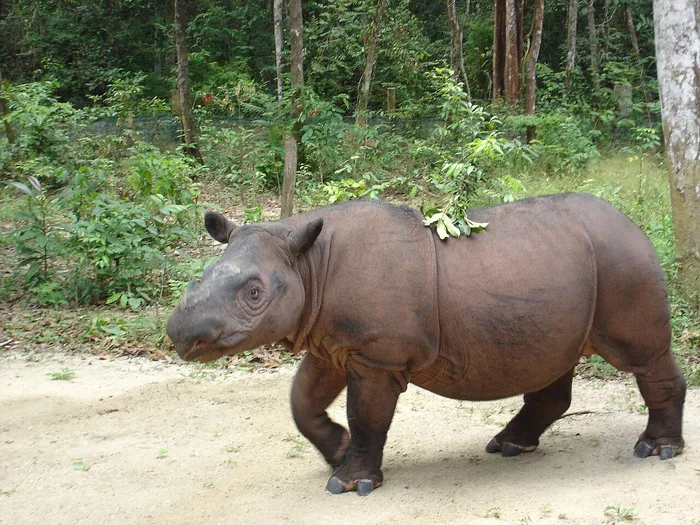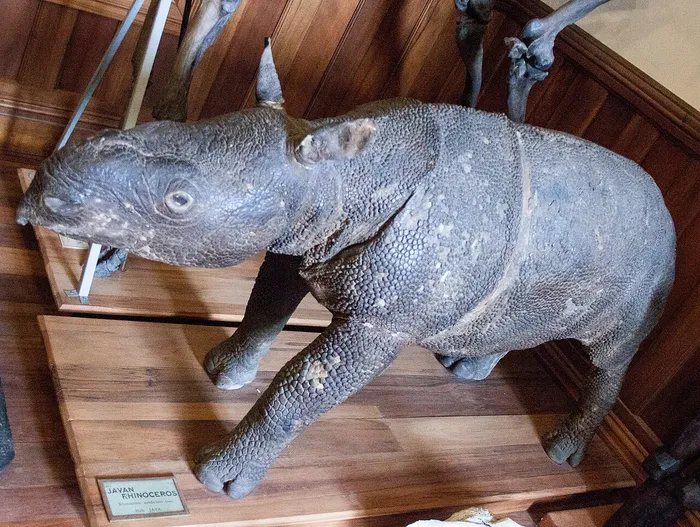
Rhinoceros sondaicus
A one-horned rhinoceros with a single surviving wild population in Ujung Kulon. Strong protection and careful habitat management underpin its future.
PANDUANHEWAN · INDONESIA
How do the Javan rhinoceros (Rhinoceros sondaicus) and Sumatran rhinoceros (Dicerorhinus sumatrensis) differ? Classification, features, range, diet, size, IUCN status and legal protection, from cited sources.
The Javan rhinoceros (Rhinoceros sondaicus) and the Sumatran rhinoceros (Dicerorhinus sumatrensis) share the family Rhinocerotidae but belong to different genera: Rhinoceros and Dicerorhinus. Range in Indonesia — the Javan rhinoceros: Ujung Kulon National Park, Banten; the Sumatran rhinoceros: Remaining Indonesian habitat pockets in Sumatra and Kalimantan.
A one-horned rhinoceros with a single surviving wild population in Ujung Kulon. Strong protection and careful habitat management underpin its future.
The smallest living rhino and the only two-horned Asian rhino. Isolated populations make finding mates and protecting habitat particular challenges.
| Aspect | Javan rhinoceros | Sumatran rhinoceros |
|---|---|---|
| Scientific name | Rhinoceros sondaicus | Dicerorhinus sumatrensis |
| Indonesian name | Badak Jawa | Badak Sumatera |
| Class | Mammalia | Mammalia |
| Order | Perissodactyla | Perissodactyla |
| Family | Rhinocerotidae | Rhinocerotidae |
| Range in Indonesia | Ujung Kulon National Park, Banten | Remaining Indonesian habitat pockets in Sumatra and Kalimantan |
| Endemic to Indonesia | Yes | Yes |
| Key features | — | More conspicuous hair than other rhinos |
| Size | Body weight: 900–2,300 kg; 1.5–1.7 m at the shoulder | Body weight: 600–950 kg; 1.0–1.5 m at the shoulder |
| Diet | Leaves, shoots, and forest vegetation | Forest vegetation |
| Diet type | herbivore (plant-eater) | herbivore (plant-eater) |
| Reproduction | giving birth to live young (viviparous) | giving birth to live young (viviparous) |
| IUCN status | Critically Endangered | Critically Endangered |
| Legal protection | Protected (Regulation P.106/2018) | Protected (Regulation P.106/2018) |
Every cell comes from the sourced data on each animal’s page; an empty cell means the data is not yet available, not that it is absent.
Search by name, habitat or island in the animal directory.