
Quick answer
IUCN status: Critically EndangeredSumatran tiger at a glance
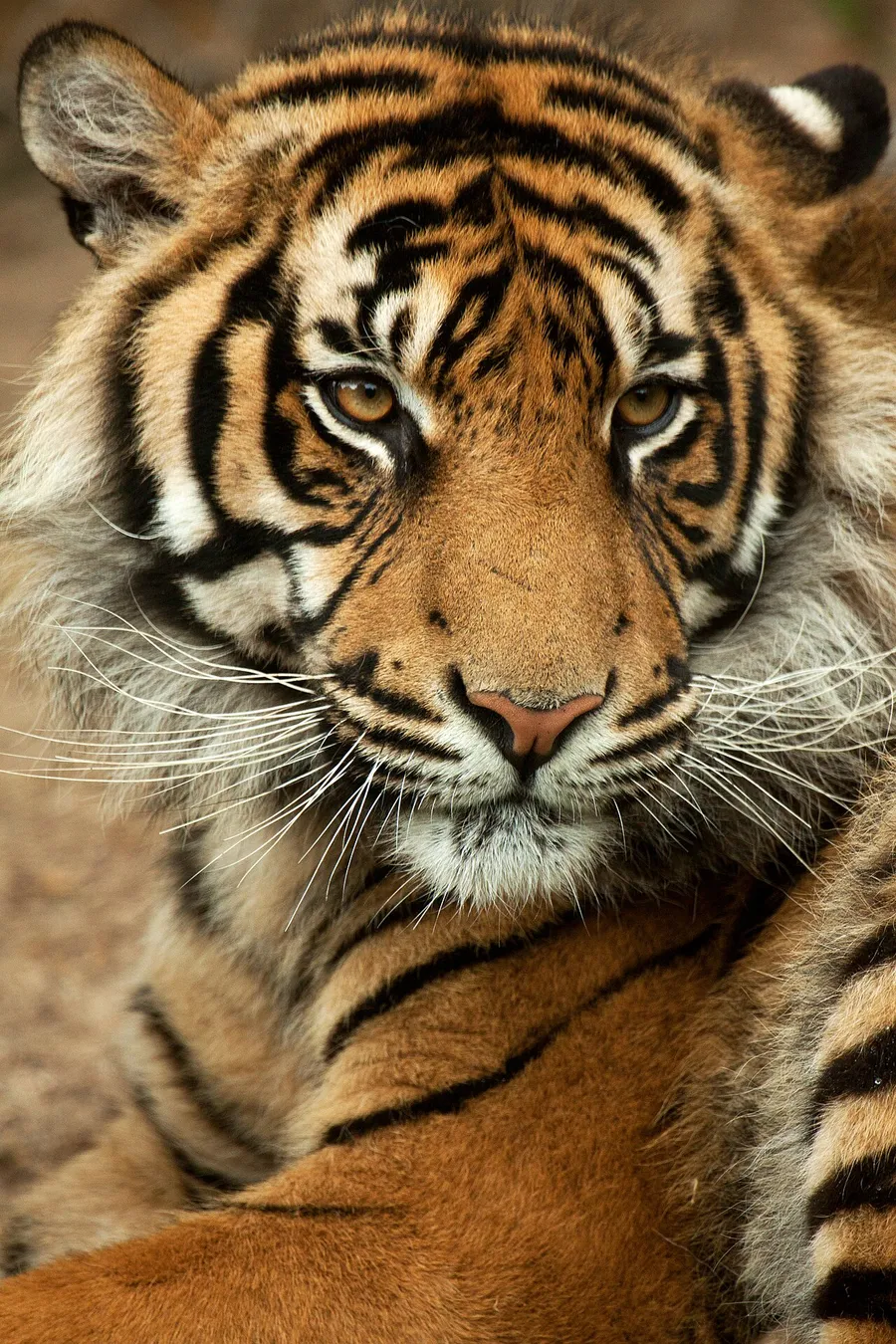
The Sumatran tiger (Panthera tigris sondaica) is a mammal in the family Felidae. Range in Indonesia: Sumatra. It is endemic to Indonesia, living naturally only in Sumatra; this profile covers the population living in Sumatra. Diet: carnivore; a carnivore. IUCN Red List status: Critically Endangered — subspecies assessment (P. t. sumatrae). It is a legally protected species in Indonesia (Regulation P.106/2018).
| Scientific name | Panthera tigris sondaica |
|---|---|
| Indonesian name | Harimau Sumatera |
| Group | Mammals |
| Family | Felidae |
| Range in Indonesia | Sumatra |
| Linked habitats | Tropical Rainforests, Freshwater Wetlands |
| Wild range | Sumatra |
| Diet | Carnivore |
| Social pattern | Mostly solitary; mothers with cubs |
| IUCN status | Critically Endangered — subspecies assessment (P. t. sumatrae) · IUCN Red List — Panthera tigris ssp. sumatrae (Linkie et al. 2008) · assessment 2008 |
| Legal protection in Indonesia | Protected · Regulation P.106/2018 · annex no. 56 |
| Body weight | Adult Sumatran tigers can reach 140 kg · WCS Indonesia — Sumatran tiger |
| Body length | Up to 2.5 m from head to tail tip · WCS Indonesia — Sumatran tiger |
| Diet type | Carnivore (meat-eater) — predator, mainly wild pigs and deer · IUCN SSC Cat Specialist Group |
| Reproduction | Giving birth to live young (viviparous) · Animal Diversity Web |
| Observance days | Global Tiger Day (29 July) |
| Active | Diurnal (active by day) — This daytime pattern comes from a 2010–2017 survey in a low-disturbance part of Bukit Barisan Selatan; it is not a schedule for all Sumatran tigers. · Terrestrial mammal community richness and temporal overlap between tigers and other carnivores in Bukit Barisan Selatan National Park, Sumatra (Allen et al. 2020, Animal Biodiversity and Conservation 43: 97-107; author PDF) |
| Endemic to Indonesia | Yes — Sumatra; this profile covers the population living in Sumatra · worldwildlife.org |
In this guide (12)
Name and scope
This profile covers tigers living in Sumatra. WWF uses Panthera tigris sondaica for the Sunda group; other sources still use Panthera tigris sumatrae. Record that naming difference when comparing literature. The risk category of the tiger species as a whole is also distinct from the category in the Sunda profile.
Evidence: WWF — Sunda tiger ↗ · WCS — Bukit Barisan Selatan research, 2017 ↗
Forest must provide prey and space
Tigers need areas with prey and room to move. Habitats in Sumatra include rainforest and forested wetlands. Two patches that appear green on a map are not necessarily safely connected. Connections between them and protection of prey are essential conservation work alongside protecting the tigers themselves.
Evidence: WWF — Sunda tiger ↗
A predator that is hard to see
Tigers are generally solitary apart from mothers with young, using marking and sound in communication. Difficulty seeing one directly does not establish absence. Scientific monitoring relies on repeated evidence; an unexamined track should not be treated as a certain identification. Wildlife observation requires patience and appropriate expertise.
Poaching and conflict
Trade-driven poaching, snares, loss of prey, and habitat loss are major pressures. Where movement routes overlap with settlements, both community and animal safety matter. Do not approach, pursue, or gather a crowd around a tiger; encounters need the attention of authorised professionals rather than improvised intervention.
Evidence: WCS — Bukit Barisan Selatan research, 2017 ↗ · WCS — Conflict response and tiger protection in Bukit Barisan Selatan ↗
Assessing recovery claims
WCS and its partners use research and protected-area work to assess tiger change. Findings from one national park do not represent all Sumatra. When reading about an increase, check the area, observation years, and methods; photograph counts are not individual counts, and one birth does not guarantee recovery.
Actions that support wild lives
Avoid tiger-part products and experiences built around touching wildlife. When supporting conservation, look for verifiable explanations of patrols, monitoring, habitat work, and community involvement. If you encounter suspected trade, preserve information safely without arranging a purchase or confronting people yourself. Follow the wildlife-trade reporting guide.
Evidence: WCS — Conflict response and tiger protection in Bukit Barisan Selatan ↗ · WWF — Sunda tiger ↗
Explore related habitats
These habitat relationships are supported by species sources in this guide. This is not a complete range map.
Scientific classification of the Sumatran tiger
| Kingdom | Animalia |
|---|---|
| Phylum | Chordata |
| Class | Mammalia |
| Order | Carnivora |
| Family | Felidae |
| Genus | Panthera |
| Species | Panthera tigris |
| Subspecies | Panthera tigris sondaica |
Source: GBIF Backbone Taxonomy, adjusted to the ranks commonly used in school biology (for example class Reptilia).
Common questions about the Sumatran tiger
What is the scientific name of the Sumatran tiger?
The scientific name of the Sumatran tiger is Panthera tigris sondaica, in the family Felidae. In Indonesian it is called Harimau Sumatera.
What kind of animal is the Sumatran tiger?
The Sumatran tiger is a mammal in the family Felidae. By diet it is a carnivore (meat-eater): a predator, mainly wild pigs and deer. It is also endemic to Indonesia.
Where does the Sumatran tiger live in Indonesia?
In Indonesia, this guide records the Sumatran tiger in: Sumatra.
The Sumatran tiger is endemic to Indonesia and lives naturally only in Sumatra; this profile covers the population living in Sumatra. Source: worldwildlife.org.
Source-supported habitats: Tropical Rainforests, Freshwater Wetlands.
What does the Sumatran tiger eat?
Diet of the Sumatran tiger: carnivore. That makes it a carnivore (meat-eater). Source: IUCN SSC Cat Specialist Group.
How does the Sumatran tiger reproduce?
The Sumatran tiger reproduces by giving birth to live young (viviparous). Source: Animal Diversity Web.
Is the Sumatran tiger nocturnal?
The cited source records the Sumatran tiger as diurnal (active by day). This daytime pattern comes from a 2010–2017 survey in a low-disturbance part of Bukit Barisan Selatan; it is not a schedule for all Sumatran tigers. Source: Terrestrial mammal community richness and temporal overlap between tigers and other carnivores in Bukit Barisan Selatan National Park, Sumatra (Allen et al. 2020, Animal Biodiversity and Conservation 43: 97-107; author PDF).
See also the list of nocturnal and diurnal animals in Indonesia.
What are the main features of the Sumatran tiger?
Key features of the Sumatran tiger, from this guide’s sources: Body weight: Adult Sumatran tigers can reach 140 kg; Body length: Up to 2.5 m from head to tail tip.
How big is the Sumatran tiger?
Body weight: Adult Sumatran tigers can reach 140 kg. Source: WCS Indonesia — Sumatran tiger.
Body length: Up to 2.5 m from head to tail tip. Source: WCS Indonesia — Sumatran tiger.
What is the scientific classification of the Sumatran tiger?
Scientific classification of the Sumatran tiger: kingdom Animalia, phylum Chordata, class Mammalia, order Carnivora, family Felidae, genus Panthera, species Panthera tigris, subspecies Panthera tigris sondaica.
Source: GBIF Backbone Taxonomy, adjusted to the ranks commonly used in school biology.
Is the Sumatran tiger endangered?
Yes. The global conservation status of the Sumatran tiger: Critically Endangered — subspecies assessment (P. t. sumatrae) (assessment or source update 2008). In the IUCN system, this category means it is considered to face an extremely high risk of extinction in the wild. Source: IUCN Red List — Panthera tigris ssp. sumatrae (Linkie et al. 2008).
This global category is separate from national legal protection. Is the Sumatran tiger protected in Indonesia?
Is the Sumatran tiger protected in Indonesia?
Yes. The Sumatran tiger (Panthera tigris sondaica) is a protected species in Indonesia under Environment and Forestry Ministerial Regulation No. P.106/MENLHK/SETJEN/KUM.1/12/2018 on protected plant and animal species (annex, entry 56); the annex lists it as Panthera tigris sumatrae.
The annex uses the older name Panthera tigris sumatrae for the Sumatran tiger.
Article 21(2) of Law No. 5 of 1990, as amended by Law No. 32 of 2024, prohibits anyone from hunting, catching, injuring, killing, storing, owning, keeping, transporting or trading a protected animal, alive or dead, including its body parts, eggs and nests.
If you see this animal being traded, kept or injured, contact the local BKSDA office.
Can the Sumatran tiger be kept as a pet?
No. Because the Sumatran tiger is a protected species, catching, owning, keeping, transporting or trading it without a permit is prohibited by law. Trading without a permit through electronic media is also prohibited.
If you see this animal for sale or being kept, report it to the local BKSDA office.
Compare with similar animals
Sources & references
- WWF — Sunda tiger ↗
- WCS — Bukit Barisan Selatan research, 2017 ↗
- Smithsonian’s National Zoo — Tiger behaviour ↗
- WCS — Conflict response and tiger protection in Bukit Barisan Selatan ↗
- Peraturan Menteri LHK Nomor P.106/MENLHK/SETJEN/KUM.1/12/2018 tentang Jenis Tumbuhan dan Satwa yang Dilindungi ↗
- WCS Indonesia — Sumatran tiger ↗
- IUCN SSC Cat Specialist Group ↗
- Animal Diversity Web ↗
- Terrestrial mammal community richness and temporal overlap between tigers and other carnivores in Bukit Barisan Selatan National Park, Sumatra (Allen et al. 2020, Animal Biodiversity and Conservation 43: 97-107; author PDF) ↗
- GBIF Backbone Taxonomy (GBIF) ↗
References can change. Check dates and context in the original source. How we use sources and data →
National parks where it is recorded
According to the official national park profiles from the KSDAE directorate. The animal may also live elsewhere.
Related causes and news
Help from outside Indonesia
If you live outside Indonesia, you can help wild tigers with World Animal Rescue Network.
Related site: PanduanHewan’s founder is also a director of World Animal Rescue Network. PanduanHewan itself does not accept donations, and this invitation is not directed at people in Indonesia.
Further reading
Tiger: facts, threats and conservation ↗ — World Animal Rescue Network. A broader overview that covers this animal.
Related site: PanduanHewan’s founder is also a director of World Animal Rescue Network.
Cite this page
Credit PanduanHewan when referring to this page. Check the original evidence sources before reusing a claim.
PanduanHewan. Sumatran tiger (Panthera tigris sondaica). Last substantive update: 7 October 2026. https://panduanhewan.org/en/species/sumatran-tiger/