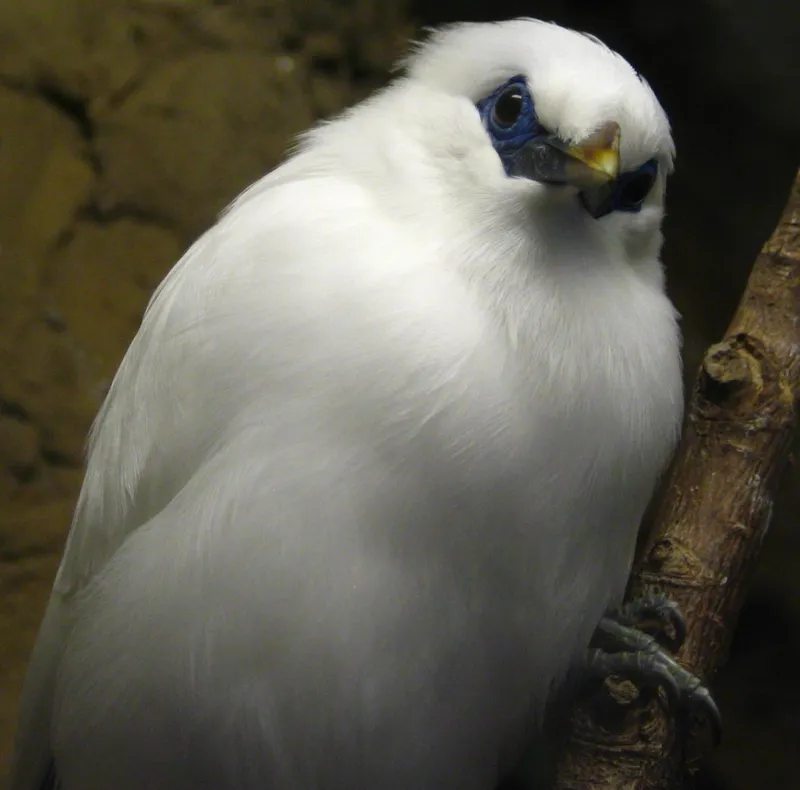

Recognisable features
Bali mynas are predominantly white, with black wing and tail tips and blue skin around the eyes. A crest is another conspicuous feature. Males and females look similar, so an ordinary photograph may not establish sex. Curik Bali and Bali starling are alternative names for the same species.
Habitat and daily life
These birds forage for insects and fruit and use cavities for nesting. Open wooded areas and suitable trees need to provide both food and breeding places. Nest boxes can form part of a managed programme, but putting up a box without assessing the location is not a substitute for habitat protection.
Why the bird trade matters
The Bali myna’s beauty and rarity have encouraged capture for the bird trade. Seeing a bird in a cage does not establish lawful origin or conservation benefit. When faced with breeding claims, look for verifiable documentation; do not assume every sale supports the wild population.
Release is a process
Begawan describes habitat assessment before release and monitoring afterwards. The process involves the birds’ readiness and environmental conditions. The number released is not the number that survives or breeds. Good reporting distinguishes these stages and explains the role of communities around the release site.
Trees, farms, and community support
Begawan reports education and community work as part of Bali myna conservation. This shows that protection does not stop at a breeding centre’s fence. When assessing a programme, consider who maintains habitat, how disturbance is prevented, and whether outcomes are explained openly rather than relying only on release photographs.
Learn without disturbance
Watch from distances recommended by site managers and avoid approaching nests. Support observation or education that clearly explains welfare and conservation. Do not share precise nest locations. To learn more, connect this profile with habitat guidance and wildlife-trade reporting rather than treating a close encounter as the main objective.
Sources & references
- BCA Zoo — Bali starling habitat ↗
- San Diego Zoo Wildlife Alliance — Bali myna ↗
- Begawan — Nature conservation and release monitoring ↗
- Begawan — Restoring biodiversity on the farm ↗
References can change. Check dates and context in the original source.