Recognising the yellow-vented bulbul
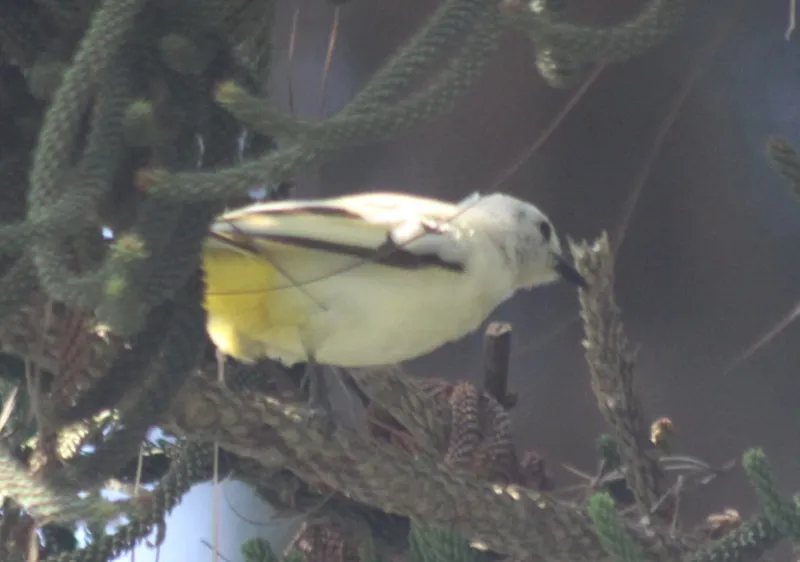
The yellow-vented bulbul is brown above and paler below, with a bright yellow vent and a dark line from bill to eye. Its slight crest is not always raised. The combination of features is more reliable than yellow colour alone when separating it from other bulbuls.
Edges and open habitats
eBird records this species in cities, parks, plantations, secondary growth and forest edges. It is not confined to deep forest. A garden encounter can therefore reveal its foraging behaviour, but does not stand for the condition of all forest birds in the surrounding area.
Fruit and insects in the diet
An Aceh study observed yellow-vented bulbuls taking small fruit and discussed their seed-dispersal role. Research in an oil-palm landscape also found insects in the diet. Food composition varies by place; one garden or plantation study should not be applied uncritically to every Indonesian habitat.
Voice and movement
Variable song and bubbling calls can reveal a bird before it is seen. Individuals move among trees, shrubs and open patches while foraging. Record visible features with the sound, date and location; a brief, unclear call alone can be confused with other songbirds.
What many sightings do and do not mean
Yellow-vented bulbuls are often visible in accessible places, so many photos do not provide a valid population estimate. GBIF records from several Indonesian regions are not a complete range map or a local conservation assessment. Keep suitable fruiting plants and shrubs where possible, and observe without capturing birds.
Sources & references
- eBird — Yellow-vented Bulbul identification ↗
- Safrika et al. — Feeding behaviour in Aceh ↗
- Journal of Oil Palm Research — Diet in an oil-palm landscape ↗
- GBIF — accepted Pycnonotus goiavier taxon ↗
References can change. Check dates and context in the original source.