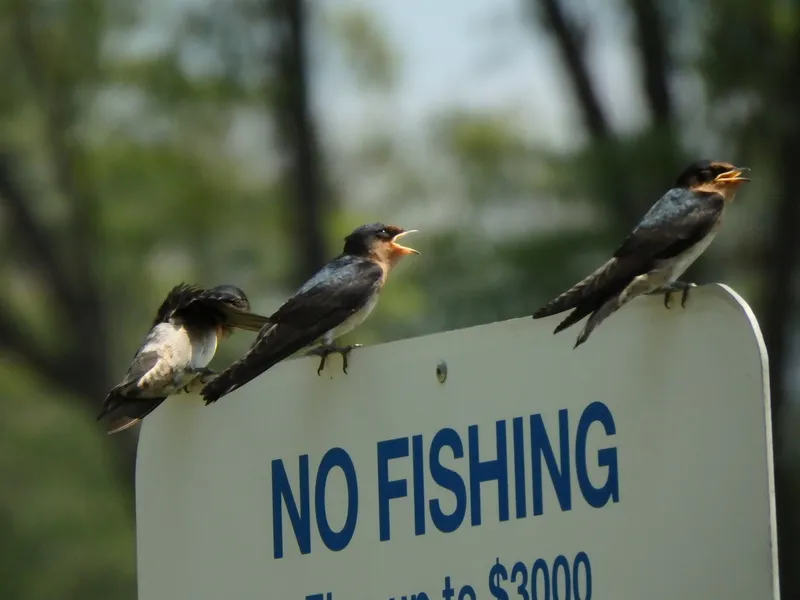
Recognising a flying swallow
The Pacific swallow is a small, pointed-winged bird often seen taking insects in flight. Shape and plumage should be considered together because other swallows may pass through the same area. Several viewing angles or a voice note are more useful than a guess from one silhouette.
From coasts to buildings
The species is associated with coasts and also uses human-modified landscapes. A cup-shaped nest is built from mud pellets under a ledge or a structure such as a bridge. A nest on a building is not proof of current activity; watch for adults visiting without touching it.
Feeding in the air
Pacific swallows catch insects while airborne, including flies and other small flying prey. They may repeatedly cross open spaces where insects gather. The number visible on one afternoon can depend on weather and insect activity, so a brief count is not an annual population measure.
Why the scientific name matters
eBird updated the taxonomy of this group and uses Hirundo javanica for Pacific swallow after a split from birds formerly grouped together. Older sources may use a different name or scope. When comparing records across years, match the scientific name and checklist version before inferring a range change.
Responsible nest watching
Do not remove a nest or place a camera close to young birds just to obtain a photograph. If a structure needs maintenance, seek locally appropriate advice before disturbing an active nest. Indonesian GBIF records identify observation places, but repeat photos and uneven effort prevent them from functioning as a census.
Sources & references
References can change. Check dates and context in the original source.