Phase D · Grade 7; Phase D · IPAPhase D · Grades 7–9 (Phase D) · IPA
Quick answer
The lesson in brief
Vertebrates are animals with a backbone, such as fish, amphibians, reptiles, birds and mammals. Invertebrates are animals without a backbone, such as insects, worms, snails, crabs, jellyfish and sea stars. 90% or more of animal species are invertebrates.
- Vertebrates are animals with a backbone, a chain of small bones (vertebrae) running along the back.
- Invertebrates are animals without a backbone, and they make up 90% or more of all animal species.
- At school, vertebrates are sorted into five groups: fish, amphibians, reptiles, birds and mammals.
- The main invertebrate groups are sponges, cnidarians, worms, molluscs, arthropods and echinoderms.
- Not all invertebrates are soft: insects and crabs have an outer skeleton, and snails and clams have shells.
- Komodo dragons, flying foxes and whale sharks are vertebrates; dragonflies, coconut crabs and giant clams are invertebrates.
What are vertebrates and invertebrates?
Vertebrates are animals that have a backbone, while invertebrates are animals that do not have a backbone.
A backbone is made of small bones called vertebrae. They form a chain along the back, from the head to the tail. The backbone is the main support of the body when the animal moves. Fish, amphibians, reptiles, birds and mammals all have a backbone. Humans are vertebrates too.
There are far more kinds of invertebrates. Scientists estimate that Earth has 15–30 million animal species, and 90% or more of them are invertebrates. So most of the animals around us have no backbone at all.
Both kinds are easy to find around the home. The house gecko that hunts insects on the wall near a lamp is a vertebrate from the reptile group. The fly you wave away, the worm you dig up and the spider waiting in its web are invertebrates.
The key feature is the backbone. Size, habitat, or whether the body feels hard or soft does not decide whether an animal is a vertebrate or an invertebrate.
Evidence: Animal Diversity Web (University of Michigan): Vertebrata ↗ · Australian Museum: What are invertebrates? ↗ · UC Museum of Paleontology (Berkeley): Introduction to the Vertebrates ↗ · Animal Diversity Web: Hemidactylus frenatus ↗
What is the difference between vertebrates and invertebrates?
The main difference is the backbone: vertebrates have an inner skeleton with a backbone, while invertebrates have no backbone.
A vertebrate's inner skeleton can be made of bone or of cartilage. Sharks and rays have no true bone; their skeleton is made of cartilage. Even so, sharks and rays are still vertebrates.
Many invertebrates have a hard covering on the outside. Insects, shrimps and crabs have an outer skeleton (exoskeleton) made of chitin. Snails and clams have soft bodies, but these are often protected by a shell. An octopus has no skeleton at all, so its body is very flexible.
Size is not a reliable guide either. Land invertebrates range from a fraction of a millimetre to about 150 centimetres long, although most are shorter than five centimetres.
The table below sums up the differences. It answers the common test question "the difference between vertebrates and invertebrates can be seen from…": whether or not the animal has a backbone.
| Feature | Vertebrates | Invertebrates |
|---|---|---|
| Backbone | Present | Absent |
| Skeleton | Inner skeleton of bone or cartilage | No bony inner skeleton; many have an outer skeleton or shell, and some have no skeleton |
| Number of species | A small share of all animal species | 90% or more of all animal species |
| Main groups | Fish, amphibians, reptiles, birds, mammals | Sponges, cnidarians, worms, molluscs, arthropods, echinoderms |
| Examples in Indonesia | Komodo dragon, large flying fox, whale shark, barn owl | Dragonfly, coconut crab, giant clam, crown-of-thorns starfish |
Evidence: Animal Diversity Web (University of Michigan): Vertebrata ↗ · UC Museum of Paleontology (Berkeley): Introduction to the Chondrichthyes ↗ · UC Museum of Paleontology (Berkeley): Introduction to the Arthropoda ↗ · UC Museum of Paleontology (Berkeley): The Mollusca ↗ · Animal Diversity Web: Hapalochlaena lunulata ↗ · Australian Museum: What are invertebrates? ↗
How many groups of vertebrates are there?
At school, vertebrates are sorted into five groups: fish (pisces), amphibians, reptiles, birds (aves) and mammals.
Fish live in water and breathe with gills. All fish have a backbone or a notochord. But the idea of a fish as an animal with fins and scales is not always right, because some fish have no scales. In most ray-finned fish, eggs are fertilised outside the mother's body. Whale sharks, however, give birth to live young.
Fish can be divided further. One group is the jawless fish (Agnatha); the living ones are lampreys and hagfish. The Asian swamp eel (belut) is not one of them; it is a teleost, part of the huge group of ray-finned fish.
Amphibians, such as frogs and toads, have soft skin without scales. Their skin also helps them take in oxygen. Tadpoles live in water and breathe with gills, then change into adult frogs that breathe air and can live on land.
Reptiles, such as lizards, snakes, turtles and crocodiles, have scales made of horny protein and breathe with lungs. Their eggs have a leathery or chalky shell, although some reptiles give birth to live young.
Birds are vertebrates with feathers. They have a beak with no teeth and lay hard-shelled eggs. Mammals have hair, and the mothers make milk for their young. Most mammals give birth, but the western long-beaked echidna of Papua hatches from an egg.
| Group | Body covering | Breathing | Reproduction | Examples in Indonesia |
|---|---|---|---|---|
| Fish (pisces) | Usually scales; some fish have none | Gills | Mostly egg-laying with external fertilisation; whale sharks give birth | Whale shark, Sulawesi coelacanth |
| Amphibians | Soft, moist skin without scales | Tadpoles: gills; adults: lungs and skin | Lay eggs; tadpoles live in water | Crab-eating frog, Asian common toad |
| Reptiles | Scales made of horny protein | Lungs | Shelled eggs; some give birth | Komodo dragon, green turtle, common house gecko |
| Birds (aves) | Feathers | Lungs | Hard-shelled eggs | Barn owl, Bali myna, Javan hawk-eagle |
| Mammals | Hair | Lungs, helped by the diaphragm muscle | Most give birth, all feed milk; echidnas lay eggs | Sumatran orangutan, large flying fox, Irrawaddy dolphin |
Evidence: Animal Diversity Web (University of Michigan): Vertebrata ↗ · Australian Museum: What is a fish? ↗ · Animal Diversity Web: Actinopterygii ↗ · Animal Diversity Web: Rhincodon typus ↗ · UC Museum of Paleontology (Berkeley): Introduction to the Vertebrates ↗ · FishBase: Monopterus albus, Asian swamp eel ↗ · AmphibiaWeb (UC Berkeley): Amphibian introduction ↗ · Australian Museum: Frog life cycle ↗ · Animal Diversity Web: Reptilia ↗ · Animal Diversity Web: Aves ↗ · Animal Diversity Web: Mammalia ↗ · Animal Diversity Web: Cetacea ↗ · UC Museum of Paleontology (Berkeley): The Hall of Mammals ↗ · Animal Diversity Web: Zaglossus bruijni ↗
What are some examples of vertebrates in Indonesia?
Examples of vertebrates in Indonesia include the whale shark, the Sulawesi coelacanth, the crab-eating frog, the Komodo dragon, the barn owl, the large flying fox and the Sumatran orangutan.
The whale shark is the largest known fish. Its skeleton is made of flexible cartilage, but it is still a vertebrate. The Sulawesi coelacanth is a lobe-finned fish that lives in the Celebes Sea.
Amphibians are often called the vertebrates that live a "double life". They spend part of their lives in water, and many can also live on land. The crab-eating frog and even its tadpoles can live in brackish water.
Habitat does not decide the group. The green turtle lives in the sea, but it is a reptile: it breathes with lungs, and females come ashore to lay their eggs in the sand.
The vertebrates that can fly are birds and bats. The large flying fox is one of the largest bats in the world. The flying lizard (Draco volans) does not truly fly; it glides on flaps of skin held out by its ribs.
- Whale shark Rhincodon typus — The largest known fish, reaching 20 metres long. source ↗
- Indonesian coelacanth Latimeria menadoensis — A coelacanth fish that lives in the Celebes Sea, north of Sulawesi. source ↗
- Komodo dragon Varanus komodoensis — A reptile: the largest lizard, weighing up to 165 kg. source ↗
- Barn owl Tyto alba — A bird: its soft, downy feathers muffle sound as it hunts. source ↗
- Large Flying-fox Pteropus vampyrus — A flying mammal: one of the largest bats, with a wingspan of about 1.5 metres. source ↗
- Green turtle Chelonia mydas — A sea reptile that comes ashore to lay its eggs in the sand. source ↗
- Sumatran orangutan Pongo abelii — A mammal (great ape) found only on the island of Sumatra. source ↗
- Javan Flying Dragon Draco volans — A reptile that glides from trees on wing-like flaps of skin. source ↗
Evidence: Animal Diversity Web: Rhincodon typus ↗ · FishBase: Latimeria menadoensis, Sulawesi coelacanth ↗ · UC Museum of Paleontology (Berkeley): Introduction to the Amphibia ↗ · Animal Diversity Web: Chelonia mydas ↗ · Animal Diversity Web: Reptilia ↗ · UC Museum of Paleontology (Berkeley): Introduction to the Vertebrates ↗ · Animal Diversity Web: Draco volans ↗ · Animal Diversity Web: Pteropus vampyrus ↗ · Shao et al. (2015), Transcriptomes reveal the genetic mechanisms underlying ionic regulatory adaptations to salt in the crab-eating frog, Scientific Reports ↗
What are the main groups of invertebrates?
Invertebrates belong to many phyla; the six groups most often studied at school are sponges, cnidarians, worms, molluscs, arthropods and echinoderms.
Sponges (Porifera) are the "animals with pores". A sponge has no mouth; water enters through tiny pores in its body wall. Most sponges live in the sea, but about 150 species live in fresh water.
Cnidarians, called Coelenterata in many textbooks, include jellyfish, hydra, sea anemones and corals. All of them have stinging cells. Their body cavity has a single opening that works as both mouth and anus.
Worms belong to several phyla. Flatworms (Platyhelminthes) are flat and unsegmented. Roundworms (Nematoda, called Nemathelminthes in the school textbook) are long and round and covered by a cuticle. Segmented worms (Annelida), such as earthworms and leeches, have bodies made of segments.
Molluscs have soft bodies, and many are protected by a shell. Arthropods have an outer skeleton and jointed legs; they include insects, crustaceans, spiders and millipedes. Insects make up most of the animal species on Earth.
Echinoderms, the "spiny-skinned" animals such as sea stars, sea urchins and sea cucumbers, live only in the sea. Most have fivefold symmetry.
Looking for invertebrates that live in the soil? The earthworm is the easiest example. Other land invertebrates include insects, spiders, centipedes and millipedes.
| Group (textbook name) | Main features | Examples |
|---|---|---|
| Porifera (sponges) | Body full of pores, no mouth, attached to one place | Sponges |
| Cnidaria/Coelenterata | Stinging cells; one opening for mouth and anus | Jellyfish, sea anemones, corals |
| Platyhelminthes (flatworms) | Flat, unsegmented body | Planarians, tapeworms, liver flukes |
| Nematoda/Nemathelminthes (roundworms) | Long, round, unsegmented body with a cuticle | Pinworms, roundworms |
| Annelida (segmented worms) | Body made of segments | Earthworms, leeches |
| Mollusca (molluscs) | Soft body, many with a shell | Snails, clams, giant clam, octopus |
| Arthropoda (arthropods) | Outer skeleton of chitin, jointed legs | Insects, shrimps, crabs, spiders, millipedes |
| Echinodermata (echinoderms) | Spiny skin, marine only, usually fivefold symmetry | Sea stars, sea urchins, sea cucumbers |
Evidence: UC Museum of Paleontology (Berkeley): Introduction to Porifera ↗ · Animal Diversity Web: Porifera ↗ · Animal Diversity Web: Cnidaria ↗ · UC Museum of Paleontology (Berkeley): Introduction to Cnidaria ↗ · Animal Diversity Web: Platyhelminthes ↗ · Animal Diversity Web: Nematoda ↗ · Animal Diversity Web: Annelida ↗ · UC Museum of Paleontology (Berkeley): The Mollusca ↗ · UC Museum of Paleontology (Berkeley): Introduction to the Arthropoda ↗ · Australian Museum: What are insects? ↗ · Animal Diversity Web: Insecta ↗ · UC Museum of Paleontology (Berkeley): Introduction to the Echinodermata ↗ · Australian Museum: What are invertebrates? ↗ · Ilmu Pengetahuan Alam untuk SMP/MTs Kelas VII (Edisi Revisi), Kemendikbudristek, Bab V, Tabel 5.2 ↗
What are some examples of invertebrates in Indonesia?
Examples of invertebrates in Indonesia include dragonflies, the coconut crab, the giant clam, the greater blue-ringed octopus and the crown-of-thorns starfish.
Dragonflies are insects. An insect's body has three main parts, the head, thorax and abdomen, and insects have no inner skeleton.
The coconut crab is the largest known land arthropod. The giant clam is the largest living clam; its shell can reach 1.5 metres. The blue-ringed octopus is also a mollusc, but it has no shell and no skeleton.
The crown-of-thorns starfish is an echinoderm with 8 to 21 arms. So "usually fivefold" means most echinoderms, not all of them. The blue-ringed octopus and the crown-of-thorns starfish are both venomous, so only look at them in pictures or from a distance.
Invertebrates matter to people. Many arthropods give us food, clothing materials and medicines, and help control harmful organisms. Others, however, have caused disease outbreaks and crop failures.
- Slender Skimmer Orthetrum sabina — Dragonflies are insects, a group of arthropods. source ↗
- Coconut crab Birgus latro — A crustacean: the largest known land arthropod. source ↗
- Giant clam Tridacna gigas — The largest living bivalve mollusc; its shell can reach 1.5 metres. source ↗
- Greater blue-ringed octopus Hapalochlaena lunulata — A mollusc with no skeleton, so its body is very flexible. source ↗
- Crown-of-thorns starfish Acanthaster planci — A spiny echinoderm with 8 to 21 arms. source ↗
Evidence: Australian Museum: What are insects? ↗ · Animal Diversity Web: Hapalochlaena lunulata ↗ · Animal Diversity Web: Acanthaster planci ↗ · Animal Diversity Web: Arthropoda ↗
How can you tell whether an animal is a vertebrate or an invertebrate?
Use a dichotomous key: answer one yes-or-no question at a time, starting with "does this animal have a backbone?", then move on to other body features.
A dichotomous key always gives two opposite choices. The first step separates invertebrates from vertebrates. For vertebrates, carry on: hair and milk? Mammal. Feathers? Bird. Horny scales and lungs? Reptile. Gills and fins? Fish. Soft skin without scales? Amphibian.
Watch out for animals that look misleading. Pangolins have scales, but they are mammals and feed their young on milk. Irrawaddy dolphins live in rivers, but they come to the surface to breathe; they are mammals. Echidnas hatch from eggs, but the young drink milk. Appearance or habitat alone is not enough to decide the group.
When you look at real animals, watch from a distance or use photos. Do not catch, hold or disturb wild animals.
- Sunda pangolin Manis javanica — A scaly mammal; mothers nurse their young for about three months. source ↗
- Mahakam Irrawaddy dolphin Orcaella brevirostris — A water mammal that comes to the surface to breathe. source ↗
- Western long-beaked echidna Zaglossus bruijnii — A mammal that hatches from an egg, then drinks milk in its mother's pouch. source ↗
Evidence: Ilmu Pengetahuan Alam untuk SMP/MTs Kelas VII (Edisi Revisi), Kemendikbudristek, Bab V, Tabel 5.1 ↗ · Australian Museum: What is a fish? ↗ · Animal Diversity Web: Reptilia ↗ · AmphibiaWeb (UC Berkeley): Amphibian introduction ↗ · Animal Diversity Web: Manis javanica ↗ · IUCN SSC Cetacean Specialist Group: Irrawaddy dolphins (Pesut) in Indonesia's Mahakam River ↗ · Animal Diversity Web: Orcaella brevirostris ↗ · Animal Diversity Web: Zaglossus bruijni ↗ · Animal Diversity Web: Mammalia ↗
Common misconceptions
Belief: All invertebrates have soft bodies.
The fact: Many invertebrates have hard parts. Insects, shrimps and crabs have an outer skeleton of chitin, and snails and clams have shells. source ↗
Belief: Dolphins are fish because they live in water.
The fact: Dolphins, including the Irrawaddy dolphin, are mammals. Even dolphins have hair, at least at one stage of their lives. source ↗
Belief: An animal with scales must be a fish or a reptile.
The fact: Pangolins have scales, but they are mammals: mothers feed their young on milk. source ↗
Belief: All mammals give birth to live young.
The fact: Long-beaked echidnas hatch from eggs, and the young then drink milk in the mother's pouch. They are still mammals. source ↗
Belief: The swamp eel (belut) is an example of Agnatha, the jawless fish.
The fact: The Asian swamp eel is a teleost, one of the ray-finned fish, so it is not a jawless fish. source ↗
Practice questions with answers
Choose your answer, then open “Show answer” to check it.
Vertebrates are animals that have …
Show answer
Answer: A. a backbone. Vertebrates are recognised by their backbone, a chain of bones along the back.
Which of these is an invertebrate?
Show answer
Answer: C. Coconut crab. The coconut crab is an arthropod (a crustacean) with no backbone. The other three are vertebrates.
The whale shark has a skeleton of cartilage. It is …
Show answer
Answer: B. a vertebrate in the fish group. A cartilage skeleton is still an inner skeleton with a backbone. The whale shark is a fish, so it is a vertebrate.
Pangolins have scales. Why are they classed as mammals?
Show answer
Answer: D. Because they feed their young on milk. Mammals are defined by hair and milk. Pangolins remain mammals despite having scales.
Animals with jointed legs and an outer skeleton of chitin belong to …
Show answer
Answer: A. Arthropoda. Arthropoda means jointed legs. Insects, shrimps, crabs and spiders all belong here.
Invertebrates with spiny skin that live only in the sea are …
Show answer
Answer: C. Echinodermata. Echinoderms, such as sea stars, sea urchins and sea cucumbers, have no freshwater or land species.
Which vertebrates can truly fly with wings?
Show answer
Answer: B. Birds and bats. Birds and bats fly with wings. Flying lizards only glide, and dragonflies and butterflies are invertebrates.
Tadpoles breathe with gills, and adult frogs breathe with lungs and skin. Frogs are …
Show answer
Answer: D. amphibians. Amphibians live a double life: tadpoles in water, and adult frogs on land as well.
Which statement about animal species is TRUE?
Show answer
Answer: C. 90% or more of animal species are invertebrates. Of an estimated 15–30 million animal species, 90% or more are invertebrates, and they live almost everywhere.
The Irrawaddy dolphin lives in a river. Why is it not a fish?
Show answer
Answer: A. Because it breathes air with lungs and feeds its young on milk. The Irrawaddy dolphin is a mammal: it surfaces to breathe and feeds its young on milk.
For teachers: learning objectives and activities
Learning objectives
- Students can explain the difference between vertebrates and invertebrates by whether the animal has a backbone.
- Students can sort Indonesian animals into the five vertebrate groups and the main invertebrate groups.
- Students can use a simple dichotomous key to identify an animal's group from a picture.
- Students can explain tricky examples such as the pangolin, the Irrawaddy dolphin and the echidna.
Classroom activity ideas (about 70 minutes)
- Sorting cards (20 minutes): small groups sort 16 photo cards of Indonesian animals into vertebrates and invertebrates, then into smaller groups, and explain their reasons.
- Dichotomous key (20 minutes): students draw a yes/no chart on large paper, then test it with another group's photo cards.
- Observation from a distance (20 minutes): in the school grounds, students record the animals they see without touching or catching them, then mark which are vertebrates and which are invertebrates.
- Class discussion (10 minutes): discuss the pangolin, the Irrawaddy dolphin and the echidna as tricky examples, then write one shared conclusion.
Materials: Photo cards of Indonesian animals (printed or hand-drawn), Large sheets of paper and markers, Notebooks and pencils, The vertebrates and invertebrates worksheet.
Curriculum and textbook links
- Phase D · Grade 7; Phase D · IPA. Chapter 5 of the revised Grade 7 science textbook (2023), "Karakteristik dan Klasifikasi Makhluk Hidup", includes an identification key that separates vertebrates from invertebrates. SIBI Kemendikdasmen, data katalog resmi: Ilmu Pengetahuan Alam untuk SMP/MTs Kelas VII (Edisi Revisi), daftar bab ↗
- Phase D · Grades 7–9 (Phase D) · IPA. The Phase D science outcome in BSKAP Decree 046/H/KR/2025 includes examining how living things are identified by their characteristics. Keputusan Kepala BSKAP Kemendikdasmen No. 046/H/KR/2025 tentang Capaian Pembelajaran, Lampiran II: CP IPA Fase D ↗
May be printed and copied for non-commercial teaching, crediting PanduanHewan.org.
Common questions
Are snakes vertebrates or invertebrates?
Snakes are vertebrates, in the reptile group with lizards, turtles and crocodiles. Snakes have no legs, but they do have a backbone.
Are shrimps invertebrates?
Yes. Shrimps are crustaceans, part of the Arthropoda. They have an outer skeleton and jointed legs, but no backbone.
How many vertebrate groups are there?
At school there are five: fish, amphibians, reptiles, birds and mammals. Scientists split fish further into several classes, such as cartilaginous fish like sharks.
Are there more vertebrates or invertebrates?
Invertebrates, by far. About 90% or more of animal species are invertebrates, and most of them are insects.
What are the vertebrates that live a double life called?
Amphibians. Examples are the crab-eating frog and the Asian common toad: the tadpoles live in water, and the adults can live on land.
Animals in this lesson
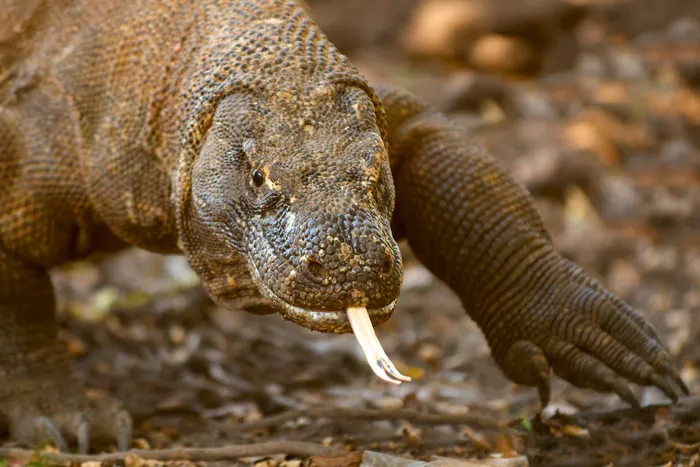
The largest living lizard, native to a small group of islands in East Nusa Tenggara. Explore its links with prey, dry habitats, and island-specific conservation.
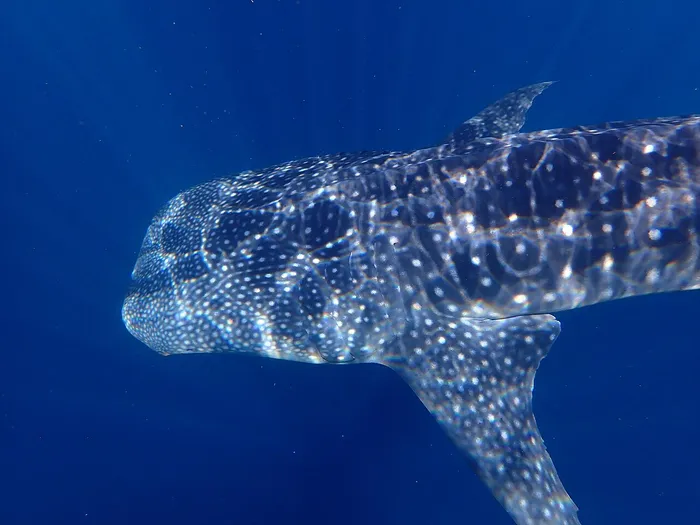
The largest living fish, with distinctive spots and filter-feeding behaviour. Its protection involves ocean movements, boats, fisheries, and tourism.
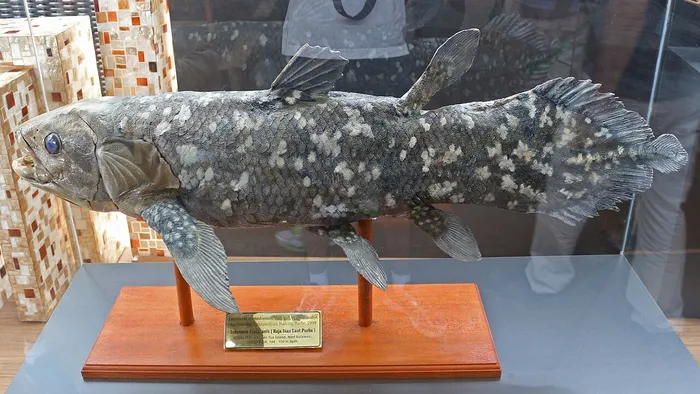
The Indonesian coelacanth (Latimeria menadoensis) is a rare, deep-water lobe-finned fish known from Sulawesi to Papua, first recognised in 1997.
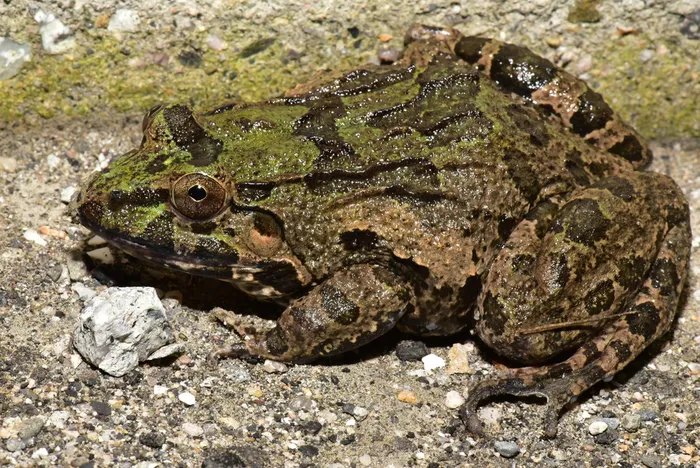
Crab-eating Frog (Fejervarya cancrivora). Crab-eating frogs use brackish habitats; salinity studies document tadpole tolerance, but laboratory limits do not justify moving animals into seawater.
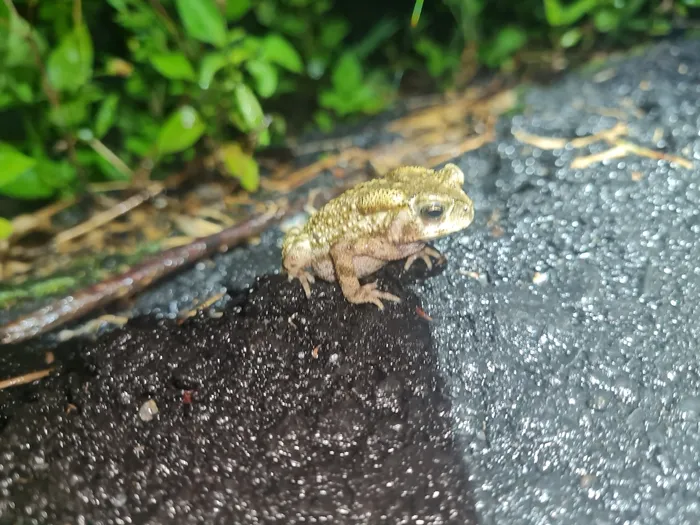
Asian Common Toad (Duttaphrynus melanostictus). Asian common toads use many human-modified habitats; genetic research suggests the name may encompass a more complex set of lineages.
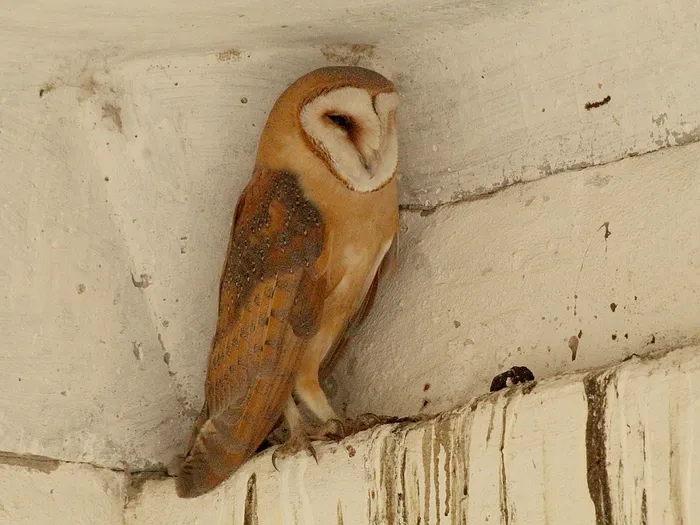
The barn owl (Tyto alba) is a pale, heart-faced owl that hunts rats in rice fields, oil palm plantations and villages across Indonesia.
Sources and references
- SIBI Kemendikdasmen, data katalog resmi: Ilmu Pengetahuan Alam untuk SMP/MTs Kelas VII (Edisi Revisi), daftar bab ↗
- Keputusan Kepala BSKAP Kemendikdasmen No. 046/H/KR/2025 tentang Capaian Pembelajaran, Lampiran II: CP IPA Fase D ↗
- Animal Diversity Web (University of Michigan): Vertebrata ↗
- Australian Museum: What are invertebrates? ↗
- UC Museum of Paleontology (Berkeley): Introduction to the Vertebrates ↗
- Animal Diversity Web: Hemidactylus frenatus ↗
- UC Museum of Paleontology (Berkeley): Introduction to the Chondrichthyes ↗
- UC Museum of Paleontology (Berkeley): Introduction to the Arthropoda ↗
- UC Museum of Paleontology (Berkeley): The Mollusca ↗
- Animal Diversity Web: Hapalochlaena lunulata ↗
- Australian Museum: What is a fish? ↗
- Animal Diversity Web: Actinopterygii ↗
- Animal Diversity Web: Rhincodon typus ↗
- FishBase: Monopterus albus, Asian swamp eel ↗
- AmphibiaWeb (UC Berkeley): Amphibian introduction ↗
- Australian Museum: Frog life cycle ↗
- Animal Diversity Web: Reptilia ↗
- Animal Diversity Web: Aves ↗
- Animal Diversity Web: Mammalia ↗
- Animal Diversity Web: Cetacea ↗
- UC Museum of Paleontology (Berkeley): The Hall of Mammals ↗
- Animal Diversity Web: Zaglossus bruijni ↗
- FishBase: Latimeria menadoensis, Sulawesi coelacanth ↗
- UC Museum of Paleontology (Berkeley): Introduction to the Amphibia ↗
- Animal Diversity Web: Chelonia mydas ↗
- Animal Diversity Web: Draco volans ↗
- Animal Diversity Web: Pteropus vampyrus ↗
- Shao et al. (2015), Transcriptomes reveal the genetic mechanisms underlying ionic regulatory adaptations to salt in the crab-eating frog, Scientific Reports ↗
- Animal Diversity Web: Varanus komodoensis ↗
- Animal Diversity Web: Tyto alba ↗
- Animal Diversity Web: Pongo abelii ↗
- UC Museum of Paleontology (Berkeley): Introduction to Porifera ↗
- Animal Diversity Web: Porifera ↗
- Animal Diversity Web: Cnidaria ↗
- UC Museum of Paleontology (Berkeley): Introduction to Cnidaria ↗
- Animal Diversity Web: Platyhelminthes ↗
- Animal Diversity Web: Nematoda ↗
- Animal Diversity Web: Annelida ↗
- Australian Museum: What are insects? ↗
- Animal Diversity Web: Insecta ↗
- UC Museum of Paleontology (Berkeley): Introduction to the Echinodermata ↗
- Ilmu Pengetahuan Alam untuk SMP/MTs Kelas VII (Edisi Revisi), Kemendikbudristek, Bab V, Tabel 5.1 ↗
- Animal Diversity Web: Acanthaster planci ↗
- Animal Diversity Web: Arthropoda ↗
- Australian Museum: Dragonflies and damselflies ↗
- Animal Diversity Web: Birgus latro ↗
- Animal Diversity Web: Tridacna gigas ↗
- Animal Diversity Web: Manis javanica ↗
- IUCN SSC Cetacean Specialist Group: Irrawaddy dolphins (Pesut) in Indonesia's Mahakam River ↗
- Animal Diversity Web: Orcaella brevirostris ↗
Checked 2026-10-02. Send a correction