Phase B · Primary grade 3; Phase B · IPASPhase B · Primary grades 3–4 · IPAS
Quick answer
The lesson in brief
Metamorphosis is a change in body form during an animal’s development. In insects, complete metamorphosis includes a pupa stage, while incomplete metamorphosis does not. Frogs undergo amphibian metamorphosis and do not become pupae.
- A life cycle connects young stages, adulthood and the next generation.
- Butterflies and mosquitoes develop through eggs, larvae, pupae and adults.
- Dragonflies have no pupa stage despite moving from aquatic to aerial life.
- A tadpole is a frog larva, not an insect larva.
- The number of pictures in a diagram does not define the metamorphosis type.
- In Indonesian, a butterfly pupa is commonly called a kepompong, and the adult insect after metamorphosis is the imago.
What are metamorphosis and a life cycle?
Metamorphosis is a change in body form or structure during development. A life cycle also connects development with the following generation.
Separate growth from a change of form. In a butterfly diagram, a caterpillar is not simply a small, colourless butterfly. It is the larval stage. A pupa follows, and the adult emerges with a different body and wings. It remains the same kind of animal throughout. Label both the animal and its stage on a learning card so that the two ideas stay distinct.
The revised Grade 3 IPAS book discusses life cycles in Chapter 4. Begin by selecting one diagram and reading its sequence slowly. Ask what changes rather than simply naming the pictures. Does the body look different? Is there a pupa? Does the last picture represent an adult or the eggs of the next generation? These questions help readers interpret evidence without assuming every animal develops in the same way. Metamorphosis describes development, not an individual changing into a different species.
Evidence: Australian Museum — Metamorphosis: a remarkable change ↗ · Kemendikdasmen — IPAS Kelas III, Edisi Revisi 2025, Bab 4 ↗
How do complete and incomplete metamorphosis differ?
For insects, the main distinction here is the pupa: complete metamorphosis includes it, while incomplete metamorphosis does not.
Butterflies, beetles, bees and flies belong to groups with complete metamorphosis. Their larvae and adults can look very different. In Indonesian, a butterfly pupa is commonly called a kepompong, and the adult insect is called the imago. In incomplete metamorphosis, young stages are generally called nymphs. Nymphs grow through moults before becoming adults. Grasshoppers, crickets, cockroaches and dragonflies are examples. The word incomplete does not mean that development fails or that the adult is unfinished.
Compare stages rather than counting boxes. A diagram may show several larval sizes or several moults. More pictures do not necessarily mean more categories of stage. The table below summarises insect development; it is not a classification into which every animal must fit. Frogs have their own amphibian metamorphosis. When a question supplies evidence of a pupa, use that evidence. Wings, habitat and the number of drawings cannot, by themselves, establish which type of development an insect has.
| Feature | Complete | Incomplete |
|---|---|---|
| Outline | Egg → larva → pupa → adult | Egg → nymph → adult |
| Pupa | Present | Absent |
| Other stage names | Pupa: kepompong in Indonesian; adult: imago | Young stage: nymph; adult: imago |
| Example groups | Butterflies, mosquitoes, beetles | Grasshoppers, crickets, cockroaches, dragonflies |
| Meaning | A developmental pattern | Not failed development |
Evidence: Australian Museum — Metamorphosis: a remarkable change ↗ · Australian Museum — Insects ↗ · Kemendikdasmen — IPAS Kelas III, Edisi Revisi 2025, Bab 4 ↗ · KBBI VI Daring (Badan Bahasa, Kemendikdasmen): kepompong ↗ · KBBI VI Daring (Badan Bahasa, Kemendikdasmen): imago ↗ · KBBI VI Daring (Badan Bahasa, Kemendikdasmen): nimfa ↗
What is the butterfly life-cycle sequence?
A butterfly develops from egg to caterpillar or larva, then pupa, and finally adult butterfly.
The lime swallowtail, Papilio demoleus, provides a species example linked to the animal guide. The University of Florida source shows eggs, several larval stages, pupae and adults. Choose pictures already labelled with the species so that a sequence does not combine different butterflies. Similar caterpillar colours are not proof of identical species.
Draw four labelled boxes and connect them in developmental order. Explain that eggs shown after the adult belong to the next generation; the adult itself does not turn back into an egg. If the source shows several caterpillar pictures, group them within the larval stage. Keep stage names separate from colour descriptions. Colour describes an image, whereas the larval and pupal stages explain the developmental pattern. Avoid adding a duration from memory. Developmental timing depends on conditions and should come from evidence for the species being studied.
- Lime Swallowtail Papilio demoleus — The lime swallowtail has a pupa stage before adulthood. source ↗
Evidence: University of Florida — Lime Swallowtail Papilio demoleus ↗ · Australian Museum — Insects ↗
Do mosquitoes also undergo complete metamorphosis?
Aedes aegypti undergoes complete metamorphosis through eggs, larvae, pupae and adults.
The University of Florida account explicitly identifies all four stages. This makes a useful comparison with butterflies: their larvae look different, but both cycles contain a pupa. Larva is a developmental term, not the name of a separate animal. A mosquito larva therefore does not need to resemble a caterpillar to count as a larva.
Study mosquitoes using photographs or diagrams prepared by the teacher. Make one row for a butterfly and another for a mosquito, placing equivalent stage names in matching columns. Do not substitute egg for pupa simply because both pictures look small. If a picture has no reliable label, record that its identification is uncertain. This activity tests interpretation of evidence, not willingness to approach animals. When answering a classification question, give the pupa as the reason. Saying that mosquitoes can fly describes the adult, but does not explain their complete life cycle.
- Yellow fever mosquito Aedes aegypti — Aedes aegypti develops through larval and pupal stages. source ↗
Evidence: University of Florida — Yellow Fever Mosquito Aedes aegypti ↗
Why is dragonfly metamorphosis called incomplete?
Dragonflies have incomplete metamorphosis because they develop from eggs through immature stages to adults without a pupa.
The Australian Museum describes their sequence as egg, larva and adult. The same museum also calls the young dragonfly a nymph, an immature stage that lives in water. Finding the word larva in a dragonfly source therefore does not establish complete metamorphosis. Examine the whole sequence and whether a pupa occurs, rather than relying on a single label.
Young and adult dragonflies use different environments. That habitat change is separate from the distinction between complete and incomplete development. When comparing diagrams, record the aquatic stage and the winged adult in a separate habitat column. One column can then answer where the animal lives, while another identifies its developmental stage. Combining those questions can lead students to assume that every animal moving from water to land develops in the same way. Dragonflies show why scientific terms need to be read alongside the explanation in their source.
- Slender Skimmer Orthetrum sabina — Dragonflies belong to Odonata, a group without a pupa. source ↗
Evidence: Australian Museum — Dragonflies and damselflies ↗ · Australian Museum — Metamorphosis: a remarkable change ↗
How does frog metamorphosis differ from insect metamorphosis?
Frogs undergo amphibian metamorphosis: tadpoles become young and adult frogs without a pupa stage.
In the common pattern, eggs hatch into aquatic tadpoles that breathe with gills. As they develop, the hind legs appear first, then the front legs. Lungs replace the gills, and the tail is reabsorbed rather than shed like an autotomised lizard tail. This transitional stage, the metamorph, has legs and what remains of the tail. The sequence is therefore egg, tadpole, metamorph and adult frog.
The revised Grade 3 IPAS textbook explains that complete metamorphosis has a pupa stage. Frogs have no pupa, so do not place them under complete metamorphosis simply because their transformation is striking. Complete and incomplete in the preceding table describe insect patterns. For frogs, write amphibian metamorphosis and explain the source-supported sequence. The Asian common toad is an amphibian example with an aquatic tadpole stage. Yet not every frog follows exactly the same cycle: the museum also describes species that develop into small frogs within the egg. Use usually when describing the basic frog diagram, and check the particular species before adding further details.
- Asian Common Toad Duttaphrynus melanostictus — The Asian common toad has an aquatic tadpole stage. source ↗
Evidence: Australian Museum — Frog life cycle ↗ · University of Michigan, Animal Diversity Web — Duttaphrynus melanostictus ↗ · Kemendikdasmen — IPAS Kelas III, Edisi Revisi 2025, Bab 4 ↗
How can we read metamorphosis diagrams accurately?
Read metamorphosis diagrams by checking the animal, stage sequence, presence of a pupa and source labels.
Start with the legend or nearby text. Arrows in a developmental diagram indicate sequence. An arrow connecting an adult with eggs needs an explanation that it links generations. Several caterpillar pictures may still represent the same larval stage. Several tadpole pictures can illustrate leg growth and tail reduction without adding a pupa.
Try reading two different diagrams. Write down their shared information first, then the extra detail in one of them. If one has four boxes and the other six, ask whether the author simply divided a change into smaller steps. Frame a conclusion using because: a butterfly has complete metamorphosis because its cycle includes a pupa. For a frog, use an explanation appropriate to amphibian development. A good conclusion answers the question and identifies evidence without adding durations, egg counts or species names absent from the source.
For a final exercise, give one pupil an unlabelled diagram and another a list of terms. Ask them to match stages and explain their clues. If they disagree, return to the source caption. A good answer explains both the reasoning and its limits. An unclear photograph can remain unidentified; there is no need to force every image into an apparently tidy sequence.
Evidence: Kemendikdasmen — IPAS Kelas III, Edisi Revisi 2025, Bab 4 ↗ · Australian Museum — Dragonflies and damselflies ↗ · Australian Museum — Frog life cycle ↗
Common misconceptions
Belief: Frogs have complete metamorphosis, just like butterflies.
The fact: Complete and incomplete are insect terms, separated by the pupa stage. Frogs have no pupa: they develop from egg to tadpole to metamorph to adult (amphibian metamorphosis). source ↗
Belief: Incomplete means the animal fails to become adult.
The fact: The term describes an insect pattern without a pupa; the animal still becomes adult. source ↗
Belief: Every larva is a caterpillar.
The fact: Mosquitoes also have larvae, with a different form from caterpillars. source ↗
Belief: Every egg-laying animal has insect metamorphosis.
The fact: Egg laying and developmental pattern are separate questions; frogs do not have a pupa. source ↗
Practice questions with answers
Choose your answer, then open “Show answer” to check it.
What does metamorphosis mean?
Show answer
Answer: A. A change of form during development. Metamorphosis concerns developmental changes in body form.
Which stage distinguishes complete insect metamorphosis?
Show answer
Answer: C. pupa. Complete insect metamorphosis includes a pupa.
Which butterfly sequence is correct?
Show answer
Answer: B. egg–caterpillar–pupa–adult. The caterpillar is the larva that precedes the pupa.
Frogs undergo …
Show answer
Answer: D. amphibian metamorphosis. Frogs are amphibians; tadpoles do not become pupae.
Why are dragonflies classed as having incomplete metamorphosis?
Show answer
Answer: A. There is no pupa. Dragonflies develop through immature stages without a pupa.
What happens to a tadpole’s tail during metamorphosis?
Show answer
Answer: B. It is reabsorbed. The tail is reabsorbed during the transition to a frog.
Aedes aegypti develops through …
Show answer
Answer: C. egg–larva–pupa–adult. This mosquito has both larval and pupal stages.
What does an arrow from adult butterfly to eggs mean?
Show answer
Answer: D. The eggs are the next generation. A life-cycle diagram connects generations.
Diagram A has four pictures and B six. What should you do?
Show answer
Answer: A. Check labels and stage changes. Picture counts can differ because of the level of detail.
Which classroom activity is suitable?
Show answer
Answer: C. Ordering source-labelled picture cards. Picture cards allow comparison without using live animals. The other three options involve handling, moving or disturbing animals, so they are not done in class.
For teachers: learning objectives and activities
Learning objectives
- Students can compare complete and incomplete insect metamorphosis.
- Students can explain tadpole-to-frog development separately from insect life cycles.
- Students can build a source-based diagram and explain its limits.
Classroom activity ideas (about 70 minutes)
- Give groups picture cards showing butterfly, cricket, dragonfly and frog life cycles; ask them to order the cards, separate the insect patterns with and without a pupa from the frog pattern, and explain why.
- Compare two diagrams with different numbers of pictures and discuss whether their biological stages differ.
- Complete the worksheet, then exchange sheets and compare reasoning with the answer key.
Materials: Printed picture cards or drawings on the board, Scrap paper and pencils, Source extracts prepared by the teacher.
Curriculum and textbook links
- Phase B · Primary grade 3; Phase B · IPAS. Life cycles appear in Chapter 4 of the revised 2025 Grade 3 IPAS textbook and support the Phase B life-cycle outcome. Kemendikdasmen — IPAS Kelas III, Edisi Revisi 2025, Bab 4 ↗
- Phase B · Primary grades 3–4 · IPAS. The learning-outcome reference is BSKAP Decree 046/H/KR/2025. Insect metamorphosis categories are explained separately from frog development. Keputusan Kepala BSKAP No. 046/H/KR/2025, CP IPAS Fase B ↗
May be printed and copied for non-commercial teaching, crediting PanduanHewan.org.
Common questions
Do frogs have complete metamorphosis?
No. The Grade 3 IPAS textbook says complete metamorphosis has a pupa stage, and frogs have no pupa. Frog development is called amphibian metamorphosis: egg, tadpole, metamorph, then adult frog.
Do mosquitoes have pupae?
Yes. Aedes aegypti has egg, larval, pupal and adult stages.
Do dragonflies have pupae?
No. Their immature stages develop into adults without a pupa.
Does picture count determine metamorphosis type?
No. Read the stages and check for a pupa; one stage can appear in several pictures.
What do kepompong and imago mean?
Kepompong is the everyday Indonesian word for a butterfly's pupa stage, which is usually wrapped and does not move. Imago is the adult stage of an insect after metamorphosis.
Animals in this lesson
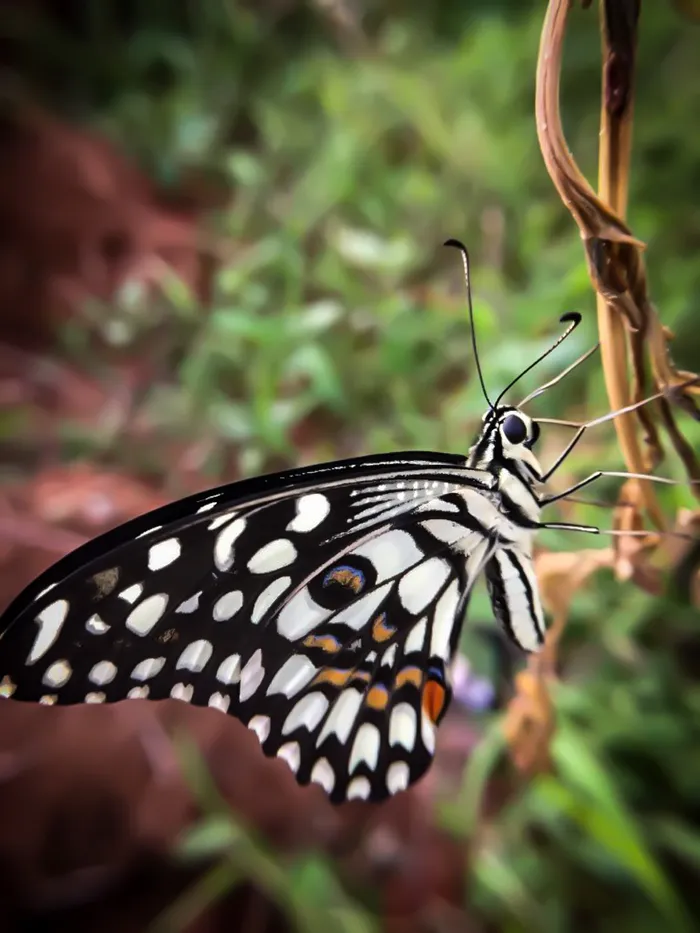
Lime Swallowtail (Papilio demoleus). Lime swallowtails use citrus among larval host plants; garden records should distinguish eggs, caterpillars and adult butterflies.
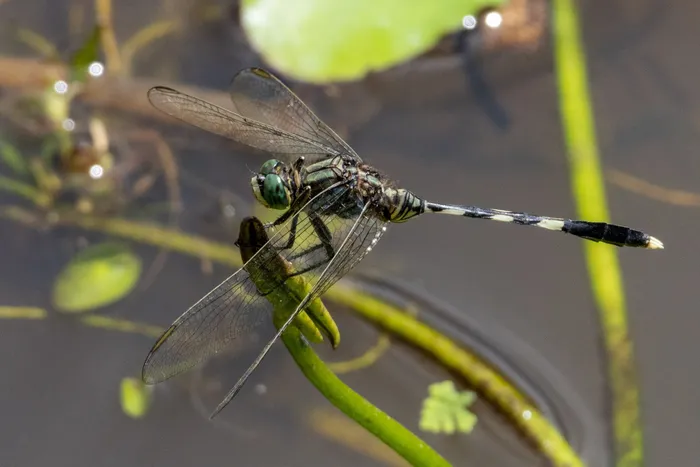
Slender Skimmer (Orthetrum sabina). The slender skimmer ranges widely from Asia to Australia; its green-and-black pattern and perching behaviour aid recognition.
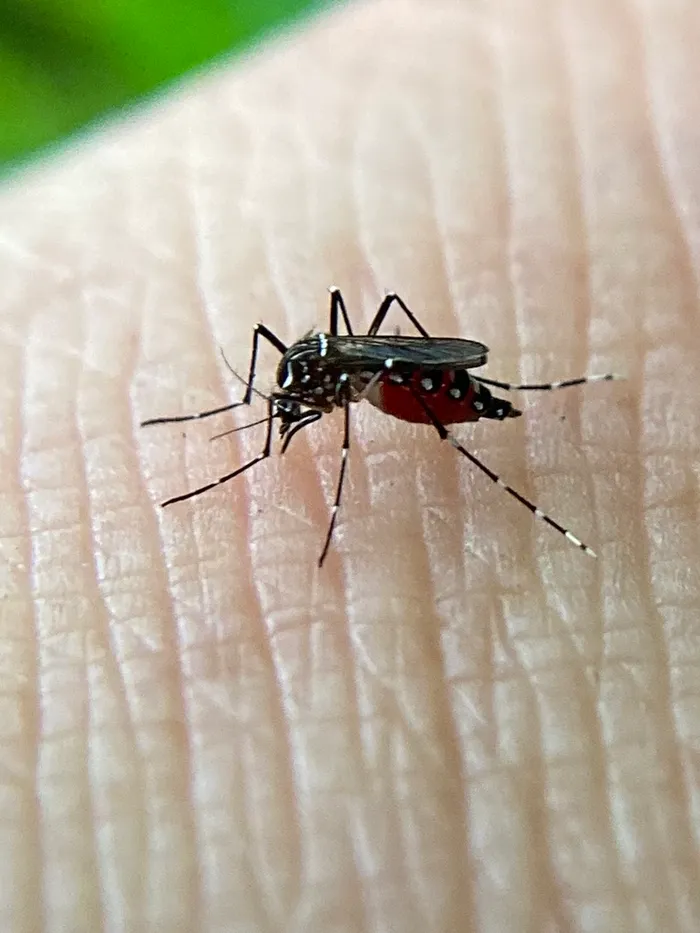
The yellow fever mosquito (Aedes aegypti) is a black-and-white, day-biting mosquito and the main carrier of dengue virus in Indonesia.
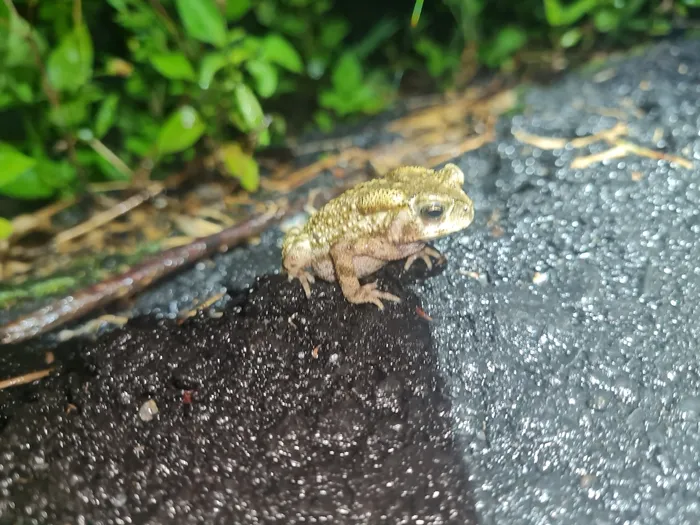
Asian Common Toad (Duttaphrynus melanostictus). Asian common toads use many human-modified habitats; genetic research suggests the name may encompass a more complex set of lineages.
Sources and references
- Kemendikdasmen — IPAS Kelas III, Edisi Revisi 2025, Bab 4 ↗
- Keputusan Kepala BSKAP No. 046/H/KR/2025, CP IPAS Fase B ↗
- Australian Museum — Metamorphosis: a remarkable change ↗
- Australian Museum — Insects ↗
- KBBI VI Daring (Badan Bahasa, Kemendikdasmen): kepompong ↗
- KBBI VI Daring (Badan Bahasa, Kemendikdasmen): imago ↗
- KBBI VI Daring (Badan Bahasa, Kemendikdasmen): nimfa ↗
- University of Florida — Lime Swallowtail Papilio demoleus ↗
- University of Florida — Yellow Fever Mosquito Aedes aegypti ↗
- Australian Museum — Dragonflies and damselflies ↗
- Australian Museum — Frog life cycle ↗
- University of Michigan, Animal Diversity Web — Duttaphrynus melanostictus ↗
Checked 2026-10-02. Send a correction