Enrichment
Quick answer
The lesson in brief
Animals protect themselves from predators with camouflage, mimicry, autotomy, body armour such as scales and spines, poison or venom, warning colours, smells or ink, and playing dead. For example, house geckos drop their tails (autotomy) and pangolins roll into a ball.
- Camouflage means blending in with the surroundings, while mimicry means looking like another living thing.
- Changing colour to blend into the background is camouflage, not mimicry; Indonesia's bunglon lizards are not true chameleons either.
- Autotomy means dropping a body part, such as a gecko's tail or a crab's claw; a regrown tail is not an exact copy.
- Poisonous animals are harmful when touched or eaten, while venomous animals inject toxins by biting or stinging.
- Pangolins roll up, porcupines rattle their quills, squid squirt ink and some snakes play dead.
- Watch animals from a distance; never catch, touch or pull the tail of an animal.
How do animals protect themselves from predators?
Animals escape predators by blending in, looking like other animals, dropping body parts, or using body armour, poison or venom, warning colours, smells or ink, and playing dead.
The relationship between a predator and its prey is called predation: one living thing hunts and eats another. Defence strategies help prey escape predation.
Many animals use more than one strategy. A pangolin, for example, rolls into a ball. If the ball is prised open, it squirts a foul-smelling liquid as a last resort.
Some defences are body features, such as a pangolin's scales or camouflage colours. Others are behaviours, such as rolling up, spraying a liquid or playing dead.
The table below summarises eight main strategies with Indonesian examples. The sections that follow explain each one with its sources.
| Strategy | Short meaning | Indonesian example |
|---|---|---|
| Camouflage | Body colour or shape blends in with the surroundings | Spotted seahorse |
| Mimicry | Looking like another living thing that is dangerous or bad to eat | Female great Mormon butterflies (Papilio memnon) |
| Autotomy | Dropping a body part on purpose to escape | House gecko (tail), crabs (claws) |
| Body armour and rolling up | Scales, spines or shells act as a shield | Sunda pangolin, Javan porcupine |
| Poison and venom | Poison works when touched or eaten; venom is injected by a bite or sting | Asian common toad (poison), Javan spitting cobra (venom) |
| Warning colours (aposematism) | Bright colours that signal danger | Greater blue-ringed octopus |
| Smells and ink | Smelly liquid or ink to repel or confuse | Asian palm civet, pangolin, squid |
| Playing dead (thanatosis) | Lying still as if dead after being caught or touched | Copper-headed trinket snake (Coelognathus radiatus) |
- Sunda pangolin Manis javanica — Rolls into a ball, then squirts a smelly liquid if the ball is prised open. source ↗
Evidence: Ilmu Pengetahuan Alam untuk SMP/MTs Kelas VII (Edisi Revisi), Bab VI Ekologi dan Pelestarian Lingkungan, hlm. 171 ↗ · Animal Diversity Web: Manis javanica (trenggiling Sunda) ↗
What is the difference between mimicry and camouflage?
Camouflage helps an animal blend into its surroundings, while mimicry makes it look like another living thing, usually one that is dangerous or bad to eat.
Camouflage means looking or behaving like part of the surroundings. The spotted seahorse, for example, can change its colour and pattern for a while to match what is around it and avoid predators.
Mimicry means imitating or looking similar to another organism. An Indonesian example is the great Mormon butterfly (Papilio memnon). Some females look like other butterflies that are bad to eat, while the males do not copy them.
This is called Batesian mimicry: an animal that is actually good to eat is attacked less often because it resembles one that tastes bad. Predators learn to avoid that pattern.
A bunglon's colour change is sometimes called "mimicry". In biology, blending in with the background is camouflage, and mimicry means resembling another living thing.
| Feature | Camouflage | Mimicry |
|---|---|---|
| What is copied | The background: leaves, stems, sand, coral | Another living thing |
| Purpose | Not to be seen by predators | To be seen but mistaken for another animal |
| Indonesian example | Spotted seahorse | Female great Mormon butterflies |
| Common mistake | Called mimicry | Confused with colour change |
- Spotted seahorse Hippocampus kuda — Changes colour and pattern to match its surroundings (camouflage). source ↗
- Great Mormon Swallowtail Papilio memnon — Some females copy the pattern of bad-tasting butterflies (Batesian mimicry). source ↗
Evidence: BioEd Online (Baylor College of Medicine): Mimicry and Camouflage ↗ · Animal Diversity Web: Hippocampus kuda (spotted seahorse) ↗ · Scientific Reports (2017): Temporal dynamics of the mimetic allele frequency at the doublesex locus, which controls polymorphic Batesian mimicry in Papilio memnon butterflies ↗
Is the Indonesian bunglon a chameleon, and why does it change colour?
No: Indonesia’s bunglon lizards, such as the maned forest lizard and oriental garden lizard, are agamids, and their colour change is not always for hiding. True chameleons belong to Chamaeleonidae. Similar common names do not make them the same scientific group.
The maned forest lizard is recorded on many Indonesian islands, including Java, Bali, Sulawesi, Nias and Borneo.
True chameleons live mainly in Madagascar and Africa. A few species also live in southern Spain, the Arabian Peninsula, India and Sri Lanka. Indonesia is not part of their natural range.
Colour change is not always for hiding. A study of dwarf chameleons in southern Africa found that strong colour change is linked to conspicuous signals used when males fight and court females. In the oriental garden lizard, breeding males turn reddish with a brick-red throat pouch.
Colour change can therefore serve several functions. Evidence about true chameleons should not automatically be applied to every Indonesian lizard called bunglon.
- Great Crested Canopy Lizard Bronchocela jubata — The maned forest lizard is an agamid, not a chameleon. source ↗
Evidence: The Reptile Database: Bronchocela jubata ↗ · Animal Diversity Web: Chamaeleonidae (chameleons) ↗ · Stuart-Fox & Moussalli (2008), PLoS Biology: Selection for social signalling drives the evolution of chameleon colour change ↗ · The Reptile Database: Calotes versicolor ↗
What is autotomy? Examples besides the house gecko
Autotomy is an animal's ability to drop part of its own body to escape a predator; house geckos drop their tails and crabs drop their claws.
House geckos have many predators, including cats, birds, snakes, rats, dogs, large spiders, praying mantises and bigger lizards.
The house gecko can drop its tail when it is grabbed or threatened. The dropped tail keeps wriggling and often distracts the predator, giving the gecko time to escape.
Many other animals can do this. Lizards drop tails, crickets drop legs and crabs drop claws. Sea stars can also drop arms.
A gecko's tail can grow back, but it is not an exact copy. In lizards, the original chain of tail bones is replaced by a tube of cartilage that does not turn into bone.
So the line "the tail grows back as before" in some books needs correcting: the outside looks similar, but the inside is different.
Never catch a gecko or pull its tail to test autotomy. Just watch geckos from a distance, for example one whose tail looks shorter or a different colour.
- Asian House Gecko Hemidactylus frenatus — Drops a wriggling tail that distracts the predator. source ↗
Evidence: Animal Diversity Web: Hemidactylus frenatus (cicak rumah) ↗ · Emberts et al. (2017), Behavioral Ecology: Cut your losses: self-amputation of injured limbs increases survival (PMC) ↗ · Cartilage and Muscle Cell Fate and Origins during Lizard Tail Regeneration (Frontiers in Bioengineering and Biotechnology, PMC) ↗
How do pangolins and porcupines protect themselves?
A pangolin rolls itself into a scaly ball, while a porcupine rattles its quills as a warning and then runs backwards into the enemy if the threat continues.
The Sunda pangolin first swishes its tail with its scales raised. If the threat does not go away, it curls up tightly so its soft belly is on the inside. A threatened mother even curls up with her young tucked safely inside.
Porcupines in the family Hystricidae have quills that rattle when shaken. The sound warns predators. If that fails, the porcupine may charge backwards into the predator.
Porcupines cannot shoot their quills. The quills are only loosely attached, so they come off easily and stick into an animal that touches them.
The crown-of-thorns starfish on coral reefs is armed with venomous spines. Its stings can cause pain, long-lasting vomiting, redness and swelling.
- Sunda pangolin Manis javanica — Curls up tightly to shield its soft belly. source ↗
- Javan Porcupine Hystrix javanica — A member of Hystricidae: rattling, loosely attached quills. source ↗
- Crown-of-thorns starfish Acanthaster planci — Venomous spines act as body armour. source ↗
Evidence: Animal Diversity Web: Manis javanica (trenggiling Sunda) ↗ · Animal Diversity Web: Hystricidae (landak Dunia Lama) ↗ · Lee et al. (2013), Hemolytic activity of venom from crown-of-thorns starfish Acanthaster planci spines (PMC) ↗
Which animals protect themselves with poison, venom or warning colours?
The Asian common toad uses poison, the Javan spitting cobra and Javan slow loris use venom, and the greater blue-ringed octopus shows warning colours and is venomous too.
Poison and venom are different. Venomous animals inject their toxins through teeth, glands in the mouth or a sting. Poisonous animals are harmful when touched or eaten.
Poison is usually used for defence or to put predators off, while venom can be used both for defence and for hunting.
The Asian common toad is poisonous. Toads in the family Bufonidae make a very strong mix of toxins that act on the heart.
The Javan spitting cobra is venomous. Its scientific name, Naja sputatrix, means "spitter", because this snake can spit venom.
The Javan slow loris is one of very few venomous mammals. When threatened, it makes venom from its saliva and fluid from a gland on its upper arm.
Bright colours that signal danger are called warning colours, or aposematism. The greater blue-ringed octopus has bright blue rings, thought to be warning colours, that seem to glow when it is disturbed. Rather than making ink, it relies on venom: a toxin like the tetrodotoxin of pufferfish, made by bacteria in its salivary glands.
Use pictures or watch from a safe distance. Live wildlife is unnecessary for experiments about animal defences.
- Asian Common Toad Duttaphrynus melanostictus — Poisonous: produces a potent mix of heart toxins. source ↗
- Javan spitting cobra Naja sputatrix — A venomous snake that can spit its venom. source ↗
- Javan slow loris Nycticebus javanicus — A venomous mammal; makes venom when threatened. source ↗
- Greater blue-ringed octopus Hapalochlaena lunulata — Bright blue rings thought to be warning colours. source ↗
Evidence: Australian Museum: Venomous vs. Poisonous ↗ · Natural History Museum (London): Bite or be bitten: What is the difference between poison and venom? ↗ · Dufresnes et al. (2025), Nature Communications: Speciation and historical invasions of the Asian black-spined toad (PMC) ↗ · The Reptile Database: Naja sputatrix (kobra Jawa) ↗ · Barrett et al. (2021), Toxins: Risky Business: The Function of Play in a Venomous Mammal - The Javan Slow Loris (PMC) ↗ · Animal Diversity Web: Hapalochlaena lunulata (gurita cincin biru) ↗
Which animals use smells, ink or playing dead?
Asian palm civets, pangolins and Sunda stink badgers release smelly liquids, squid squirt ink, and some snakes play dead when threatened or caught.
The Asian palm civet has a scent gland in a pouch beneath the skin of its abdomen. It uses the gland for defensive spraying, marking territory and communicating with other civets.
The Sunda stink badger (Mydaus javanensis) lives on Sumatra, Java, Borneo and the North Natuna Islands. When threatened, it raises its tail and sprays a foul-smelling, milky green liquid.
The bigfin reef squid (Sepioteuthis lessoniana) lives in the Indo-Pacific. It has an ink sac that can release a dark cloud of ink to confuse predators.
Octopuses can squirt black ink when threatened too. In the day octopus (Octopus cyanea) of the Indian and Pacific oceans, the ink blocks a predator's sight and sense of smell so the octopus can get away.
Playing dead is called thanatosis. Animals usually do it late in an attack, often after a predator has touched them. Lying still is thought to stop further attack, because the prey no longer seems to need subduing.
One example is the copper-headed trinket snake (Coelognathus radiatus), found on Sumatra, Java, Borneo and Bali. When threatened, it may flatten its front body, gape, hiss, strike or play dead.
- Asian Palm Civet Paradoxurus hermaphroditus — Sprays fluid from a scent gland in defence. source ↗
Evidence: Animal Diversity Web: Paradoxurus hermaphroditus (musang luwak) ↗ · Animal Diversity Web: Mydaus javanensis (teledu) ↗ · Animal Diversity Web: Sepioteuthis lessoniana (cumi-cumi sirip besar) ↗ · Animal Diversity Web: Octopus cyanea (gurita besar biru) ↗ · Humphreys & Ruxton (2018), Behavioral Ecology and Sociobiology: A review of thanatosis (death feigning) as an anti-predator behaviour (PMC) ↗ · Giri et al. (2020), Reptiles & Amphibians 27(2): Death-feigning behavior by Copper-headed Trinket Snakes, Coelognathus radiatus ↗ · The Reptile Database: Coelognathus radiatus ↗
Key terms for crosswords and tests
The key terms for crosswords and tests are autotomy, camouflage, mimicry, aposematism and thanatosis; the table below gives their meanings and letter counts.
A gecko dropping its tail to escape is autotomy. An animal that blends into its background uses camouflage, while an animal that looks like another living thing uses mimicry.
Watch the verbs in a question. Words like blend in or hide point to camouflage. Words like copy or look like another animal point to mimicry.
Sample question: an animal whose body colour blends in with where it rests is using .... The answer is camouflage. A snake that lies still as if dead after a predator touches it is using .... The answer is thanatosis.
| Term | Meaning | Letters |
|---|---|---|
| AUTOTOMY | Dropping a body part, such as a gecko's tail | 8 |
| CAMOUFLAGE | Blending in with the surroundings | 10 |
| MIMICRY | Looking like another living thing | 7 |
| APOSEMATISM | Warning colours or signals | 11 |
| THANATOSIS | Playing dead | 10 |
| PREDATION | One animal hunting and eating another | 9 |
| VENOM | Toxin injected by a bite or sting | 5 |
| INK | Dark liquid squid release to confuse predators | 3 |
Evidence: BioEd Online (Baylor College of Medicine): Mimicry and Camouflage ↗ · Humphreys & Ruxton (2018), Behavioral Ecology and Sociobiology: A review of thanatosis (death feigning) as an anti-predator behaviour (PMC) ↗
Common misconceptions
Belief: A bunglon that changes colour to match its surroundings is doing mimicry.
The fact: Blending in with the background is camouflage. Mimicry means looking like another living thing, like female great Mormon butterflies that resemble bad-tasting butterflies. source ↗
Belief: Indonesia's bunglon lizards are chameleons.
The fact: The maned forest lizard belongs to Agamidae. True chameleons belong to Chamaeleonidae and occur naturally mainly in Madagascar and Africa. source ↗
Belief: Chameleons change colour only to hide.
The fact: Colour change is also used for signalling. In dwarf chameleons, strong colour change is linked to signals used in male contests and courtship. source ↗
Belief: A gecko's lost tail grows back exactly as before.
The fact: The tail regrows, but the tail bones are replaced by a cartilage tube, so the new tail is not an exact copy. source ↗
Belief: Porcupines can shoot their quills at enemies.
The fact: Porcupine quills cannot be fired. They are loosely attached, so they come off and stick in when touched. source ↗
Practice questions with answers
Choose your answer, then open “Show answer” to check it.
A house gecko protects itself by dropping its tail. This is called ....
Show answer
Answer: B. autotomy. Autotomy means dropping a body part. The wriggling tail distracts the predator.
A spotted seahorse changes its colour and pattern to match its surroundings. This is called ....
Show answer
Answer: D. camouflage. Blending in with the surroundings is camouflage. Mimicry means resembling another living thing.
Which is a correct example of mimicry?
Show answer
Answer: A. female great Mormon butterflies that look like bad-tasting butterflies. Mimicry means looking like another living thing. A bunglon blending in with a branch is using camouflage.
Indonesia's maned forest lizard and oriental garden lizard belong to the family ....
Show answer
Answer: C. Agamidae. Both are agamids. True chameleons (Chamaeleonidae) do not occur naturally in Indonesia.
How does a pangolin protect itself from predators?
Show answer
Answer: B. it rolls into a scaly ball. A pangolin curls up tightly so its soft belly is inside. If the ball is prised open, it squirts a smelly liquid.
Which statement about porcupine quills is true?
Show answer
Answer: D. quills are loosely attached and stick in when touched. Porcupine quills cannot be fired. They come off easily and stick into an animal that touches them.
Venomous animals differ from poisonous animals because venomous animals ....
Show answer
Answer: A. inject toxins by biting or stinging. Venom is injected through teeth, mouth glands or a sting. Poison works when an animal is touched or eaten.
The bright blue rings of the blue-ringed octopus are an example of ....
Show answer
Answer: C. warning colours (aposematism). The blue rings are thought to be warning colours that seem to glow when the octopus is disturbed.
Which animal releases dark ink when chased by a predator?
Show answer
Answer: D. squid. Squid have an ink sac. A dark cloud of ink confuses predators.
A snake that lies still as if dead after a predator touches it is using ....
Show answer
Answer: A. thanatosis. Playing dead is called thanatosis and usually happens late in an attack.
For teachers: learning objectives and activities
Learning objectives
- Students can explain eight ways animals protect themselves, with Indonesian examples.
- Students can correctly tell camouflage and mimicry apart.
- Students can explain autotomy and the difference between poisonous and venomous animals.
- Students can explain why animals should be watched from a safe distance without touching them.
Classroom activity ideas (about 70 minutes)
- Sorting cards: groups match 12 picture cards of Indonesian animals to their defence strategy and explain why.
- Find me game: the teacher sticks green and brown paper insect shapes on a leafy poster; students count how many they spot in 30 seconds to understand camouflage.
- Venn diagram: groups compare camouflage and mimicry using the spotted seahorse and the great Mormon butterfly, then discuss why a bunglon's colour change is not mimicry.
- Gecko watch from a distance at home or school: note where it sits, its colour and its tail shape without chasing, catching or touching it.
Materials: Animal picture cards (printed or hand-drawn), Coloured paper, scissors and glue, A leafy poster, The worksheet on how animals protect themselves.
Enrichment notes
- Enrichment. This is enrichment material. No specific chapter or learning-outcome alignment is claimed for this topic. Decree 046/H/KR/2025 is referenced only to document the scope check. Keputusan Kepala BSKAP No. 046/H/KR/2025 ↗
May be printed and copied for non-commercial teaching, crediting PanduanHewan.org.
Common questions
What is it called when an animal protects itself by dropping its tail?
It is called autotomy. A house gecko drops its tail when grabbed or threatened, and the wriggling tail distracts the predator.
What is an example of mimicry other than the bunglon?
Mimicry means resembling another organism. Some female great Mormon butterflies resemble unpalatable butterflies. Blending into a background is camouflage.
Do house geckos use mimicry?
The house-gecko defence discussed here is autotomy: shedding the tail. Tail shedding is not mimicry.
What are examples of camouflage besides the bunglon?
Seahorses can change their colour and pattern to match their surroundings, helping conceal them from predators.
Which animal releases dark ink when chased by a predator?
Bigfin reef squid can release a dark ink cloud that confuses predators. Day octopuses can also release ink when threatened.
Is a bunglon the same as a chameleon?
No. Indonesian bunglon lizards, such as the maned forest lizard, are agamids. True chameleons are Chamaeleonidae and live mainly in Madagascar and Africa.
Animals in this lesson
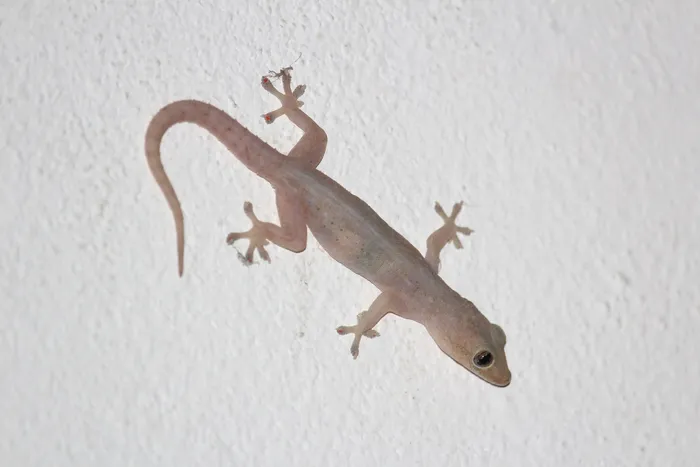
Asian House Gecko (Hemidactylus frenatus). The Asian house gecko often lives on buildings and hunts insects around lights; separate it from flat-tailed house geckos.
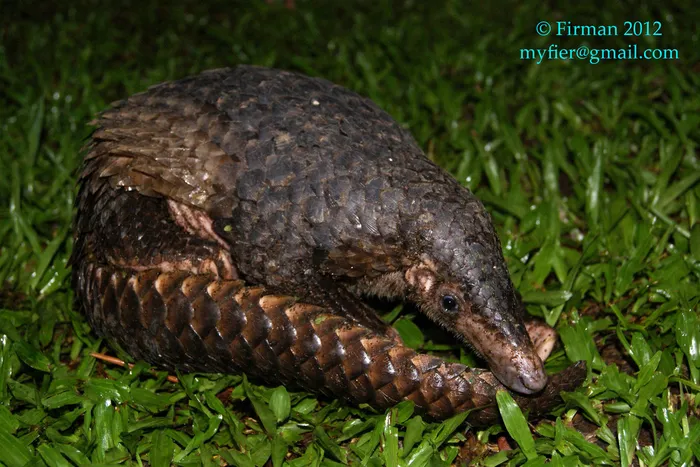
A scaled, ant- and termite-eating mammal threatened by illegal trade. Climbing and secretive behaviour make direct observation difficult.
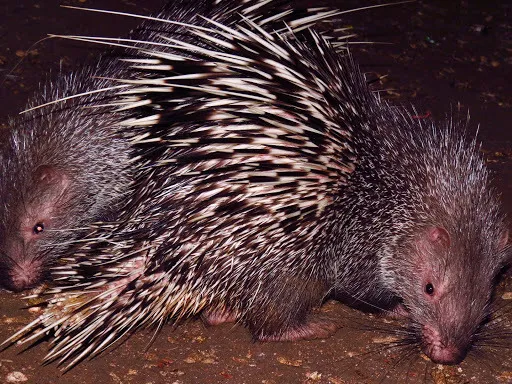
Javan Porcupine (Hystrix javanica). The Javan or Sunda porcupine is an Indonesian rodent with defensive quills; it is endemic to Java, Bali and the Lesser Sunda Islands and lives mainly in lowlands, including secondary and degraded habitats.
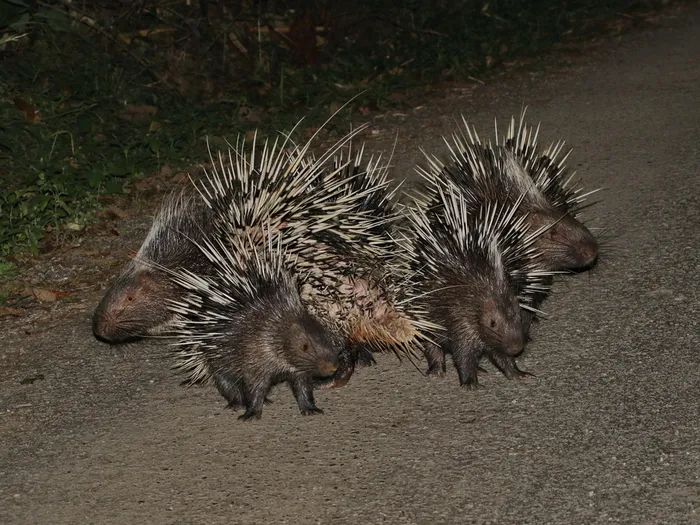
The Malayan porcupine (Hystrix brachyura) is a large, quilled, nocturnal rodent of Sumatra and Borneo that is widely hunted for meat and trade.
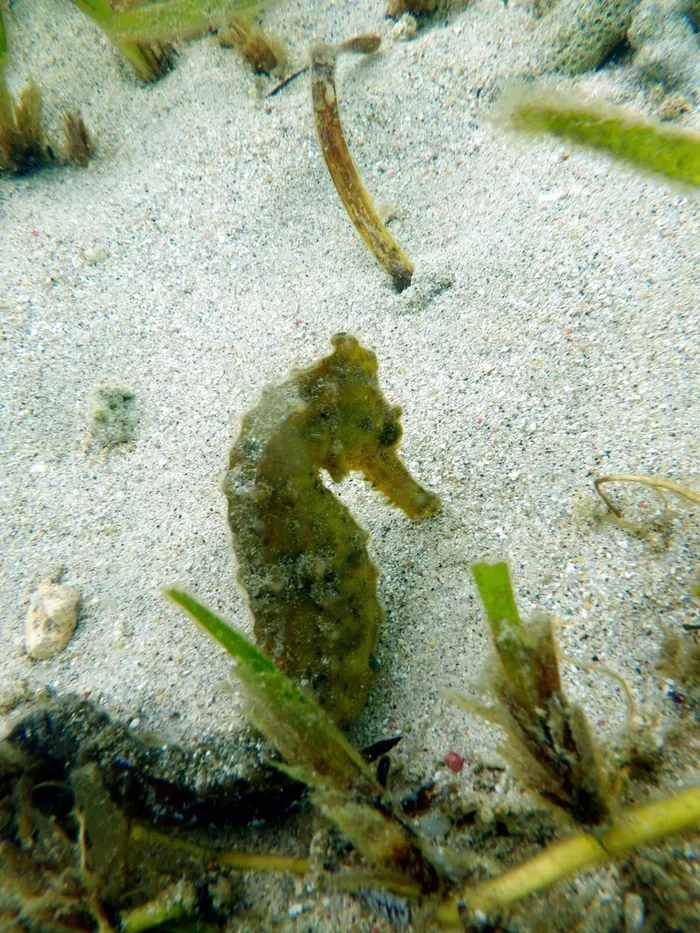
The spotted seahorse (Hippocampus kuda) is a small horse-headed fish whose males carry the young; it lives in seagrass and estuaries and is widely traded.
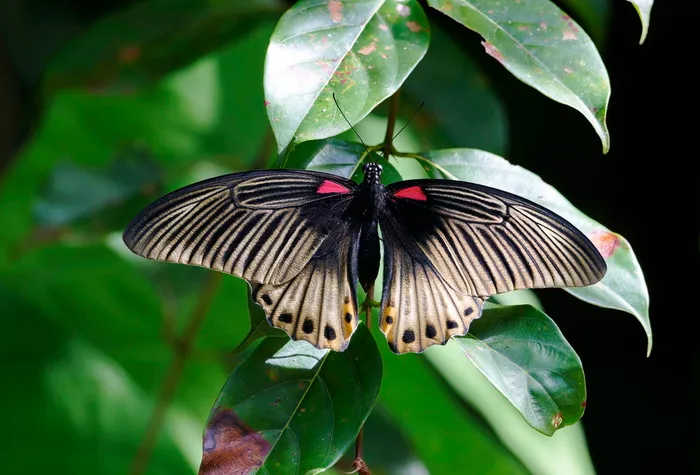
Great Mormon Swallowtail (Papilio memnon). Female great Mormon swallowtails occur in several colour forms, including mimics; these forms should not automatically be treated as different species.
Sources and references
- Keputusan Kepala BSKAP No. 046/H/KR/2025 ↗
- Ilmu Pengetahuan Alam untuk SMP/MTs Kelas VII (Edisi Revisi), Bab VI Ekologi dan Pelestarian Lingkungan, hlm. 171 ↗
- Animal Diversity Web: Manis javanica (trenggiling Sunda) ↗
- BioEd Online (Baylor College of Medicine): Mimicry and Camouflage ↗
- Animal Diversity Web: Hippocampus kuda (spotted seahorse) ↗
- Scientific Reports (2017): Temporal dynamics of the mimetic allele frequency at the doublesex locus, which controls polymorphic Batesian mimicry in Papilio memnon butterflies ↗
- The Reptile Database: Bronchocela jubata ↗
- Animal Diversity Web: Chamaeleonidae (chameleons) ↗
- Stuart-Fox & Moussalli (2008), PLoS Biology: Selection for social signalling drives the evolution of chameleon colour change ↗
- The Reptile Database: Calotes versicolor ↗
- Animal Diversity Web: Hemidactylus frenatus (cicak rumah) ↗
- Emberts et al. (2017), Behavioral Ecology: Cut your losses: self-amputation of injured limbs increases survival (PMC) ↗
- Cartilage and Muscle Cell Fate and Origins during Lizard Tail Regeneration (Frontiers in Bioengineering and Biotechnology, PMC) ↗
- Animal Diversity Web: Hystricidae (landak Dunia Lama) ↗
- Lee et al. (2013), Hemolytic activity of venom from crown-of-thorns starfish Acanthaster planci spines (PMC) ↗
- Australian Museum: Venomous vs. Poisonous ↗
- Natural History Museum (London): Bite or be bitten: What is the difference between poison and venom? ↗
- Dufresnes et al. (2025), Nature Communications: Speciation and historical invasions of the Asian black-spined toad (PMC) ↗
- The Reptile Database: Naja sputatrix (kobra Jawa) ↗
- Barrett et al. (2021), Toxins: Risky Business: The Function of Play in a Venomous Mammal - The Javan Slow Loris (PMC) ↗
- Animal Diversity Web: Hapalochlaena lunulata (gurita cincin biru) ↗
- Animal Diversity Web: Paradoxurus hermaphroditus (musang luwak) ↗
- Animal Diversity Web: Mydaus javanensis (teledu) ↗
- Animal Diversity Web: Sepioteuthis lessoniana (cumi-cumi sirip besar) ↗
- Animal Diversity Web: Octopus cyanea (gurita besar biru) ↗
- Humphreys & Ruxton (2018), Behavioral Ecology and Sociobiology: A review of thanatosis (death feigning) as an anti-predator behaviour (PMC) ↗
- Giri et al. (2020), Reptiles & Amphibians 27(2): Death-feigning behavior by Copper-headed Trinket Snakes, Coelognathus radiatus ↗
- The Reptile Database: Coelognathus radiatus ↗
Checked 2026-10-02. Send a correction