Enrichment
Quick answer
The lesson in brief
Warm-blooded animals (endotherms) make their body heat from their own metabolism; examples are mammals and birds. Cold-blooded animals (ectotherms) mainly use heat from their surroundings; examples are fish, amphibians, reptiles and most invertebrates. An ectotherm's blood is not always cold, and ectotherms can still control their temperature through behaviour.
- Endotherms (warm-blooded animals) make their own body heat by metabolism; mammals and birds are endotherms.
- Ectotherms (cold-blooded animals) mainly use heat from their surroundings; fish, amphibians, reptiles and most invertebrates are ectotherms.
- "Cold-blooded" is a misleading term, because the blood of a basking snake or Komodo dragon can be warm.
- Ectotherms control their body temperature through behaviour: basking, seeking shade, soaking in water or retreating into burrows.
- Endotherms need more food than ectotherms of a similar size, because making body heat takes energy.
- There are exceptions, such as the leatherback turtle, which stays warmer than the sea, and the echidna, which has a low body temperature.
What are warm-blooded and cold-blooded animals?
Warm-blooded animals (endotherms) make their body heat from their own metabolism, while cold-blooded animals (ectotherms) mainly use heat from their surroundings, such as sunlight.
Endotherms use metabolic heat to help maintain body temperature as their surroundings change. Mammals and birds are the main examples. Environmental temperature still matters: endotherms must also release heat or limit heat loss.
Most fish, amphibians, non-avian reptiles and invertebrates rely mainly on environmental heat. Behaviour also helps them regulate temperature; this category does not mean their bodies are always cold.
Examples are easy to find at home. A cat is an endotherm with a fairly steady body temperature. The house gecko hunting insects on the wall is an ectotherm.
"Warm-blooded" and "cold-blooded" are everyday words. Scientists prefer "endotherm" and "ectotherm", because the real difference is where the body heat comes from, not how warm the blood is.
Evidence: Animal Diversity Web (University of Michigan): glossary entry "endothermic", Pongo abelii account ↗ · Ilmu Pengetahuan Alam untuk SMP/MTs Kelas IX (Edisi Revisi 2025), Bab 1 ↗ · Animal Diversity Web (University of Michigan): glossary entry "ectothermic", Crocodylus porosus account ↗ · Animal Diversity Web: Felis catus (Other Physical Features) ↗ · Animal Diversity Web: Hemidactylus frenatus (Other Physical Features) ↗ · University of North Georgia, Tumbling Creek project: Reptiles & Amphibians ↗ · Rice University, OpenStax — Biology 2e, 33.3 Homeostasis ↗
Why is "cold-blooded" a misleading term?
Because an ectotherm's blood is not always cold; when it basks, its body can become warm, even close to human body temperature.
The blood of a snake basking on a hot rock on a summer afternoon is not cold. It can reach 90 °F (about 32 °C) or more. An active Komodo dragon keeps its preferred body temperature at around 35 °C, only a little below human body temperature.
Ectotherms are also not animals that "cannot control their body temperature". Many land ectotherms can make their body temperature different from the air around them through behaviour, such as basking or moving into shade.
There are two pairs of scientific terms. Endotherm and ectotherm describe where body heat comes from. Homeotherm and poikilotherm describe whether body temperature stays steady or rises and falls with the surroundings. Most ectotherms are poikilotherms, while humans are homeotherms.
These terms often appear in tests and crossword puzzles (TTS). The table below gives a short meaning and the letter count of each Indonesian term. The KBBI dictionary lists homoiterm as a noun and homoiotermal as an adjective.
| Indonesian term | Letters | Short meaning | Everyday term |
|---|---|---|---|
| ENDOTERM (endotherm) | 8 | An animal whose body heat comes mainly from its own metabolism | Warm-blooded |
| HOMOITERM (homeotherm) | 9 | An animal whose body temperature is fairly high and steady | Warm-blooded |
| EKTOTERM (ectotherm) | 8 | An animal whose body heat comes mainly from its surroundings | Cold-blooded |
| POIKILOTERM (poikilotherm) | 11 | An animal whose body temperature rises and falls with its surroundings | Cold-blooded |
Evidence: University of North Georgia, Tumbling Creek project: Reptiles & Amphibians ↗ · Lewicka et al. (2024), Biological Significance of the Komodo Dragon's Tail, Animals (PMC) ↗ · Ilmu Pengetahuan Alam untuk SMP/MTs Kelas IX (Edisi Revisi 2025), Bab 1 ↗ · Ariefiandy et al. (2013), Can camera traps monitor Komodo dragons a large ectothermic predator? PLoS ONE (PMC) ↗ · Animal Diversity Web (University of Michigan): glossary entry "ectothermic", Crocodylus porosus account ↗ · KBBI VI Daring (Badan Bahasa, Kemendikdasmen): endoterm ↗ · KBBI VI Daring (Badan Bahasa, Kemendikdasmen): homoiterm ↗ · KBBI VI Daring (Badan Bahasa, Kemendikdasmen): homoiotermal ↗ · KBBI VI Daring (Badan Bahasa, Kemendikdasmen): ektoterm ↗ · KBBI VI Daring (Badan Bahasa, Kemendikdasmen): poikiloterm ↗ · Rice University, OpenStax — Biology 2e, 33.3 Homeostasis ↗
What is the difference between warm-blooded and cold-blooded animals?
The main difference is where body heat comes from: endotherms make their own heat by metabolism, while ectotherms mainly rely on heat from their surroundings.
Endotherms can increase heat production in the cold, for example through muscle activity. Ways of losing heat differ between animals: sweating and panting are examples, not abilities shared by every endotherm. Temperature control also involves reducing or increasing heat loss to the surroundings.
Ectotherms also generate metabolic heat, but generally rely on external sources to maintain activity temperatures. Basking or choosing shade can change their body temperature. The distinction concerns the main heat source, not whether metabolism occurs.
In mammals, hair slows the exchange of heat with the surroundings, like a blanket that keeps the body warm. Feathers on birds and layers of fat can also hold heat in.
| Feature | Warm-blooded (endotherm) | Cold-blooded (ectotherm) |
|---|---|---|
| Main heat source | Metabolism inside the body | Surroundings, such as sunlight or warm rocks |
| Body temperature | Fairly steady (homeotherm) | Usually rises and falls with the surroundings (poikilotherm) |
| Ways to control temperature | Shivering, sweating, panting; hair, feathers or fat keep heat in | Basking, seeking shade, soaking in water, going into burrows |
| Food needs | More than an ectotherm of similar size, to make heat | Less than an endotherm of similar size, because most heat comes from outside |
| Animal groups | Mammals, birds | Fish, amphibians, reptiles, most invertebrates |
| Examples in Indonesia | Sumatran orangutan, sun bear, dugong, barn owl | Komodo dragon, saltwater crocodile, whale shark, Asian common toad |
Evidence: Animal Diversity Web (University of Michigan): glossary entry "endothermic", Pongo abelii account ↗ · Animal Diversity Web: Crocodylus porosus ↗ · University of North Georgia, Tumbling Creek project: Reptiles & Amphibians ↗ · Animal Diversity Web: Mammalia ↗ · Animal Diversity Web: Varanus komodoensis ↗ · Rice University, OpenStax — Biology 2e, 33.3 Homeostasis ↗ · Animal Diversity Web: Pteropus vampyrus ↗
Which animals are warm-blooded and which are cold-blooded?
Warm-blooded animals are mammals and birds; cold-blooded animals are fish, amphibians, reptiles and most invertebrates.
Examples of endothermic mammals in Indonesia are the Sumatran orangutan, the sun bear and the dugong. The barn owl is an example of an endothermic bird. Mammals that live in water, such as the dugong and the Irrawaddy dolphin, are still warm-blooded.
Examples of ectotherms are the whale shark (a fish), the Asian common toad (an amphibian), the Komodo dragon and the saltwater crocodile (reptiles), and the crown-of-thorns starfish (an invertebrate).
Invertebrates such as insects, crabs and sea stars are generally ectotherms. Birds around the home, such as the rock pigeon, are endotherms, just like pet cats and dogs, which are mammals.
So if a test asks for the cold-blooded vertebrate groups, the answer is fish, amphibians and reptiles. The warm-blooded vertebrate groups are birds and mammals.
- Sumatran orangutan Pongo abelii — An endothermic mammal with a fairly steady body temperature (homeotherm). source ↗
- Barn owl Tyto alba — An endothermic bird with a fairly steady body temperature. source ↗
- Dugong Dugong dugon — A sea mammal, still an endotherm although it lives its whole life in water. source ↗
- Whale shark Rhincodon typus — An ectothermic fish; its body heat comes mainly from its surroundings. source ↗
- Asian Common Toad Duttaphrynus melanostictus — An ectothermic amphibian often found around homes. source ↗
- Komodo dragon Varanus komodoensis — An ectothermic reptile and a large predator. source ↗
- Crown-of-thorns starfish Acanthaster planci — A marine invertebrate that is an ectotherm. source ↗
Evidence: Animal Diversity Web: Helarctos malayanus (Other Physical Features) ↗ · Animal Diversity Web: Columba livia (Other Physical Features) ↗ · Animal Diversity Web: Felis catus (Other Physical Features) ↗ · Animal Diversity Web: Mammalia ↗ · UC Museum of Paleontology (Berkeley): The Hall of Mammals ↗ · Rice University, OpenStax — Biology 2e, 33.3 Homeostasis ↗ · Animal Diversity Web: Birgus latro (Other Physical Features) ↗ · Animal Diversity Web: Orcaella brevirostris (Other Physical Features) ↗
How do cold-blooded animals control their body temperature?
Ectotherms control their body temperature through behaviour: they bask when they are cold, then seek shade, soak in water or retreat into burrows when they get too hot.
The saltwater crocodile spends most of its time controlling its body temperature. If it gets too hot, it goes into the water with only its eyes and nostrils showing. If it gets too cold, it lies in the sun on flat rocks until it warms up.
Crocodiles also often lie on land with their mouths held open for a long time (gaping). A study on alligators showed that gaping slows the heating of the head in strong sunlight. Its effect on body temperature, however, is small.
Komodo dragons actively control their body temperature throughout the day. Large Komodo dragons take longer to warm up and cool down than small ones. At night and when the weather is very hot, they retreat into burrows they have dug.
Snakes, lizards and amphibians also control their temperature through behaviour. Snakes and lizards bask in the sun to warm up, while amphibians depend on the temperature around them and choose suitable places.
- Saltwater crocodile Crocodylus porosus — Soaks in water when hot and basks on rocks when cold. source ↗
- Komodo dragon Varanus komodoensis — Retreats into burrows at night and in very hot weather. source ↗
Evidence: Animal Diversity Web: Crocodylus porosus ↗ · Spotila, Terpin & Dodson (1977), Mouth gaping as an effective thermoregulatory device in alligators, Nature 265 ↗ · Lewicka et al. (2024), Biological Significance of the Komodo Dragon's Tail, Animals (PMC) ↗ · Animal Diversity Web: Varanus komodoensis ↗ · University of North Georgia, Tumbling Creek project: Reptiles & Amphibians ↗ · AmphibiaWeb (UC Berkeley): Amphibian introduction ↗ · Rice University, OpenStax — Biology 2e, 33.3 Homeostasis ↗
How do warm-blooded animals keep their body temperature steady?
Endotherms make heat by metabolism and then adjust it: they shiver when they are cold, and sweat or pant when they are hot.
In humans, the controller is the hypothalamus in the brain. When the body is too hot, the hypothalamus signals the sweat glands, so we sweat and the body cools down. When the body is too cold, it signals the muscles, so they shiver and produce warmth.
Birds are endotherms too; the features of modern birds are linked to a high ("hot") metabolism and to flight. Hair, feathers and fat help keep body heat in. Ways of losing heat vary: the large flying fox, for example, sometimes fans its wings, licks its body or pants during the hottest part of the day. Because their temperature is controlled from inside, endotherms can stay active when their surroundings are cooler.
All of this takes energy. That is why endotherms need more food than ectotherms of a similar size.
Evidence: Ilmu Pengetahuan Alam untuk SMP/MTs Kelas IX (Edisi Revisi 2025), Bab 1 ↗ · Animal Diversity Web: Aves ↗ · Animal Diversity Web: Mammalia ↗ · Animal Diversity Web (University of Michigan): glossary entry "endothermic", Pongo abelii account ↗ · Rice University, OpenStax — Biology 2e, 33.3 Homeostasis ↗ · Animal Diversity Web: Pteropus vampyrus ↗
What are the pros and cons of being an endotherm or an ectotherm?
Endotherms can stay active across many temperatures but need a lot of food; ectotherms need less food energy but depend on heat from their surroundings.
Body temperature affects enzymes and cellular processes. Excessive heat can disrupt enzyme function. Suitable temperatures depend on the animal and its environment; human body temperature is not a target for every species.
Endotherms control their heat from inside, so they can survive many outside temperatures. The downside is that this needs a lot of energy: mammals need much more food than ectotherms of a similar size. Ectotherms use outside sources to warm up and cool down, so they need less food.
The downside for ectotherms is their dependence on the surroundings. When it is cool, they cannot keep up the level of activity that endotherms can. Regulating temperature through behaviour also takes time: the saltwater crocodile spends most of its time doing it.
Evidence: Animal Diversity Web: Crocodylus porosus ↗ · Rice University, OpenStax — Biology 2e, 33.3 Homeostasis ↗ · Animal Diversity Web: Mammalia ↗
Are there animals that do not fit these groups?
Yes; some ectotherms can be warmer than their surroundings, and some mammals keep a less steady body temperature than other mammals.
The leatherback turtle is a reptile, but it has a network of blood vessels that works as a heat exchanger and a thick layer of oils and fats in its skin. With these, its body can stay much warmer than the surrounding sea.
The opah is the first fish known to keep its whole body warmer than its surroundings. Tuna and some sharks warm only certain parts of their bodies, such as their muscles.
The western long-beaked echidna of Papua is a mammal, but its body temperature is low, about 28–35 °C. Its temperature is also less steady than that of placental mammals. When food is scarce or temperatures are extreme, it can enter torpor, lowering its metabolic rate and body temperature.
A single honey bee is a poikilotherm: its body temperature rises and falls with its surroundings. But bees can make heat. In Asian honey bees in Japan, more than 500 bees surround an attacking hornet in a hot ball that kills the hornet but not the bees. Guard bees patrolling the nest entrance also produce high temperatures.
- Leatherback turtle Dermochelys coriacea — A reptile whose body can be much warmer than the sea. source ↗
- Western long-beaked echidna Zaglossus bruijnii — A mammal with a low body temperature, about 28–35 °C. source ↗
- Asian honey bee Apis cerana — A bee that forms a hot ball in groups to fight hornets. source ↗
Evidence: Animal Diversity Web: Dermochelys coriacea ↗ · NOAA Fisheries: Warm blood makes opah an agile predator ↗ · Animal Diversity Web: Zaglossus bruijni ↗ · KBBI VI Daring (Badan Bahasa, Kemendikdasmen): poikiloterm ↗ · Ono et al. (1995), Unusual thermal defence by a honeybee against mass attack by hornets, Nature 377 ↗
Common misconceptions
Belief: Cold-blooded animals cannot control their body temperature.
The fact: Ectotherms control their body temperature by using heat from their surroundings and behaviour, such as basking, seeking shade, soaking in water or going into burrows. source ↗
Belief: A cold-blooded animal's blood is always cold.
The fact: The blood of a snake basking on a hot rock is not cold. That is why scientists prefer the term ectotherm. source ↗
Belief: Cold-blooded animals are the ones that live on land and in water, such as frogs, crocodiles and seals.
The fact: The term is about where body heat comes from, not where an animal lives. Seals are mammals, and mammals are endotherms and homeotherms. source ↗
Belief: All fish are cold-blooded.
The fact: The opah keeps its whole body warmer than its surroundings, and tuna and some sharks warm parts of their bodies. source ↗
Belief: All mammals keep a steady body temperature of about 37 °C.
The fact: The western long-beaked echidna is a mammal with an unusually low body temperature, between 28 and 35 °C. source ↗
Practice questions with answers
Choose your answer, then open “Show answer” to check it.
The scientific term for a warm-blooded animal is …
Show answer
Answer: B. endotherm. An endotherm makes its own body heat by metabolism, as mammals and birds do.
Which vertebrate groups are generally ectotherms (cold-blooded)?
Show answer
Answer: D. Fish, amphibians and reptiles. Fish, amphibians and reptiles generally use heat from their surroundings. Mammals and birds are endotherms. There are exceptions, such as the opah.
Why is "cold-blooded" a misleading term?
Show answer
Answer: A. Because an ectotherm's blood can be warm when it basks. The blood of a snake basking on a hot rock is not cold; what makes an ectotherm is its source of heat.
A Komodo dragon basks in the morning sun. Why?
Show answer
Answer: C. To warm its body. Ectotherms such as the Komodo dragon use the sun's heat to reach the body temperature they need to be active.
What does a saltwater crocodile usually do when it is too hot?
Show answer
Answer: B. Go into the water with only its eyes and nostrils showing. Crocodiles cool down by soaking in water and warm up by basking.
When the human body is too hot, the hypothalamus sends signals to …
Show answer
Answer: A. the sweat glands, so we sweat. Sweat cools the body. Shivering is used to warm the body when it is cold.
Why do endotherms need a lot of energy from food?
Show answer
Answer: D. Because making and controlling their own body heat takes a lot of energy. Controlling temperature from inside helps endotherms survive many temperatures, but mammals need much more food than ectotherms of similar size.
The leatherback turtle is a reptile, yet its body can be much warmer than the sea. What helps it?
Show answer
Answer: B. A thick layer of oils and fats plus heat-exchanging blood vessels. The fat layer holds heat in, and the heat-exchanging blood vessels reduce heat loss.
The western long-beaked echidna is a mammal from Papua with a body temperature of 28–35 °C. This shows that …
Show answer
Answer: C. not all mammals keep their temperature as steady as other mammals. The echidna is still a mammal, but its body temperature is low and less steady than that of placental mammals.
In an Indonesian crossword, the 11-letter answer for "cold-blooded animal" is …
Show answer
Answer: A. POIKILOTERM. POIKILOTERM (poikilotherm) means an animal whose temperature rises and falls with its surroundings. HOMOITERM has only 9 letters, and ENDOTERMIK and OVOVIVIPAR have 10 each.
For teachers: learning objectives and activities
Learning objectives
- Students can tell endotherms and ectotherms apart by the source of their body heat.
- Students can explain, with examples, why "cold-blooded" is a misleading term.
- Students can explain how ectotherms and endotherms control their body temperature, using Indonesian animals as examples.
- Students can use the terms endotherm, ectotherm, homeotherm and poikilotherm correctly.
Classroom activity ideas (about 70 minutes)
- Temperature diagram (20 minutes): study pictures of a lizard in sunlight and shade; add arrows showing heat transfer.
- Picture model (20 minutes): compare diagrams of a mammal with and without a hair layer; explain its role using the reading.
- Observation from a distance (15 minutes): watch house geckos, lizards or birds around the school without going close or touching them, and record whether each animal is in the sun or in the shade.
- Term cards (15 minutes): students match cards for endotherm, ectotherm, homeotherm and poikilotherm with their meanings and example animals.
Materials: Animal picture cards, Heat-transfer diagrams, Paper and pencils, Worksheet.
Enrichment notes
- Enrichment. This is enrichment material. No specific chapter or learning-outcome alignment is claimed for this topic. Decree 046/H/KR/2025 is referenced only to document the scope check. Keputusan Kepala BSKAP No. 046/H/KR/2025 ↗
May be printed and copied for non-commercial teaching, crediting PanduanHewan.org.
Common questions
What are cold-blooded animals called?
This popular term usually refers to ectotherms. ECTOTHERM has 9 letters in English; POIKILOTHERM has 12, but describes changing body temperature rather than the source of heat.
What are warm-blooded animals called?
This popular term usually refers to endotherms. ENDOTHERM has 9 letters in English. HOMEOTHERM has 10 and describes a relatively stable body temperature.
Are snakes cold-blooded?
Yes, snakes are ectotherms. A basking snake’s blood can be warm; cold-blooded does not mean its blood is always cold.
Why do crocodiles keep their mouths open?
This is called gaping. A study on alligators showed that gaping slows the heating of the head in sunlight, although it has little effect on body temperature.
Which vertebrate groups are cold-blooded?
Fish, amphibians and reptiles. There are exceptions, such as the opah, a fish whose whole body is warm.
Why are birds called warm-blooded?
Because birds make their own body heat by metabolism and keep a fairly steady body temperature, just like mammals.
Animals in this lesson
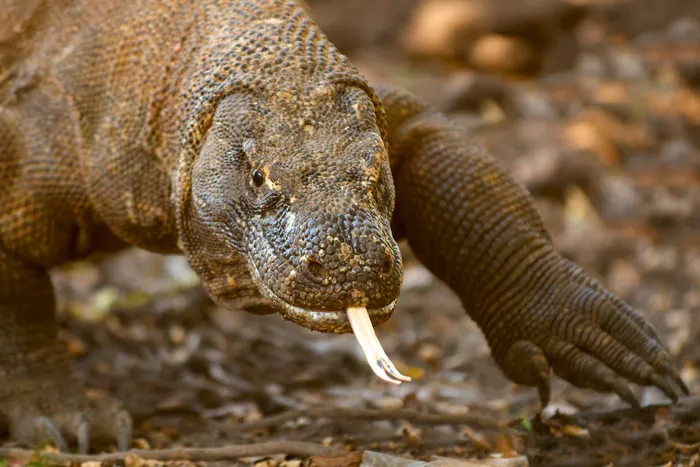
The largest living lizard, native to a small group of islands in East Nusa Tenggara. Explore its links with prey, dry habitats, and island-specific conservation.
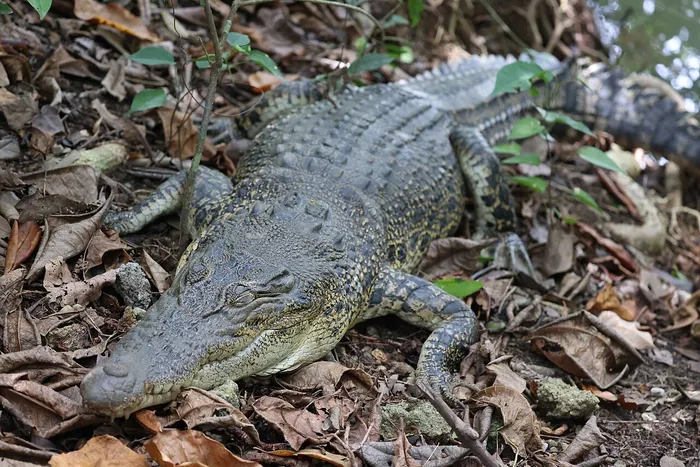
A large reptile capable of using both salt and fresh water. Understanding its habitat and respecting its space matters for community safety and conservation.
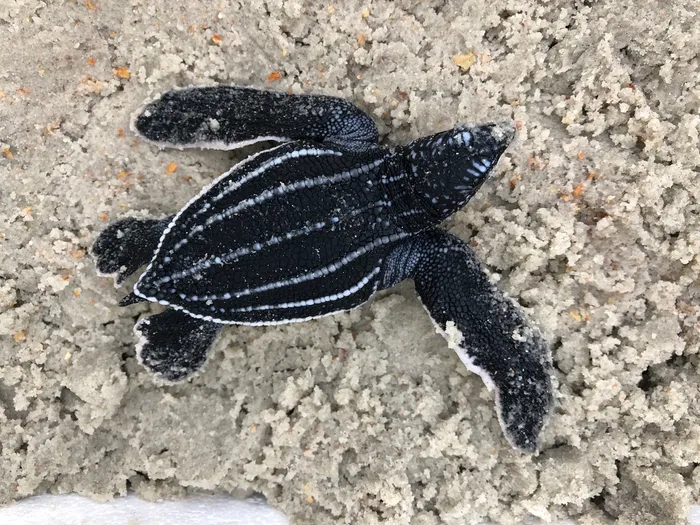
The leatherback (Dermochelys coriacea) is the world's largest turtle, with a leathery shell; in Indonesia it nests mainly in Tambrauw, Southwest Papua.
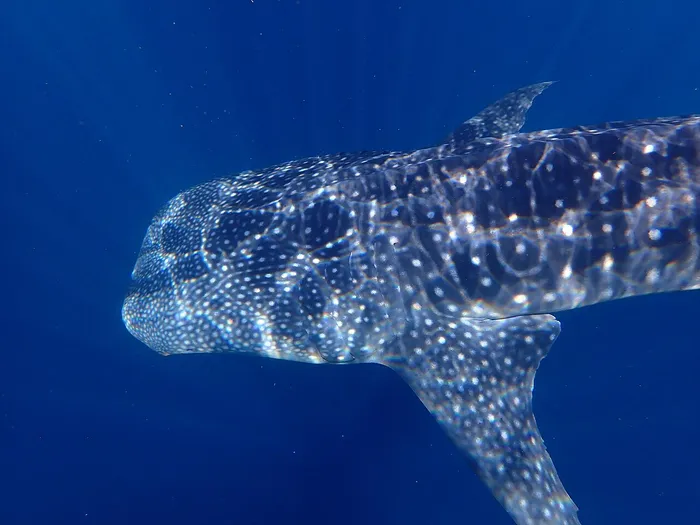
The largest living fish, with distinctive spots and filter-feeding behaviour. Its protection involves ocean movements, boats, fisheries, and tourism.
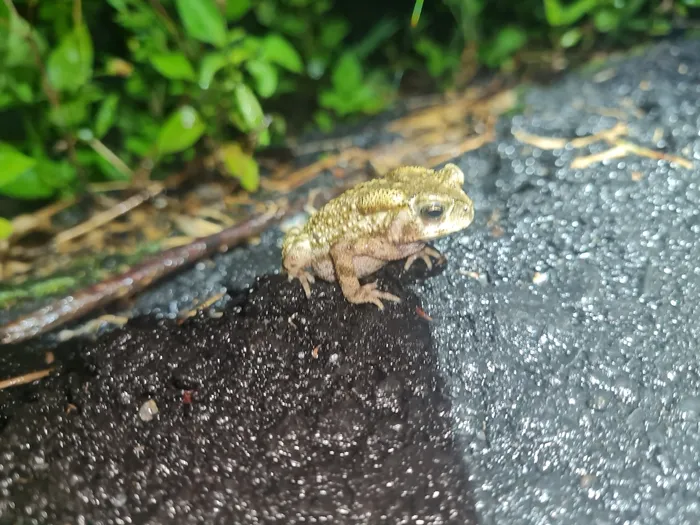
Asian Common Toad (Duttaphrynus melanostictus). Asian common toads use many human-modified habitats; genetic research suggests the name may encompass a more complex set of lineages.
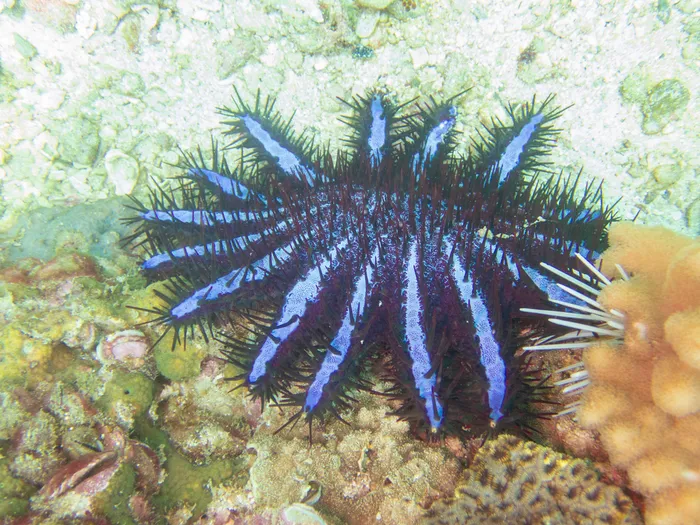
The crown-of-thorns starfish (Acanthaster) is a venomous, spiny, coral-eating starfish whose population outbreaks can devastate coral reefs.
Sources and references
- Keputusan Kepala BSKAP No. 046/H/KR/2025 ↗
- Animal Diversity Web (University of Michigan): glossary entry "endothermic", Pongo abelii account ↗
- Ilmu Pengetahuan Alam untuk SMP/MTs Kelas IX (Edisi Revisi 2025), Bab 1 ↗
- Animal Diversity Web (University of Michigan): glossary entry "ectothermic", Crocodylus porosus account ↗
- Animal Diversity Web: Felis catus (Other Physical Features) ↗
- Animal Diversity Web: Hemidactylus frenatus (Other Physical Features) ↗
- University of North Georgia, Tumbling Creek project: Reptiles & Amphibians ↗
- Rice University, OpenStax — Biology 2e, 33.3 Homeostasis ↗
- Lewicka et al. (2024), Biological Significance of the Komodo Dragon's Tail, Animals (PMC) ↗
- Ariefiandy et al. (2013), Can camera traps monitor Komodo dragons a large ectothermic predator? PLoS ONE (PMC) ↗
- KBBI VI Daring (Badan Bahasa, Kemendikdasmen): endoterm ↗
- KBBI VI Daring (Badan Bahasa, Kemendikdasmen): homoiterm ↗
- KBBI VI Daring (Badan Bahasa, Kemendikdasmen): homoiotermal ↗
- KBBI VI Daring (Badan Bahasa, Kemendikdasmen): ektoterm ↗
- KBBI VI Daring (Badan Bahasa, Kemendikdasmen): poikiloterm ↗
- Animal Diversity Web: Mammalia ↗
- Animal Diversity Web: Varanus komodoensis ↗
- Animal Diversity Web: Pteropus vampyrus ↗
- Animal Diversity Web: Helarctos malayanus (Other Physical Features) ↗
- Animal Diversity Web: Columba livia (Other Physical Features) ↗
- UC Museum of Paleontology (Berkeley): The Hall of Mammals ↗
- Animal Diversity Web: Birgus latro (Other Physical Features) ↗
- Animal Diversity Web: Orcaella brevirostris (Other Physical Features) ↗
- Animal Diversity Web: Tyto alba (Other Physical Features) ↗
- Animal Diversity Web: Dugong dugon (Other Physical Features) ↗
- Animal Diversity Web: Rhincodon typus (Other Physical Features) ↗
- Animal Diversity Web: Duttaphrynus melanostictus (Other Physical Features) ↗
- Animal Diversity Web: Acanthaster planci (Other Physical Features) ↗
- Spotila, Terpin & Dodson (1977), Mouth gaping as an effective thermoregulatory device in alligators, Nature 265 ↗
- AmphibiaWeb (UC Berkeley): Amphibian introduction ↗
- Animal Diversity Web: Aves ↗
- Animal Diversity Web: Dermochelys coriacea ↗
- NOAA Fisheries: Warm blood makes opah an agile predator ↗
- Animal Diversity Web: Zaglossus bruijni ↗
- Ono et al. (1995), Unusual thermal defence by a honeybee against mass attack by hornets, Nature 377 ↗
Checked 2026-10-02. Send a correction