Phase D · Lower secondary grade 7 · IPA
Quick answer
The lesson in brief
Symbiosis is a close, long-lasting relationship between two different kinds of living things. In mutualism both gain (clownfish and anemone), in commensalism one gains and the other is unaffected (orchid and tree), and in parasitism one gains and the other is harmed (cat flea and cat). It is taught in Indonesia's Grade 7 science book, Chapter VI.
- Symbiosis has three main types: mutualism (+/+), commensalism (+/0) and parasitism (+/−).
- Clownfish and sea anemones are mutualists: the anemone protects the fish, and the fish drives off the anemone's predators.
- Epiphytic orchids are not parasites; they grow on trees without taking nutrients from them, so they are commensals.
- Only female Aedes mosquitoes feed on blood, to produce eggs; their relationship with people is usually classed as parasitism, though ecologists call mosquitoes micropredators.
- Cattle egrets mainly eat insects disturbed by buffalo, so the pair is usually classed as commensalism; if the egret eats ticks off the buffalo's hide, it becomes mutualism.
- Symbiosis is different from predation and competition, which are also interactions between living things.
What is symbiosis?
Symbiosis is a close, long-lasting relationship between two different kinds of living things; it is divided into mutualism, commensalism and parasitism.
The Grade 7 science textbook describes symbiosis as a close relationship between populations sharing a habitat. It distinguishes parasitism, mutualism and commensalism. Focus on the effects on each participant, rather than memorising pairs of animals.
Scientists use a similar definition. Symbiosis is an intimate, long-term association between two or more organisms of different species. It can benefit both partners, only one of them, or even harm one partner.
Symbiosis is just one kind of interaction between living things. Other common interactions are competition, predation and herbivory.
To work out the type of symbiosis, ask two questions. What does the first organism gain? What happens to the second one: does it gain, lose or stay unaffected?
Evidence: Ilmu Pengetahuan Alam untuk SMP/MTs Kelas VII (Edisi Revisi), Bab VI Ekologi dan Pelestarian Lingkungan, hlm. 171 ↗ · Anemonefish use sialic acid metabolism as Trojan horse to avoid giant sea anemone stinging (BMC Biology 2025, PMC) ↗
How do mutualism, commensalism and parasitism differ?
In mutualism both partners gain; in commensalism one gains and the other is unaffected; in parasitism one gains and the other is harmed.
Mutualism is a relationship that benefits both partners. The Grade 7 science book gives butterflies and flowering plants as an example.
Commensalism benefits one partner, while the other neither gains nor loses. The book's example is an orchid growing on a tree trunk.
Parasitism benefits the organism called the parasite and harms the organism called the host. Examples are mistletoe on trees and roundworms in the human gut.
A worked example: with a cat flea and a cat, the flea gets blood (+) while the cat loses blood and can catch tapeworms (−), so the answer is parasitism. With an orchid and a tree, the orchid gets a place to grow (+) while the tree loses no nutrients (0), so the answer is commensalism.
The table uses + for a gain, − for harm and 0 for no effect. The animal pairs are explained in the next sections.
| Type | Meaning | Sign | Example pairs |
|---|---|---|---|
| Mutualism | Both partners gain | + / + | Clownfish and sea anemone; Asian honey bee and flowers; large flying fox and durian trees; knobbed hornbill and forest fruit trees |
| Commensalism | One gains, the other is unaffected | + / 0 | Orchid and tree; remora and shark; cattle egret and water buffalo |
| Parasitism | Parasite gains, host is harmed | + / − | Cat flea and cat; brown dog tick and dog; female Aedes mosquito and people; mistletoe and tree |
Evidence: Ilmu Pengetahuan Alam untuk SMP/MTs Kelas VII (Edisi Revisi), Bab VI Ekologi dan Pelestarian Lingkungan, hlm. 171–172 ↗ · Animal Diversity Web: Ctenocephalides felis (pinjal kucing) ↗ · University of Georgia Extension (Forsyth County): Amazing facts about orchids ↗ · Insects (2022), Genetic Structure of Apis cerana Populations from South Korea, Vietnam and the Russian Far East (PMC) ↗ · Insects (2024), Decline in Honeybees and Its Consequences for Beekeepers and Crop Pollination in Western Nepal (PMC) ↗ · BBKSDA Sulawesi Selatan (KSDAE, Kementerian Kehutanan): Sulawesi Hornbill (Rhyticeros cassidix) ↗
What are examples of mutualism among Indonesian animals?
Examples of mutualism include clownfish with sea anemones, flying foxes with trees they pollinate, and giant clams with symbiotic algae.
The clown anemonefish (Amphiprion ocellaris) lives in the Indo-West Pacific, including Indonesia. It lives among a sea anemone's tentacles and is protected by its stinging cells. In return, the clownfish chases away the anemone's predators.
The large flying fox (Pteropus vampyrus) eats fruit, flowers and nectar. While feeding, it spreads seeds and pollinates forest trees, including durian.
In the sea, corals live with tiny algae called zooxanthellae. The coral gives the algae a protected home plus the carbon dioxide and water they need for photosynthesis. In return, the algae supply the coral with sugars and proteins made by photosynthesis.
Giant clams work in a similar way. They get most of their food from algae living in their tissues, much as corals farm zooxanthellae.
The bluestreak cleaner wrasse (Labroides dimidiatus) waits at stations where other fish come to be cleaned. It eats parasitic crustaceans from other fish, but also their mucus. Researchers describe cleaning as a mutualism: the cleaner gets food and the client loses parasites. A bite that makes the client jolt, however, is considered cheating that breaks the mutualism.
- Large Flying-fox Pteropus vampyrus — Spreads seeds and pollinates forest trees, including durian. source ↗
- Giant clam Tridacna gigas — Gets most of its food from symbiotic algae in its tissues. source ↗
Evidence: Anemonefish use sialic acid metabolism as Trojan horse to avoid giant sea anemone stinging (BMC Biology 2025, PMC) ↗ · FishBase: Amphiprion ocellaris (clown anemonefish) ↗ · Ilmu Pengetahuan Alam untuk SMP/MTs Kelas VII (Edisi Revisi), Bab VI Ekologi dan Pelestarian Lingkungan, hlm. 171–172 ↗ · Animal Diversity Web: Pteropus vampyrus (kalong besar) ↗ · NOAA National Ocean Service, Corals tutorial: What is zooxanthellae? ↗ · Animal Diversity Web: Tridacna gigas (kima raksasa) ↗ · FishBase: Labroides dimidiatus (bluestreak cleaner wrasse) ↗ · Biology Letters (2024), Neural mechanisms of mutualistic fish cleaning behaviour: a study in the wild (PMC) ↗
What are examples of commensalism?
Examples of commensalism are orchids growing on trees, remoras riding on sharks, and cattle egrets feeding beside water buffalo.
Epiphytic orchids use trees as a place to grow. The Grade 7 textbook uses an orchid on a tree trunk as an example of commensalism. In this model, the orchid gains a growing place while the tree receives neither the benefit nor harm under discussion. Epiphytes draw nourishment from rotting leaves caught in branch angles, not from the host tree.
A classic example of commensalism is a remora riding on a shark while the shark gets nothing. Remoras attach for a while to sharks, rays, large fish, sea turtles, whales and dolphins. They eat small fish and scraps of their host's prey.
Remoras also eat parasites on their host's body. So the shark sometimes benefits too, which makes the relationship close to mutualism.
Cattle egrets often follow livestock and buffalo as they graze. Their main prey is insects disturbed by the host's footsteps. This way an egret can get up to 50% more food for less effort. When the egret only feeds near the buffalo, the buffalo is unaffected, so the relationship is commensalism. If the egret eats ticks off the buffalo's hide, it becomes mutualism.
- Domestic Water Buffalo Bubalus bubalis — A grazer followed by insect-eating cattle egrets. source ↗
Evidence: Kemendikbudristek — IPA Kelas VII (Edisi Revisi 2023), hlm. 172 ↗ · University of Georgia Extension (Forsyth County): Amazing facts about orchids ↗ · NOAA Office of Education, Podcast: NOAA and the Octonauts, Episode 6: The Crab and the Urchin ↗ · FishBase: Echeneis naucrates (live sharksucker, a remora) ↗ · Animal Diversity Web: Bubulcus ibis (kuntul kerbau) ↗ · CSIR-NIScPR Science Reporter (June 2019): Cattle Egret and Grazer – Story of their Relationship ↗
What are examples of parasitism in animals?
Examples of parasitism are fleas and ticks that suck blood from cats or dogs, female Aedes mosquitoes that bite people, mistletoe on trees, and roundworms.
The cat flea (Ctenocephalides felis) is an external parasite whose main host is the cat, but it also attacks dogs. It is an intermediate host of the most common tapeworm that infects cats and dogs.
Adult fleas suck blood, while their larvae eat adult flea droppings and organic debris in the surroundings. When other hosts are missing, cat fleas are known to bite people.
The brown dog tick (Rhipicephalus sanguineus) has been found in much of the world. Each life stage takes one blood meal from a host and then drops off. In kennels and homes its numbers can grow very large and cause diseases in dogs.
If a cat or dog at home keeps scratching, ask an adult to take advice from a vet.
Male and female Aedes aegypti mosquitoes feed on plant nectar. Females also feed on blood, mainly human blood, to produce eggs. This mosquito can spread dengue and chikungunya viruses. It depends heavily on stored water for breeding.
The relationship between female mosquitoes and people is usually classed as parasitism: the mosquito gets blood for its eggs, while people are harmed because they can catch diseases. However, mosquitoes do not live on their hosts. Ecologists call them micropredators: animals that take small, non-lethal meals from many victims.
Parasites also live on plants and inside bodies. Mistletoe grows on trees, and roundworms live inside the human gut.
- Domestic cat Felis catus — The main host of the cat flea. source ↗
- Domestic dog Canis lupus familiaris — Host of the brown dog tick and the cat flea. source ↗
- Yellow fever mosquito Aedes aegypti — Females feed on human blood to produce eggs. source ↗
Evidence: Animal Diversity Web: Ctenocephalides felis (pinjal kucing) ↗ · UF/IFAS EDIS: Brown dog tick, Rhipicephalus sanguineus (EENY-221) ↗ · UF/IFAS Ask IFAS: EENY-221/IN378 Brown dog tick, Rhipicephalus sanguineus ↗ · UF/IFAS EDIS (2020): Brown dog tick, Rhipicephalus sanguineus (EENY-221) ↗ · UF/IFAS Featured Creatures: Yellow fever mosquito, Aedes aegypti (IN792) ↗ · Lafferty & Kuris (2002), Trends in Ecology & Evolution: Trophic strategies, animal diversity and body size (UC Santa Barbara) ↗ · Ilmu Pengetahuan Alam untuk SMP/MTs Kelas VII (Edisi Revisi), Bab VI Ekologi dan Pelestarian Lingkungan, hlm. 171–172 ↗
Are water buffalo and mynas an example of mutualism?
Not necessarily: buffalo and mynas are often given as an example of mutualism, but we have not found research measuring any benefit to the buffalo in Indonesia.
The usual reason given is that mynas eat ticks on the buffalo. If the birds really reduce the buffalo's parasites, the relationship is mutualism. If they only ride along or catch insects nearby, it is commensalism.
The well-documented case is the cattle egret and grazing animals. Cattle egrets often perch on these animals' backs, so they are often wrongly grouped with tick-eating birds.
In fact, a cattle egret's main prey is insects disturbed when its host grazes. So the cattle egret and water buffalo pair is usually classed as commensalism. It becomes mutualism when the egret eats ticks off the buffalo's hide.
For test questions, follow the steps: decide who gains and what happens to the other partner. If the question says both partners gain, the answer is mutualism.
- Domestic Water Buffalo Bubalus bubalis — A grazer that cattle egrets often follow. source ↗
Evidence: Animal Diversity Web: Bubulcus ibis (kuntul kerbau) ↗ · Ilmu Pengetahuan Alam untuk SMP/MTs Kelas VII (Edisi Revisi), Bab VI Ekologi dan Pelestarian Lingkungan, hlm. 171–172 ↗ · CSIR-NIScPR Science Reporter (June 2019): Cattle Egret and Grazer – Story of their Relationship ↗
How do symbiosis, predation, competition and herbivory differ?
Symbiosis is a close association, predation involves eating prey, competition concerns shared resources, and herbivory links plant-eating animals with producers.
Competition happens between living things in the same habitat that need the same limited resources, such as plants competing for light, nutrients and water.
Predation is when one living thing hunts and eats another, such as a bird eating a grasshopper. The predator gains and the prey loses, but they do not live together like a parasite and its host.
Herbivory is the interaction between a plant-eater and a producer, such as a grasshopper eating grass. This is not symbiosis either.
Use terms according to the evidence in the example. Benefit and harm symbols help compare relationships, but do not by themselves establish a close, lasting association. Animal names alone cannot determine the interaction.
Common misconceptions
Belief: Clownfish and sea anemones are commensals because only the clownfish benefits.
The fact: It is a prime example of mutualism. The anemone protects the clownfish, and the clownfish drives off the anemone's predators. source ↗
Belief: Orchids growing on trees are parasites.
The fact: The Grade 7 science textbook uses an orchid on a tree trunk as an example of commensalism, rather than parasitism. source ↗
Belief: All mosquitoes suck blood.
The fact: Male and female Aedes mosquitoes drink nectar. Only females also take blood, to produce eggs. source ↗
Belief: White birds perching on buffalo must be eating the buffalo's ticks.
The fact: Cattle egrets are often wrongly grouped with tick-eating birds. Their main prey is insects disturbed by grazing animals. source ↗
Belief: Symbiosis always means both partners benefit.
The fact: Symbiosis can benefit both partners, only one, or harm one. Only mutualism benefits both. source ↗
Practice questions with answers
Choose your answer, then open “Show answer” to check it.
A relationship in which both organisms benefit is called ....
Show answer
Answer: C. mutualism. Mutualism benefits both partners, such as butterflies and flowering plants.
The relationship between clownfish and sea anemones is ....
Show answer
Answer: A. mutualism. The anemone protects the clownfish, and the clownfish drives off the anemone's predators. Both gain.
An orchid growing on a mango tree is an example of ....
Show answer
Answer: D. commensalism, because the orchid gains and the tree is not harmed. Epiphytic orchids take no nutrients directly from the tree, so this is commensalism.
Why do female Aedes mosquitoes feed on human blood?
Show answer
Answer: B. to produce eggs. Females take blood to produce eggs. Both males and females drink nectar.
Fleas living on a cat and sucking its blood are an example of ....
Show answer
Answer: C. parasitism. The flea gains blood while the cat is harmed. Fleas can also pass on tapeworms.
A remora rides on a shark and eats scraps of the shark's prey. This is usually classed as ....
Show answer
Answer: A. commensalism. The remora gains and the shark is usually unaffected. Because remoras also eat the shark's parasites, it can come close to mutualism.
Large flying foxes obtain food from durian flowers and help pollinate them. This bat–durian relationship is ....
Show answer
Answer: B. mutualism. The bat receives food and the tree benefits from pollination. Both partners gain.
Cattle egrets eat insects disturbed by a buffalo's steps. The buffalo neither gains nor loses. This is called ....
Show answer
Answer: D. commensalism. One partner gains and the other is unaffected: that is commensalism.
A bird eating a grasshopper is an example of ....
Show answer
Answer: A. predation. Predation is when one organism hunts and eats another. It is not symbiosis because they do not live together.
Giant clams get most of their food from zooxanthellae algae in their tissues, while the algae get a home. This is ....
Show answer
Answer: C. mutualism. Both partners gain, like corals and zooxanthellae.
For teachers: learning objectives and activities
Learning objectives
- Students can explain what symbiosis is and its three types.
- Students can classify pairs of organisms as mutualism, commensalism or parasitism using gain and harm.
- Students can give examples of symbiosis involving Indonesian animals.
- Students can tell symbiosis apart from predation and competition.
Classroom activity ideas (about 70 minutes)
- Pair cards: groups get 12 picture cards of paired organisms, stick them in +/+, +/0 or +/− columns and explain why.
- Ground-level observation: students look at plants growing on school trees, such as orchids or ferns, without climbing or removing them, then draw them and decide the relationship.
- Short debate: groups discuss whether remoras and sharks are better called commensalism or mutualism, using evidence from the reading.
- Who gains quiz: the teacher reads out a pair, and students raise +, 0 or − cards for each partner.
Materials: Picture cards of paired organisms, A poster with three columns: +/+, +/0, +/−, +, 0 and − cards, The symbiosis worksheet.
Curriculum and textbook links
- Phase D · Lower secondary grade 7 · IPA. In line with the Phase D learning outcomes (BSKAP decree 046/H/KR/2025) on interactions between organisms; covered in the Grade 7 science book (revised edition), Chapter VI Ecology and Environmental Conservation. Keputusan Kepala BSKAP Kemendikdasmen No. 046/H/KR/2025 tentang Capaian Pembelajaran, CP IPA Fase D ↗
May be printed and copied for non-commercial teaching, crediting PanduanHewan.org.
Common questions
How many types of symbiosis are there?
The Grade 7 science textbook discusses three types: mutualism, commensalism and parasitism, distinguished by their effects on the two partners.
What type of symbiosis are clownfish and sea anemones?
Mutualism. The anemone protects the clownfish, and the clownfish drives off the anemone's predators.
What type of symbiosis are mosquitoes and people?
Usually parasitism. Female Aedes mosquitoes take human blood to produce eggs, while people are harmed because they can catch dengue or chikungunya. Because a mosquito takes a small meal and leaves, ecologists call it a micropredator.
What is the relationship between butterflies and flowering plants?
The Grade 7 science textbook uses this pair as an example of mutualism, in which both partners benefit.
Are buffalo and mynas mutualists?
Not necessarily. We have not found research measuring a benefit to the buffalo. The well-documented cattle egret mainly eats insects disturbed by buffalo, so it is usually classed as commensalism; if the egret eats ticks off the buffalo's hide, it becomes mutualism.
Is predation the same as symbiosis?
No. Predation is a feeding relationship, while symbiosis concerns close associations between organisms. A bird eating a grasshopper is an example of predation.
Animals in this lesson
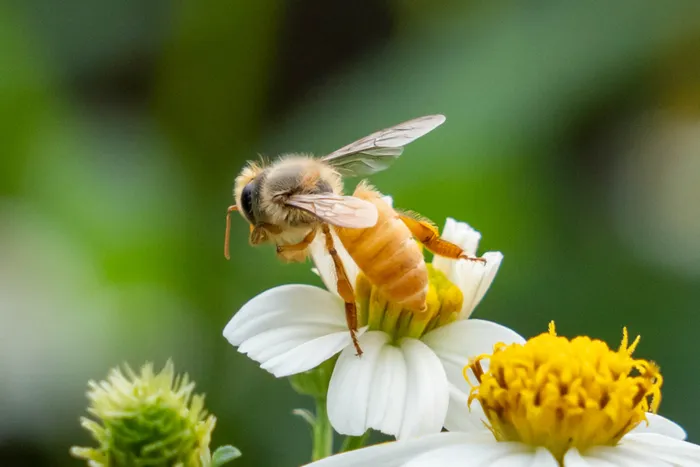
The Asian honey bee (Apis cerana) is a native Indonesian honey bee that nests in cavities, pollinates plants and is kept for honey.
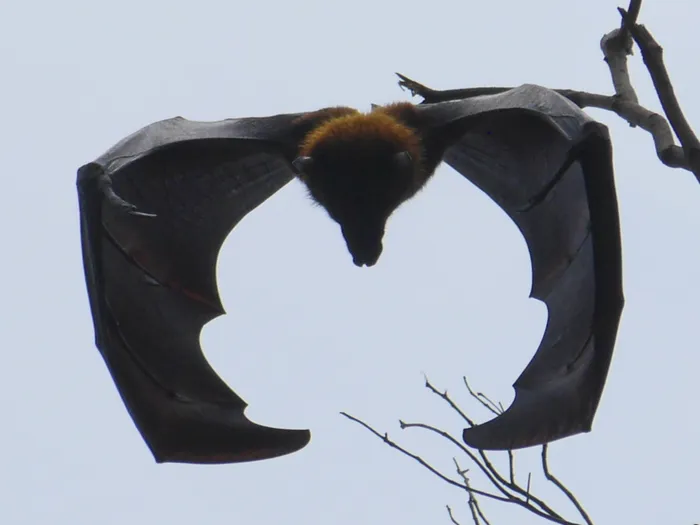
Large Flying-fox (Pteropus vampyrus). The large flying fox is a Southeast Asian fruit bat; its size and fruit-feeding ecology differ from many smaller insect-eating bats.
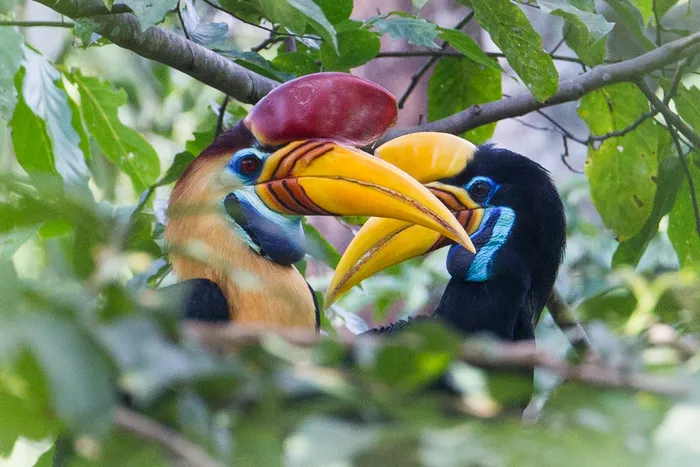
The knobbed hornbill (Rhyticeros cassidix) is a large fig-eating hornbill endemic to Sulawesi, with a red casque, and South Sulawesi's identity animal.
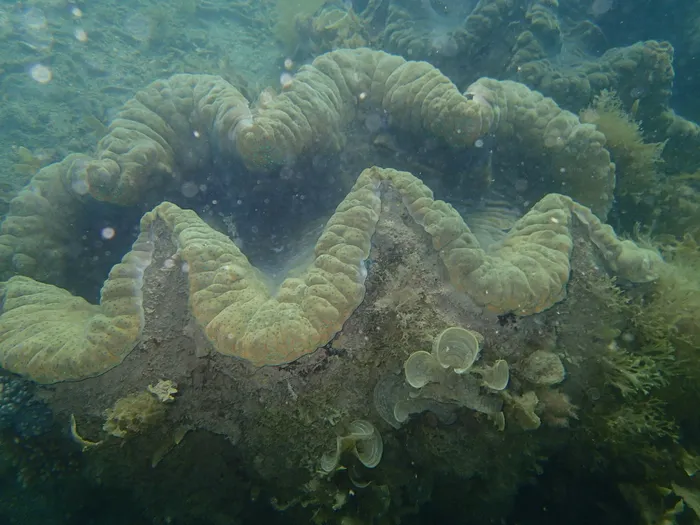
The giant clam (Tridacna gigas) is the world's largest bivalve, living on shallow coral reefs; it is now very rare across most of Indonesia.
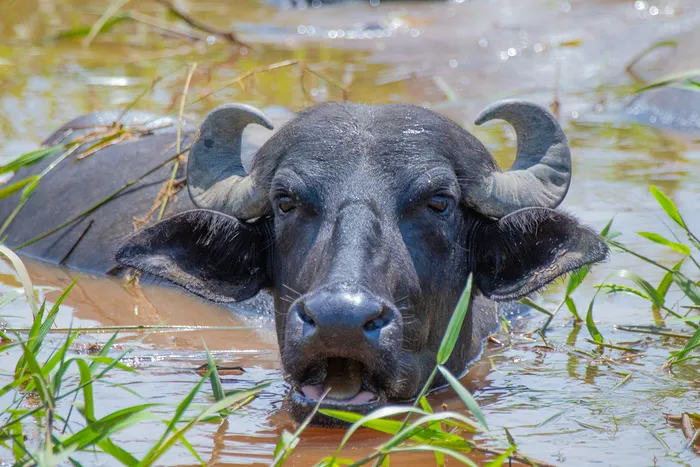
Domestic Water Buffalo (Bubalus bubalis). Water buffalo are domesticated bovids with a long Asian husbandry history; Indonesian records should not be mapped as an original wild-buffalo range.
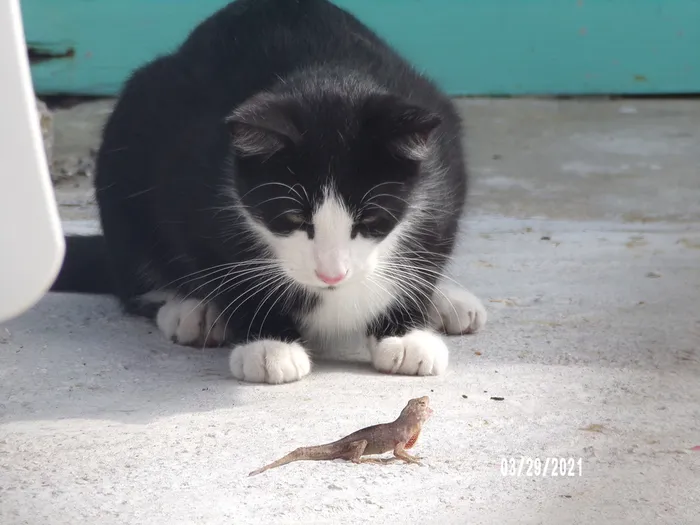
Understand cats at home and in your neighbourhood: safe spaces, suitable food, natural behaviour, and a lifelong responsibility for their care.
Sources and references
- Keputusan Kepala BSKAP Kemendikdasmen No. 046/H/KR/2025 tentang Capaian Pembelajaran, CP IPA Fase D ↗
- Kemendikbudristek — IPA Kelas VII, Edisi Revisi 2023, hlm. 172 ↗
- Anemonefish use sialic acid metabolism as Trojan horse to avoid giant sea anemone stinging (BMC Biology 2025, PMC) ↗
- Animal Diversity Web: Ctenocephalides felis (pinjal kucing) ↗
- University of Georgia Extension (Forsyth County): Amazing facts about orchids ↗
- Insects (2022), Genetic Structure of Apis cerana Populations from South Korea, Vietnam and the Russian Far East (PMC) ↗
- Insects (2024), Decline in Honeybees and Its Consequences for Beekeepers and Crop Pollination in Western Nepal (PMC) ↗
- BBKSDA Sulawesi Selatan (KSDAE, Kementerian Kehutanan): Sulawesi Hornbill (Rhyticeros cassidix) ↗
- FishBase: Amphiprion ocellaris (clown anemonefish) ↗
- Animal Diversity Web: Pteropus vampyrus (kalong besar) ↗
- NOAA National Ocean Service, Corals tutorial: What is zooxanthellae? ↗
- Animal Diversity Web: Tridacna gigas (kima raksasa) ↗
- FishBase: Labroides dimidiatus (bluestreak cleaner wrasse) ↗
- Biology Letters (2024), Neural mechanisms of mutualistic fish cleaning behaviour: a study in the wild (PMC) ↗
- NOAA Office of Education, Podcast: NOAA and the Octonauts, Episode 6: The Crab and the Urchin ↗
- FishBase: Echeneis naucrates (live sharksucker, a remora) ↗
- Animal Diversity Web: Bubulcus ibis (kuntul kerbau) ↗
- CSIR-NIScPR Science Reporter (June 2019): Cattle Egret and Grazer – Story of their Relationship ↗
- UF/IFAS EDIS: Brown dog tick, Rhipicephalus sanguineus (EENY-221) ↗
- UF/IFAS Ask IFAS: EENY-221/IN378 Brown dog tick, Rhipicephalus sanguineus ↗
- UF/IFAS EDIS (2020): Brown dog tick, Rhipicephalus sanguineus (EENY-221) ↗
- UF/IFAS Featured Creatures: Yellow fever mosquito, Aedes aegypti (IN792) ↗
- Lafferty & Kuris (2002), Trends in Ecology & Evolution: Trophic strategies, animal diversity and body size (UC Santa Barbara) ↗
Checked 2026-10-02. Send a correction