Quick answer
IUCN status: Least ConcernAsian Common Toad at a glance
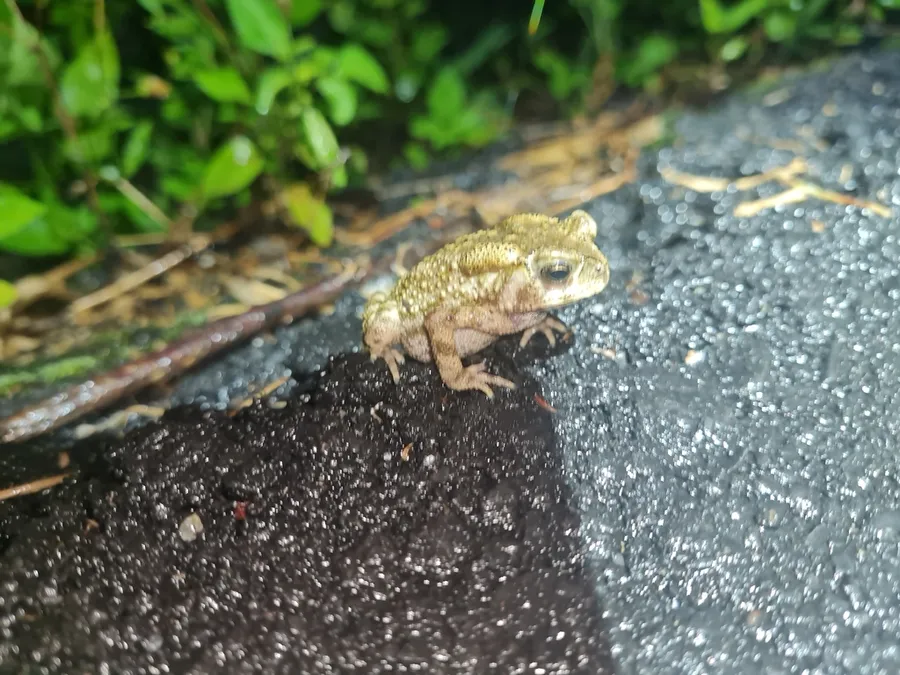
The Asian Common Toad (Duttaphrynus melanostictus) is an amphibian in the family Bufonidae. In Indonesia, observation records come mainly from West Java, Bali, Central Java. Diet: insect-eater (insectivore); a carnivore. IUCN Red List status: Least Concern.
| Scientific name | Duttaphrynus melanostictus |
|---|---|
| Former scientific name | Bufo melanostictus |
| Indonesian name | Bangkong Kolong |
| Group | Amphibians |
| Family | Bufonidae |
| Observation records | West Java, Bali, Central Java |
| Taxonomic group | Anura |
| GBIF records | 3,732 human-observation records, 2016–2026 |
| Data retrieved | 2026-09-23 |
| IUCN status | Least Concern · IUCN Red List (via GBIF) · checked 1 October 2026 |
| Diet type | Carnivore (meat-eater) — insect-eater (insectivore) · Animal Diversity Web |
| Reproduction | Laying eggs (oviparous) · Animal Diversity Web |
| Venom or poison | Poisonous (toxins in its skin or body, not injected) · Dufresnes et al. 2025, Speciation and historical invasions of the Asian black-spined toad (Duttaphrynus melanostictus) (Nat Commun) |
| Active | Nocturnal (active at night) — Juveniles are sometimes active on sunny days. · Duttaphrynus melanostictus (Asian common toad) - Animal Diversity Web, University of Michigan Museum of Zoology |
In this guide (12)
What is the Asian Common Toad?
Asian Common Toad refers to Duttaphrynus melanostictus, in the genus Duttaphrynus, family Bufonidae, and order Anura. The scientific name follows the accepted taxon in the GBIF Backbone Taxonomy. Common names can vary between places; the scientific name distinguishes this species from relatives.
What is known about the Asian Common Toad?
Asian common toads use many human-modified habitats; genetic research suggests the name may encompass a more complex set of lineages.
Read that fact alongside the scientific name and species source, not as proof from an unclear photograph. Populations, ages and taxonomic limits can differ; when identification is uncertain, record the broader group.
Evidence: Species account — background reading ↗
How many Indonesian records name the Asian Common Toad?
When checked on 2026-09-23, the GBIF search returned 3,732 human-observation records from Indonesia under this species name for 2016–2026. That is a count of indexed records, not an estimate of population, abundance or unique individuals. Observation effort can vary by location, and the count may change as records are added or identifications revised.
Evidence: GBIF occurrence search — Indonesia, human observations, 2016–2026 ↗
Where were observations reported?
Place labels appearing in the results include West Java, Bali, Central Java. They are labels attached to records, not a complete range map or evidence that the species occurs only there. Some labels may be broad or inconsistent. Check the underlying records before using the location information for field decisions.
Evidence: GBIF occurrence search — Indonesia, human observations, 2016–2026 ↗
How can you observe the Asian Common Toad?
Observe in place without moving eggs, tadpoles or frogs. Images of the body and habitat, together with date and calls, can help specialists assess an identification; common names do not establish handling safety. A well-documented sighting helps others check the identification without turning one encounter into a conservation-status claim.
Explore related animals
To explore this group further, compare Asian Common Toad with River Toad, Common Southeast Asian Tree Frog, Schlegel's Frog. These links reflect a shared genus, family, order, class or catalogue group; taxonomic proximity does not imply identical habitat needs or conservation status.
Scientific classification of the Asian Common Toad
| Kingdom | Animalia |
|---|---|
| Phylum | Chordata |
| Class | Amphibia |
| Order | Anura |
| Family | Bufonidae |
| Genus | Duttaphrynus |
| Species | Duttaphrynus melanostictus |
Source: GBIF Backbone Taxonomy, adjusted to the ranks commonly used in school biology (for example class Reptilia).
Common questions about the Asian Common Toad
What is the scientific name of the Asian Common Toad?
The scientific name of the Asian Common Toad is Duttaphrynus melanostictus, in the family Bufonidae and the order Anura. In Indonesian it is called Bangkong Kolong. A former scientific name still often used: Bufo melanostictus.
What kind of animal is the Asian Common Toad?
The Asian Common Toad is an amphibian in the family Bufonidae. By diet it is a carnivore (meat-eater): a insect-eater (insectivore).
Where does the Asian Common Toad live in Indonesia?
Observation records of the Asian Common Toad summarised in this guide mainly come from West Java, Bali, Central Java. That list is not a complete range map.
What does the Asian Common Toad eat?
The Asian Common Toad is a insect-eater (insectivore). That makes it a carnivore (meat-eater). Source: Animal Diversity Web.
How does the Asian Common Toad reproduce?
The Asian Common Toad reproduces by laying eggs (oviparous). Source: Animal Diversity Web.
Is the Asian Common Toad poisonous?
Yes. The Asian Common Toad is poisonous (toxins in its skin or body, not injected). Not venomous, but its skin glands contain heart toxins; eating its skin is suspected to have caused serious illness and death. Source: Dufresnes et al. 2025, Speciation and historical invasions of the Asian black-spined toad (Duttaphrynus melanostictus) (Nat Commun).
Do not catch, handle or disturb wild animals. If bitten, stung or exposed to its toxins, go to the nearest health facility straight away.
Is the Asian Common Toad nocturnal?
The cited source records the Asian Common Toad as nocturnal (active at night). Juveniles are sometimes active on sunny days. Source: Duttaphrynus melanostictus (Asian common toad) - Animal Diversity Web, University of Michigan Museum of Zoology.
See also the list of nocturnal and diurnal animals in Indonesia.
What is the scientific classification of the Asian Common Toad?
Scientific classification of the Asian Common Toad: kingdom Animalia, phylum Chordata, class Amphibia, order Anura, family Bufonidae, genus Duttaphrynus, species Duttaphrynus melanostictus.
Source: GBIF Backbone Taxonomy, adjusted to the ranks commonly used in school biology.
Is the Asian Common Toad endangered?
No, according to the global IUCN assessment. On the IUCN Red List, the Asian Common Toad is listed as Least Concern: it does not qualify for a threatened category or for Near Threatened in the global assessment. Source: IUCN Red List (via GBIF), checked 1 October 2026.
This global category is separate from legal protection in Indonesia. To check whether the Asian Common Toad is a protected species, consult the current national list of protected species or contact the local BKSDA (natural resources conservation office).
Compare with similar animals
Sources & references
- GBIF Backbone Taxonomy — accepted taxon ↗
- GBIF occurrence search — Indonesia, human observations, 2016–2026 ↗
- iNaturalist — exact species taxon and community observations ↗
- Species account — background reading ↗
- Animal Diversity Web ↗
- Dufresnes et al. 2025, Speciation and historical invasions of the Asian black-spined toad (Duttaphrynus melanostictus) (Nat Commun) ↗
- GBIF Backbone Taxonomy (GBIF) ↗
- IUCN Red List of Threatened Species, version 2026-1, via GBIF (CC BY 4.0) ↗
References can change. Check dates and context in the original source. How we use sources and data →
Cite this page
Credit PanduanHewan when referring to this page. Check the original evidence sources before reusing a claim.
PanduanHewan. Asian Common Toad (Duttaphrynus melanostictus). Last substantive update: 1 October 2026. https://panduanhewan.org/en/species/duttaphrynus-melanostictus/