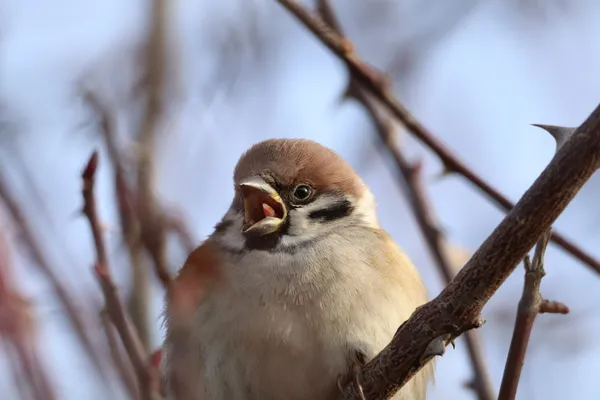
Eurasian tree sparrow
Passer montanus · Burung gereja
Features: Chestnut crown; black spot on white cheek
Active: diurnal (active by day)
PANDUANHEWAN · INDONESIA
An illustrated guide to the birds most often seen in gardens, parks and towns in Indonesia: features, size and active time, from sourced data.
These birds are often seen in gardens, parks, rice fields and towns in Indonesia. Compare their size, colours and active times, then open each bird’s page for full features and sources.
Passer montanus · Burung gereja
Features: Chestnut crown; black spot on white cheek
Active: diurnal (active by day)
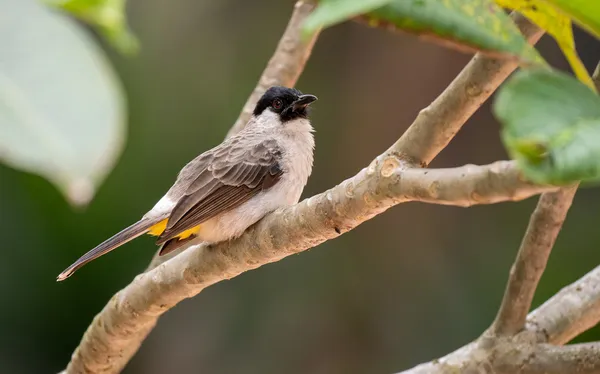
Pycnonotus goiavier · Merbah cerucuk
Features: Yellow vent; dark line near eye
Active: diurnal (active by day)
Pycnonotus aurigaster · Kutilang
Features: Black head and crest, white rump, orange-red vent
Size: About 19–21 cm
Active: diurnal (active by day)
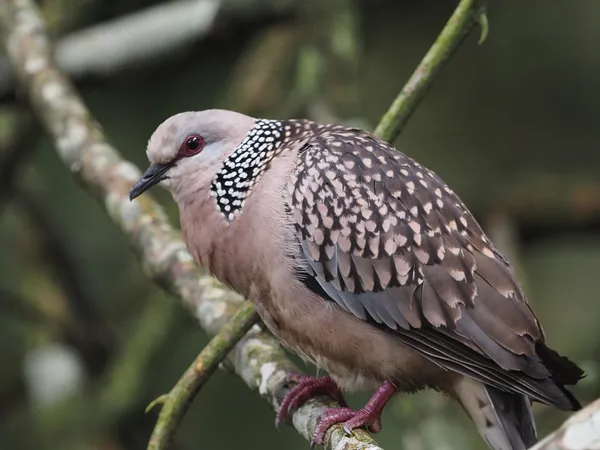
Spilopelia chinensis · Burung tekukur
Features: White spots on black nape patch
Active: diurnal (active by day)
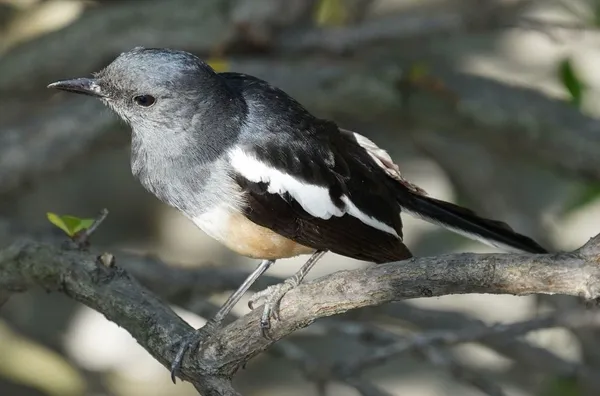
Copsychus saularis · Kacer
Features: Black-and-white male with a broad white wing stripe
Size: About 19–21 cm
Active: diurnal (active by day)
Todiramphus chloris · Cekakak sungai
Features: Blue-green upperparts and white collar
Active: diurnal (active by day)
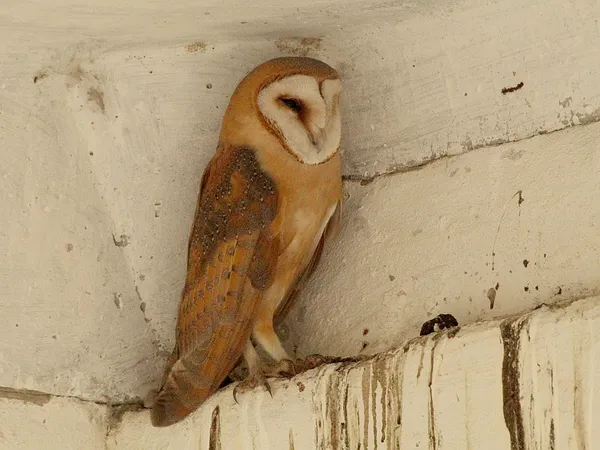
Tyto alba · Serak Jawa
Features: White heart-shaped face; active at night
Active: nocturnal (active at night)
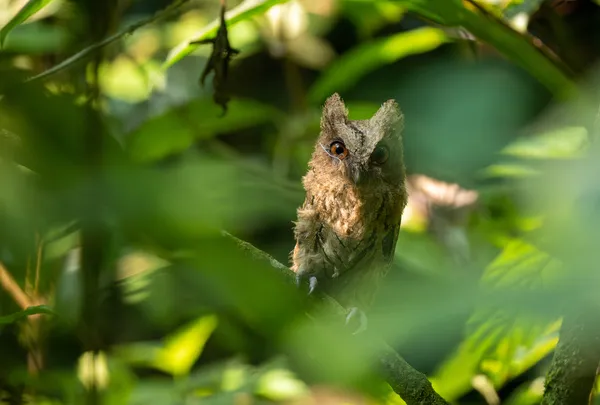
Otus lempiji · Celepuk reban
Features: Short ear tufts and a pale brown collar
Active: nocturnal (active at night)
Features, size, active time and venom status come from each animal’s page and its sources. Photos are from iNaturalist and Wikimedia Commons contributors; licences are on the photo credits page. Photo credits