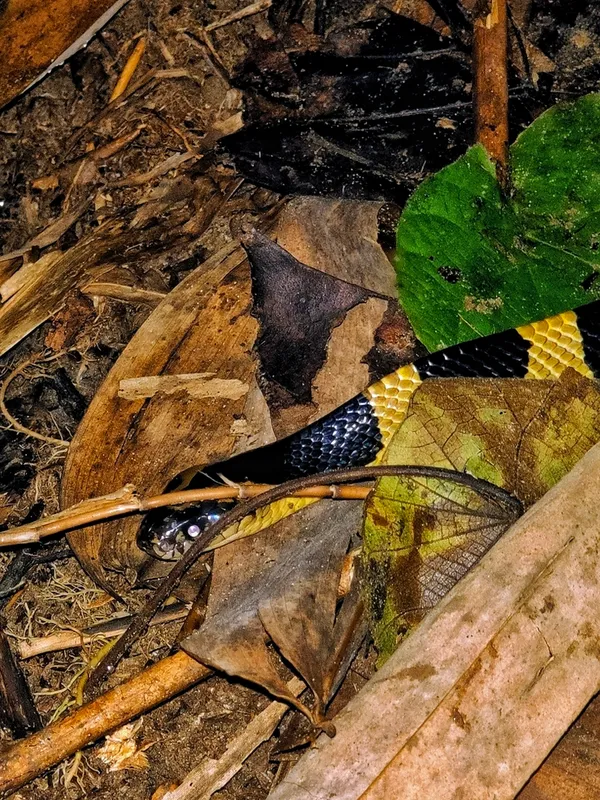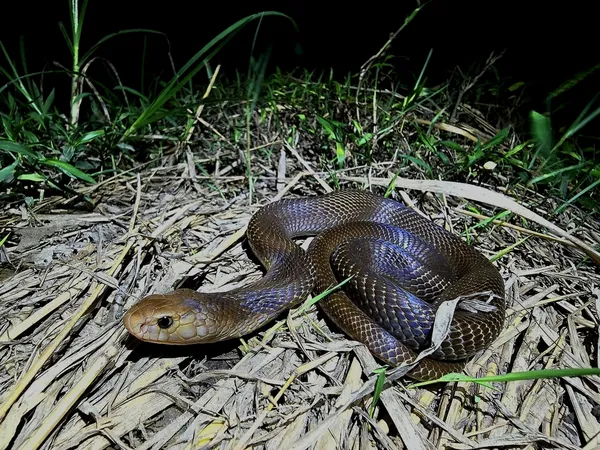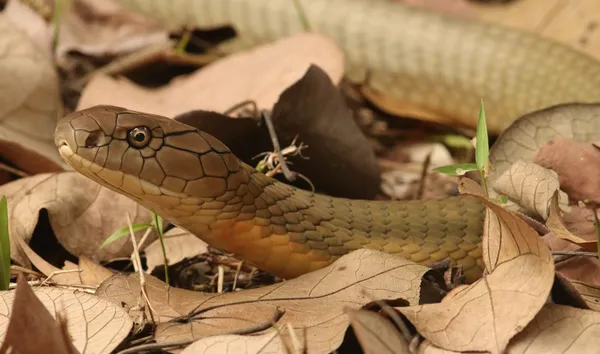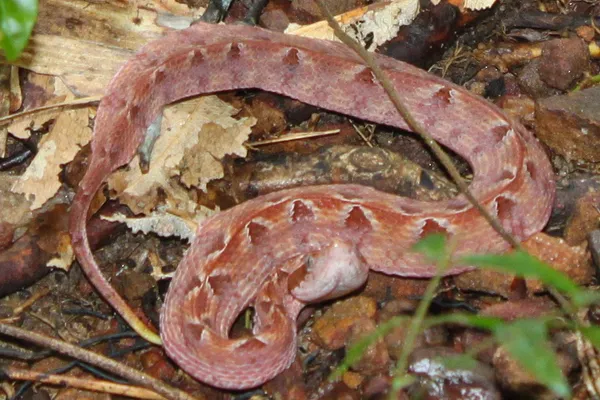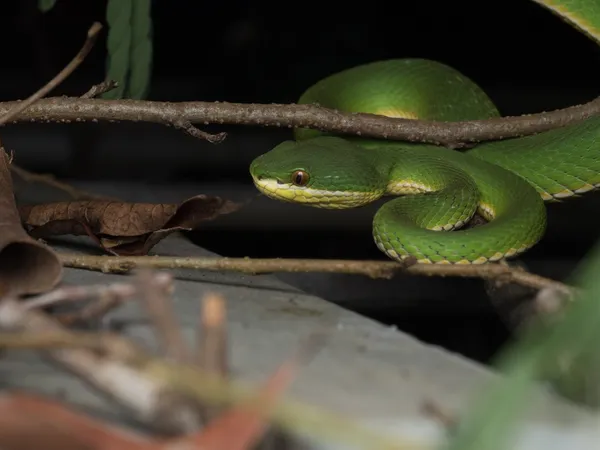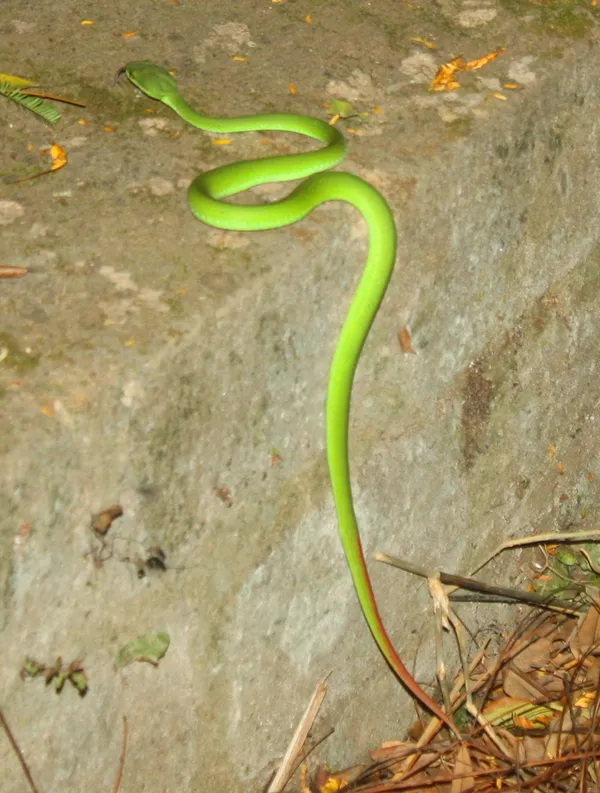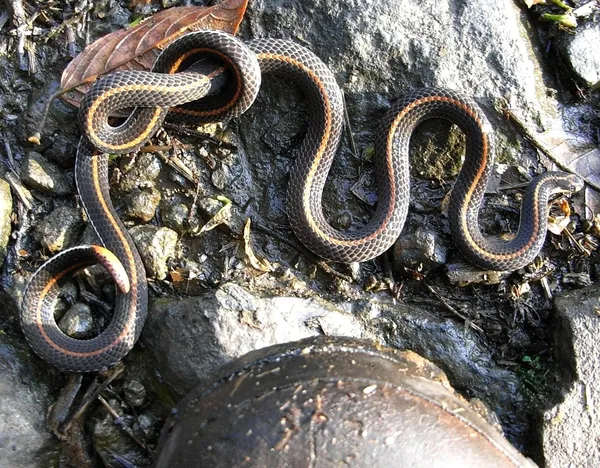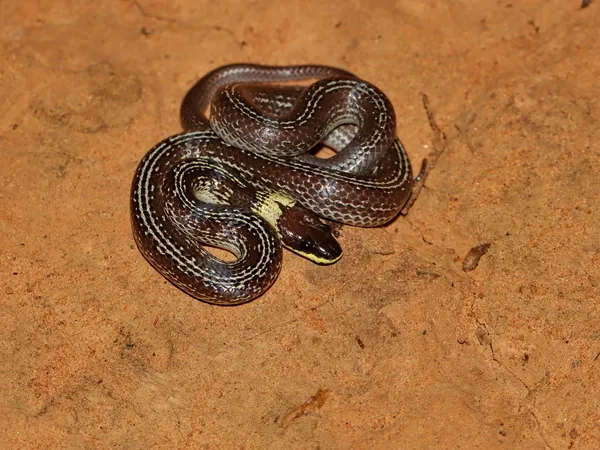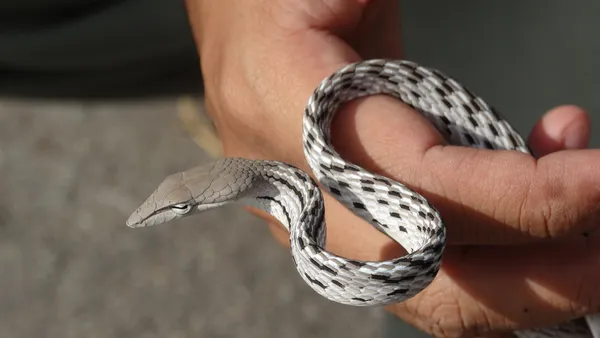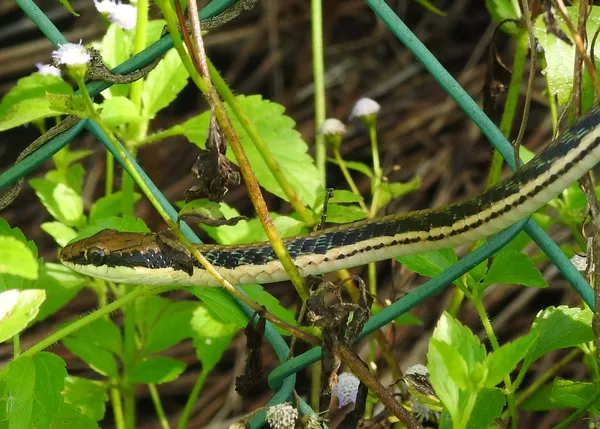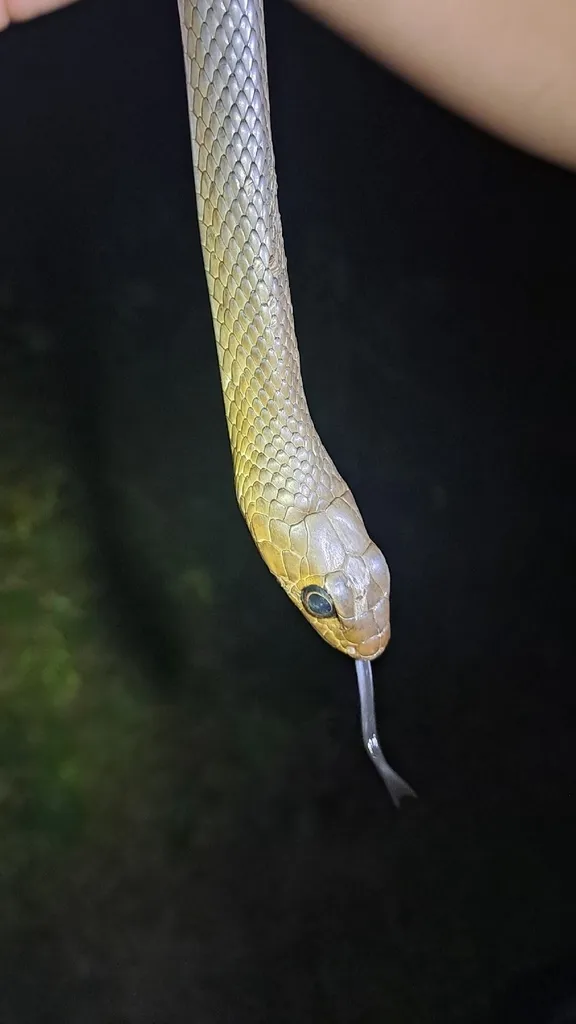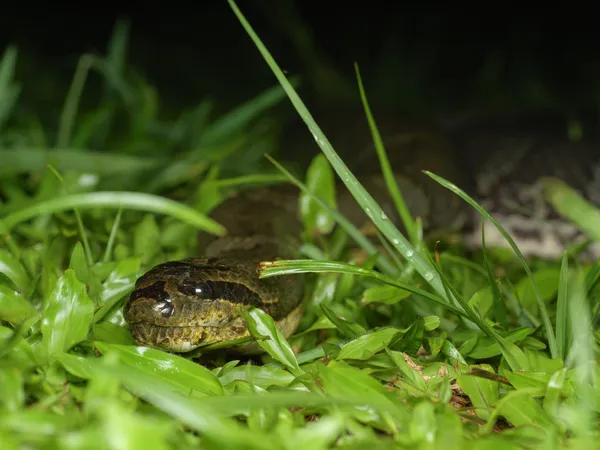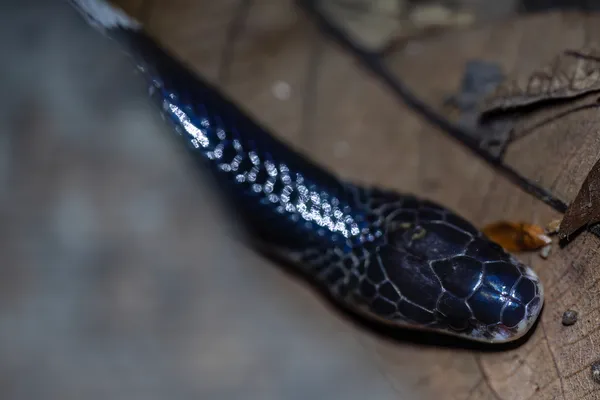
Malayan krait
Bungarus candidus · Ular weling
Features: Black and white bands on back; plain white belly
Active: nocturnal (active at night)
PANDUANHEWAN · INDONESIA
Snakes often found near homes in Indonesia, which are venomous according to official sources, and why every snake should be avoided. Not a guide to catching snakes.
These snakes are recorded around homes in Indonesia. Each species’ venom status comes from official sources, but this guide is not meant to decide whether a particular snake is safe.
Bungarus candidus · Ular weling
Features: Black and white bands on back; plain white belly
Active: nocturnal (active at night)
Bungarus fasciatus · Ular welang
Features: Bands ring the belly; triangular body cross-section
Size: Up to 225 cm
Active: nocturnal (active at night)
Naja sputatrix · Ular kobra Jawa
Features: Spoon-shaped hood; can spray venom
Size: Average 130 cm, up to 180 cm
Active: cathemeral (active irregularly by day and night)
Ophiophagus bungarus · King kobra
Features: Adults mostly plain brown; juveniles with 57–87 pale bands
Active: diurnal (active by day)
Calloselasma rhodostoma · Ular tanah
Features: Triangular head; dark triangular blotches along each side
Size: Females about 100 cm, males about 75 cm
Active: nocturnal (active at night)
Trimeresurus albolabris · Ular Bangkai Laut (Trimeresurus albolabris)
Active: nocturnal (active at night)
Trimeresurus insularis · Ular Bangkai Laut (Trimeresurus insularis)
Active: nocturnal (active at night)
Calliophis intestinalis · Ular cabai kecil
venomous · Clinical Toxinology Resources (WCH / Univ. of Adelaide): Calliophis intestinalis (archived copy) ↗
Features: Red-orange back stripe, red tail, black-and-white belly
Size: Up to about 50 cm
Active: nocturnal (active at night)
Lycodon capucinus · Ular Cicak
not venomous · WHO Regional Office for South-East Asia (2016), Guidelines for the management of snakebites, 2nd ed ↗
Active: nocturnal (active at night)
Ahaetulla prasina · Ular gadung
mildly venomous (weak venom for people) · The Reptile Database: Ahaetulla prasina ↗
Active: diurnal (active by day)
Dendrelaphis pictus · Dendrelaphis pictus
not venomous · Uyeda et al. 2022, Snakebite Envenomation, Attitudes, and Behavior toward Snakes in Banten, Indonesia (Animals) ↗
Active: diurnal (active by day)
Homalopsis buccata · Ular Air Belang
mildly venomous (weak venom for people) · Cook-Price, Makchai & Suwanwaree 2026, Snakes of Ko Pha-ngan in the Surat Thani Province, Thailand (Biodivers Data J) ↗
Active: nocturnal (active at night)
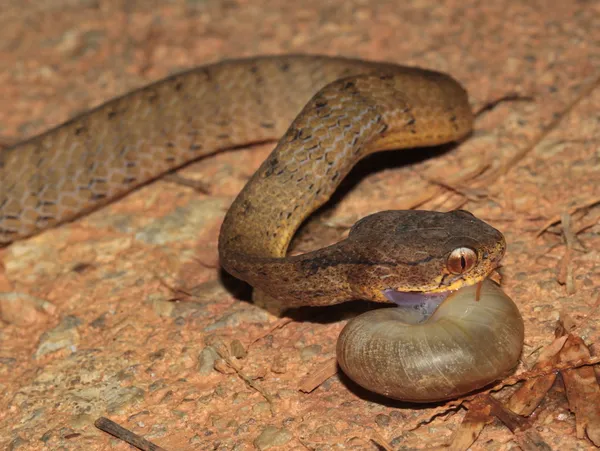
Pareas carinatus · Ular siput
not venomous · Hoso 2017, Asymmetry of mandibular dentition is associated with dietary specialization in snail-eating snakes (PeerJ) ↗
Active: nocturnal (active at night)
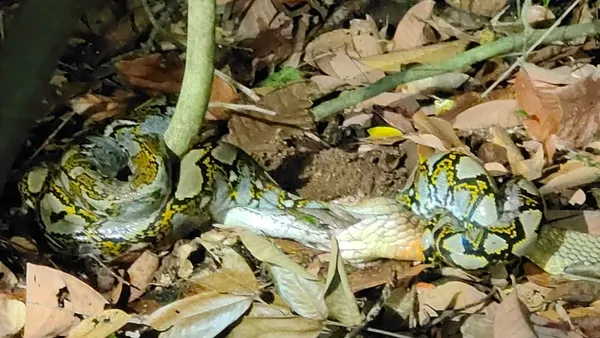
Malayopython reticulatus · Sanca Kembang
not venomous · Uyeda et al. 2022, Snakebite Envenomation, Attitudes, and Behavior toward Snakes in Banten, Indonesia (Animals) ↗
Active: nocturnal (active at night)
Features, size, active time and venom status come from each animal’s page and its sources. Photos are from iNaturalist and Wikimedia Commons contributors; licences are on the photo credits page. Photo credits