
Quick answer
IUCN status: EndangeredJavan leopard at a glance
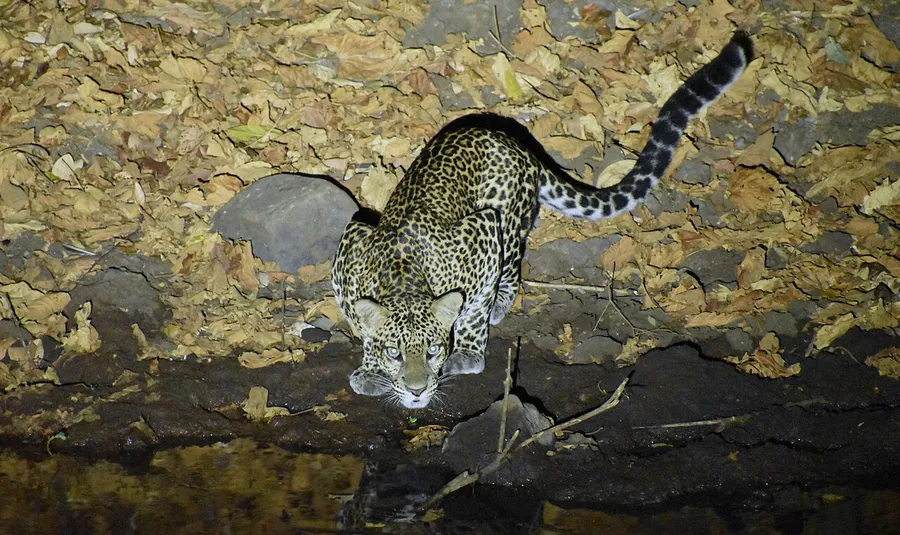
The Javan leopard (Panthera pardus melas) is a mammal in the family Felidae. Range in Indonesia: Java. It is endemic to Indonesia, living naturally only in Java. Diet: carnivore; a carnivore. IUCN Red List status: Endangered. It is a legally protected species in Indonesia (Regulation P.106/2018).
| Scientific name | Panthera pardus melas |
|---|---|
| Indonesian name | Macan tutul Jawa |
| Group | Mammals |
| Family | Felidae |
| Range in Indonesia | Java |
| Linked habitats | Tropical Rainforests |
| Diet | Carnivore |
| Range | Java |
| Colour forms | Spotted and melanistic |
| IUCN status | Endangered · IUCN SSC Cat Specialist Group — Javan leopard |
| Legal protection in Indonesia | Protected · Regulation P.106/2018 · annex no. 55 |
| Population estimate | 324 (179–682) mature individuals; fewer than 50 mature individuals in each subpopulation · IUCN SSC Cat Specialist Group — Javan leopard |
| Remaining range | Less than 8.9% of its historical range, in 23 isolated landscapes · IUCN SSC Cat Specialist Group — Javan leopard |
| Diet type | Carnivore (meat-eater) — predator: hoofed mammals, primates and smaller animals · IUCN SSC Cat Specialist Group |
| Reproduction | Giving birth to live young (viviparous) · Animal Diversity Web |
| Active | Nocturnal (active at night) — This nocturnal pattern was documented in Baluran National Park, East Java; it does not establish activity hours for every Javan population. · Exploring temporal activity of dholes, their prey, and competitors in East Java, Indonesia (Havmøller et al. 2024, Ecology and Evolution; PMC) |
| Endemic to Indonesia | Yes — Java · IUCN SSC Cat Specialist Group |
In this guide (11)
Black panthers and spotted leopards
The Javan leopard is a subspecies of Panthera pardus. Its black form, often called a black panther, results from melanism and is not another species. It also differs from the Sunda clouded leopard. Similar everyday names can hide important differences in range and conservation needs.
Evidence: IUCN SSC Cat Specialist Group — Javan leopard ecology and status ↗ · IUCN SSC Cat Specialist Group — Leopard colour and taxonomy ↗
Using more than primary forest
Javan leopards occur in primary forest, secondary forest, and some human-used landscapes. This flexibility does not make habitat loss harmless. Cover, food, and connections between areas remain necessary; one plantation photograph does not demonstrate that plantations can replace forests.
Evidence: IUCN SSC Cat Specialist Group — Javan leopard ecology and status ↗
A hunter with varied prey
Prey includes mammals such as barking deer, wild pigs, and primates. Predation connects the leopard with the condition of the wider wildlife community. Protecting it therefore also requires understanding prey availability. Suspected livestock attacks need field assessment rather than identification from unverified reports.
Evidence: IUCN SSC Cat Specialist Group — Javan leopard ecology and status ↗
What camera surveys measure
SINTAS’s February 2025 progress report describes cameras and scat collection to study populations and prey. Only some target landscapes had been surveyed at that stage. This interim report is not a final Java-wide census. Photographs, scat samples and identified individuals are different units; one animal can generate many records.
Evidence: SINTAS Indonesia — Java-Wide Leopard Survey progress, 2025 ↗
Living space and encounters
Separated habitat patches make connectivity management especially important. If a leopard is reported near homes, avoid crowds, pursuit, and public sharing of precise locations. Pass information to site managers or local conservation officers. The response needs to consider both community and animal safety.
Evidence: SINTAS Indonesia — Java-Wide Leopard Survey progress, 2025 ↗
Explore related habitats
These habitat relationships are supported by species sources in this guide. This is not a complete range map.
Scientific classification of the Javan leopard
| Kingdom | Animalia |
|---|---|
| Phylum | Chordata |
| Class | Mammalia |
| Order | Carnivora |
| Family | Felidae |
| Genus | Panthera |
| Species | Panthera pardus |
| Subspecies | Panthera pardus melas |
Source: GBIF Backbone Taxonomy, adjusted to the ranks commonly used in school biology (for example class Reptilia).
Common questions about the Javan leopard
What is the scientific name of the Javan leopard?
The scientific name of the Javan leopard is Panthera pardus melas, in the family Felidae. In Indonesian it is called Macan tutul Jawa.
What kind of animal is the Javan leopard?
The Javan leopard is a mammal in the family Felidae. By diet it is a carnivore (meat-eater): a predator: hoofed mammals, primates and smaller animals. It is also endemic to Indonesia.
Where does the Javan leopard live in Indonesia?
In Indonesia, this guide records the Javan leopard in: Java.
The Javan leopard is endemic to Indonesia and lives naturally only in Java. Source: IUCN SSC Cat Specialist Group.
Source-supported habitats: Tropical Rainforests.
What does the Javan leopard eat?
Diet of the Javan leopard: carnivore. That makes it a carnivore (meat-eater). Source: IUCN SSC Cat Specialist Group.
How does the Javan leopard reproduce?
The Javan leopard reproduces by giving birth to live young (viviparous). Source: Animal Diversity Web.
Is the Javan leopard nocturnal?
The cited source records the Javan leopard as nocturnal (active at night). This nocturnal pattern was documented in Baluran National Park, East Java; it does not establish activity hours for every Javan population. Source: Exploring temporal activity of dholes, their prey, and competitors in East Java, Indonesia (Havmøller et al. 2024, Ecology and Evolution; PMC).
See also the list of nocturnal and diurnal animals in Indonesia.
What are the main features of the Javan leopard?
Key features of the Javan leopard, from this guide’s sources: Colour forms: spotted and melanistic.
How large is the population of the Javan leopard?
324 (179–682) mature individuals; fewer than 50 mature individuals in each subpopulation. Source: IUCN SSC Cat Specialist Group — Javan leopard. Wild population figures are estimates and can differ between surveys.
What is the scientific classification of the Javan leopard?
Scientific classification of the Javan leopard: kingdom Animalia, phylum Chordata, class Mammalia, order Carnivora, family Felidae, genus Panthera, species Panthera pardus, subspecies Panthera pardus melas.
Source: GBIF Backbone Taxonomy, adjusted to the ranks commonly used in school biology.
Is the Javan leopard endangered?
Yes. The global conservation status of the Javan leopard: Endangered. In the IUCN system, this category means it is considered to face a very high risk of extinction in the wild. Source: IUCN SSC Cat Specialist Group — Javan leopard.
This global category is separate from national legal protection. Is the Javan leopard protected in Indonesia?
Is the Javan leopard protected in Indonesia?
Yes. The Javan leopard (Panthera pardus melas) is a protected species in Indonesia under Environment and Forestry Ministerial Regulation No. P.106/MENLHK/SETJEN/KUM.1/12/2018 on protected plant and animal species (annex, entry 55).
Article 21(2) of Law No. 5 of 1990, as amended by Law No. 32 of 2024, prohibits anyone from hunting, catching, injuring, killing, storing, owning, keeping, transporting or trading a protected animal, alive or dead, including its body parts, eggs and nests.
If you see this animal being traded, kept or injured, contact the local BKSDA office.
Can the Javan leopard be kept as a pet?
No. Because the Javan leopard is a protected species, catching, owning, keeping, transporting or trading it without a permit is prohibited by law. Trading without a permit through electronic media is also prohibited.
If you see this animal for sale or being kept, report it to the local BKSDA office.
Compare with similar animals
Sources & references
- IUCN SSC Cat Specialist Group — Javan leopard ecology and status ↗
- IUCN SSC Cat Specialist Group — Leopard colour and taxonomy ↗
- SINTAS Indonesia — Java-Wide Leopard Survey progress, 2025 ↗
- Peraturan Menteri LHK Nomor P.106/MENLHK/SETJEN/KUM.1/12/2018 tentang Jenis Tumbuhan dan Satwa yang Dilindungi ↗
- Animal Diversity Web ↗
- Exploring temporal activity of dholes, their prey, and competitors in East Java, Indonesia (Havmøller et al. 2024, Ecology and Evolution; PMC) ↗
- GBIF Backbone Taxonomy (GBIF) ↗
References can change. Check dates and context in the original source. How we use sources and data →
National parks where it is recorded
According to the official national park profiles from the KSDAE directorate. The animal may also live elsewhere.
Related causes and news
Further reading
Leopard: facts, threats and conservation ↗ — World Animal Rescue Network. A broader overview that covers this animal.
Related site: PanduanHewan’s founder is also a director of World Animal Rescue Network.
Cite this page
Credit PanduanHewan when referring to this page. Check the original evidence sources before reusing a claim.
PanduanHewan. Javan leopard (Panthera pardus melas). Last substantive update: 7 October 2026. https://panduanhewan.org/en/species/javan-leopard/