Pekalongan, Central Java · Published · PanduanHewan editorial team
Summary
What you need to know
A binturong (Arctictis binturong), a protected species, wandered into a garden in Dukuh Sikucing, Yosorejo village, Petungkriyono district, Pekalongan regency, Central Java, at about 01.00 local time (WIB) on Tuesday 29 September 2026. The resident first took it for a luwak, the common palm civet. Once identified, the binturong was handed over that afternoon to the Pemalang office of the Central Java conservation agency (BKSDA) for health checks and observation.
- When and where
- Tuesday 29 September 2026, about 01.00 WIB; Dukuh Sikucing, Yosorejo village, Petungkriyono source ↗
- Handling
- Handed to the BKSDA Pemalang team on Tuesday afternoon source ↗
- Legal protection
- Protected; Regulation P.106/2018 annex entry 131 source ↗
- Binturong IUCN status
- Vulnerable source ↗
- Binturong size
- 9–20 kg; body 61–96 cm, tail 56–89 cm source ↗
- Palm civet (luwak) size
- About 3 kg; body about 50 cm, tail about 48 cm source ↗
What happened in Petungkriyono?
Radar Pekalongan and Disway reported that a resident saw an animal enter their garden in the early hours and, thinking it was a luwak, caught it by hand. Once it was secured, the resident noticed its build was unusual and contacted a local forestry worker. That is how it was identified as a binturong, a protected species, said the Petungkriyono police chief, Inspector Faridin.
A team from BKSDA Pemalang came out and confirmed it as Arctictis binturong. The handover took place on Tuesday afternoon with the forestry staff, officers from the Petungkriyono police station and Yosorejo village officials. The binturong was taken to the BKSDA for health checks, observation and treatment. Officers also explained to residents that binturongs may not be kept or traded.
Sources: Warga Pekalongan Tangkap Binturong Satwa Dilindungi, Sempat Dikira Luwak ↗ · Dikira Luwak Masuk Pekarangan, Warga Petungkriyono Kaget Ternyata Binturong Satwa Dilindungi ↗ · Dikira Luwak Masuk Rumah, Warga Petungkriyono Kaget Ternyata Binturong ↗
Binturong vs palm civet: how can you tell them apart?
The binturong and the luwak, or Asian palm civet (Paradoxurus hermaphroditus), both belong to the civet family, Viverridae, but differ in genus and size. According to Animal Diversity Web, a binturong weighs 9–20 kg, with a body of 61–96 cm and a tail almost as long, 56–89 cm. A palm civet is far smaller: about 3 kg on average, with a body of about 50 cm and a tail of about 48 cm.
A binturong has long, coarse black fur, sometimes tipped with grey, white whiskers and long tufts of hair on small, rounded ears. Its tail can grip and is used for climbing; the binturong is one of only two carnivores with a prehensile tail. Smithsonian's National Zoo also notes its distinctive smell, like buttered popcorn.
A palm civet has a short grey or blackish coat, a masked face with white patches above and below the eyes and beside the nose, large pointed ears, and dark stripes down the back with three rows of black spots along each side. Its tail has no rings and is black only at the tip. In the dark these differences are hard to see, so treat any wild mammal as possibly protected and leave it alone.
Sources: Arctictis binturong (binturong) ↗ · Paradoxurus hermaphroditus (Asian palm civet) ↗ · Binturong ↗
Is the binturong protected in Indonesia?
Yes. Arctictis binturong is entry 131 in the annex to Environment and Forestry Ministerial Regulation P.106/MENLHK/SETJEN/KUM.1/12/2018 on protected plant and animal species. Law No. 5 of 1990, as amended by Law No. 32 of 2024, bars anyone from hunting, catching, injuring, killing, storing, owning, keeping, transporting or trading a protected animal. Since 2 January 2026, when Law 1/2026 on criminal-penalty adjustment removed the minimum sentence, offenders face up to 15 years in prison and/or a fine of up to category VII.
Reports on the Petungkriyono case mention no legal proceedings; instead, police thanked the residents for handing the binturong to the authorities. Globally, the IUCN lists the binturong as Vulnerable, with an inferred population decline of 30% over three generations. The Asian palm civet is listed as Least Concern by the IUCN and does not appear in the P.106/2018 annex; the only members of the civet family Viverridae in that annex are the binturong, the otter civet and the Sulawesi palm civet.
Sources: Permen LHK Nomor P.106/MENLHK/SETJEN/KUM.1/12/2018 tentang Jenis Tumbuhan dan Satwa yang Dilindungi (PDF, dengan lampiran) ↗ · Undang-Undang Nomor 32 Tahun 2024 tentang Perubahan atas UU Nomor 5 Tahun 1990 (PDF) ↗ · Warga Pekalongan Tangkap Binturong Satwa Dilindungi, Sempat Dikira Luwak ↗ · Binturong ecology and conservation in pristine, fragmented and degraded tropical forests ↗ · Paradoxurus hermaphroditus (Asian palm civet) ↗ · UU No. 1 Tahun 2026 tentang Penyesuaian Pidana (JDIH BPK) ↗
Why do binturongs and other wild animals turn up near homes?
The Bali conservation agency (BKSDA Bali) says wild animals may appear near homes because of their natural movements, habitat disturbance, or a search for food and shelter. Binturongs live in trees but are too large to leap between them, so they often come down to the ground. A study in the journal Oryx found they persist in degraded forest and near forest edges where enough forest cover remains, becoming more nocturnal in disturbed places, probably to avoid people.
Petungkriyono is known for its forest of about 6,000 hectares, home to the Javan gibbon, and a Universitas Gadjah Mada study that used camera traps there notes that binturongs are indicated to live in the Petungkriyono forest. Palm civets, by contrast, are common in parks, gardens and plantations.
This is not the first time a protected animal has turned up among homes in Pekalongan regency. On 25 February 2023 a black leopard was found in the kitchen of a food stall in Mesoyi village, Talun district, and on 18 January 2024 young men in Rowoyoso village, Wonokerto district, secured a pangolin. Both were handled by the Central Java BKSDA's Conservation Section II office in Pemalang.
Sources: Respons Cepat Penyelamatan Satwa Liar: Kijang Terluka di Karangasem Dievakuasi untuk Mendapatkan Perawatan Intensif ↗ · Arctictis binturong (binturong) ↗ · Binturong ecology and conservation in pristine, fragmented and degraded tropical forests ↗ · Petungkriyono, Rumah ‘Terakhir’ Owa Jawa ↗ · Faktor Lingkungan yang Mempengaruhi Keberadaan Binturong (Arctictis binturong) di Hutan Petungkriyono Pekalongan ↗ · Paradoxurus hermaphroditus (Asian palm civet) ↗ · Macan Kumbang Tersesat di Dapur Warung Makan Warga Pekalongan, Kondisi Kurus dan Lemas ↗ · Heboh Trenggiling Nyasar ke Permukiman Warga di Pekalongan ↗
Why shouldn't you catch a wild animal near your home?
The head of BKSDA Bali asks people not to deal with wild animals found near homes themselves, but to report them to the BKSDA call centre or local field staff; catching, keeping or injuring wild animals is against the law. Even a binturong that looks sluggish can be dangerous: the wildlife researcher Lonnie Grassman told Mongabay that binturongs can be aggressive and chase nearby people when released from a trap.
Mistaken identity can also be fatal for the animal. In mid-January 2026, villagers in Cigandeng, Pandeglang, Banten, who had never seen a binturong took one for a wolf or a shape-shifting creature; it was brought down and died. In Petungkriyono, reporting it got the binturong to the authorities, which the police chief said helps prevent harm to the animal or people.
Sources: Respons Cepat Penyelamatan Satwa Liar: Kijang Terluka di Karangasem Dievakuasi untuk Mendapatkan Perawatan Intensif ↗ · What is a binturong? ↗ · Binturong, Satwa Langka Dilindungi yang Dijuluki Kucing Beruang ↗ · Warga Pekalongan Tangkap Binturong Satwa Dilindungi, Sempat Dikira Luwak ↗
What happens next
- BKSDA Pemalang is checking the binturong's health and observing it, and will decide the next step according to its condition.
- In January 2024, a healthy pangolin found in Wonokerto was due to be released the same day in Pekalongan's Linggoasri protection forest.
How to help
- If a wild animal comes into your garden, keep your distance and do not catch it, least of all with bare hands.
- Keep children, dogs and cats away from it.
- Note the place and time, take photos from a safe distance, then call the BKSDA call centre, the police or village officials.
- If you are unsure whether it is a palm civet or a protected species, treat it as protected and wait for the officers.
Common questions
Is a binturong a civet?
Broadly, yes: like the luwak, or Asian palm civet, it belongs to the civet family, Viverridae. But it is a different, much larger animal with long black fur, ear tufts and a gripping tail; the luwak is smaller, with a masked face, stripes and spots.
Source: Arctictis binturong (binturong) ↗ · Paradoxurus hermaphroditus (Asian palm civet) ↗
Is the binturong a protected species?
Yes. The binturong is entry 131 in the annex to Regulation P.106/2018, and the IUCN lists it as Vulnerable.
Source: Permen LHK Nomor P.106/MENLHK/SETJEN/KUM.1/12/2018 tentang Jenis Tumbuhan dan Satwa yang Dilindungi (PDF, dengan lampiran) ↗ · Binturong ecology and conservation in pristine, fragmented and degraded tropical forests ↗
Can you keep a binturong as a pet?
No. Law No. 5 of 1990, as amended by Law No. 32 of 2024, bans catching, owning, keeping or trading protected animals, with prison terms of up to 15 years.
Source: Undang-Undang Nomor 32 Tahun 2024 tentang Perubahan atas UU Nomor 5 Tahun 1990 (PDF) ↗ · UU No. 1 Tahun 2026 tentang Penyesuaian Pidana (JDIH BPK) ↗
Is a binturong dangerous?
Binturongs tend to avoid people, becoming more nocturnal near settlements, but a researcher has described them as aggressive when released from a trap. Do not approach one; report it to the BKSDA.
Source: Binturong ecology and conservation in pristine, fragmented and degraded tropical forests ↗ · What is a binturong? ↗
Is the Asian palm civet protected?
The Asian palm civet does not appear in the annex to Regulation P.106/2018, and the IUCN lists it as Least Concern. Even so, do not catch wild animals yourself; if you are unsure what it is, report it to the BKSDA.
Source: Permen LHK Nomor P.106/MENLHK/SETJEN/KUM.1/12/2018 tentang Jenis Tumbuhan dan Satwa yang Dilindungi (PDF, dengan lampiran) ↗ · Paradoxurus hermaphroditus (Asian palm civet) ↗ · Respons Cepat Penyelamatan Satwa Liar: Kijang Terluka di Karangasem Dievakuasi untuk Mendapatkan Perawatan Intensif ↗
Animals in this story
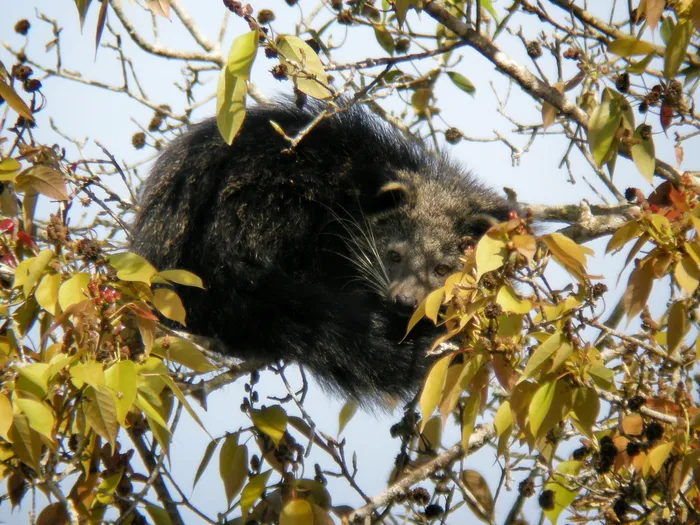
The binturong (Arctictis binturong) is the largest civet, a tree-dwelling mammal with a gripping tail, found in the forests of Sumatra, Borneo and Java.
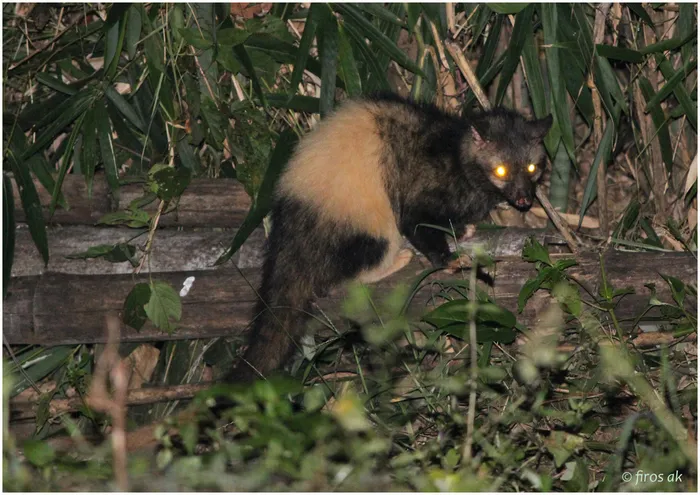
Asian Palm Civet (Paradoxurus hermaphroditus). The Asian palm civet can use varied habitats; captivity and civet-coffee production should be distinguished from its wild behaviour.
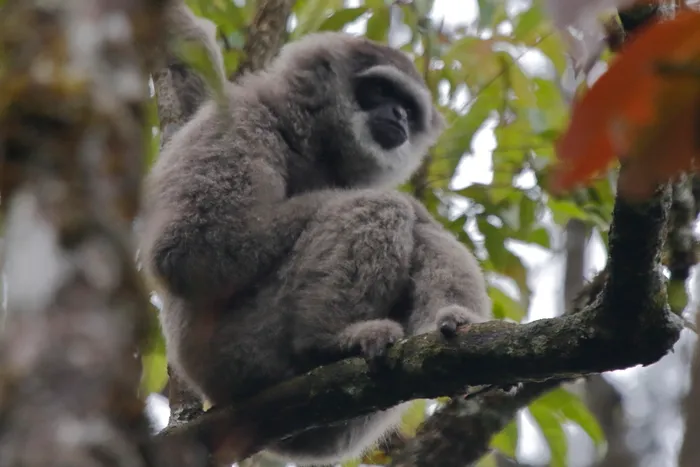
A silvery small ape dependent on Java’s forest canopy. Calls, family relationships, and routes through the trees shape its life.
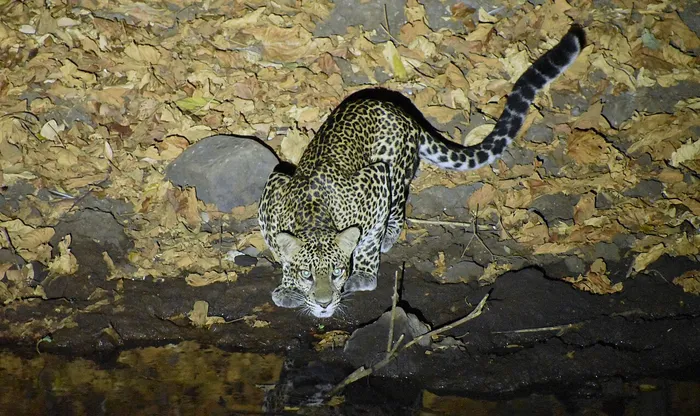
A big cat endemic to Java with spotted and black forms. Connected forests and careful management of human encounters matter for its survival.
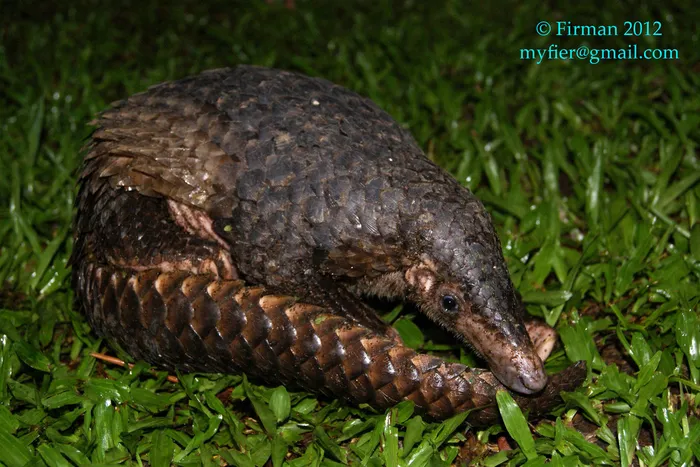
A scaled, ant- and termite-eating mammal threatened by illegal trade. Climbing and secretive behaviour make direct observation difficult.
Sources and references
- Warga Pekalongan Tangkap Binturong Satwa Dilindungi, Sempat Dikira Luwak ↗ — Kompas.com, 2026-09-29
- Permen LHK Nomor P.106/MENLHK/SETJEN/KUM.1/12/2018 tentang Jenis Tumbuhan dan Satwa yang Dilindungi (PDF, dengan lampiran) ↗ — JDIH Kementerian Kehutanan, 2018-12-28
- Binturong ecology and conservation in pristine, fragmented and degraded tropical forests ↗ — Oryx (Cambridge University Press), 2023-07-04
- Arctictis binturong (binturong) ↗ — Animal Diversity Web, University of Michigan, 2026-10-01
- Paradoxurus hermaphroditus (Asian palm civet) ↗ — Animal Diversity Web, University of Michigan, 2026-10-01
- Dikira Luwak Masuk Pekarangan, Warga Petungkriyono Kaget Ternyata Binturong Satwa Dilindungi ↗ — Radar Pekalongan, 2026-09-29
- Dikira Luwak Masuk Rumah, Warga Petungkriyono Kaget Ternyata Binturong ↗ — Disway Jateng, 2026-09-30
- Binturong ↗ — Smithsonian's National Zoo and Conservation Biology Institute, 2026-10-01
- Undang-Undang Nomor 32 Tahun 2024 tentang Perubahan atas UU Nomor 5 Tahun 1990 (PDF) ↗ — JDIH BPK RI, 2024-08-07
- UU No. 1 Tahun 2026 tentang Penyesuaian Pidana (JDIH BPK) ↗ — JDIH BPK RI, 2026-01-02
- Respons Cepat Penyelamatan Satwa Liar: Kijang Terluka di Karangasem Dievakuasi untuk Mendapatkan Perawatan Intensif ↗ — Balai KSDA Bali, 2026-06-06
- Petungkriyono, Rumah ‘Terakhir’ Owa Jawa ↗ — Mongabay Indonesia, 2025-04-28
- Faktor Lingkungan yang Mempengaruhi Keberadaan Binturong (Arctictis binturong) di Hutan Petungkriyono Pekalongan ↗ — Universitas Gadjah Mada (repositori ETD), 2016
- Macan Kumbang Tersesat di Dapur Warung Makan Warga Pekalongan, Kondisi Kurus dan Lemas ↗ — Tribun Muria, 2023-02-26
- Heboh Trenggiling Nyasar ke Permukiman Warga di Pekalongan ↗ — detikJateng, 2024-01-19
- What is a binturong? ↗ — Mongabay, 2016-10-13
- Binturong, Satwa Langka Dilindungi yang Dijuluki Kucing Beruang ↗ — Mongabay Indonesia, 2026-02-16
This story was written by the PanduanHewan editorial team from the reports and official sources listed; we do not copy other outlets. Facts may change as the story develops; the update date is shown at the top. Send a correction