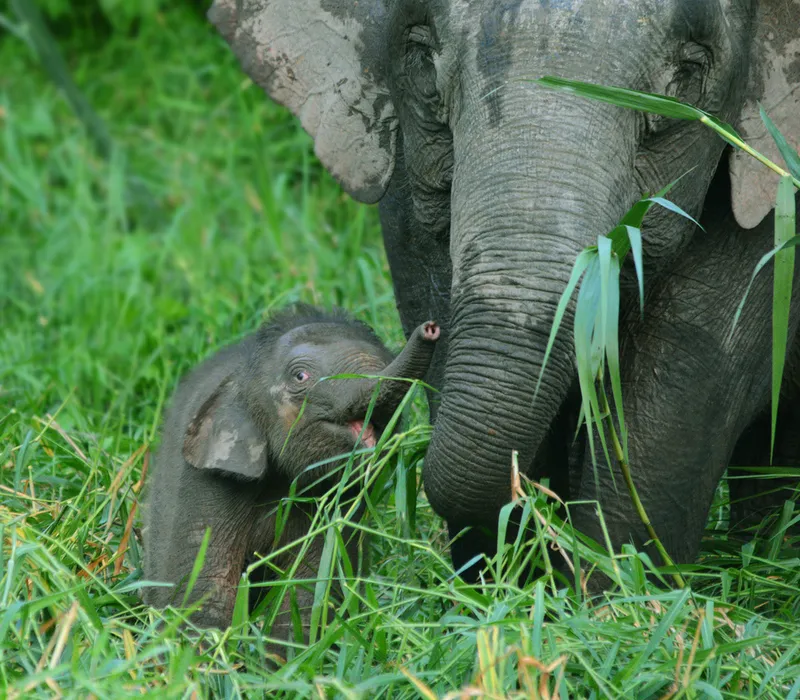
What is the Bornean elephant?
WWF uses Elephas maximus borneensis for the Bornean elephant, an Asian elephant population in northern Borneo. Some taxonomic databases resolve that name only to the parent species Elephas maximus. This page describes the documented geographic population and makes the naming difference explicit; it does not claim a separate elephant species.
Where does it live?
WWF places the Indonesian habitat around Nunukan in North Kalimantan, close to Sabah, Malaysia. The landscape crosses the international border, so a country-only map can hide important movement routes. A habitat area is not a promise that elephants will be seen at every forest location.
Why does forest connectivity matter?
Elephants move across large areas as they use food and water sources. WWF’s work emphasizes cross-border forest corridors that keep those routes available. Roads, land conversion and fragmentation can interrupt movement and increase encounters with farms or settlements.
How should conflict be understood?
Moving one animal cannot address the underlying problem if habitat routes and land use stay the same. Field monitoring, corridor protection and collaboration with local communities need to work together. This profile does not tell readers to approach wild elephants; local conservation authorities are the appropriate contact during an encounter.
What should be checked before quoting numbers?
Some fact sheets include population estimates from older surveys. Check their date, survey area and method before reusing a figure; a historical estimate does not automatically describe the present. Keep Bornean elephant data separate from Sumatran elephant figures and from the Asian elephant species as a whole.
Sources & references
- WWF Indonesia — Elephant ↗
- WWF Indonesia — Bornean pygmy elephant range ↗
- WWF Indonesia — Bornean elephant factsheet ↗
- GBIF name match — Elephas maximus borneensis ↗
- Indonesia Travel — 10 endemic animals ↗
References can change. Check dates and context in the original source.