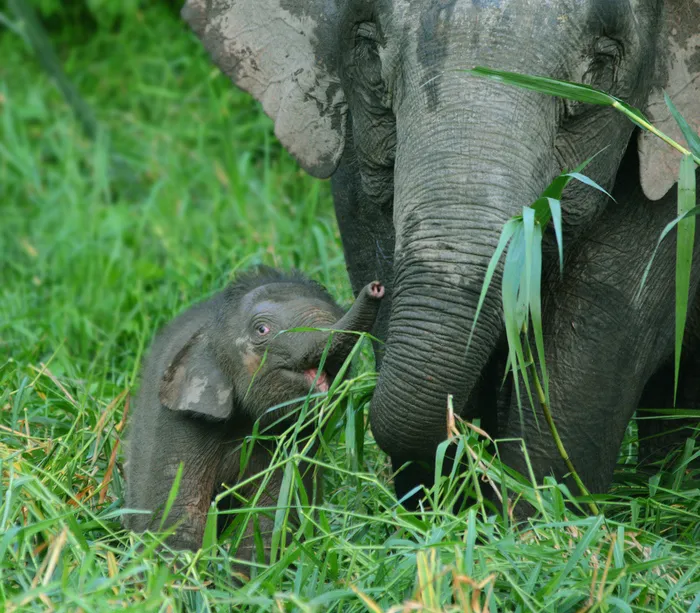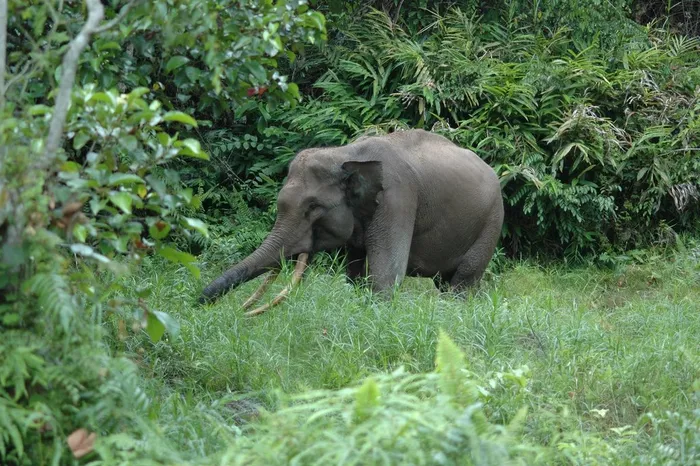
Elephas maximus sumatranus
A large herbivore that disperses seeds and shapes forests. Its conservation needs connected movement space and solutions developed with communities living nearby.
PANDUANHEWAN · INDONESIA
How do the Sumatran elephant (Elephas maximus sumatranus) and Bornean elephant (Elephas maximus borneensis) differ? Classification, features, range, diet, size, IUCN status and legal protection, from cited sources.
The Sumatran elephant (Elephas maximus sumatranus) and the Bornean elephant (Elephas maximus borneensis) share the species Elephas maximus but belong to different subspecies groups: Elephas maximus sumatranus and Elephas maximus borneensis. Range in Indonesia — the Sumatran elephant: Forested landscapes in Sumatra; the Bornean elephant: North Kalimantan (Nunukan, near the Sabah border).
A large herbivore that disperses seeds and shapes forests. Its conservation needs connected movement space and solutions developed with communities living nearby.
A northern Borneo population of Asian elephant shared by North Kalimantan and Sabah. Its future depends on a connected cross-border landscape and reducing conflict with people.
| Aspect | Sumatran elephant | Bornean elephant |
|---|---|---|
| Scientific name | Elephas maximus sumatranus | Elephas maximus borneensis |
| Indonesian name | Gajah Sumatera | Gajah Kalimantan |
| Class | Mammalia | Mammalia |
| Order | Proboscidea | Proboscidea |
| Family | Elephantidae | Elephantidae |
| Range in Indonesia | Forested landscapes in Sumatra | North Kalimantan (Nunukan, near the Sabah border) |
| Endemic to Indonesia | Yes | No |
| Diet | A variety of plants | — |
| Diet type | herbivore (plant-eater) | herbivore (plant-eater) |
| Reproduction | giving birth to live young (viviparous) | giving birth to live young (viviparous) |
| IUCN status | Critically Endangered | Endangered — subspecies, 2024 assessment |
| Legal protection | Protected (Regulation P.106/2018) | Protected (Regulation P.106/2018) |
Every cell comes from the sourced data on each animal’s page; an empty cell means the data is not yet available, not that it is absent.
Search by name, habitat or island in the animal directory.