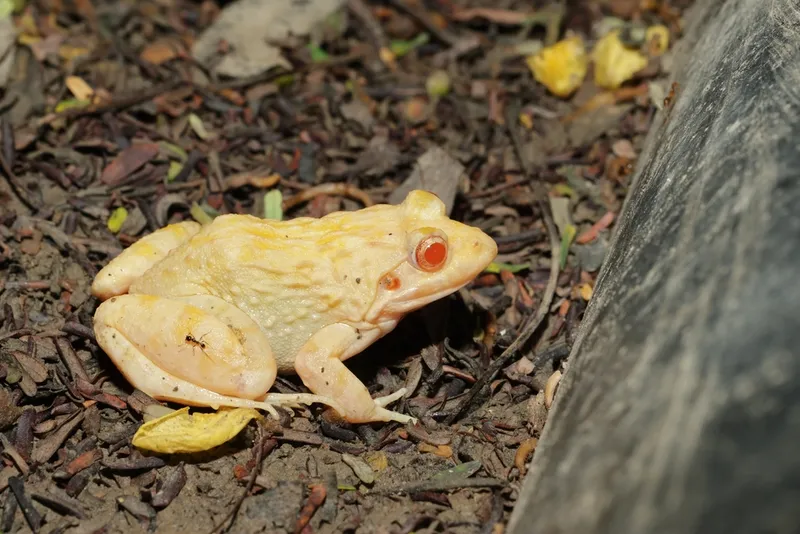
Important taxonomic note
Amphibian Species of the World warns that F. limnocharis formerly covered many populations that may belong to other species. The record count and older observations on this page need review against the taxon concept used before they are treated as evidence of one species.
Evidence: Amphibian Species of the World — Fejervarya limnocharis ↗
What is the Paddy Field Frog?
Paddy Field Frog refers to Fejervarya limnocharis, in the genus Fejervarya, family Dicroglossidae, and order Anura. The scientific name follows the accepted taxon in the GBIF Backbone Taxonomy. Common names can vary between places; the scientific name distinguishes this species from relatives.
What is known about the Paddy Field Frog?
The paddy field frog belongs to a complex revised by molecular studies; older records under this name may not match today's species limits.
Read that fact alongside the scientific name and species source, not as proof from an unclear photograph. Populations, ages and taxonomic limits can differ; when identification is uncertain, record the broader group.
Evidence: Species account — background reading ↗
Habitat and field observations of the Paddy Field Frog
An older survey by eastern Lake Maninjau reported frogs under this name active in rice fields by day and night. Because species limits within Fejervarya have been revised, those older records need taxonomic caution.
Evidence: Teynié, David & Ohler (2010) — Western Sumatra herpetofauna field study ↗
How many Indonesian records name the Paddy Field Frog?
When checked on 2026-09-23, the GBIF search returned 789 human-observation records from Indonesia under this species name for 2016–2026. That is a count of indexed records, not an estimate of population, abundance or unique individuals. Observation effort can vary by location, and the count may change as records are added or identifications revised.
Evidence: GBIF occurrence search — Indonesia, human observations, 2016–2026 ↗
Where were observations reported?
Place labels appearing in the results include Jawa Barat, Jawa Tengah, Banten. They are labels attached to records, not a complete range map or evidence that the species occurs only there. Some labels may be broad or inconsistent. Check the underlying records before using the location information for field decisions.
Evidence: GBIF occurrence search — Indonesia, human observations, 2016–2026 ↗
How can you observe the Paddy Field Frog?
Observe in place without moving eggs, tadpoles or frogs. Images of the body and habitat, together with date and calls, can help specialists assess an identification; common names do not establish handling safety. A well-documented sighting helps others check the identification without turning one encounter into a conservation-status claim.
Explore related animals
To explore this group further, compare Paddy Field Frog with Crab-eating Frog, River Toad, Green Paddy Frog. These links reflect a shared genus, family, order, class or catalogue group; taxonomic proximity does not imply identical habitat needs or conservation status.
Sources & references
- GBIF Backbone Taxonomy — accepted taxon ↗
- GBIF occurrence search — Indonesia, human observations, 2016–2026 ↗
- Teynié, David & Ohler (2010) — Western Sumatra herpetofauna field study ↗
- Amphibian Species of the World — Fejervarya limnocharis ↗
- iNaturalist — exact species taxon and community observations ↗
- Species account — background reading ↗
References can change. Check dates and context in the original source.