Varanus komodoensis
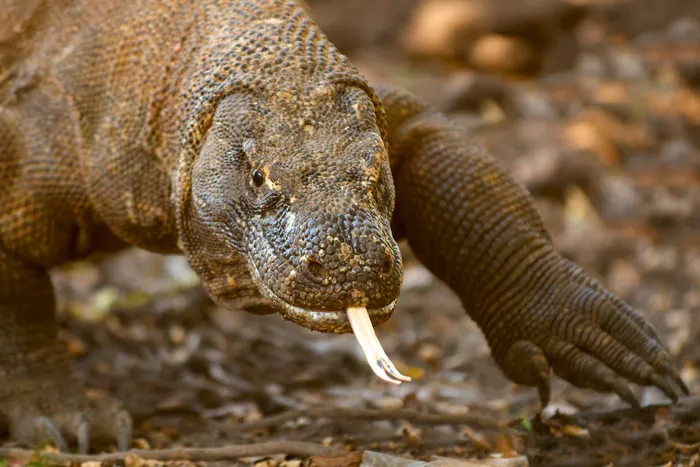
The largest living lizard, native to a small group of islands in East Nusa Tenggara. Explore its links with prey, dry habitats, and island-specific conservation.
PANDUANHEWAN · INDONESIA
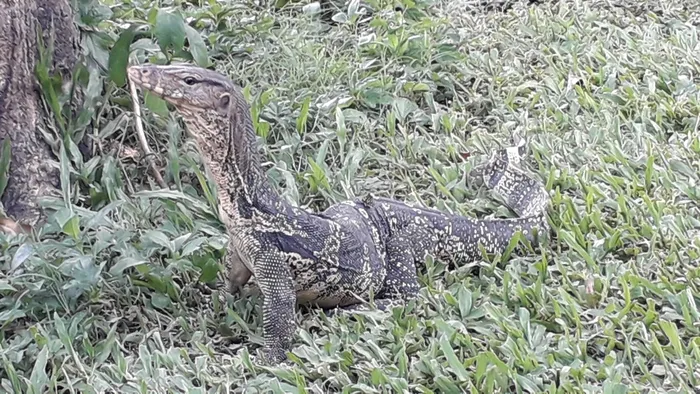
How do the Komodo dragon (Varanus komodoensis) and Asian water monitor (Varanus salvator) differ? Classification, features, range, diet, size, IUCN status and legal protection, from cited sources.
The Komodo dragon (Varanus komodoensis) and the Asian water monitor (Varanus salvator) are different species in the same genus, Varanus. Range in Indonesia — the Komodo dragon: East Nusa Tenggara: Flores and nearby islands; the Asian water monitor: Sumatra, Java, Bali, Kalimantan, Sulawesi and parts of Nusa Tenggara.
The largest living lizard, native to a small group of islands in East Nusa Tenggara. Explore its links with prey, dry habitats, and island-specific conservation.
A large semi-aquatic lizard living near rivers, swamps, mangroves and some human-used areas. As both predator and scavenger, it connects aquatic and terrestrial food webs.
| Aspect | Komodo dragon | Asian water monitor |
|---|---|---|
| Scientific name | Varanus komodoensis | Varanus salvator |
| Indonesian name | Komodo | Biawak air |
| Class | Reptilia | Reptilia |
| Order | Squamata | Squamata |
| Family | Varanidae | Varanidae |
| Range in Indonesia | East Nusa Tenggara: Flores and nearby islands | Sumatra, Java, Bali, Kalimantan, Sulawesi and parts of Nusa Tenggara |
| Endemic to Indonesia | Yes | No |
| Key features | Forked tongue for sensing scent | — |
| Size | Largest verified size: 3.13 m long and 166 kg | Body length: Can reach 3 m, but most adults are at most about 1.5 m |
| Diet | Predator and scavenger | Small animals and carrion |
| Diet type | carnivore (meat-eater) | carnivore (meat-eater) |
| Reproduction | laying eggs (oviparous) | laying eggs (oviparous) |
| IUCN status | Endangered | Least Concern |
| Legal protection | Protected (Regulation P.106/2018) | — |
Every cell comes from the sourced data on each animal’s page; an empty cell means the data is not yet available, not that it is absent.
Telling animals apart never replaces keeping your distance. Do not approach, catch or handle wild animals; if bitten, go to a health facility immediately.
Search by name, habitat or island in the animal directory.