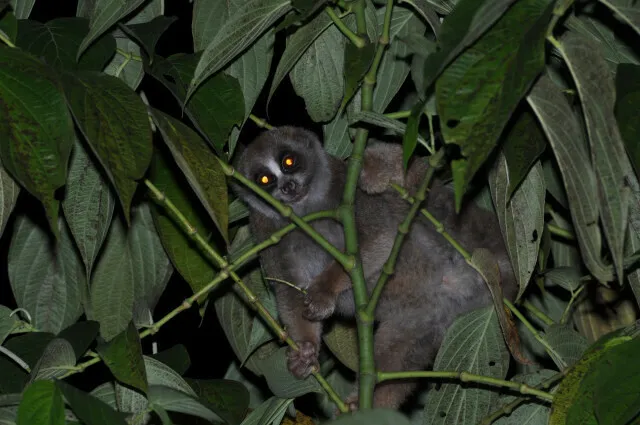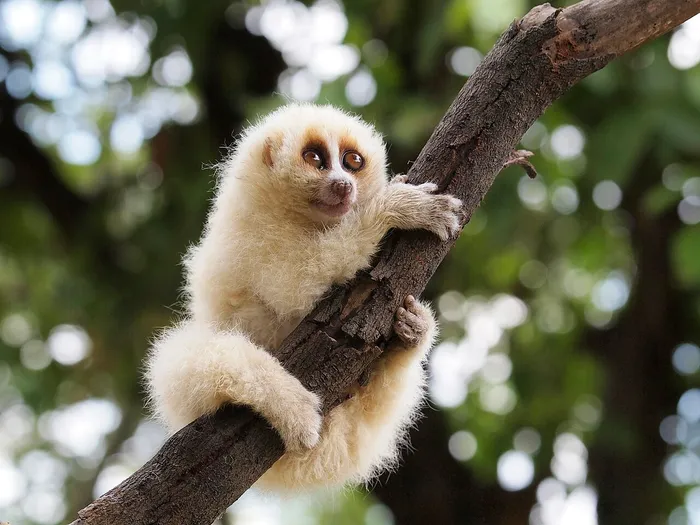
Nycticebus javanicus
A nocturnal, tree-dwelling primate of Java threatened by wildlife trade. Understanding its behaviour helps turn curiosity into respectful observation.
PANDUANHEWAN · INDONESIA
How do the Javan slow loris (Nycticebus javanicus) and Sunda slow loris (Nycticebus coucang) differ? Classification, features, range, diet, size, IUCN status and legal protection, from cited sources.
The Javan slow loris (Nycticebus javanicus) and the Sunda slow loris (Nycticebus coucang) are different species in the same genus, Nycticebus. Range in Indonesia — the Javan slow loris: Java, Indonesia; the Sunda slow loris: Sumatra, the Riau Islands and the Natuna Islands.
A nocturnal, tree-dwelling primate of Java threatened by wildlife trade. Understanding its behaviour helps turn curiosity into respectful observation.
The Sunda slow loris (Nycticebus coucang) is a slow, venomous nocturnal primate of Sumatra, threatened by the pet trade and protected in Indonesia.
| Aspect | Javan slow loris | Sunda slow loris |
|---|---|---|
| Scientific name | Nycticebus javanicus | Nycticebus coucang |
| Indonesian name | Kukang Jawa | Kukang sunda |
| Class | Mammalia | Mammalia |
| Order | Primates | Primates |
| Family | Lorisidae | Lorisidae |
| Range in Indonesia | Java, Indonesia | Sumatra, the Riau Islands and the Natuna Islands |
| Endemic to Indonesia | Yes | No |
| Key features | One of the venomous mammals | Large eyes, white stripe between them, slow movements |
| Diet | — | Tree gum, nectar and fruit; sometimes insects, snails and eggs |
| Diet type | omnivore (eats plants and animals) | omnivore (eats plants and animals) |
| Reproduction | giving birth to live young (viviparous) | giving birth to live young (viviparous) |
| IUCN status | Critically Endangered | Endangered |
| Legal protection | Protected (Regulation P.106/2018) | Protected (Regulation P.106/2018) |
Every cell comes from the sourced data on each animal’s page; an empty cell means the data is not yet available, not that it is absent.
Search by name, habitat or island in the animal directory.