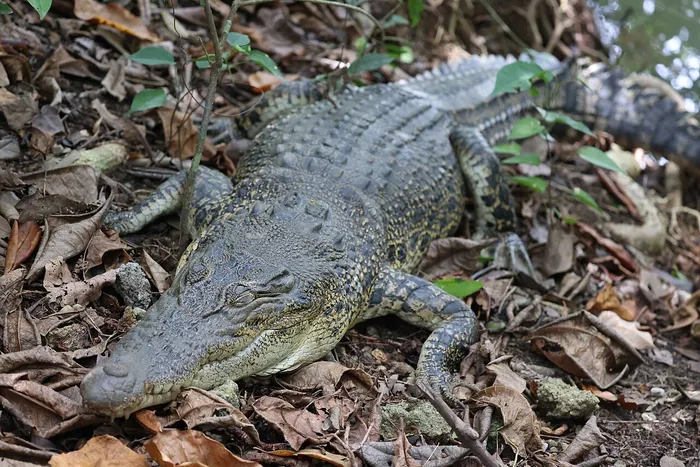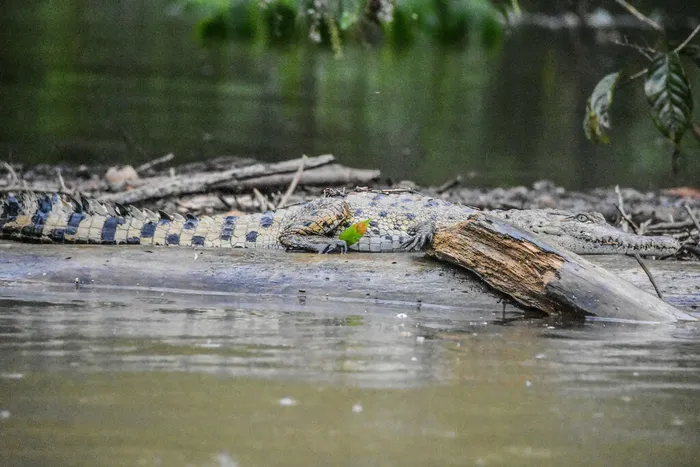
Crocodylus novaeguineae
The New Guinea crocodile (Crocodylus novaeguineae) is a medium-sized freshwater crocodile found only on New Guinea, smaller than the saltwater crocodile.
PANDUANHEWAN · INDONESIA
How do the New Guinea crocodile (Crocodylus novaeguineae) and Saltwater crocodile (Crocodylus porosus) differ? Classification, features, range, diet, size, IUCN status and legal protection, from cited sources.
The New Guinea crocodile (Crocodylus novaeguineae) and the saltwater crocodile (Crocodylus porosus) are different species in the same genus, Crocodylus. Range in Indonesia — the New Guinea crocodile: Papua, mainly freshwater rivers, lakes and swamps such as the Mamberamo basin; the saltwater crocodile: Coasts, estuaries and rivers across much of Indonesia, from Sumatra to Papua.
The New Guinea crocodile (Crocodylus novaeguineae) is a medium-sized freshwater crocodile found only on New Guinea, smaller than the saltwater crocodile.
A large reptile capable of using both salt and fresh water. Understanding its habitat and respecting its space matters for community safety and conservation.
| Aspect | New Guinea crocodile | Saltwater crocodile |
|---|---|---|
| Scientific name | Crocodylus novaeguineae | Crocodylus porosus |
| Indonesian name | Buaya irian | Buaya muara |
| Class | Reptilia | Reptilia |
| Order | Crocodylia | Crocodylia |
| Family | Crocodylidae | Crocodylidae |
| Range in Indonesia | Papua, mainly freshwater rivers, lakes and swamps such as the Mamberamo basin | Coasts, estuaries and rivers across much of Indonesia, from Sumatra to Papua |
| Endemic to Indonesia | No | No |
| Key features | Fairly narrow snout, dark bands on body and tail | — |
| Size | — | Adult length: Average 3–5 m; largest reliably measured female 4 m |
| Diet | Fish, waterbirds, frogs and reptiles; young eat insects | Animals; carnivore |
| Diet type | carnivore (meat-eater) | carnivore (meat-eater) |
| Reproduction | laying eggs (oviparous) | laying eggs (oviparous) |
| IUCN status | Least Concern | Least Concern |
| Legal protection | Protected (Regulation P.106/2018) | Protected (Regulation P.106/2018) |
Every cell comes from the sourced data on each animal’s page; an empty cell means the data is not yet available, not that it is absent.
Telling animals apart never replaces keeping your distance. Do not approach, catch or handle wild animals; if bitten, go to a health facility immediately.
Search by name, habitat or island in the animal directory.